

If you've been fighting a losing battle against persistent dryness, you're not alone. Using beef tallow for dry skin offers a deeply nourishing, ancestral solution that gets to the root of the problem in a way many modern moisturizers simply can't. Its unique composition works in harmony with your skin's own biology, providing lasting hydration where synthetic formulas often fail. This isn't just another trendy ingredient; it's about getting back to skincare that truly works.
Why Modern Skincare Often Fails Dry Skin
Walking down the skincare aisle can be overwhelming. It’s a dizzying array of complex formulas, multi-step routines, and buzzworthy ingredients, all promising a miracle cure for dryness. You’ve likely tried them all: hyaluronic acids that feel great for an hour, lightweight gels that seem to vanish into thin air, and thick creams that just sit on top of your skin without ever truly sinking in.
For many of us, the result is the same—a cycle of temporary relief followed by that familiar return to tightness, flaking, and irritation.
The issue is that many contemporary products are built around surface-level hydration or single active ingredients. While it's common to see discussions about the best common vitamins for skin health, these products often overlook the foundational needs of a compromised skin barrier. They just don't have the right kinds of rich, biocompatible fats needed to replenish what dry skin is missing.
The Problem with Synthetic Solutions
Modern moisturizers frequently lean on plant-based oils, silicones, and synthetic compounds that don't quite match our skin's own lipid structure. This biological mismatch can cause a few key problems:
- They're just a temporary fix. Ingredients like silicones create an illusion of smoothness but don't actually nourish the skin. They form a film that can trap debris and offer zero long-term benefits once they're washed away.
- They can disrupt your barrier. Harsh preservatives, alcohols, and synthetic fragrances found in many commercial lotions can further irritate an already sensitive complexion, making a weak skin barrier even weaker over time.
- They don't absorb properly. When a moisturizer's fatty acid profile is too different from your skin's natural sebum, it just can't integrate. The result is a greasy or ineffective layer that sits right on the surface.
This is exactly where an ancestral approach can make such a profound difference. Beef tallow isn't a new discovery; it has a long, proven history as a premier moisturizer, especially for dry and irritated skin. Its power comes from a unique composition rich in fatty acids like oleic and stearic acid, which act as both emollients (to smooth the skin) and occlusives (to lock in moisture).
It works so well because its fatty acid profile closely mimics our skin's natural oils. This allows for far superior absorption and deep-down barrier support.
For skin that is chronically dry, the goal isn't just to add moisture; it's to restore the fundamental building blocks of the skin barrier itself. Tallow provides these blocks in a form your skin instantly recognizes.
Instead of fighting against your skin's biology with foreign substances, beef tallow works with it. This synergy creates a foundation for true healing and lasting comfort, making it one of the best natural moisturizers for dry skin you can find. It’s a powerful shift from just managing symptoms to providing genuine, foundational nourishment.
How Tallow Heals Your Skin's Natural Barrier
To really get why beef tallow works so well for dry skin, I find it helps to picture your skin's outer protective layer—the stratum corneum—as a sturdy brick wall. Your skin cells are the bricks, and the natural fats (lipids) are the mortar holding them all together. When that wall is healthy, it's strong and sealed tight, keeping moisture locked in.
But when you're dealing with dry, sensitive, or irritated skin, it’s a sign that the mortar is starting to crumble. Gaps are forming between the bricks, letting precious hydration escape while irritants sneak in. This is what we call a compromised skin barrier, and it's the real culprit behind chronic dryness and sensitivity. The secret to real, lasting relief isn’t just about slathering on moisture; it's about rebuilding that wall.
This is where tallow's unique magic comes in. It’s like a master mason for your skin, showing up with the exact materials needed to patch up that crumbling mortar. Its rich profile of fatty acids—oleic, palmitic, and stearic—is incredibly similar to the lipids your own skin produces naturally. Because of this biocompatibility, your skin doesn't see it as a foreign substance. Instead, it welcomes it as a much-needed reinforcement.
Rebuilding the Mortar with Fatty Acids
When you smooth on some beef tallow, those fatty acids don’t just sit on the surface. They get to work right away, integrating into your skin's lipid matrix and filling in those microscopic gaps between the cells. This does two incredible things at once: it deeply nourishes the skin cells and rebuilds the protective seal that locks in hydration.
The illustration below really drives home just how similar the lipids in human sebum and beef tallow are. It’s the key to its effectiveness.
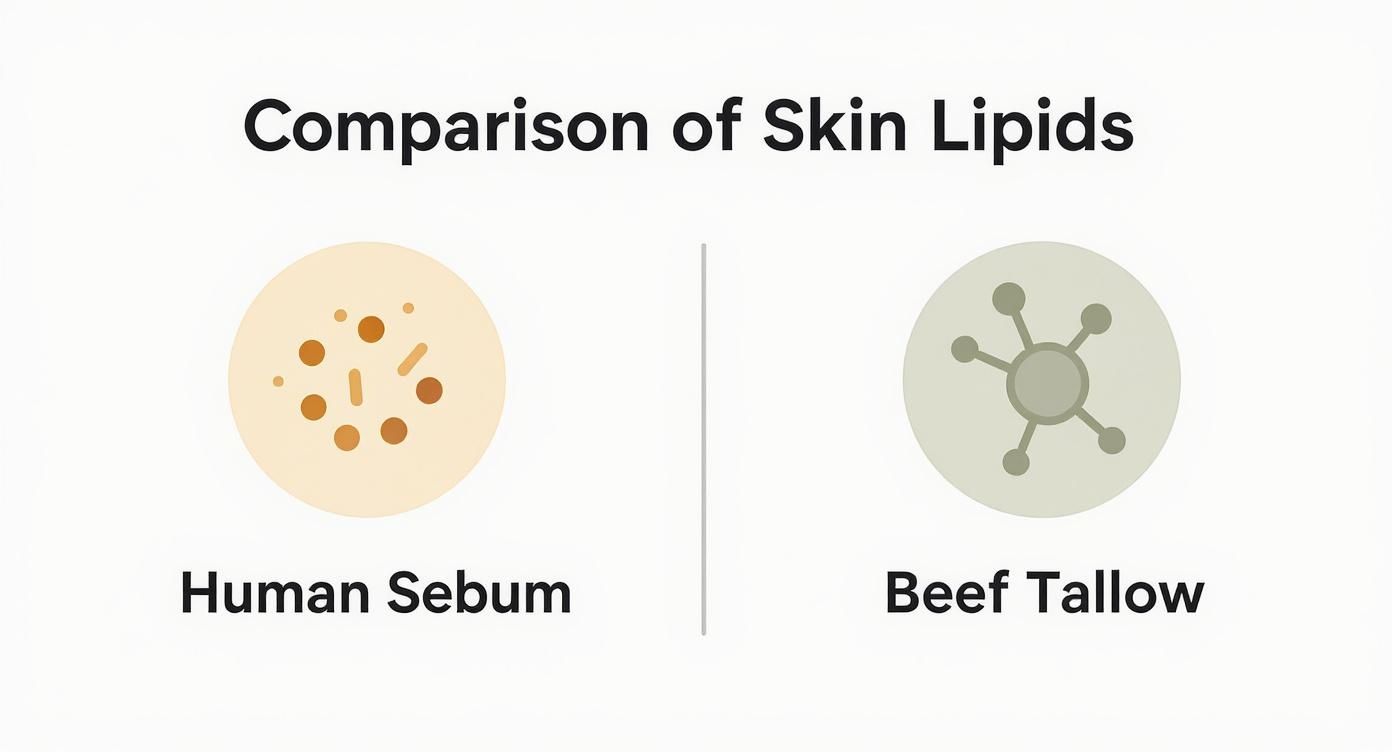
You can see why tallow is so readily accepted by the skin. It helps restore that natural balance and strength almost immediately.
And this isn't just a traditional belief; modern science is catching up. One study looking into tallow-derived esters saw a significant and progressive jump in skin hydration after application. Researchers measured a 4.7% improvement after just 30 minutes, which then soared to an impressive 47.2% after only three hours. That’s a powerful and lasting moisturizing effect.
I like to think of it this way: using a typical synthetic moisturizer is like trying to patch a brick wall with plaster. Sure, it might cover the cracks for a little while, but it won’t truly bond with the original structure. Using tallow is like applying fresh, perfectly matched mortar that strengthens the wall from the inside out.
Understanding how to keep that structure strong is everything. If you want to dive deeper, our guide on how to repair a damaged skin barrier is packed with more strategies.
More Than Just Fats: A Nutrient Powerhouse
Beyond its barrier-repairing fatty acids, tallow is loaded with fat-soluble vitamins that are crucial for healthy skin. And because these vitamins are naturally present in the fat, they are highly bioavailable—meaning your skin can absorb and use them with incredible efficiency.
- Vitamin A: Helps with skin cell turnover, which is key for shedding old, damaged cells and revealing the healthier ones underneath. It’s essential for keeping skin smooth and firm.
- Vitamin D: Plays a role in skin cell growth and repair. It also has antimicrobial properties that help keep your skin's microbiome in happy balance.
- Vitamin E: A powerhouse antioxidant that shields your skin from environmental stressors like UV rays and pollution that can cause dryness and premature aging.
- Vitamin K: Known for its role in healing, it helps improve skin tone and texture, especially where there's irritation or damage.
Together, these nutrients offer a complete support system that goes way beyond simple moisturization. They protect, heal, and fortify your skin, creating an environment where it can truly thrive. This powerful combination of barrier repair and antioxidant protection is what makes using beef tallow for dry skin such a holistic and effective solution. It doesn’t just put a band-aid on the problem; it nourishes your skin back to a state of resilient, comfortable health.
Choosing the Right Beef Tallow for Your Skin
Getting started with tallow skincare is an exciting step, but it's important to know that not all tallow is the same. The quality of the product you choose has a huge impact on your results, especially when you’re dealing with dry, sensitive skin. It’s less about the brand and more about what’s actually inside the jar.
Think of it like shopping for produce. You know that a bright, vibrant, organically grown tomato is going to be packed with more flavor and nutrients than a pale, mass-produced one. The same exact principle applies here. The source and purity of the tallow are what make all the difference.
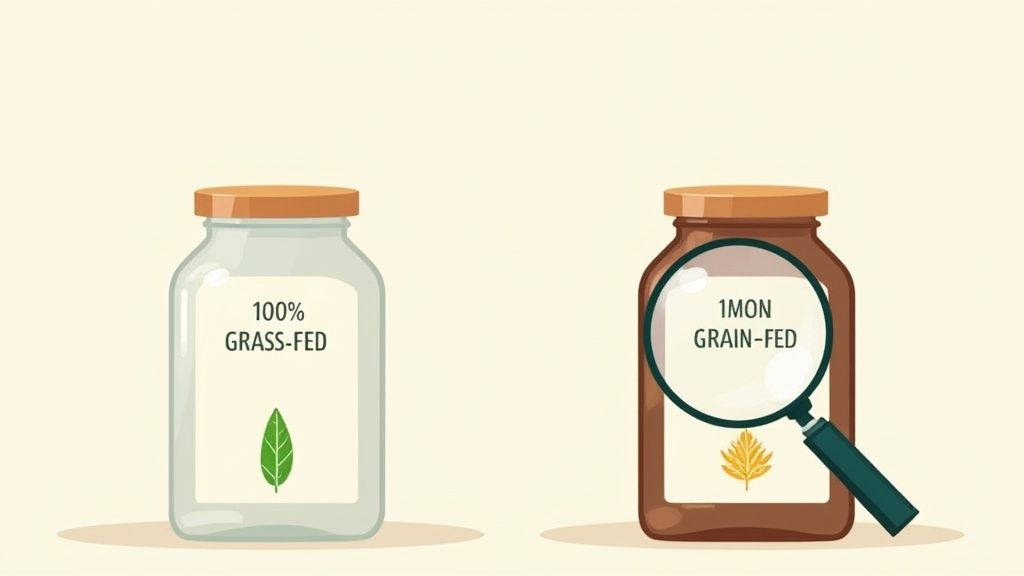
Grass-Fed vs. Grain-Fed Tallow
The biggest factor in tallow quality comes down to one thing: the cow's diet. There's a world of difference between tallow from cows that spent their lives on pasture (grass-fed) and those fed a diet of grains.
Cows are built to eat grass. When they live and eat as nature intended, their fat becomes a storehouse for a rich concentration of beneficial nutrients. Tallow that comes from 100% grass-fed and grass-finished cows has a far superior nutritional profile, making it a powerhouse for your skin.
Specifically, it offers:
- Higher Vitamin Content: Grass-fed tallow is loaded with more of the fat-soluble vitamins A, D, E, and K. These are the vitamins your skin craves for repair, antioxidant defense, and collagen support.
- Better Fatty Acid Balance: It has a healthier ratio of omega-3 to omega-6 fatty acids. This is key for calming down inflammation, which is often the root cause of irritated, dry skin conditions.
- More Conjugated Linoleic Acid (CLA): Found in much higher amounts in grass-fed animals, this fatty acid is a potent anti-inflammatory agent.
Grain-fed tallow just doesn't have this same nutrient density. It's also worth remembering that toxins and pesticides can accumulate in an animal's fat. By choosing a pure, grass-fed source, you're making sure only the good stuff touches your skin.
To make this crystal clear, here’s a quick breakdown of what sets these two types of tallow apart.
Grass-Fed vs. Grain-Fed Tallow for Skincare
A comparison of key characteristics to help you choose the highest quality beef tallow for your skin.
| Feature | Grass-Fed Tallow | Grain-Fed Tallow |
|---|---|---|
| Nutrient Profile | Rich in vitamins A, D, E, K, and CLA. Higher concentration of skin-loving nutrients. | Lower in essential vitamins and beneficial fatty acids. |
| Fatty Acid Ratio | Balanced omega-3 to omega-6 ratio, which helps reduce inflammation. | Higher in inflammatory omega-6 fatty acids, which can be less beneficial. |
| Color and Consistency | Typically a richer, more golden color due to higher beta-carotene content. | Often paler or whiter in color. |
| Purity | Less likely to contain stored toxins from pesticides if sourced from organic pasture. | Higher potential for stored toxins from grain feed treated with pesticides. |
| Ideal For | Dry, sensitive, and inflamed skin due to its superior anti-inflammatory properties. | Less effective for therapeutic skincare; may lack key healing compounds. |
As you can see, the choice is pretty straightforward for anyone serious about skin health. Grass-fed is simply in another league.
When you choose 100% grass-fed tallow, you're not just getting a moisturizer. You're getting a vitamin-rich, anti-inflammatory skin superfood that delivers maximum therapeutic benefit for dry skin.
Reading Labels Like a Pro
Once you know to look for a grass-fed source, the next step is to get really good at reading the ingredient list. The best beef tallow for dry skin will have a beautifully short, simple, and recognizable list. For sensitive complexions, less is almost always more.
Here’s a quick guide on what to look for and what to run from.
What to Look For:
- "100% Grass-Fed & Finished Tallow": This needs to be the star of the show, right at the top of the list.
- Minimalist Formulas: The best products often contain just tallow, or perhaps tallow blended with a single high-quality oil like organic olive oil.
- "Fragrance-Free" or "Unscented": This is non-negotiable for sensitive skin to avoid mystery irritants.
What to Avoid:
- Hidden Fragrances: A label that just says "fragrance" or "parfum" can legally hide dozens of synthetic chemicals known to trigger reactions.
- Synthetic Preservatives: Ingredients like parabens or phenoxyethanol have no place in a quality tallow balm and can be harsh on the skin.
- Fillers: Be wary of low-quality oils or synthetic ingredients added to bulk up the product. They offer zero benefits and might even clog your pores.
If you're looking for a pure and effective option, starting with a dedicated grass-fed beef tallow moisturizer from a trusted source is a great move. By focusing on quality and purity from the start, you can be confident that the tallow you use will soothe and restore your skin without any unwanted extras.
How to Use Beef Tallow in Your Daily Routine
Bringing beef tallow into your skincare routine is refreshingly simple. Its rich, nourishing texture means you only need a tiny amount, and it’s versatile enough to handle everything from daily facial dryness to those stubborn rough patches on your elbows and heels. The real trick is just knowing how and when to apply it to get the most out of every drop.

Unlike those lightweight lotions that seem to vanish in minutes, tallow provides a lasting, protective layer on your skin. This makes it the perfect final step in your routine, especially at night when your skin kicks into its natural repair and regeneration cycle.
Your Step-by-Step Application Guide
Applying tallow correctly is all about helping it melt seamlessly into your skin for deep hydration, not just sit on top feeling heavy. The goal is true absorption.
Follow these simple steps for a perfect application every time:
-
Start with a Clean Canvas: Always work with clean, slightly damp skin. A fresh cleanse gets rid of impurities, while the lingering moisture gives the tallow an extra boost of hydration to lock in.
-
A Little Goes a Long Way: Scoop out a very small amount—seriously, think the size of a single pea for your entire face. High-quality, grass-fed tallow is incredibly concentrated with nutrients.
-
Warm It Up: Rub the tallow between your clean palms. Your own body heat will instantly soften it, turning it from a firm balm into a silky, luxurious oil that’s ready to be absorbed.
-
Press, Don’t Rub: Instead of rubbing it in, gently press or pat the warmed tallow onto your face and neck. This pressing motion is far more effective, helping the product sink deep into the skin rather than just being smeared across the surface.
This gentle technique is especially great for the delicate skin around your eyes. For even more pointers, check out our complete guide on how to use tallow.
Finding Tallow's Place in Your Routine
Knowing where tallow fits into your existing lineup is key. The golden rule of skincare is to apply products from thinnest to thickest. Since tallow is such a rich, occlusive moisturizer, it should almost always be your final step.
Think of it as the protective topcoat for your skin. It seals in all the good stuff from any lighter products you used beforehand (like mists or water-based serums) and forms a barrier to stop moisture from escaping.
For an evening routine, the order would look like this: Cleanse -> Tone (optional) -> Serum -> Beef Tallow. This locks everything in and lets the tallow work its magic all night long.
You can absolutely use tallow during the day, too, especially if your skin is feeling extra parched. Just use a slightly smaller amount and give it a few minutes to fully sink in before moving on to makeup or sunscreen.
How Often Should You Use It?
When you first start using beef tallow for dry skin, consistency is far more important than quantity. For most people, a nightly application is the perfect starting point. This gives your skin a solid eight hours to soak up the nutrients and rebuild its barrier while you sleep.
- For Very Dry or Compromised Skin: Daily use, both morning and night, can bring incredible relief and help speed up the healing process.
- For Normal to Combination Skin: Using it as a rich night cream 3-5 times a week is often the sweet spot for maintaining hydration without feeling over-moisturized.
- As an Intensive Treatment: Don't forget how amazing tallow is as a spot treatment! Dab it on any particularly dry or chapped areas—elbows, knees, heels, even your cuticles—for an intense dose of moisture right where you need it.
The best thing you can do is listen to your skin. It will tell you what it needs. If you wake up feeling soft and balanced, you've found your rhythm. If you still feel a little tight, try a slightly more generous amount the next night. It's an intuitive process, and you'll quickly figure out what makes your skin happy.
Is Beef Tallow Right for Your Skin Type?
Beef tallow can be a game-changer for restoring dry, unhappy skin, but that doesn't mean it's the right fit for everyone. The single most important step is figuring out if this rich, traditional moisturizer will be your new holy grail or a potential problem for your specific skin.
A great way to think about tallow is like a heavy-duty, protective winter coat. If your skin is constantly feeling the chill—meaning it's dry, flaky, or stripped of its natural oils—that coat is a lifesaver. It wraps your skin in the nourishment and protection it needs to feel strong and comfortable again.
But what if your skin already produces plenty of its own warmth (oil)? Adding another heavy layer can quickly lead to overheating, sweat, and congestion. That’s why understanding your starting point is key.
Who It Works Best For
Certain skin types just seem to drink up beef tallow and thrive. If any of these sound like you, tallow is very likely to be a fantastic addition to your routine.
- Chronically Dry or Dehydrated Skin: This is where tallow truly shines. For skin that always feels tight, looks dull, or just can't seem to hold onto moisture, tallow's biocompatible fats deliver deep, lasting nourishment that helps rebuild the skin's natural moisture barrier.
- Mature Skin: As we get older, our skin’s natural oil production slows way down, which is a big reason for increased dryness and fine lines. Tallow helps replenish those lost fatty acids, bringing back a plump, supple feeling and a healthy glow.
- Sensitive and Easily Irritated Skin: If your skin reacts to just about everything—especially synthetic fragrances, preservatives, or long ingredient lists—the simplicity of a grass-fed tallow balm can be incredibly calming. Its natural anti-inflammatory properties are also great for soothing redness.
- A Compromised Skin Barrier: Conditions like eczema or psoriasis are all about a damaged skin barrier that can't do its job. Tallow creates a gentle, protective seal over the skin, which locks in precious moisture and gives it the quiet space it needs to finally start healing itself.
This isn't just theory. A large-scale consumer satisfaction analysis of over 16,000 users found an average satisfaction score of 4.3 out of 5 for tallow's ability to relieve psoriasis and eczema symptoms. It's clear that people with these challenging dry skin conditions are finding real-world benefits. You can learn more about these customer satisfaction findings on RanchersRender.com.
A Word of Caution for Oily and Acne-Prone Skin
While beef tallow for dry skin is a clear win, it’s a much different story for those with naturally oily or acne-prone complexions. The very things that make it so healing for dry skin can spell trouble for others.
Tallow is highly occlusive, which is just a technical way of saying it forms a rich, protective barrier on the skin. For dry skin, this is a huge plus—it stops water from evaporating. But if your skin already produces plenty of oil, this heavy layer can trap that excess sebum, along with dead skin cells and bacteria, right inside your pores. That’s a perfect recipe for congestion and breakouts.
Some people will argue tallow is non-comedogenic because its makeup is so similar to our own sebum, but its heavy texture can simply be too much for pores that clog easily. The same consumer analysis I mentioned earlier backs this up: it found a much lower satisfaction rating of just 3.3 out of 5 among users with acne-prone skin, confirming it can make pore-clogging worse for this group.
If your skin is oily, combination, or you're prone to breakouts, you'll want to be careful. You could try using it as a spot treatment on stubborn dry patches, but a lighter, non-occlusive moisturizer is probably a safer bet for keeping your skin clear and balanced.
Your Guide to Getting Started with Tallow
Jumping into a new skincare routine can feel a little daunting, but adding beef tallow is all about getting back to basics, not overcomplicating things. If you've been fighting a losing battle with dry, unhappy skin, you now know the real solution isn’t about temporary fixes—it’s about rebuilding your skin's natural barrier.
Beef tallow gives your skin exactly what it needs to do that.
Its magic lies in its molecular structure. It's packed with the same fatty acids and fat-soluble vitamins (A, D, E, and K) that your own skin produces, which means your skin recognizes it instantly. Instead of just sitting on the surface, it gets right to work replenishing lost oils, locking in moisture, and soothing irritation. It provides a kind of deep, lasting relief that most modern moisturizers just can't replicate.
A Return to Ancestral Wellness
Choosing beef tallow for dry skin is often about more than just what you’re putting on your face. It’s a move toward a simpler, more intentional way of living. In an era of 10-step routines and mystifying chemical ingredients, tallow is a nod to ancestral wisdom—a pure, nutrient-dense ingredient that has been trusted for generations.
It’s an effective, sustainable, and family-safe choice that just feels right. When you opt for a simple formula from a trusted source like Wild Tallow Skincare, you’re getting a product that’s both incredibly gentle and powerful, without any of the synthetic fillers that can trigger sensitive skin.
You now have everything you need to make a great decision. You know what to look for—high-quality, grass-fed tallow—and you know how to work it into your daily life to see if it’s the right fit for your unique skin.
This guide was meant to give you a roadmap, but the next step is yours. By listening to what your skin is telling you and embracing this time-tested ingredient, you can finally break the cycle of temporary relief. You’re ready to restore your skin’s health from the inside out and achieve that resilient, comfortable, and truly hydrated glow you’ve been looking for.
Your Tallow Questions, Answered
Even when you're sold on the science, a few practical questions always pop up before you dive in. Getting those details sorted is the last step to feeling truly confident about welcoming tallow into your routine.
Let's walk through some of the most common questions we get. Think of this as the final piece of the puzzle.
What Does Beef Tallow Smell Like?
This is probably the number one question on everyone's mind, and the answer might surprise you. High-quality, properly rendered tallow has an incredibly neutral, almost non-existent scent. It absolutely should not smell "beefy."
The purification process is key here—it removes the impurities that create strong odors. What you're left with is a very faint, slightly rich scent that vanishes almost instantly once it's absorbed into your skin. If you're using a balm with other ingredients, like a little olive oil, it will likely just smell clean and subtly earthy.
Will Beef Tallow Clog My Pores?
The honest answer? It really depends on your unique skin. Because tallow's fatty acid profile is a near-perfect match for our own sebum, it's not typically considered comedogenic (pore-clogging). For many, it actually helps balance out oil production.
The potential issue comes from its richness. Tallow is occlusive, meaning it forms a protective barrier on the skin. For anyone with dry, sensitive, or mature skin, this is a lifesaver. But if your skin is already quite oily or prone to breakouts, that same protective layer could trap excess oil and contribute to congestion.
The Bottom Line: Tallow is a fantastic match for dry and sensitive skin. If you have oily or acne-prone skin, it's wise to start slow—maybe just use it as a spot treatment or on drier patches of your body first.
How Should I Store My Tallow Balm?
Good storage habits are essential for keeping your tallow balm fresh and potent. Since pure balms skip the synthetic preservatives found in most store-bought lotions, a little care makes all the difference.
- Keep it Cool and Dark: Your tallow balm’s biggest enemies are heat and direct sunlight. Store it in a cabinet, drawer, or anywhere away from a sunny window to protect its nutrient profile and consistency.
- Refrigeration is an Option: For long-term storage, the fridge works great. Just know this will make the balm very firm, so you'll need to warm a small bit between your fingers before applying.
- Always Use Clean Hands: This is a big one. To prevent introducing any bacteria or water into your jar, always scoop out the balm with clean, dry hands. This single step can dramatically extend its shelf life.
Stored properly, a pure tallow balm can easily last for many months, often up to a year.
Can I Use Beef Tallow on My Baby's Skin?
Yes, absolutely! In fact, it's one of the purest and gentlest things you can put on a baby's incredibly delicate skin. A simple, fragrance-free tallow balm made from 100% grass-fed sources is perfect for tackling everything from diaper rash and cradle cap to everyday dry patches.
Because it's just pure, simple fat, you don't have to worry about the hidden chemicals, artificial fragrances, or harsh preservatives common in so many baby products. Tallow's natural ability to soothe and protect a fragile skin barrier makes it a trusted favorite for parents seeking a truly clean, effective, and minimalist option for their little ones.
Quick Answers to Your Tallow Questions
Still have a few questions? This table gives you a quick rundown of the key things to know before getting started.
| Question | Short Answer | Key Takeaway |
|---|---|---|
| What does it smell like? | High-quality tallow has a very neutral, subtle scent. | If it smells "beefy," it likely hasn't been rendered or purified correctly. |
| Will it clog my pores? | Not for most people, especially those with dry skin. | Its richness can be too much for oily or acne-prone skin types. Patch test first! |
| How do I store it? | In a cool, dark place away from sunlight. | Keeping it cool and using clean hands will preserve it for up to a year. |
| Is it safe for babies? | Yes, it's one of the safest and most gentle options available. | Look for a 100% grass-fed, fragrance-free balm with minimal ingredients. |
Hopefully, these answers give you the clarity you need to feel great about trying tallow. It's an incredibly simple yet powerful way to care for your skin.
Ready to experience the deep, nourishing hydration of a truly pure tallow balm? At Wild Tallow Skincare, we handcraft our formulas with just 100% grass-fed tallow and a few food-grade ingredients, ensuring it's gentle enough for the entire family. Discover the difference on wildtallow.com and give your dry skin the relief it deserves.