

Picture a skincare ingredient so deeply nourishing that our ancestors swore by it for generations. That's the essence of beef tallow skin cream. At its core, it's a moisturizer made from rendered beef fat—a simple, time-honored practice that's making a serious comeback in the modern beauty world. This revival isn't just a fad; it's fueled by a growing demand for skincare that's uncomplicated, effective, and profoundly natural.
The Natural Skincare Secret Making a Comeback
Long before we had labs formulating complex creams, tallow was the go-to for protecting and healing the skin. Our great-grandparents didn't just cook with it; they used it as an all-purpose balm for everything from rough, chapped hands to weathered winter skin. This wasn't a trend, but a practical staple born from a resource that was abundant and incredibly effective. Its power lies in its simplicity and its uncanny compatibility with our own skin.
Today, many of us are looking at long, confusing ingredient lists and asking for something better. This has sparked a return to our ancestral roots. The modern revival of beef tallow cream is part of a larger movement toward "clean" and "whole-ingredient" beauty. People want products that are not only effective but also transparent and minimally processed, reconnecting them to more traditional, sustainable ways of living.
Rediscovering a Time-Tested Solution
This renewed interest isn't just about nostalgia—it's about results. Skincare lovers are rediscovering what our ancestors knew all along: tallow just works. Its unique fatty acid profile is remarkably similar to the oils (or sebum) our own skin produces. This allows it to absorb deeply without just sitting on the surface, providing true, foundational support for the skin barrier and helping you achieve a healthy, resilient glow.
What's drawing people back to this incredible ingredient? It boils down to a few key benefits:
- Intense Moisturization: It delivers lasting hydration that truly quenches dry, thirsty skin.
- Skin Barrier Support: It helps fortify your skin's natural defenses against daily environmental stressors.
- Nutrient-Rich Composition: It's a natural powerhouse of fat-soluble vitamins like A, D, E, and K.
This shift is more than just a fleeting trend. It signals a deeper appreciation for ingredients that are both elemental and powerful, proving that sometimes the best solutions have been right in front of us all along.
Ultimately, the return of beef tallow skin cream is a testament to its timeless value. As we explore what is tallow used for, from its historical roots to modern skincare, it’s easy to see why this simple fat is reclaiming its spot as a trusted ally for healthy skin. It perfectly bridges the gap between ancient wisdom and our modern needs, offering a straightforward path back to true nourishment.
Why Your Skin Recognizes Beef Tallow
Ever notice how some moisturizers just sit on top of your skin, forming a greasy layer, while others seem to disappear right in? The difference often comes down to biocompatibility—how well an ingredient’s makeup matches your skin’s own. With beef tallow, this match is so spot-on it's like a key sliding perfectly into a lock.
Your skin has its own built-in moisturizer: a waxy, oily substance called sebum. The whole point of sebum is to keep your skin hydrated, waterproofed, and protected from the elements. This natural oil is a unique cocktail of fatty acids and triglycerides, and here's the magic of tallow: its fatty acid profile is almost a mirror image of our sebum. That’s why our skin doesn't just tolerate it; it welcomes it.
This infographic really drives home the connection between tallow and healthy skin, showing how its natural origins make it such a great fit for protecting our own barrier.
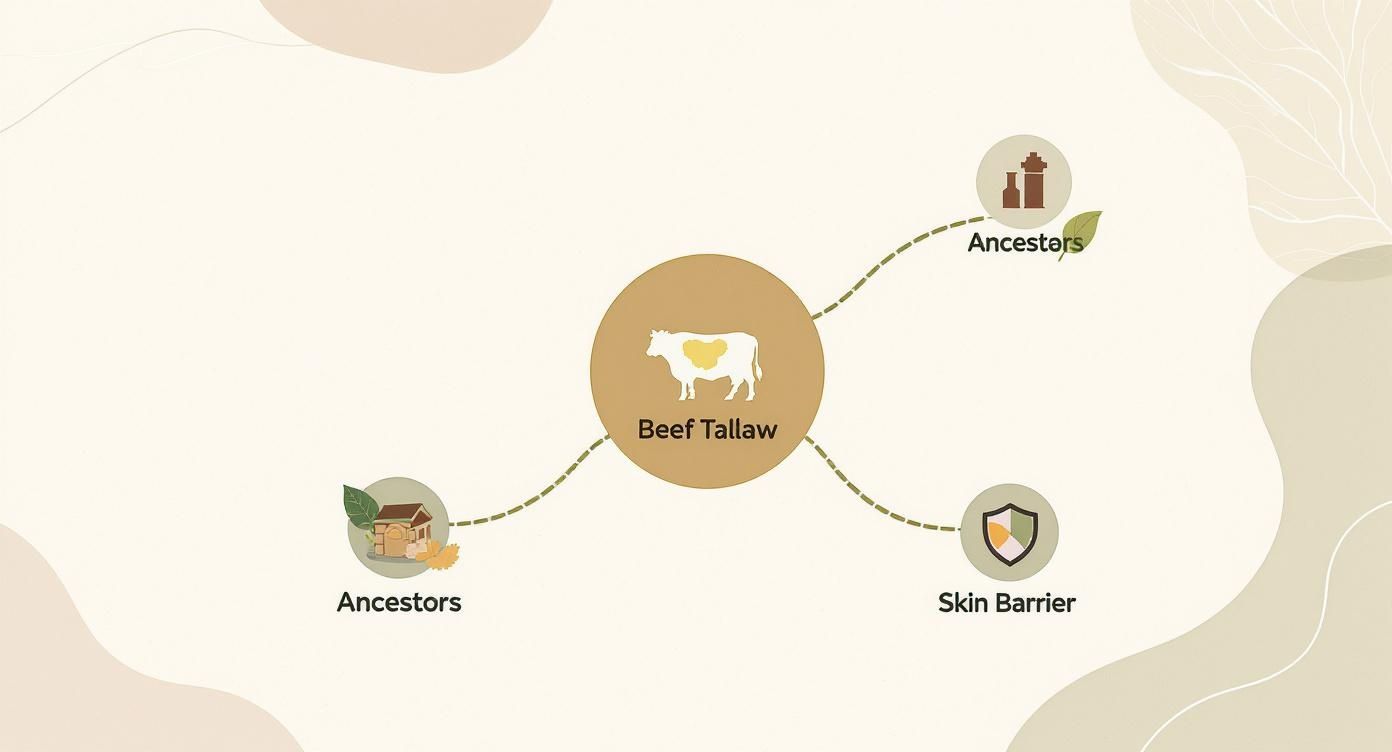
As you can see, tallow isn't some new-age trend. Its value is rooted in a composition that’s been used for generations to reinforce the skin's natural defenses.
The Building Blocks of a Healthy Skin Barrier
So, what makes this connection so strong? It really boils down to two specific fatty acids that are abundant in both tallow and healthy human skin.
- Oleic Acid: A superstar for deep moisturization. This fatty acid is brilliant at penetrating the skin to deliver hydration where it’s needed most, keeping your skin soft and flexible. Tallow is made up of 34–47% oleic acid, closely matching a key component of our own sebum.
- Palmitic Acid: This is one of the most common saturated fatty acids found in nature. For our skin, its main job is to help form a protective barrier that locks in moisture and keeps irritants out. Tallow contains about 26–30% palmitic acid, helping to shore up that natural shield.
Think of your skin barrier like a brick wall. Your skin cells are the bricks, and the lipids (like fatty acids) are the mortar holding it all together. When that mortar is weak or has gaps, moisture escapes and irritants can easily get in. The result? Dryness, redness, and sensitivity.
Using a beef tallow skin cream is like giving your skin the exact raw materials it needs to mix new mortar. It doesn't just patch things up on the surface; it integrates right into your skin's structure to rebuild and fortify it from the inside out.
More Than Just Fatty Acids
The benefits don't stop with the fatty acid profile. Tallow is also a natural source of fat-soluble vitamins that your skin craves, including Vitamins A, D, E, and K. Because these vitamins are delivered in a familiar animal fat, they are incredibly bioavailable. This means your skin can absorb and put them to use right away.
It's this unique combination—a familiar lipid structure plus essential nutrients—that makes beef tallow such a powerful skincare ingredient. You’re not introducing a foreign substance; you're giving your skin a nourishing fat it already understands. Your skin doesn't have to work hard to figure it out. It simply recognizes a friend.
Why Ancestral Skincare is Making a Comeback
The recent buzz around beef tallow skin cream isn't just a random trend. It's a clear sign of a much bigger shift in how we think about what we put on our skin. People are getting tired of looking at skincare labels with ingredient lists a mile long, full of words they can't pronounce.
We're seeing a powerful return to simplicity. This "clean beauty" movement is all about finding products with recognizable, whole ingredients instead of complex synthetic compounds. It’s created the perfect moment for time-tested remedies like tallow to step back into the spotlight.
More than just buying a moisturizer, people are adopting a philosophy. Using tallow fits perfectly with a "nose-to-tail" approach to living, where the goal is to use every part of an animal and minimize waste. For many, choosing tallow is a small but meaningful way to make their daily routines more sustainable.
The Numbers Don't Lie
This isn't just a feeling or a niche movement; the market data tells the same story. The global demand for beef tallow moisturizer has exploded, moving it from a quirky, old-fashioned remedy to a serious player in the skincare world.
The global market for beef tallow moisturizer has ballooned to USD 1.27 billion. North America is leading the charge, making up a massive USD 470 million of that total. This incredible growth is being driven by the clean beauty movement and the huge educational role social media now plays. You can dig deeper into these numbers and see the full market report on MarketIntelo.com.
This chart from the report really paints a clear picture of just how rapidly sales are climbing.
What we're seeing isn't a temporary fad. The data shows a steady, powerful upward trend, proving that beef tallow skin cream is here to stay.
Social Media is Fueling the Fire
So, how did this happen so fast? Social media has been a game-changer. Platforms like TikTok and Instagram have become virtual classrooms where influencers and regular people share their honest, unfiltered experiences with tallow.
They post videos breaking down the benefits, showing before-and-afters, and walking their followers through how to use it. This kind of authentic, word-of-mouth marketing reaches millions in a way that traditional ads never could.
This digital community has built a level of trust that encourages even the biggest skeptics to give beef tallow skin cream a shot. It's created a global conversation, leaving us with a new generation of skincare users who are informed, curious, and genuinely excited to get back to basics.
How to Choose a High-Quality Tallow Cream
As ancestral skincare makes a comeback, tallow creams are popping up everywhere. But here’s the thing: not all of them are created equal. The effectiveness of your cream comes down to two simple things—the quality of the fat and the care put into making it.
To make sure you're getting a cream that’s actually packed with skin-loving nutrients, you need to know what to look for.
The biggest factor, by far, is the source. Was the tallow sourced from grass-fed or grain-fed cattle? This isn't just a marketing buzzword; it completely changes the nutritional profile of the final product.
Cattle raised on pasture, the way nature intended, produce fat with a much richer nutrient content. We're talking higher levels of omega-3 fatty acids and crucial fat-soluble vitamins like E and K. This translates directly into a more nourishing beef tallow skin cream that can give your skin the support it really needs.
Grass-Fed vs. Grain-Fed Tallow: Why It Matters
Let's break down the key differences. This quick comparison will help you see why the source of your tallow is non-negotiable for quality skincare.
Comparing Grass-Fed vs Grain-Fed Tallow
| Feature | Grass-Fed Tallow | Grain-Fed Tallow |
|---|---|---|
| Vitamin E | Significantly higher, offering potent antioxidant protection for skin. | Lower concentrations. |
| Omega-3s | Rich in anti-inflammatory omega-3 fatty acids. | Higher in pro-inflammatory omega-6s. |
| CLA | Higher levels of Conjugated Linoleic Acid, known for its skin benefits. | Minimal to no CLA content. |
| Vitamin A | Contains more beta-carotene, a precursor to vitamin A. | Contains less beta-carotene. |
| Color | Often has a richer, more golden hue due to higher nutrient content. | Tends to be paler, whiter in color. |
As you can see, choosing tallow from grass-fed cattle isn't just a preference—it's a choice for a more potent, nutrient-dense product that delivers better results for your skin.
Sourcing and Rendering Are Key
The journey from raw fat to finished cream involves a process called rendering, and how it's done is critical. Rendering is simply the method of gently melting and purifying the raw beef fat (called suet) to create the clean, stable tallow used in skincare.
A low-and-slow rendering process is the only way to preserve all the delicate vitamins and fatty acids.
Unfortunately, some producers use high heat or even chemicals to speed things up. This can destroy the very nutrients you’re buying the tallow for, leaving you with a product that just doesn't work as well. Always look for brands that are transparent about their gentle, traditional rendering methods. If you want to dive deeper, you can learn more about the specific benefits of a top-tier grass-fed tallow balm in our detailed guide.
A superior tallow cream starts with superior sourcing. Choosing a product from 100% grass-fed and grass-finished cattle ensures you are getting the highest quality fat, which translates directly to better results for your skin.
Beyond the source, the ingredient list itself can tell you a lot. A truly high-quality beef tallow cream should have a short, simple, and understandable list of ingredients.
What to Look For on the Label
When you flip that jar over, you should recognize everything on the label. The best formulas let the tallow be the star of the show, without a bunch of unnecessary fillers.
Here’s a quick checklist for your next purchase:
- Tallow Source: The label should proudly state "100% grass-fed tallow." If it doesn't specify, you can almost guarantee it's from conventional, grain-fed cattle.
- Simple Ingredients: Less is more. A great formula might only contain high-quality tallow, a bit of olive oil for texture, and maybe some beeswax. That's it.
- No Unwanted Additives: Be on the lookout for synthetic fragrances, preservatives, parabens, and phthalates. These additives can irritate sensitive skin and completely defeat the purpose of using a pure, natural product.
By paying close attention to the source and the ingredient list, you can confidently choose a pure, ethically produced cream that truly nourishes your skin from the outside in.
Getting the Most from Your Tallow Cream
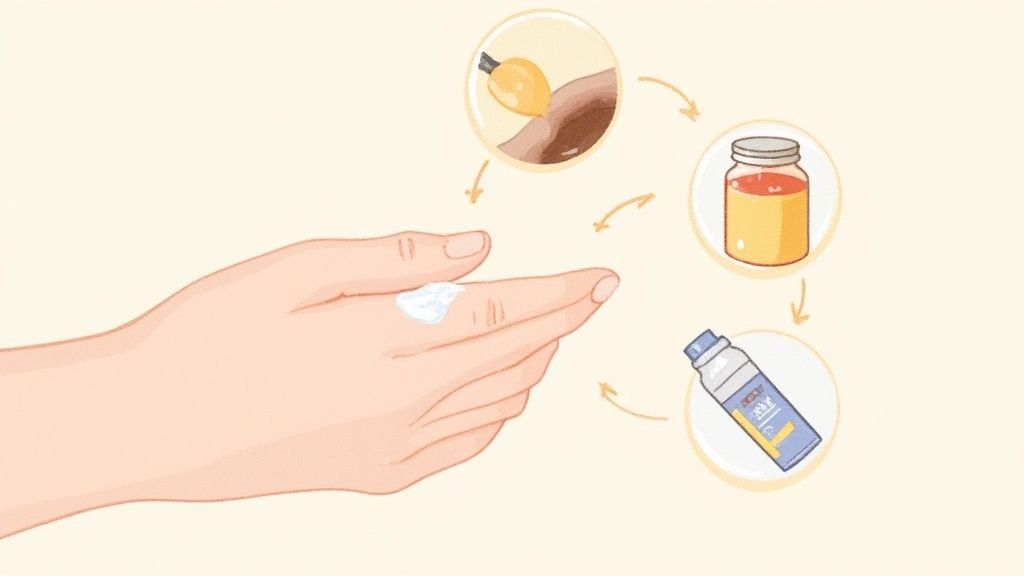
You’ve found a beautiful, grass-fed tallow cream—so how do you work it into your daily life? The secret to getting all those incredible benefits is surprisingly simple: less is more.
Because tallow is so concentrated and packed with nutrients, a tiny bit is all you need. Forget slathering it on like a typical water-based lotion. Just start with a pea-sized amount, warm it between your fingers, and watch it melt into a silky, luxurious oil.
The best way to apply it is by gently pressing or patting it onto clean, slightly damp skin. This simple trick helps trap that precious moisture and gives you a nice, even layer without any tugging. You'll be amazed at how well it absorbs.
Finding the Right Approach for Your Skin
One of the best things about tallow is how adaptable it is. You can easily adjust how you use it to give your skin exactly what it needs, no matter your skin type.
Here are a few pointers for different skin concerns:
- For Dry or Mature Skin: Feel free to use your tallow cream both morning and night. Make it the last step in your routine (right before sunscreen in the A.M.) to lock in all your other products and create a protective shield that keeps your skin feeling supple all day long.
- For Sensitive or Irritated Skin: Focus on gently patting the cream onto any red or angry spots. Tallow is naturally calming, and its anti-inflammatory nature can help soothe a compromised skin barrier without adding more stress.
- For Combination or Oily Skin: You might discover that a nighttime-only application is your sweet spot. Try using a very small amount all over, or just use it as a targeted treatment on drier patches like your cheeks while skipping the oilier T-zone.
Tallow's incredible moisturizing power hasn't gone unnoticed. The global tallow market was valued at around USD 9.02 billion and is expected to hit USD 13.61 billion by 2030. This boom is all about the growing consumer desire for natural, effective cosmetic ingredients. You can see the full trend breakdown in the complete market analysis from Grand View Research.
How to Layer Tallow with Your Other Skincare
Wondering where beef tallow cream fits into your existing lineup of products? It's easy—just think of it as the final, protective seal for your whole routine. The golden rule of skincare layering is to go from the thinnest to the thickest consistency.
Here’s a straightforward guide to get it right every time:
- Cleanser: Always start with a fresh, clean face.
- Toner or Essence: Splash on any light, watery products first.
- Serums: Next, pat in your targeted serums (like vitamin C or hyaluronic acid) and give them a minute to sink in.
- Tallow Cream: Once your serums feel absorbed, it’s time for tallow. Press it in to lock in all that goodness.
- Sunscreen: For your morning routine, your final and most important step is always a broad-spectrum SPF.
Following this order ensures your powerful serum ingredients get a chance to penetrate the skin before you seal everything in with the rich, nourishing tallow. For more tips and tricks, take a look at our guide on how to use tallow for the best results. With the right technique, you'll be on your way to a dewy, healthy glow that never feels greasy.
Common Tallow Myths Debunked
When you start looking into ancient skincare wisdom, it's natural to have a few questions. Let's tackle some of the biggest misconceptions about using beef tallow skin cream and get straight to the facts.
The most common fear? That it will clog your pores. While every person's skin is different, high-quality tallow has a fatty acid profile that's a near-perfect match for our own natural sebum. This similarity is why it's typically non-comedogenic—it absorbs right in without causing congestion and can actually help balance your skin's oil production, not fight against it.
Then there's the smell. Let's be honest, poorly rendered tallow can have a distinct beefy scent. But today's best skincare brands use advanced purification and rendering techniques that leave the final product with a very light, clean scent or virtually no odor at all. Quality sourcing and processing make all the difference.
Is It Greasy or Does It Feel Heavy?
The thought of slathering animal fat on your face probably brings to mind a heavy, greasy mess. Surprisingly, the reality is quite the opposite.
Because tallow’s structure is so familiar to your skin, it sinks in quickly and gets to work on a deeper level. A tiny amount is all you need, and when you apply it correctly, it leaves your skin feeling nourished and velvety—not slick or oily.
It’s this kind of performance that has more and more people turning back to nature-based ingredients.
The global tallow balm market, valued at USD 265.70 million, is projected to expand to USD 403.01 million by 2032. This growth is fueled by consumers seeking chemical-free options and the rising popularity of beef tallow face creams on social media. You can discover more insights about these market trends on FortuneBusinessInsights.com.
At the end of the day, most of these myths are born from a misunderstanding of what modern, high-quality tallow skincare is all about.
Frequently Asked Questions
Diving into the world of ancestral skincare can bring up a few questions. Let's tackle some of the most common ones about beef tallow skin cream so you can feel completely confident about giving it a try.
Is Beef Tallow Skin Cream Good for Acne-Prone Skin?
The idea of putting a rich, fatty cream on acne-prone skin can definitely feel a little backward. But surprisingly, many people find beef tallow to be a game-changer for calming breakouts.
The magic lies in its anti-inflammatory properties, which can help soothe the redness and irritation that often come with acne. Plus, since its fatty acid makeup is so similar to our skin’s own sebum, it can actually help balance oil production instead of making things worse. That said, it is a rich cream, so always start with a patch test to see how your skin reacts.
How Long Until I See Results from Tallow Cream?
This really depends on your unique skin. You'll likely feel an immediate difference in dryness and softness—many people notice their skin feels more supple after just the first few uses.
For the deeper, long-term benefits like a stronger skin barrier and improved texture, you'll want to be consistent. It generally takes about 4-6 weeks of regular use to see more significant changes, as this aligns with your skin's natural regeneration cycle.
The real power of beef tallow cream is how it works with your skin over time. A little patience allows this nutrient-packed ingredient to truly restore balance and build resilience from the inside out.
What Does Beef Tallow Cream Smell Like?
This is probably the biggest question people have, and I get it! Rest assured, a high-quality, properly rendered beef tallow skin cream should have a very neutral, clean scent. It absolutely should not smell like you're cooking a steak.
The purification process is key here. When done right, any strong odors are completely removed, leaving a product with only a faint, slightly rich aroma at most. If you have very sensitive skin or just prefer no scent at all, look for an unscented version that’s free from any added fragrances or essential oils.
Ready to experience the gentle, nourishing power of ancestral skincare? Wild Tallow Skincare crafts minimalist, effective formulas with 100% grass-fed tallow for skin that feels calm, hydrated, and healthy. Discover your new favorite moisturizer at wildtallow.com.