

The single best thing you can do for your baby’s eczema is to find a thick, gentle, and fragrance-free cream that gets to work repairing their skin’s natural moisture barrier. You’ll want to look for formulas loaded with soothing ingredients like ceramides or calming colloidal oatmeal that can quiet inflammation and, most importantly, lock in hydration. Making this one simple choice is the most important first step you can take to manage your little one’s delicate skin.
Understanding Your Baby's Eczema
Finding those first red, itchy patches on your baby’s soft skin is an unsettling moment for any parent. But it's important to know you're not alone. Eczema, clinically known as atopic dermatitis, is incredibly common in infants.
The easiest way to think about it is to picture healthy skin as a solid brick wall. The skin cells are the bricks, and the natural fats and oils (called lipids) are the mortar holding it all together. This "wall" is fantastic at its job: keeping moisture in and irritants out.
But for a baby with eczema, that mortar is weak and has gaps. This compromised barrier can’t hold onto moisture, which leads to chronic dryness. It also lets allergens and irritants sneak in, triggering the inflammation that causes those familiar red, itchy rashes. Your main goal in any eczema care routine is simple: rebuild that wall.
Why Moisturizing Is Your First Line of Defense
Restoring that fragile skin barrier is everything when it comes to managing eczema. A high-quality moisturizer essentially acts as a stand-in for that missing mortar, giving your baby’s skin both immediate relief and long-term support.
By creating a protective seal over the skin, a good moisturizer does two critical jobs at once:
- It locks in hydration. Preventing water from escaping the skin is the key to fighting the constant dryness that comes with eczema.
- It blocks out irritants. A well-moisturized barrier is much better at defending against everyday triggers like dust, pet dander, or even scratchy fabrics.
This is exactly why pediatric dermatologists will tell you that a consistent moisturizing routine is the most powerful tool you have outside of a prescription. It's a huge issue, with baby eczema affecting an estimated 10-20% of infants worldwide.
Choosing the Right Tools to Rebuild the Skin Barrier
Not all moisturizers are created equal—especially when you’re dealing with the super-sensitive skin of an infant. The trick is to find products that add back all the good, soothing stuff while steering clear of common irritants. A well-formulated cream can make all the difference, which is why it's so helpful to understand how to repair a damaged skin barrier with the right ingredients and routine.
To help you get a clearer picture, here’s a quick breakdown of what to avoid and what to look for when reading ingredient labels.
Eczema Triggers vs Soothing Ingredients: A Quick Guide
| Common Eczema Triggers to Minimize | Beneficial Soothing Ingredients to Look For |
|---|---|
| Fragrance (Synthetic & Natural) | Ceramides (lipids that rebuild the skin barrier) |
| Dyes and Colorants | Colloidal Oatmeal (calms itching and inflammation) |
| Harsh Sulfates (like SLS) | Niacinamide (Vitamin B3, reduces redness) |
| Drying Alcohols (e.g., SD alcohol) | Glycerin & Hyaluronic Acid (draw moisture in) |
| Parabens & Phthalates | Shea Butter & Jojoba Oil (rich, gentle emollients) |
| Formaldehyde-Releasing Preservatives | Grass-Fed Tallow (biocompatible and nutrient-dense) |
This list isn't exhaustive, but it's a great starting point for becoming a savvy label-reader and choosing products that will help, not hurt, your baby's skin.
Proper bathing is also a crucial part of the routine, as it preps the skin to absorb moisturizer more effectively. To make sure you're using the best techniques, this guide to picking the best baby bath products has some great tips to support your efforts.
Key Takeaway: Managing baby eczema isn’t about finding a magic cure; it’s about consistently supporting and rebuilding the skin’s natural barrier. A gentle, effective moisturizer is your most powerful tool in this daily effort, providing comfort for your baby and peace of mind for you.
Decoding Moisturizer Ingredient Labels
Standing in the baby aisle, staring at a wall of lotions and creams, can feel completely overwhelming. Every bottle makes a grand promise, but the real story is always in the fine print on the back. Learning to read these ingredient labels is the single most powerful thing you can do to find the right moisturizer for your baby’s eczema.
Think of yourself as a detective for your baby’s skin. You don’t need a chemistry degree, just a clear idea of which ingredients are heroes and which are potential troublemakers.
Skin Heroes: The Ingredients to Look For
When you're trying to rebuild a compromised skin barrier, you need ingredients that get to work repairing and hydrating. These are the good guys you want to see high up on the ingredients list.
- Ceramides: These are lipids (fats) naturally found in our skin's outer layer. Think of them as the "mortar" holding the "bricks" (your skin cells) together. They’re essential for sealing in moisture and keeping irritants out, and eczema-prone skin is often short on them.
- Colloidal Oatmeal: This isn't your breakfast oatmeal! It’s finely ground oats, a remedy that’s been used for centuries to soothe angry skin. It contains special compounds that help calm inflammation and that relentless itch that makes babies so miserable.
- Hyaluronic Acid and Glycerin: Picture these as tiny moisture magnets. They're called humectants, which means they pull water from the air and deeper layers of the skin right up to the surface, delivering a major hydration boost.
- Shea Butter and Jojoba Oil: These are rich emollients that work wonders to soften and smooth the skin. They create a light, breathable barrier that locks in all that moisture without ever feeling heavy or greasy.
To get a better sense of how moisturizers help, this visual guide shows how they fill the "gaps" in the skin barrier to block out irritants.
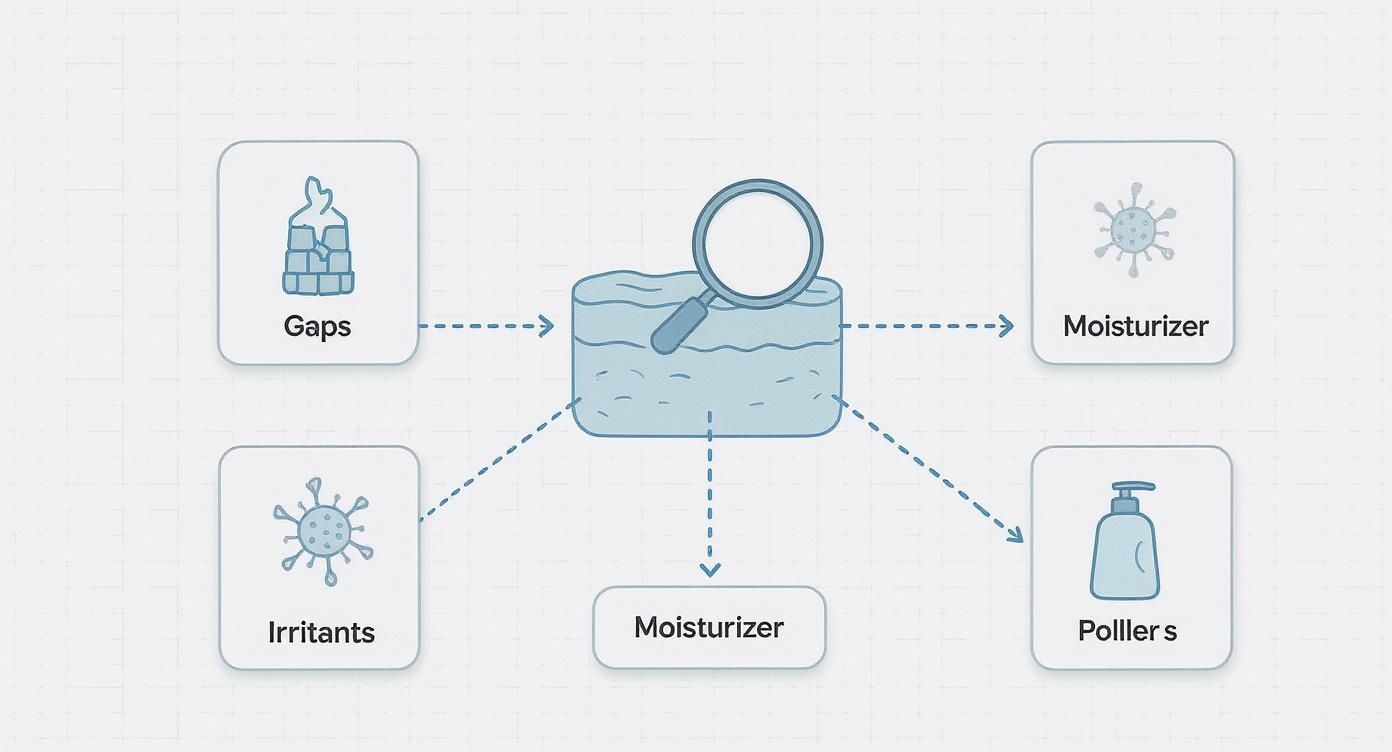
Just like patching a broken wall, a good moisturizer reinforces your baby’s skin, preventing moisture from escaping and keeping allergens from getting in.
Potential Irritants: The Ingredients to Avoid
What you don't put on your baby's skin is just as important as what you do. A baby’s skin is significantly thinner than an adult’s, making it far more vulnerable to irritation from common additives. These are the ingredients to steer clear of.
- Fragrance (Parfum): This is the number one offender. "Fragrance" is a vague catch-all term that can hide hundreds of undisclosed chemicals, many of which are known allergens.
- Dyes: Artificial colors have absolutely no business in skincare. They’re just another common source of skin irritation and allergic reactions. A good baby moisturizer should be plain and simple.
- Parabens and Phthalates: Often used as preservatives or to improve texture, these chemicals have been linked to hormonal disruption. It's best to avoid them entirely in products for little ones.
- Drying Alcohols: Not all alcohols are bad, but simple alcohols like SD alcohol, denatured alcohol, or isopropyl alcohol can strip the skin of its natural oils, making dryness and irritation even worse.
- Sulfates (SLS and SLES): You'll mostly find these in cleansers, where they create that foamy lather. Unfortunately, these harsh detergents can also strip the skin barrier, leaving it exposed and ready for a flare-up.
Learning to spot these ingredients is a great first step. For a deeper dive, learning about identifying safe and chemical-free baby products can bring a lot of peace of mind.
Fragrance-Free vs. Unscented: What’s the Difference?
This is a really common point of confusion for parents, but the difference is critical. These terms are not interchangeable, and one is much safer for sensitive skin.
Fragrance-Free means the product contains absolutely no added fragrances, whether they're synthetic or natural. This is the gold standard for eczema-prone skin.
Unscented, on the other hand, usually means a chemical has been added to the formula to mask the natural smells of the other ingredients. That masking agent is a fragrance itself and can be just as irritating.
Always, always choose fragrance-free. It’s a simple rule that can save your baby a lot of discomfort. For more insights into the building blocks of a great formula, check out this guide to the best ingredients for dry skin. Becoming a confident label reader transforms you from a worried parent into an empowered advocate for your child's skin.
Exploring Different Types of Moisturizers
Walking down the baby care aisle can feel overwhelming. It’s like standing at a crossroads. One path is paved with popular, dermatologist-recommended creams you see everywhere. The other is a quieter trail, leading to simple, traditional remedies that parents have trusted for generations.
Both paths can lead to calm, happy skin for your little one. The secret is knowing what makes each option tick.
The most common choices are usually the ones recommended by pediatricians and found at your local pharmacy. These are the familiar brands, built on a foundation of scientifically backed ingredients designed for consistency and reliability. They focus on one thing: restoring the skin barrier with proven, targeted formulas.
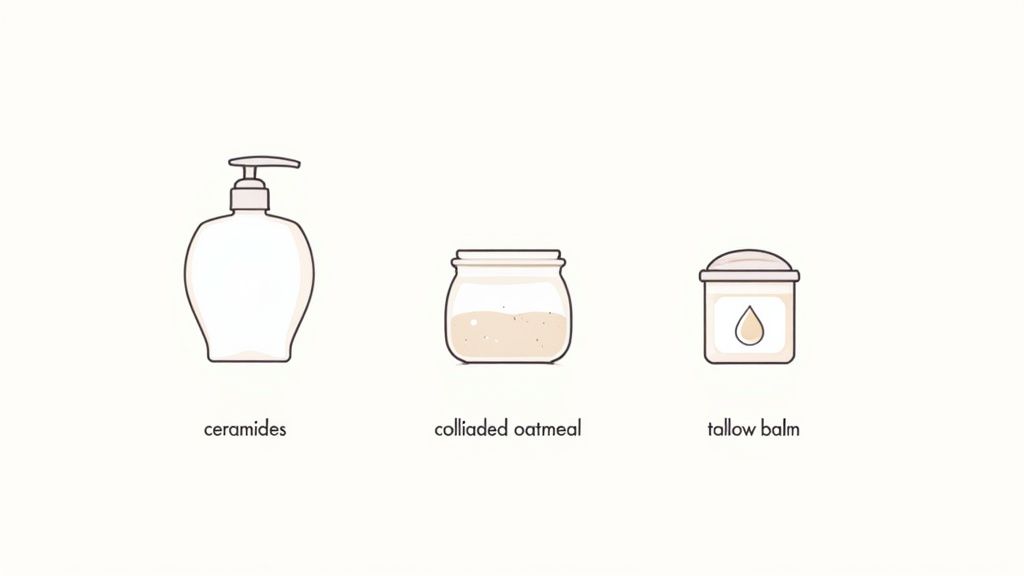
Mainstream Moisturizers and Key Ingredients
Commercial baby eczema creams have earned their trusted status by relying on a few powerhouse ingredients. When you spot these on a label, you know the product is made to get to the root of eczema’s discomfort.
- Ceramides: Think of these as the "mortar" holding your baby's skin barrier together. As we've covered, eczema-prone skin is low on these natural fats. Creams that add them back in help patch up the gaps, locking moisture in and keeping irritants out.
- Colloidal Oatmeal: This isn’t your breakfast oatmeal. It’s a finely ground powder that’s a superstar for calming angry, inflamed skin. It contains special compounds that are known to significantly reduce redness and itching, bringing almost instant relief.
Many of these products also carry the National Eczema Association Seal of Acceptance™, giving parents an extra dose of confidence that the formula is free from common irritants.
The Rise of Natural and Minimalist Options
While mainstream creams are a solid choice, a growing number of parents are looking for simpler, back-to-basics solutions. This has sparked a renewed interest in natural skincare, where the philosophy is all about "less is more."
These alternatives appeal to parents wanting to avoid synthetic preservatives, stabilizers, or other additives—even if they're considered safe. The focus shifts to whole, nutrient-rich ingredients that work with the skin’s own biology. For many, finding the best moisturizer for baby eczema really means finding the purest one.
This approach is a lifesaver for babies with extreme sensitivities who might react to even the gentlest lab-made ingredients. With only a handful of ingredients, it’s much easier to pinpoint what works and what doesn't. If you're exploring cleaner formulas, our guide to the best fragrance-free moisturizers is a great place to start.
Understanding Tallow as a Gentle Alternative
One of the most powerful traditional remedies making a comeback is tallow balm. Tallow is simply gently rendered animal fat (usually from beef) that our ancestors used for centuries to protect and heal their skin.
Its modern resurgence comes down to one thing: it’s incredibly biocompatible.
The fatty acid profile of grass-fed tallow is remarkably similar to the lipids found in healthy, supple human skin. This means the skin recognizes it, absorbs it easily, and can use its nutrients to help repair the moisture barrier.
This biological compatibility makes tallow an exceptionally gentle yet effective choice, even for the most delicate newborn skin. It’s naturally rich in skin-nourishing vitamins like A, D, E, and K, plus anti-inflammatory compounds.
Because a high-quality tallow balm can be made with just one or two ingredients, it’s the ultimate in minimalist skincare. For parents at their wit's end, a simple tallow cream can be a true game-changer, offering deep hydration without any of the common triggers found in more complex formulas.
Mastering the Art of Application
You've done the hard part and picked out a great moisturizer for your baby's eczema. That's a huge win! But how you put it on is just as important as what's in the jar. Getting the application right can make all the difference, turning a simple daily task into a powerful, soothing ritual that truly helps their skin.
Think of your baby’s skin like a thirsty little sponge. A bone-dry sponge can't soak up much, but a slightly damp one drinks water right up. Your baby's skin is the same way. Applying moisturizer right after a bath, when the skin is still damp, helps it absorb all that goodness and lock it in for lasting relief.
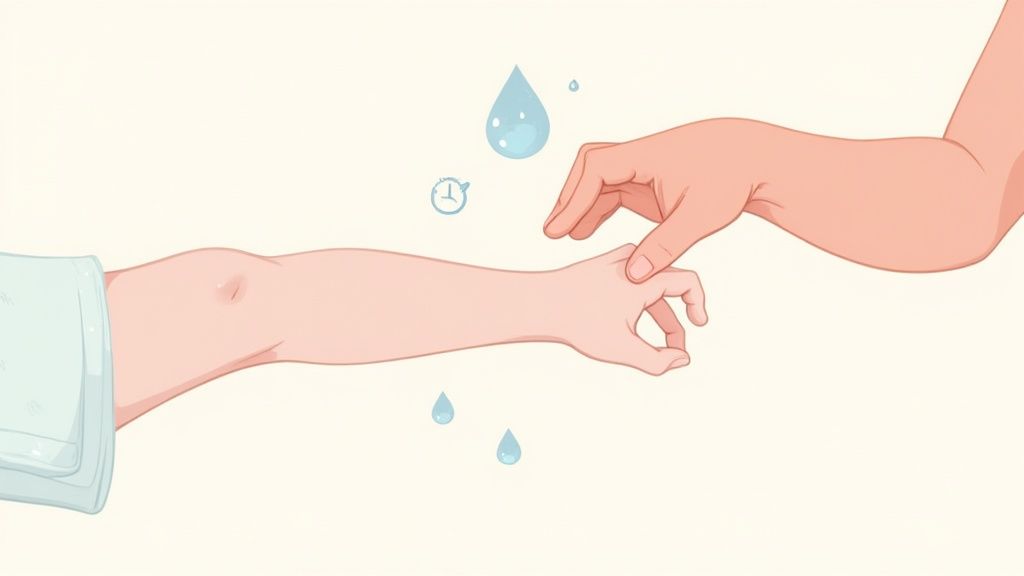
This is the whole idea behind the "Soak and Seal" method. It’s what dermatologists recommend time and time again because, frankly, it works. It’s a simple but incredibly effective way to trap moisture in the skin right when it needs it most.
The Power of the Soak and Seal Method
Soak and Seal is all about maximizing hydration to build a stronger skin barrier against all those triggers and irritants. The concept couldn't be simpler: you "soak" the skin in a quick, lukewarm bath, and then you immediately "seal" it with a thick layer of moisturizer before that water has a chance to disappear.
The trick is all in the timing.
You have a very small window—about three minutes after patting them dry—to get that moisturizer on. Any longer, and the moisture starts evaporating from the skin, which can actually leave it even drier than before the bath.
This is why moving quickly is the secret sauce. It transforms bathtime from something that could potentially dry out their skin into a super-hydrating treatment that lays the foundation for calmer, happier skin.
Your Step-by-Step Application Guide
Knowing the steps is one thing, but making it a smooth, easy part of your daily routine is where the magic happens. Here's how to make the Soak and Seal method a habit.
- Prep a Lukewarm Bath: Hot water is the enemy of eczema-prone skin because it strips away natural oils. Stick to lukewarm water and keep the bath short—5 to 10 minutes is plenty. Use a gentle, fragrance-free wash only on the bits that actually need it.
- Pat, Don't Rub: When bathtime is over, use a soft towel to gently pat your baby's skin. The goal isn't to get them completely dry; you want to leave the skin feeling slightly damp.
- Slather on the Moisturizer: Now's your chance! Within that three-minute window, apply a liberal amount of your chosen moisturizer. Don't be stingy here; a nice, thick coat is what creates that protective seal. Use gentle, downward strokes to cover your baby's entire body.
- Let It Sink In: Give the cream a minute or two to absorb before dressing your little one in soft, breathable cotton pajamas. This keeps the fabric from immediately wiping off all your hard work.
- Moisturize Again (and Again): One application a day usually isn't enough for eczema-prone skin. Plan to reapply at least once more during the day—a diaper change is a great time to do it. Pay extra attention to common flare-up spots like cheeks, the crooks of their elbows, and behind their knees.
This consistent routine does more than just moisturize. It actively reinforces the skin’s barrier, day in and day out. By making this simple practice a non-negotiable part of your day, you’re giving your baby consistent relief and yourself the peace of mind that you're doing everything you can to keep their skin comfortable and healthy.
If you're on a seemingly endless hunt for the perfect moisturizer for your baby’s eczema, you're in very good company. That feeling of being overwhelmed by options, yet determined to find something that actually works, is a shared experience for parents everywhere. We've moved far beyond the days of simply grabbing whatever lotion is on the shelf. Today, it’s all about finding safe, effective products with ingredients we can trust.
This isn't just a hunch—it's a massive shift in how we think about infant skincare. The demand for specialized baby eczema creams has exploded for a couple of key reasons. First, parents are more educated than ever about the skin barrier and the damage that harsh chemicals can do. Second, unfortunately, skin conditions like eczema are becoming more common in children worldwide, turning gentle skincare from a preference into a necessity.
A Market Responding to Parents' Needs
Your search for a better solution is echoed by millions of other parents who just want to bring their little ones some comfort. This powerful, collective voice has forced the skincare industry to step up its game, resulting in safer, more thoughtfully designed products for the most delicate skin.
The numbers back this up. The global market for baby eczema cream was valued at around USD 1.7 billion and is expected to more than double, hitting nearly USD 3.52 billion by 2033. That’s a growth rate of about 7.6% every year, driven entirely by parents like you who are demanding better. You can dive deeper into the expanding market at Wise Guy Reports to see the full picture.
Realizing you're part of this huge community can make the search feel less isolating. It’s not a private struggle; it’s a shared mission to find safer, more effective care for our kids.
This shared mission has put the focus right where it belongs: on gentle formulas that support the skin’s natural function. The best products coming out of this trend are the ones that prioritize repairing the skin barrier with a handful of high-quality ingredients. They skip the common irritants like fragrances and dyes and instead pack in nourishing components that soothe inflammation and lock in moisture.
Your diligence in reading every single label is what’s pushing this positive change forward. It's what ensures the market keeps evolving to offer real relief. This makes you more than just a consumer—you're an advocate for your child's health, and your efforts are part of a much bigger movement toward healthier skin for all babies.
When to See a Doctor for Your Baby's Eczema
Finding the right moisturizing routine is often your best first line of defense against mild baby eczema, but it's crucial to know when it’s time to call in the professionals. A consistent skincare plan can work wonders, but some flare-ups need a pediatrician's or dermatologist's expertise to get them under control.
Think of it this way: daily moisturizing is like the essential upkeep for your home. But sometimes, a problem comes up that’s too big for a DIY fix, and you need to call a contractor. If you’ve been diligently applying the best moisturizer for baby eczema twice a day for a week with no improvement, that’s your signal to book an appointment.
Your baby’s comfort is another huge clue. Eczema is incredibly itchy, but if that itch is so intense that it’s wrecking their sleep or making them constantly fussy, it's time for medical advice. A doctor can prescribe stronger, targeted treatments to finally break that miserable itch-scratch cycle.
Recognizing Signs of a Skin Infection
One of the most critical reasons to see a doctor is any sign of a skin infection. With eczema, the skin's natural barrier is already damaged, making it an easy target for bacteria to move in and cause serious problems.
Call your pediatrician immediately if you notice any of these symptoms:
- Yellow or honey-colored crusts forming over the eczema patches.
- Weeping or oozing fluid (clear or yellowish) from the rash.
- Increased redness, warmth, or swelling around the affected skin.
- Pus-filled bumps or blisters appearing within the rash.
- A fever that accompanies a particularly bad eczema flare.
A skin infection requires prompt medical attention and usually a prescription antibiotic to clear up. Don't wait and see—if you suspect an infection, call your doctor. Early treatment is key.
Ultimately, you know your baby best. If their eczema seems to be getting worse despite everything you're doing, or if you just feel overwhelmed and unsure what to do next, trust your gut. A healthcare professional can give you a clear diagnosis, rule out other issues, and create a treatment plan that finally brings your little one some relief.
Your Top Questions About Baby Eczema Creams, Answered
Finding your way through the world of baby eczema brings up a lot of questions. Even after you think you've found the perfect moisturizer, new concerns can pop up. Let's tackle some of the most common questions parents ask.
It's so tempting to just grab your own favorite lotion, but it's much safer to stick with products made just for babies. Lotions for adults are often packed with fragrances, anti-aging compounds, and preservatives that are way too harsh for an infant's incredibly thin and delicate skin.
Baby-specific formulas are all about being gentle. They leave out the common irritants that could easily spark a flare-up on sensitive skin.
How Can I Tell If a New Moisturizer Is Causing a Reaction?
Before you apply a new cream all over, always do a patch test. It’s a simple step that can save your little one from a whole lot of discomfort.
- Apply a Small Amount: Just dab a tiny bit of the new moisturizer on a hidden spot, like behind the ear or on the inside of their arm.
- Wait and Watch: Now, leave it completely alone for 24 to 48 hours.
- Check for a Reaction: Look closely for any new redness, bumps, or signs of itching. If the skin looks calm and happy, the product is probably safe to use everywhere else.
This little test helps you pinpoint what might be causing a problem, giving you real confidence in the products you choose.
Key Insight: A high price doesn't guarantee a better product. The best moisturizer is the one with the right ingredients for your baby's skin—not the one with the fanciest label or steepest price tag. Always read the ingredient list first.
So, are expensive eczema creams actually better? Not always. While some high-end brands do invest in clinical research, many affordable drugstore options are fantastic.
What matters most is the formula itself. Look for a short, simple ingredient list full of skin-soothers like ceramides, colloidal oatmeal, or gentle, skin-compatible fats like tallow. A straightforward, effective cream often works better than a complicated, pricey one, especially for the most sensitive skin.
For a truly minimalist approach focused on gentle, effective care, check out the simple, two-ingredient formula of Wild Tallow Skincare. Our Whipped Tallow Cream delivers deep, lasting moisture without any of the fillers or potential irritants found in so many other products. See what a difference simple, powerful ingredients can make at https://wildtallow.com.