

When it comes to soothing your newborn's dry skin, the best moisturizers are often the simplest ones. Look for a lipid-rich formula that closely mimics the skin's own natural barrier. This is exactly why pure, grass-fed tallow is such a standout choice—its fatty acid profile is incredibly similar to the oils in healthy human skin, making it both gentle and profoundly effective.
Finding the Right Relief for Delicate Skin
There's nothing quite like the joy of welcoming a new baby, but it's natural to feel a pang of worry when you see their perfect skin become dry, flaky, or red. A newborn's skin is a world away from our own; it's significantly thinner, far more sensitive, and loses moisture at a much faster rate. Choosing the right skincare isn't just about making them comfortable—it's about actively protecting their brand-new, developing skin barrier from potential irritants.
Take a stroll down the baby aisle, and you'll find countless lotions packed with long lists of synthetic ingredients, fragrances, and preservatives. Unfortunately, these complex formulas can sometimes do more harm than good, overwhelming a baby’s sensitive system and potentially triggering irritation or even allergic reactions. This is why, for newborns, the "less is more" philosophy is always the safest bet.
Natural Simplicity vs. Commercial Complexity
The real key is finding products with minimal, recognizable ingredients that nourish the skin without disrupting its delicate natural balance. Simple, single-ingredient moisturizers or straightforward blends can provide all the hydration and barrier support your baby needs, safely and effectively. For more context on creating a gentle routine, this guide to safe, skin-friendly baby products for newborns is a great resource.
To make things clearer, let's break down the core differences between a minimalist, natural approach and what you typically find in commercial lotions.
Natural vs. Commercial Baby Moisturizers: A Quick Comparison
This table offers a snapshot of what sets truly natural moisturizers apart from the more common, mass-produced options on the market.
| Feature | Natural Moisturizers (e.g., Tallow) | Common Commercial Lotions |
|---|---|---|
| Ingredient Source | Sourced from nature (animal or plant-based) | Often synthetic, lab-created compounds |
| Ingredient List | Minimal, simple, and easy to understand | Long and complex, with chemical names |
| Key Components | Bioavailable fatty acids, vitamins (A, D, E, K) | Water, mineral oil, silicones, emulsifiers |
| Fragrance | None added, or from natural essential oils (use with caution) | Synthetic fragrances, which are common allergens |
| Preservatives | Natural (like Vitamin E) or none needed | Parabens, phenoxyethanol, and other synthetic preservatives |
| Skin Compatibility | High; mimics the skin’s natural lipids (sebum) | Can be occlusive (block pores) or irritating |
As you can see, the choice comes down to prioritizing biocompatibility and purity over complex, synthetic formulations.
This visual summary drives the point home, comparing the foundational differences between simple moisturizers and typical commercial lotions.
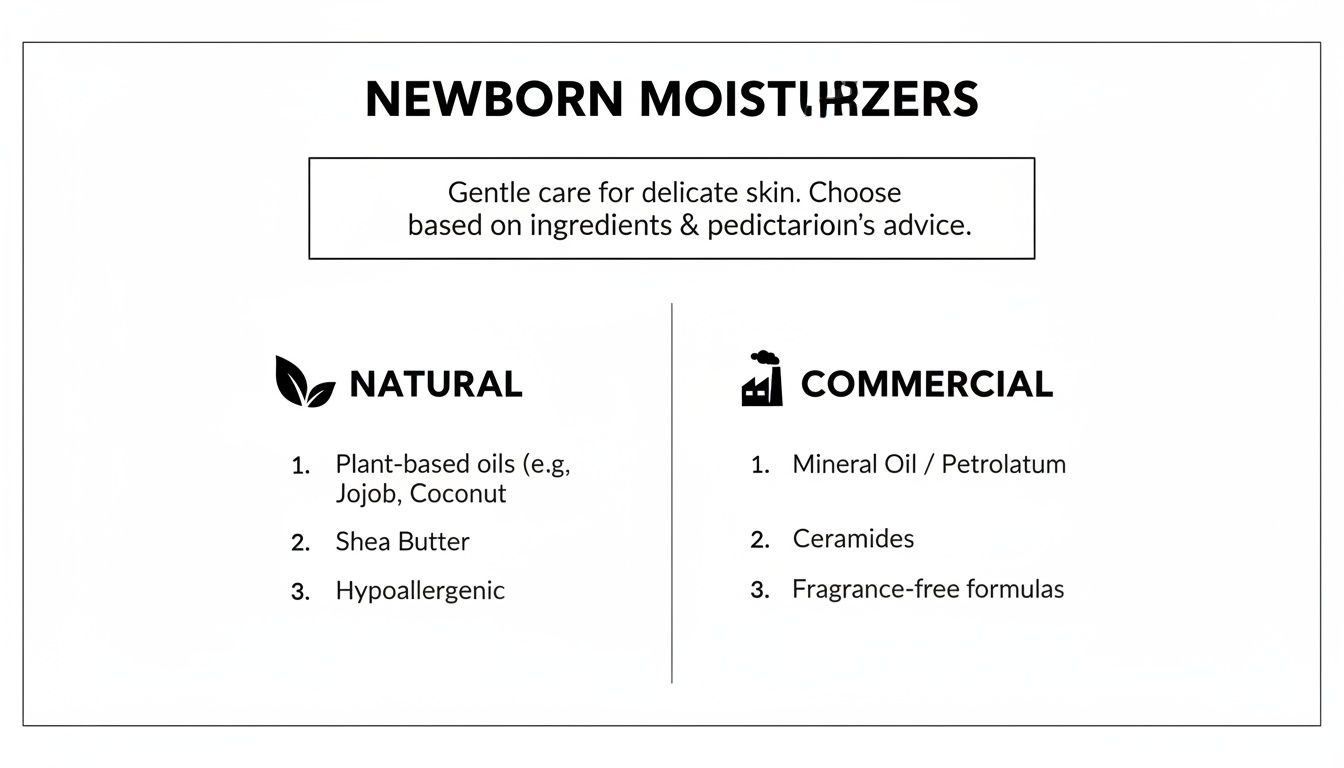
Ultimately, natural options focus on ingredients that work with your baby's skin, not just on it. Commercial products, on the other hand, often rely on synthetic compounds that might feel smooth initially but can cause sensitivity over time. Choosing a pure, simple formula is one of the best first steps you can take to build a safe, loving, and effective skincare routine for your little one.
Understanding Your Newborn's Uniquely Delicate Skin
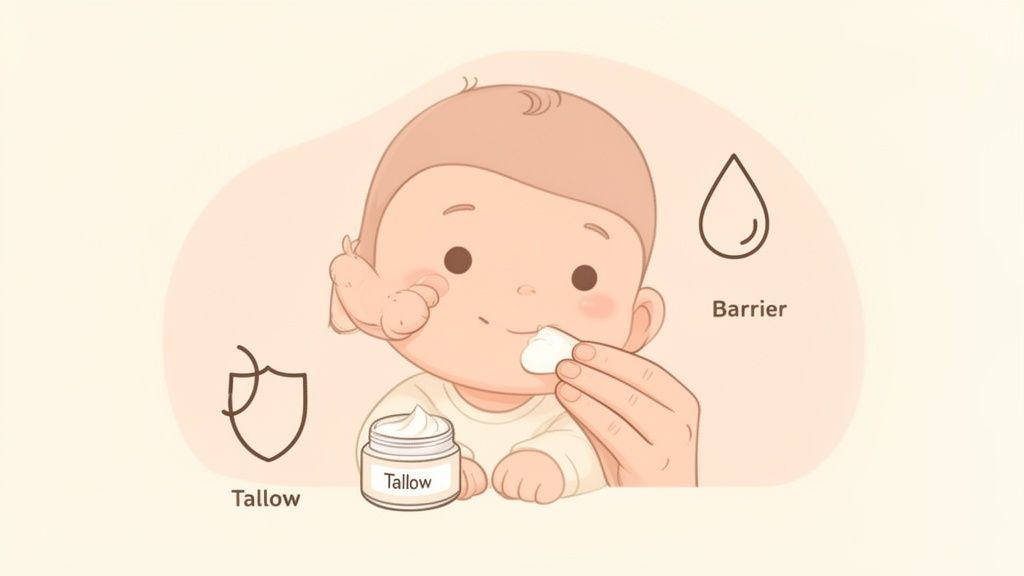
Before you can pick the right moisturizer, it helps to understand just how different your newborn’s skin is from your own. It's not simply a miniature version of adult skin; it’s a brand-new organ, still figuring out how to do its job in the outside world.
Think of a grown-up’s skin barrier as a solid brick wall. The skin cells are the bricks, and they’re held together by a strong mortar made of natural fats and oils. This structure is fantastic at locking moisture in and keeping irritants out. A newborn's skin, on the other hand, is like a freshly laid wall where the mortar is still wet and hasn't fully cured. The bricks are in place, but the gaps are wider, making the whole thing much more porous.
Because it's still developing, a newborn's skin is thinner and more permeable. This simple fact is the root of the dryness so many new parents see.
The Challenge of Transepidermal Water Loss
Since that protective "mortar" is still a work in progress, moisture escapes with ease. Scientists call this transepidermal water loss (TEWL), but you can just think of it as hydration evaporating right off the skin.
This is never more true than in the first few days after birth. Your baby has spent nine months in the perfectly hydrated, protective environment of the womb. Suddenly, they're exposed to dry air, and their skin has to adapt—fast. That abrupt change causes a huge spike in moisture loss. While a full-term baby's skin eventually balances out, this initial shock is what makes it so vulnerable to becoming dry and flaky. You can find more details about these early skin changes on PMC.
Here’s the bottom line for parents: This rapid water loss is the main reason why up to 60% of babies get dry skin, even when you can't see visible flakes.
Why pH Balance Is So Important
There's another piece to the puzzle: the skin's pH level. Healthy adult skin is naturally a little acidic, which creates a protective "acid mantle" that helps fight off bad bacteria. A newborn's skin starts out with a near-neutral pH, making it much less effective at fending off germs and irritants.
When you combine this higher pH with that porous, leaky barrier, you get the perfect storm for sensitive, dry skin. This is why choosing a moisturizer is about so much more than just slapping on some lotion. It’s about giving that delicate barrier the support it needs to mature properly.
A gentle, lipid-rich formula acts like a temporary patch for that "wet mortar," reinforcing the weak spots and giving your baby's skin the protection it needs to build its own strength.
Common Culprits Behind Your Newborn's Dry Skin
While a newborn’s skin is naturally a bit dry, a few everyday factors can really amplify the problem. Think of their brand-new skin barrier like a tiny boat with a few small leaks—certain things in their environment can easily turn those little drips into bigger issues, letting precious moisture slip away.
Often, the very systems we use to make our homes comfortable are the biggest offenders. Both indoor heating in the winter and air conditioning in the summer work by pulling humidity out of the air. This creates a dry environment that saps moisture directly from your baby's skin.
It’s a bit like leaving a damp sponge on the kitchen counter; eventually, the dry air will pull all the water out of it. An easy fix is to run a cool-mist humidifier in your baby's room to put that much-needed moisture back into the air.
Everyday Routines and Hidden Irritants
Beyond the air your baby breathes, their daily routine plays a massive role. It’s a common myth that more baths lead to healthier skin. In reality, bathing too often or for too long, especially in hot water, strips away the natural oils that keep their skin soft and hydrated.
On top of that, many common household products are loaded with hidden irritants:
- Hard Water: Tap water is often high in minerals like calcium and magnesium. These can leave behind a fine residue that messes with the skin’s protective barrier.
- Laundry Detergents: Many popular detergents are packed with harsh soaps and artificial fragrances. These chemicals don't always rinse out completely, leaving irritants on clothes and blankets that are in constant contact with your baby’s skin.
- Fabrics: Synthetic materials like polyester aren't very breathable. They can trap heat and sweat against the skin, leading to irritation and rashes. Sticking to soft, natural fibers like cotton is always a safer bet.
Figuring out these triggers is more than just a matter of comfort. Persistent dryness can open the door to bigger problems like atopic dermatitis (AD), one of the most common skin conditions in children. The statistics are eye-opening: while only 10% of mothers might report that their baby has dry skin, clinical exams reveal that 60% of infants actually have it. That's a huge gap. You can discover more insights about challenges with baby skin and see why getting ahead of it is so important.
Simple changes can make a world of difference. Try cutting back baths to just a few times a week with lukewarm water and switching to a gentle, fragrance-free laundry detergent. These small steps can dramatically reduce your baby's exposure to common skin stressors.
Once you know what to look for, you can shift from just treating dry skin to actively preventing it. By making a few tweaks to your home and daily habits, you create a protective, nurturing space where your baby's skin can truly thrive.
How to Decode Moisturizer Ingredient Labels
Walking down the baby aisle and trying to decipher an ingredient label can feel like reading a foreign language. The lists are long, the names are scientific, and the marketing claims just add to the confusion. It’s enough to make any new parent feel overwhelmed.
But here’s the good news: you don’t need a chemistry degree to figure this out. The secret is knowing what to look for and, just as importantly, what to run from. Think of it this way—a short, simple, and recognizable ingredient list is almost always a green flag for a gentle and trustworthy product.
The Good Guys: What to Look For
These are the ingredients you want to see. They’re simple, deeply nourishing, and play nicely with your baby's brand-new skin barrier. They offer up the healthy fats and nutrients needed to lock in moisture and calm things down, all without rocking the boat.
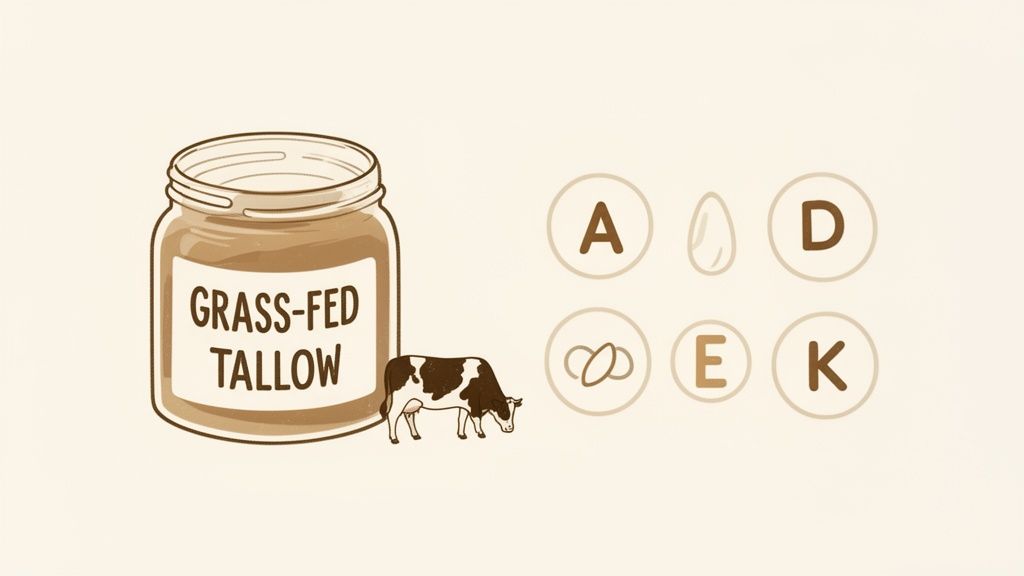
- Grass-Fed Tallow: This one is a true superstar. Its fatty acid profile is remarkably similar to our own skin's natural oils (sebum), which means the skin recognizes it and absorbs it beautifully. Plus, it’s packed with skin-loving vitamins A, D, E, and K.
- Shea Butter: A classic for a reason. This plant-based emollient is famous for its incredible moisturizing power and natural anti-inflammatory properties.
- Olive Oil: Full of antioxidants and healthy fats, it helps hydrate the skin and fortify that delicate barrier. Just make sure it’s a high-quality, cold-pressed version.
- Beeswax: This ingredient is a natural protector. It forms a light, breathable barrier on the skin that seals in all that good moisture without clogging pores.
When you're comparing moisturizers, aim for a formula with just a handful of these effective, food-grade ingredients. The simpler the better—it dramatically lowers the risk of a reaction on your newborn’s sensitive skin.
The Red Flags: Ingredients to Avoid
Now, let's talk about the ingredients that should make you put the bottle right back on the shelf. These are everywhere in mainstream lotions, but they can be incredibly harsh on a newborn’s still-developing skin. Many of them strip natural oils, cause irritation, or introduce chemicals your baby just doesn’t need.
You can learn more about the science behind great skincare in our guide to the best ingredients for dry skin.
For a quick reference, here’s a simple table to help you spot the good from the bad on any label.
Safe vs Unsafe Ingredients for Newborn Skin
This table breaks down some of the most common ingredients you'll see in baby moisturizers, helping you quickly identify what to look for and what to leave on the shelf.
| Ingredient Category | Safe Choices (What to Look For) | Ingredients to Avoid |
|---|---|---|
| Fats & Oils | Grass-fed tallow, shea butter, olive oil, jojoba oil, coconut oil, avocado oil | Mineral oil, petroleum, petrolatum, paraffin |
| Preservatives | Vitamin E (tocopherol), rosemary extract | Parabens (methylparaben, propylparaben, etc.), formaldehyde-releasing preservatives (DMDM hydantoin), phenoxyethanol |
| Fragrances | None. Always choose "fragrance-free." Essential oils should also be avoided for newborns under 3 months. | "Fragrance," "parfum," "perfume," phthalates |
| Other Additives | Beeswax, calendula extract, chamomile | Sulfates (SLS/SLES), propylene glycol, dyes (e.g., "CI 75120"), PEGs (polyethylene glycol), alcohol (ethanol, isopropyl) |
Learning to spot just a few of these key terms empowers you to tune out the marketing noise. You can confidently filter out the junk and choose the simple, safe, and effective care your baby’s skin truly deserves.
Why Grass-Fed Tallow Is a Perfect Match for Newborn Skin
When you're looking for the best moisturizer for your newborn's dry skin, you might be surprised to find that one of the best options isn't a modern lab creation, but an ancient, time-tested remedy: grass-fed tallow. This isn't just another natural oil. Tallow has a unique biological blueprint that makes it incredibly gentle and effective for the most delicate skin on the planet.
The secret is in how closely it mirrors our own biology. Think of your newborn’s skin barrier like a lock. The right moisturizer is the key. A lot of lotions out there are like poorly cut keys—they might jam in the lock, but they don't turn smoothly. Tallow, on the other hand, is like the master key, perfectly designed to fit.
Its fatty acid profile is almost identical to the natural lipids (the sebum) found in healthy human skin. Because of this, a newborn's skin barrier doesn't treat it like a foreign invader. Instead, it recognizes tallow’s components and can easily absorb and use them to patch up and strengthen its own structure.
A Perfect Partnership with the Skin Barrier
This incredible compatibility is why tallow feels so different from other moisturizers. Instead of leaving a heavy, greasy film that just sits on top of the skin, it sinks right in, becoming one with the skin. It works with the skin, not just on it.
This helps seal in that precious moisture and shield the skin from irritants, all without clogging pores or getting in the way of the skin's natural processes. It’s a true partnership that supports your baby’s skin barrier while it’s still learning how to protect itself.
By providing building blocks the skin already understands, tallow helps your baby's developing barrier become stronger and more resilient. It’s less like a temporary fix and more like giving the skin the tools it needs to do its job better.
A Natural Source of Essential Skin Vitamins
Beyond its amazing structure, grass-fed tallow is also loaded with fat-soluble vitamins that are absolutely essential for healthy skin. Many commercial lotions add synthetic versions of these vitamins, but tallow delivers them in their most natural and bioavailable form—exactly how nature intended.
This includes a powerhouse blend of:
- Vitamin A: Crucial for healthy skin cell production.
- Vitamin D: Plays a big role in skin cell growth and repair.
- Vitamin K: Important for skin healing and strength.
- Vitamin E: A potent antioxidant that protects skin from daily stressors.
These nutrients work as a team to nourish the skin from the inside out, helping it stay calm and healthy. To get a better sense of how this all works, our article on grass-fed tallow balm takes a much deeper dive into how these components work together.
The Power of Pure Simplicity
For parents, maybe the most comforting thing about grass-fed tallow is what it doesn’t have. We live in a world of complicated formulas packed with preservatives, fragrances, and stabilizers, but tallow is simply pure. When you choose a product like Wild Tallow Whipped Cream, you’re getting a handful of recognizable, food-grade ingredients. That's it.
There are no hidden chemicals, no surprise irritants, and no fillers. This minimalist approach means the risk of a reaction is incredibly low, which gives you priceless peace of mind. You know you're giving your newborn’s skin exactly what it needs to thrive—and absolutely nothing it doesn’t.
How to Apply Moisturizer for the Best Results
Choosing the right moisturizer is a great first step, but how you apply it makes all the difference. Your goal is to lock in as much moisture as possible, creating a soft, protective layer on your baby's delicate skin when it needs it most.
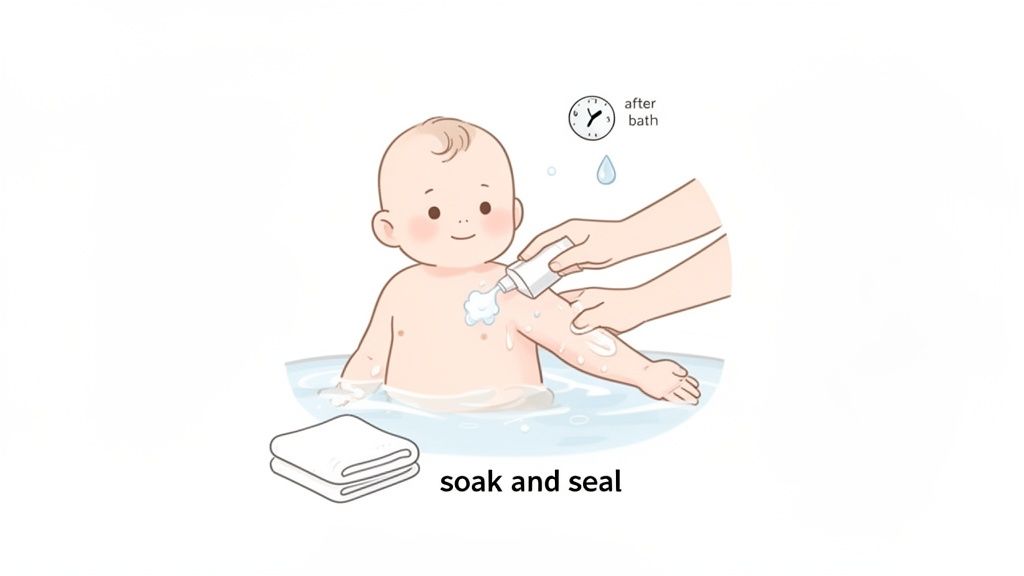
The best time to do this is right after a bath. This simple but effective trick is often called the “soak and seal” method. By applying moisturizer while their skin is still a little damp, you trap that water on the surface, which leads to deeper, longer-lasting hydration.
Your Simple Moisturizing Routine
Making moisturizing a daily habit is the secret to keeping dryness at bay. It's also a wonderful, quiet moment to bond with your little one.
Here’s a simple routine to follow:
- After the Bath: Once bathtime is over, gently pat your baby’s skin with a soft towel. The key is to leave it slightly damp, not completely dry. Never rub their skin, as that can easily cause irritation.
- Warm It Up: Scoop a small amount of moisturizer into your hands and warm it up by rubbing your palms together. This makes it feel so much nicer on your baby's skin and helps it spread more easily.
- Gentle Massage: Use long, gentle strokes to massage the moisturizer all over your baby’s body, giving a little extra attention to any flaky or dry patches you see.
A little goes a long way, especially with rich formulas like tallow. You only need enough to create a thin, breathable layer—not a thick, greasy coating. This ensures the skin can still function naturally while staying protected.
That gentle massage does more than just help the moisturizer absorb; it’s a calming ritual for your baby that can even lead to better sleep. If you're using natural formulas, it's helpful to understand how to use tallow for the best results.
Try to moisturize at least once a day, and always after a bath, to keep your newborn’s skin soft, soothed, and perfectly healthy.
Answering Your Top Newborn Skincare Questions
Even with the best routine, questions about your baby's delicate skin are bound to pop up. Let's tackle some of the most common ones that parents ask.
Is It Normal for My Newborn's Skin to Peel?
Absolutely. Think about it: your baby has spent nine months in a watery world. Now, their skin is adjusting to the much drier air we all live in. It’s completely normal to see some peeling, especially on their little hands and feet, during the first week or two.
This is just their skin's natural way of shedding its top layer and adapting to its new environment. Most of the time, it clears up on its own without any help.
That said, if you notice the peeling comes with a lot of redness, cracking, or if your baby seems uncomfortable, it's a sign that their skin is a bit too dry and could use some help from a gentle moisturizer.
When Can I Start Moisturizing My Newborn?
You can start applying a moisturizer right from the first few days after birth, particularly if you spot any dry, flaky patches. A simple, fragrance-free moisturizer is perfectly safe and goes a long way in supporting their brand-new skin barrier.
The best trick is to apply it right after a short, lukewarm bath. This helps "soak and seal" by trapping that moisture into their skin before it can evaporate.
As you build your support system, it can be helpful to know who does what. Learning the differences among postpartum doulas, night nurses, and newborn care specialists can help you find the right professional for your family’s needs.
The key is consistency. Applying a thin layer of a high-quality, simple moisturizer daily is more effective than applying a thick layer occasionally. This creates a routine that keeps their skin consistently hydrated and protected.
Can I Use Tallow Cream for Cradle Cap?
Yes, many parents have great success using grass-fed tallow for cradle cap. This common condition is basically an overproduction of natural oils (sebum) on the scalp, which causes dead skin cells to clump together into flaky, crusty patches instead of shedding normally.
Tallow is rich in fatty acids that are fantastic at gently softening and loosening those scales without any harshness.
Here’s a simple routine that often works wonders:
- Gently massage a small amount of tallow into your baby's scalp.
- Let it sit for about 20 minutes to really soak in and soften the flakes.
- Use a soft baby brush to gently lift the loosened scales away.
- Finish with a gentle shampoo to wash it all out.
For a moisturizer that’s as pure and simple as your newborn’s needs, explore the gentle, effective formulas from Wild Tallow Skincare. Discover the perfect solution for your family at https://wildtallow.com.