

You've probably seen the term "chemical-free skincare" everywhere. Let's be honest, it's a bit of a misnomer. Technically, everything is a chemical—even water. But in the world of skincare, this phrase has become shorthand for something much more meaningful: choosing products that are free from harsh, synthetic, or potentially irritating ingredients like parabens, sulfates, and artificial fragrances.
What Does Chemical-Free Skincare Really Mean?

Think of the "chemical-free" movement like choosing a whole-food diet for your skin. Sure, an apple and a candy bar are both made of chemical compounds, but we all know the apple provides direct, unprocessed nourishment. It's the same idea with your skincare. Chemical-free skincare products prioritize ingredients that are as close to their natural state as possible, delivering real benefits without a bunch of unnecessary additives.
This isn't about being anti-science; it's about being more intentional. We're all becoming more conscious of what we put on our bodies, and that awareness is causing a major shift in the beauty industry. This demand for cleaner, more transparent formulas is fueling massive growth. In fact, the natural skincare market is projected to hit USD 16.0 billion by 2035, which tells you everything you need to know about where consumer preferences are headed. People are tired of mystery ingredients and potential irritants. You can dive deeper into this trend and its market impact on FactMr.com.
The Goal of Clean Formulations
At its heart, the goal is simple: to minimize your skin’s exposure to substances that could cause irritation, throw off its natural balance, or pose long-term risks. Instead of relying on complex, lab-created compounds, the focus shifts to ingredients you might actually recognize—things derived from plants or found naturally in the earth.
This philosophy helps you steer clear of common culprits like:
- Harsh Sulfates: These are the foaming agents like Sodium Lauryl Sulfate (SLS) that can strip your skin of its precious natural oils, leaving it dry and angry.
- Synthetic Preservatives: Parabens have long been used to give products a longer shelf life, but they've raised concerns about their potential effects on the body.
- Artificial Fragrances: Often listed as just "fragrance" or "parfum," these proprietary blends can contain dozens of undisclosed chemicals, which are notorious triggers for allergies and skin sensitivity.
- Phthalates: These chemicals are often used to make fragrances linger, but they're another category many people now actively choose to avoid.
The real objective of using "chemical-free skincare" is to reduce your body's toxic load. By choosing products with fewer synthetic ingredients, you allow your skin to function as it should without the interference of harsh or unnecessary additives.
A Practical Comparison
Sometimes the best way to understand the difference is to see it laid out side-by-side. For almost every common synthetic ingredient, there's an effective, gentle alternative found in nature. This isn't about sacrificing performance; it's about finding a different, more skin-friendly path to get the results you want.
Here’s a quick reference guide comparing some common synthetic chemicals with their popular natural alternatives. This table will help you become a savvy label-reader, spotting what to look for—and what to avoid—on your next skincare shopping trip.
Common Synthetics vs. Natural Alternatives
| Concern or Function | Common Synthetic Chemical | Popular Natural Alternative |
|---|---|---|
| Cleansing/Foaming | Sodium Lauryl Sulfate (SLS) | Coco-Glucoside, Decyl Glucoside (from coconut & sugar) |
| Preservation | Parabens, Formaldehyde-releasers | Vitamin E (Tocopherol), Rosemary Extract, Grapefruit Seed Extract |
| Moisturization | Petrolatum, Mineral Oil | Shea Butter, Jojoba Oil, Squalane (from olives) |
| Fragrance | "Fragrance" or "Parfum" (Synthetic blend) | Essential Oils (e.g., Lavender, Chamomile), Plant Extracts |
| Exfoliation | Synthetic Microbeads (now banned in many places) | Jojoba Beads, Fruit Enzymes (AHA/BHA), Bamboo Powder |
| Emulsifying | Polyethylene Glycol (PEGs) | Cetearyl Olivate (from olive oil), Lecithin |
As you can see, making the switch doesn't mean giving up on great skincare. It just means choosing a different set of ingredients to get the job done—ones that work in harmony with your skin.
Why Natural Formulas Are Better for Your Skin
Choosing chemical free skincare products isn't just about hopping on the latest wellness trend. It's a fundamental shift in how you care for your skin—choosing to work with its natural processes, not against them. Many conventional products rely on synthetic compounds that might give you a quick, surface-level fix, but can slowly disrupt your skin’s delicate balance over time.
Think of your skin's protective layer—its moisture barrier—like a finely woven, protective shield. Harsh chemicals, especially things like sulfates and artificial fragrances, are like sandpaper on that shield. They can wear it down, leaving it compromised. Once that happens, your skin struggles to hold onto moisture and can't effectively defend itself, leading to that all-too-familiar cycle of dryness, redness, and sensitivity.
Soothe and Reduce Skin Irritation
One of the first things people notice when they switch to natural skincare is a sense of calm. If you struggle with reactive skin, this can be a game-changer. Conditions like eczema, rosacea, and dermatitis are often aggravated by the very ingredients meant to "cleanse" or "preserve" a product.
It's a frustrating paradox, isn't it? For instance, artificial fragrances are consistently ranked among the top causes of allergic reactions in skincare. By simply removing these and other known irritants, natural formulas give your skin the breathing room it needs to calm down and start repairing itself. This helps you build a foundation for comfortable, balanced skin, finally free from that constant cycle of irritation.
Promote Long-Term Skin Vitality
Sure, some synthetic ingredients can make your skin feel silky smooth in seconds, but what are they really doing? Many synthetic fillers and occlusive agents, like petrolatum, just sit on the surface. They create a plastic-wrap effect that feels nice but doesn't actually nourish the living cells underneath. It's a temporary patch, not a real solution.
Natural formulas take a completely different approach. They're loaded with nutrients your skin instinctively recognizes and knows how to use—vitamins, antioxidants, and essential fatty acids. Ingredients like grass-fed tallow, jojoba oil, and shea butter are so effective because their molecular structure is incredibly similar to the natural oils your skin produces. This allows them to absorb deeply and provide lasting hydration.
This concept of biocompatibility is everything. Instead of just masking a problem, these ingredients strengthen your skin from the inside out. You're actually feeding your skin, not just covering it up.
This approach bolsters your skin’s own incredible ability to heal and regenerate. When you give it the right building blocks, you empower it to function at its peak, leading to genuine, sustained health that you can see and feel.
Minimize Environmental and Bodily Impact
The ripple effect of choosing chemical free skincare products goes far beyond your own reflection. Many of the synthetic chemicals in mainstream products are not biodegradable. They wash down our drains and accumulate in waterways, where they can cause real harm to aquatic life. Opting for sustainably sourced, biodegradable ingredients is a simple way to lessen your environmental footprint.
And let's not forget—what goes on your body can go in your body. While absorption rates differ, choosing formulas free from parabens, phthalates, and other synthetics with questionable safety records helps lower your body's overall toxic burden. It's a mindful choice that supports your total well-being, turning your skincare routine into a truly holistic act of self-care.
How to Decode Skincare Labels Like a Pro
Walking into the skincare aisle can feel overwhelming. With all the bright packaging and bold claims fighting for your attention, it’s easy to get lost. But what if you could cut through all that noise and know exactly what's inside the bottle? Learning to read a skincare label is the single most powerful tool you can have in your search for genuinely chemical free skincare products.
This one skill changes everything. It turns you from a hopeful shopper into an informed one. Think of it as your secret decoder ring for revealing a product’s true character, helping you find the good stuff and dodge the marketing hype.
Mastering the Ingredient List
The first place your eyes should go is the INCI list, which stands for International Nomenclature of Cosmetic Ingredients. It might look like a bunch of intimidating scientific names, but it’s actually a roadmap to the product's entire formula. Everything is listed in descending order by how much is in there.
Here's the real pro tip: focus on the first five ingredients. These almost always make up 80% or more of the whole formula. If you see beneficial, recognizable botanicals and oils in those top spots, you’re probably holding a quality product. But if the list starts with water, alcohol, and a bunch of synthetic fillers, that "miracle" ingredient on the front of the box is likely just a tiny, ineffective drop.
This simple check can be your first filter when looking at any new product.
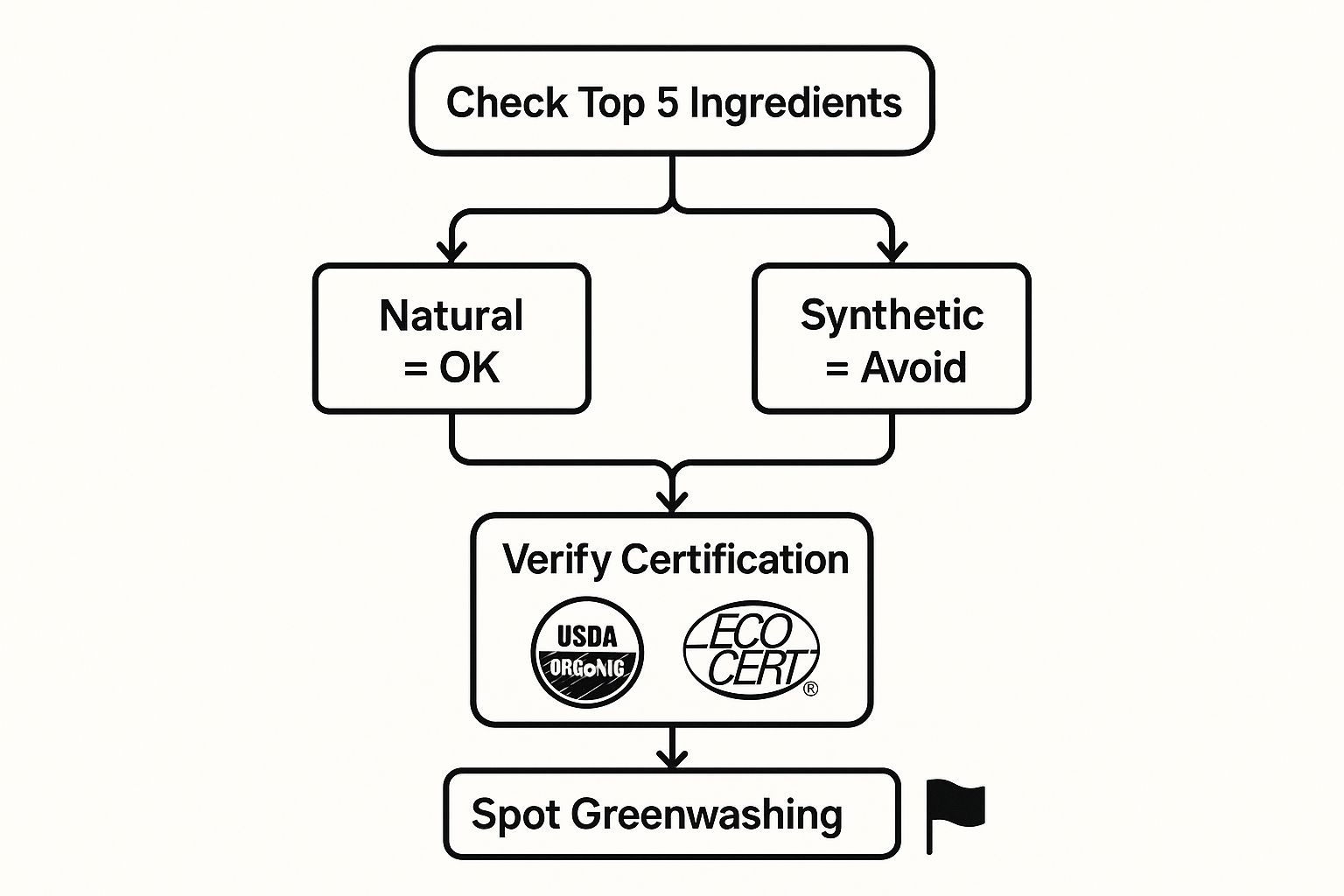
As this guide shows, it really comes down to prioritizing natural ingredients and then using certifications to verify a brand’s claims. It’s the best way to avoid being misled.
The Power of Third-Party Certifications
Words like "natural" and "clean" are tossed around a lot, but since they aren't regulated by the FDA, they don't mean much on their own. This is where third-party certifications become your best friend. These are seals of approval from independent organizations that have done the hard work of vetting a product’s ingredients and how it’s made.
Keep an eye out for these logos to confirm you’re getting the real deal:
- USDA Organic: This seal guarantees that at least 95% of the ingredients are certified organic. That means they were grown and processed without synthetic pesticides, fertilizers, or GMOs.
- ECOCERT: A globally respected certification for organic and natural cosmetics, ECOCERT looks at everything from sustainable farming and ingredient traceability to environmentally friendly packaging.
- Leaping Bunny: This is the gold standard for cruelty-free skincare. A Leaping Bunny logo certifies that no animal testing occurred at any point, from the raw ingredients to the final product you hold in your hand.
These seals give you unbiased proof that a product truly lives up to its clean, ethical, and transparent claims.
Think of certifications as a background check for your skincare. They do the investigative work for you, so you can trust that a product's claims are backed by real standards and not just clever marketing.
Spotting Greenwashing Red Flags
Greenwashing is a sneaky marketing tactic where brands try to make a product seem more natural or eco-friendly than it actually is. It's designed to appeal to your good intentions, but once you know what to look for, the deception is easy to spot.
Be on the lookout for these common red flags:
- Vague and Meaningless Claims: Phrases like "eco-conscious," "botanical essence," or "dermatologist-tested" sound official, but they have no real definition or regulatory backing.
- Focus on a Single Ingredient: You might see a beautiful drawing of lavender on the label, only to find the INCI list is full of "fragrance" (parfum) and synthetic dyes, with lavender oil as the very last ingredient.
- Hidden Problem Ingredients: A product might shout that it's "paraben-free" on the front, but a quick scan of the back reveals it's full of other synthetics like phthalates or sulfates. Always read the full ingredient list. For those with really reactive skin, knowing which simple ingredients are truly gentle is key. You can learn more in our guide to the best natural soap for sensitive skin.
Becoming a label detective is a skill that will serve you for life. By focusing on those first five ingredients, looking for trusted certifications, and learning to spot greenwashing, you can confidently choose products that will truly nourish your skin.
Powerful Plant-Based Ingredients Your Skin Will Love
When you start exploring chemical free skincare products, you’re essentially opening nature’s own medicine cabinet. The most potent solutions often come straight from the earth, delivering incredible benefits without the baggage of harsh side effects. The real secret is knowing exactly which plant-powered hero to call on for your skin's unique quirks and needs.
This isn’t just a passing trend, either. It’s a full-blown movement. The global market for plant-based skincare was pegged at around USD 1.11 billion and is expected to more than double to USD 2.39 billion by 2034. People are actively hunting for formulas packed with ingredients like aloe vera and shea butter for their proven soothing and protective abilities. You can dig into the numbers yourself in the full market analysis on insightaceanalytic.com.
Instead of just giving you a long, boring list of ingredients, let's look at them based on the problems they actually solve. This way, you can pinpoint exactly what your skin is craving, whether it's a deep drink of water, some anti-aging backup, or a bit of calming relief.
For Thirsty, Dehydrated Skin
If your skin feels tight and dry, it's not just thirsty—it's struggling to hold onto moisture. The right ingredients don't just add water; they act like a magnet, pulling hydration deep into the skin and locking it in for that plump, dewy look we all love.
-
Hyaluronic Acid (Plant-Derived): This stuff is a moisture superstar. A single molecule can hold up to 1,000 times its weight in water. Think of it as a tiny, powerful sponge for your skin cells, constantly pulling in moisture to keep your complexion looking full and supple.
-
Aloe Vera: Far more than just a quick fix for sunburns, aloe is a cocktail of water, vitamins, and healing enzymes. It delivers a wave of lightweight hydration that instantly calms inflammation without ever feeling greasy or heavy.
For Fighting Fine Lines and Promoting Youthfulness
When it comes to aging gracefully, nature offers some seriously powerful alternatives to synthetic retinoids that can often leave skin red and angry. These botanicals work by encouraging collagen production, firming up elasticity, and smoothing out texture—all while being incredibly gentle.
Key Insight: Natural anti-aging ingredients aren't just a cover-up. They feed your skin the essential nutrients it needs to repair and renew itself, leading to stronger, more resilient skin in the long run.
Bakuchiol: Often called "nature's retinol," bakuchiol is a total game-changer. It's a plant-based compound that studies show can deliver results similar to retinol—reducing fine lines, improving tone—but without the infamous irritation and sun sensitivity. This makes it the perfect pick for anyone with reactive skin who still wants powerful results.
Rosehip Oil: This beautiful, rich oil is a natural source of Vitamin A (a form of retinoic acid) and essential fatty acids. It’s a legend in the skincare world for its ability to speed up cell regeneration, fade discoloration, and soften the appearance of scars and wrinkles.
For Calming Blemishes and Acne-Prone Skin
Acne-prone skin is tricky. It needs deep cleansing, but also a ton of soothing care. Overly harsh ingredients can strip the skin, which just kicks oil production into overdrive and makes things worse. The natural approach is to target bacteria and inflammation gently, without wrecking your skin's protective barrier.
-
Tea Tree Oil: A classic for a reason. Known for its potent antibacterial and anti-inflammatory properties, tea tree oil is fantastic as a spot treatment. It helps clear out pores and calm down those angry red bumps. Just remember, this stuff is strong, so always use it diluted or in a properly formulated product.
-
Witch Hazel: This is a natural astringent that helps tighten pores and control excess oil. But unlike old-school, alcohol-based toners that sting and dry you out, witch hazel is much gentler and contains tannins that actually help soothe redness and inflammation.
For Soothing Redness and Inflammation
If you have sensitive or easily irritated skin, the goal is always to calm, soothe, and strengthen. Thankfully, certain botanicals are absolute masters at dialing down redness and bringing immediate relief to a stressed-out complexion.
-
Chamomile: Just like the tea, this gentle flower is famous for its calming abilities. It contains active compounds like bisabolol that are brilliant at reducing inflammation, making it a go-to for conditions like rosacea or just general sensitivity.
-
Calendula: This sunny extract from marigold flowers is a superstar healer. It has antiseptic properties to keep things clean while its flavonoids get to work soothing and repairing damaged skin. It’s a wonderful ingredient for everything from minor irritation to persistent redness.
To make things even easier, here's a quick cheat sheet matching some of the best plant-based ingredients to common skin concerns.
Top Plant-Based Ingredients for Common Skin Concerns
| Ingredient | Primary Benefit | Best For Skin Type or Concern |
|---|---|---|
| Aloe Vera | Hydrating & Soothing | Dry, Sensitive, Sun-Exposed |
| Bakuchiol | Anti-Aging & Smoothing | Fine Lines, Wrinkles, Uneven Tone |
| Tea Tree Oil | Antibacterial & Purifying | Acne-Prone, Oily, Blemished |
| Rosehip Oil | Regenerating & Brightening | Scars, Discoloration, Mature Skin |
| Chamomile | Calming & Anti-Inflammatory | Sensitive, Irritated, Rosacea-Prone |
| Hyaluronic Acid | Deep Hydration & Plumping | All Skin Types, Especially Dehydrated |
| Witch Hazel | Astringent & Oil-Controlling | Oily, Combination, Large Pores |
| Calendula | Healing & Soothing | Damaged, Inflamed, Eczema-Prone |
By getting to know what these incredible plant ingredients can do, you can start choosing chemical free skincare products with confidence, knowing you’re giving your skin exactly what it needs to thrive.
How to Transition to a Natural Skincare Routine
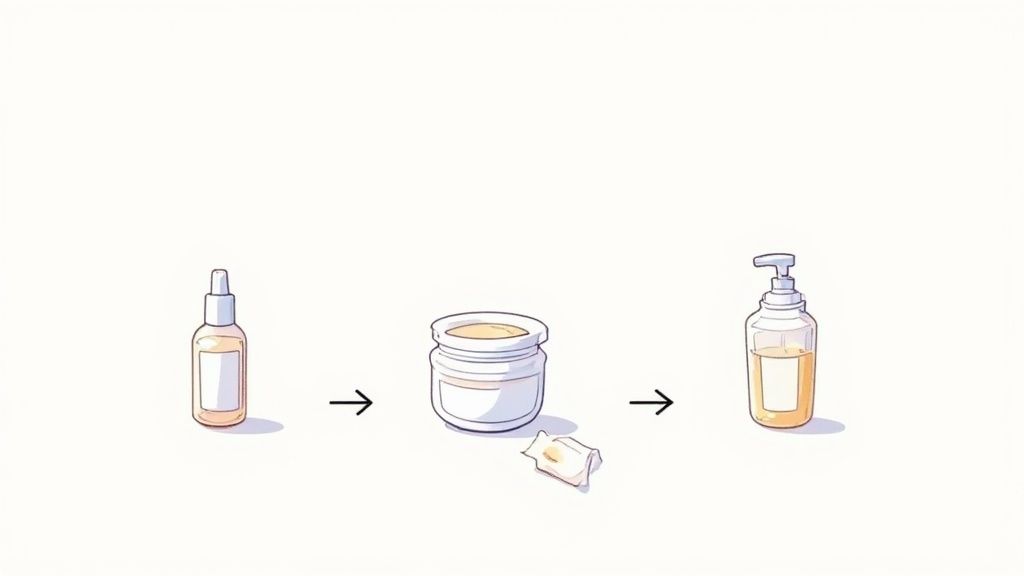
Diving headfirst into a brand-new, completely chemical-free skincare lineup can feel tempting. You're excited, and you want results now! But from my experience, going all-in at once can overwhelm your skin, leading to irritation and confusion.
Think of it this way: you wouldn't jump from never exercising to trying to run a marathon the next day. A slow, methodical approach is always better. It gives your skin a chance to breathe and adjust.
The golden rule is to replace just one product at a time. This simple strategy is your secret weapon. It lets you see exactly how your skin responds to each new formula, making it easy to pinpoint what’s working and what isn’t. If you swap everything at once, you’ll have no idea whether a breakout is from the new cleanser, serum, or moisturizer.
Prioritize Leave-On Products First
Okay, so where do you begin? Start with the products that spend the most time on your skin. A cleanser gets washed away in less than a minute, but serums, creams, and balms are designed to stay put for hours, allowing their ingredients to really sink in.
This is the order I always recommend for making the switch:
- Moisturizers and Serums: These are the heavy lifters that get absorbed deeply and work around the clock. Swapping your conventional moisturizer for a nourishing, tallow-based formula can have a huge, almost immediate impact on your skin's hydration and overall resilience.
- Toners and Essences: Since these are also designed to be left on the skin, they're the next logical product to swap out.
- Cleansers and Masks: Finally, switch out your rinse-off products. Even though their contact time is brief, moving to a sulfate-free cleanser prevents the stripping of your skin's natural oils, which beautifully supports the hard work your new leave-on products are doing.
If you want to get the most out of a truly nutrient-dense moisturizer, our guide on how to use tallow breaks down how this incredible traditional ingredient can transform your skin's health.
Understanding the "Skin Purge"
Sometimes, when you introduce powerful, active botanicals into your routine, your skin might throw a bit of a tantrum. This temporary breakout phase is often called a "skin purge." Don't panic! This is actually a good sign.
It means the new ingredients are accelerating your skin's natural cell turnover, pushing all the underlying gunk and congestion to the surface much faster than usual. A purge usually pops up in your typical breakout spots and should clear up within a few weeks as your skin finds its new rhythm. Think of it as a deep clean from the inside out.
Important Distinction: A purge shows up as small pimples in your usual problem areas and they tend to heal quickly. A negative reaction is different—it often looks like redness, itchiness, rashes, or breakouts in places you've never had them before. If you experience that, stop using the product.
The Patch Test Is Your Best Friend
This is non-negotiable, especially if you have sensitive skin. Before you slather a new product all over your face, you absolutely must do a patch test. This simple step is your safety net against a potential widespread reaction.
Here’s how to do it right:
- Apply a small amount of the product to a discreet patch of skin. The area behind your ear or on your inner wrist works perfectly.
- Wait for at least 24 hours. Keep an eye on the spot for any signs of redness, itching, burning, or any other irritation.
- If your skin looks and feels totally normal after the waiting period, you're good to go! You can confidently start using the product on your face.
The final, most important ingredient in this whole process is patience. It takes a full skin cycle—about 28 days—for your skin to fully recalibrate and for you to see the real, lasting benefits of your new routine. Stick with it. Your reward will be a calmer, healthier, and more radiant complexion.
Understanding the Difference Between Natural and Organic
When you start exploring the world of chemical-free skincare products, you’ll see the words “natural” and “organic” thrown around a lot. It’s easy to assume they mean the same thing, but they actually represent two completely different levels of quality and purity.
Getting this distinction right is the key to making truly informed choices for your skin.
Think of it like shopping for produce at the farmer's market. A "natural" apple is just... an apple. It grew on a tree. But a "certified organic" apple tells you a much deeper story about how it was raised—no synthetic pesticides, no artificial fertilizers, and no genetic funny business. The same exact logic applies to your skincare.
What Does Natural Really Mean?
Here’s the thing about the word “natural” in the skincare industry: it’s almost completely unregulated. It usually just means an ingredient came from a natural source, like a plant or mineral. That sounds great on the surface, but it's not the whole picture.
"Natural" doesn't tell you anything about how that ingredient was processed or if the original plant was doused in pesticides. A product can legally be labeled “natural” even if its main botanical ingredients were grown with a ton of chemicals. It’s a nice idea, but it lacks the strict verification needed to guarantee purity from the farm all the way to the bottle.
The Higher Standard of Certified Organic
This is where "certified organic" becomes a total game-changer. Unlike "natural," this is a legally protected and regulated term. For a product to earn that official USDA Organic seal, its ingredients have to pass some seriously strict standards.
The whole process is designed to promote ecological balance and preserve biodiversity.
Specifically, this means the ingredients in certified organic skincare are:
- Grown without any synthetic pesticides or herbicides.
- Completely free from genetically modified organisms (GMOs).
- Cultivated without artificial fertilizers or sewage sludge.
This dedication to clean, conscious farming makes a huge difference. The global organic skincare market, which is built on these exact standards, was valued at a whopping USD 12.33 billion and is only expected to grow. You can dig into the numbers behind this massive growth over at PolarisMarketResearch.com.
Choosing organic is about so much more than just what you’re avoiding. It’s about ensuring the ingredients are as potent and nutrient-rich as nature intended, which ultimately delivers better results for your skin.
So, while "natural" might be a decent starting point, "certified organic" gives you a rock-solid guarantee of quality and purity. It ensures that every ingredient, like the tallow we use in our skincare, comes from animals raised on clean, organic pastures. Our article on where tallow comes from dives deeper into why sourcing is so critical.
This level of transparency empowers you to confidently choose the absolute best chemical-free skincare products on the shelf.
Answering Your Top Questions About Natural Skincare
Dipping your toes into the world of chemical-free skincare is exciting, but it's totally normal to have a few questions before you take the plunge. You're probably wondering if these products can really stand up to the ones you've been using, and what the transition actually looks like. Let's clear up some of the most common concerns.
"But Does It Actually Work?"
This is probably the biggest question on everyone's mind: Are natural ingredients as potent as lab-created ones? Absolutely. In fact, many of the most effective compounds in modern skincare are derived directly from nature.
Think about it—powerful, science-backed ingredients like bakuchiol provide anti-aging benefits that rival retinol, but without the harsh side effects. Antioxidants extracted from berries and fruits are fantastic for brightening your complexion. The key isn't about natural vs. synthetic; it's about the quality and concentration of the ingredients in a well-crafted formula.
Why the Higher Price Tag?
It’s true, some natural skincare products come with a higher price, and there’s a good reason for it. The cost usually comes down to the quality and origin of the ingredients.
Growing and harvesting organic or wild botanicals is far more labor-intensive and expensive than mass-producing chemicals in a lab. On top of that, many smaller, conscious brands are committed to ethical sourcing practices and eco-friendly packaging, which adds a different kind of value that you can feel good about.
"How Long Until I See a Difference?"
This is where a little patience goes a long way. While you might feel an instant boost in hydration or see a quick reduction in redness, the real magic takes time.
A friendly reminder: Your skin goes through a natural renewal cycle that takes about 28 days. Lasting change doesn't happen overnight, so consistency is your best friend.
For more significant goals, like improving skin texture, evening out your skin tone, or fading dark spots, you’ll want to stick with your new routine for at least 4-8 weeks. Give your skin the time it needs to adjust and regenerate—the healthy, radiant results will be more than worth it.
Ready to nourish your skin with simple, powerful ingredients you can trust? Explore the Wild Tallow Skincare collection and experience the difference of a truly clean routine. Start your journey to healthier skin today at https://wildtallow.com.