

The first step to fixing dehydrated skin is getting its water content back up and helping the moisture barrier repair itself. It usually comes down to using hydrating ingredients like hyaluronic acid and then locking all that goodness in with the right moisturizer. This simple one-two punch can bring immediate relief from that tight, dull feeling that comes with a lack of water.
Is Your Skin Dehydrated or Just Dry
Before you can really start to fix dehydrated skin, you have to be sure you're tackling the right problem. It’s incredibly easy to mix up dehydrated skin with dry skin, but they are completely different issues. One lacks water, the other lacks oil. Using the wrong products won’t just be a waste of time and money—it can actually make things worse.
Dry skin is a skin type, something you're pretty much born with. It’s caused by your skin not producing enough sebum (its natural oils). This usually results in a texture that feels consistently rough, flaky, or even a bit scaly.
Dehydrated skin, on the other hand, is a skin condition. It can happen to anyone, no matter their skin type—yep, even oily skin can get desperately thirsty. This happens when your skin is losing more water than it's taking in, leading to a dull complexion, more noticeable fine lines, and that classic tight, uncomfortable feeling.
The Tell-Tale Signs of Dehydration
So, how can you spot the difference when you look in the mirror? Dehydrated skin can be confusing. Your face might feel tight and look lackluster, but you could still be getting oily or even breaking out. This is your skin trying to overcompensate for the water loss by pumping out more oil, which then clogs pores.
Other key clues to look for include:
- A tight, almost "crinkly" feeling, especially right after you wash your face.
- Fine lines and wrinkles that seem to pop up out of nowhere.
- Increased sensitivity, irritation, and redness.
- Darker under-eye circles or a generally tired-looking complexion.
Dehydration is a temporary state, not a permanent skin type. This is the good news! It means that with the right routine and a little consistency, you can fully restore your skin's water balance and get that plump, healthy glow back.
To make it easier to tell them apart, here's a quick reference guide.
Dehydrated Skin vs Dry Skin Key Differences
| Characteristic | Dehydrated Skin | Dry Skin |
|---|---|---|
| Core Issue | Lacks water | Lacks oil (sebum) |
| It's a... | Condition (temporary) | Type (genetic/chronic) |
| Looks Like | Dull, tired, shadows, fine lines | Flaky, scaly, rough patches |
| Feels Like | Tight, irritated, sometimes oily | Rough, itchy, consistently "dry" |
| Can Affect | Any skin type (even oily) | Only dry skin types |
This table should help you quickly pinpoint what you're dealing with so you can choose the most effective path forward.
Perform the Pinch Test at Home
There’s a quick and easy way to check for dehydration right now: the "pinch test." Just gently pinch a small bit of skin on your cheek, the back of your hand, or your chest and hold it for a couple of seconds.
This simple chart walks you through what to look for.
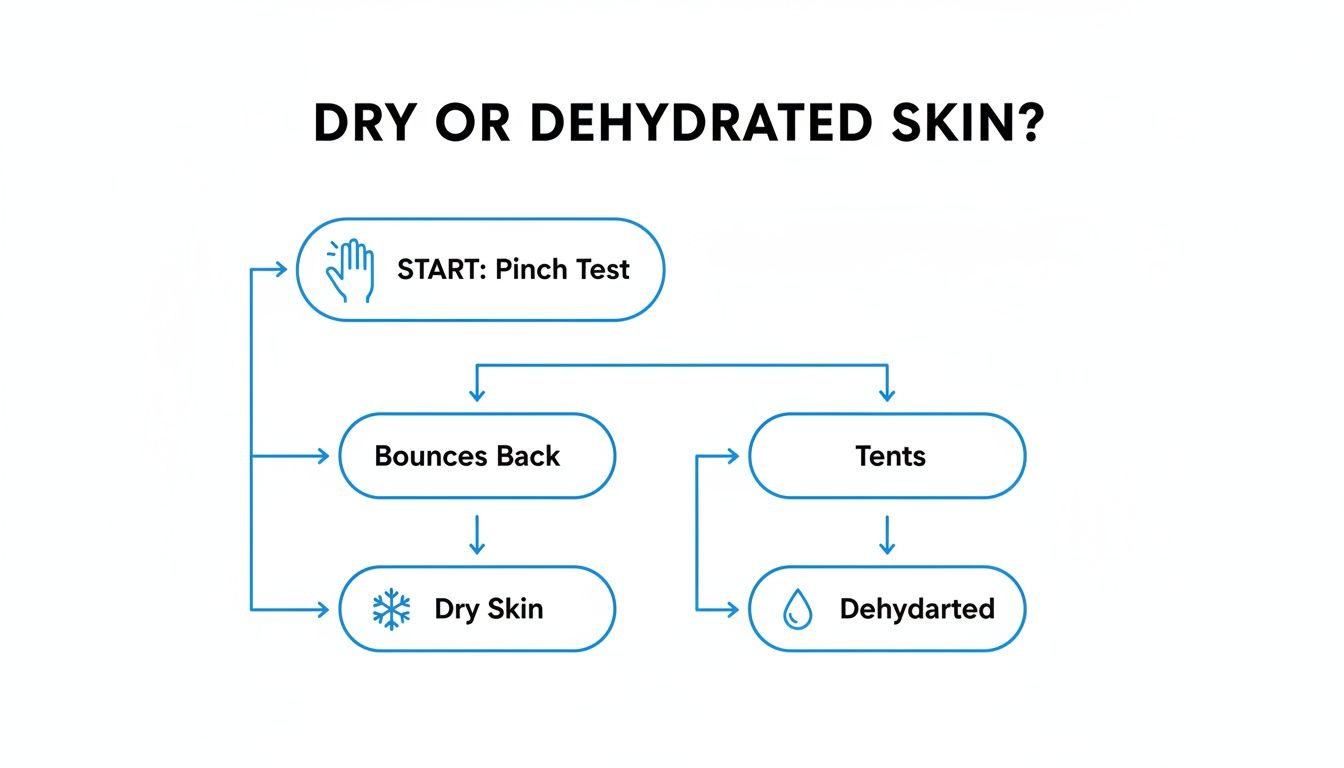
If your skin snaps right back, your hydration levels are probably in good shape. But if it "tents" up and takes a moment to settle back down, that’s a pretty clear sign of dehydration.
It's a common struggle. Around the world, about 50% of people report having skin that feels dry or sensitive. Conditions like eczema, which affects millions, are deeply tied to severe dehydration and a compromised skin barrier. Knowing your specific issue is the first real step toward relief. If you're still not sure what's going on, you might find answers in our guide on why your skin is so dry. This distinction is what separates a frustrating skincare journey from a successful one.
The Hidden Culprits Behind Dehydrated Skin
So, you've figured out your skin is dehydrated, not dry. That’s a huge first step. But the real game-changer is digging into why your skin is losing water in the first place. It's often not just about how many glasses of water you're drinking—your environment, daily habits, and even your well-intentioned skincare routine can be quietly sabotaging your efforts.
Pinpointing these triggers is how you stop fighting a losing battle and start building a real solution.
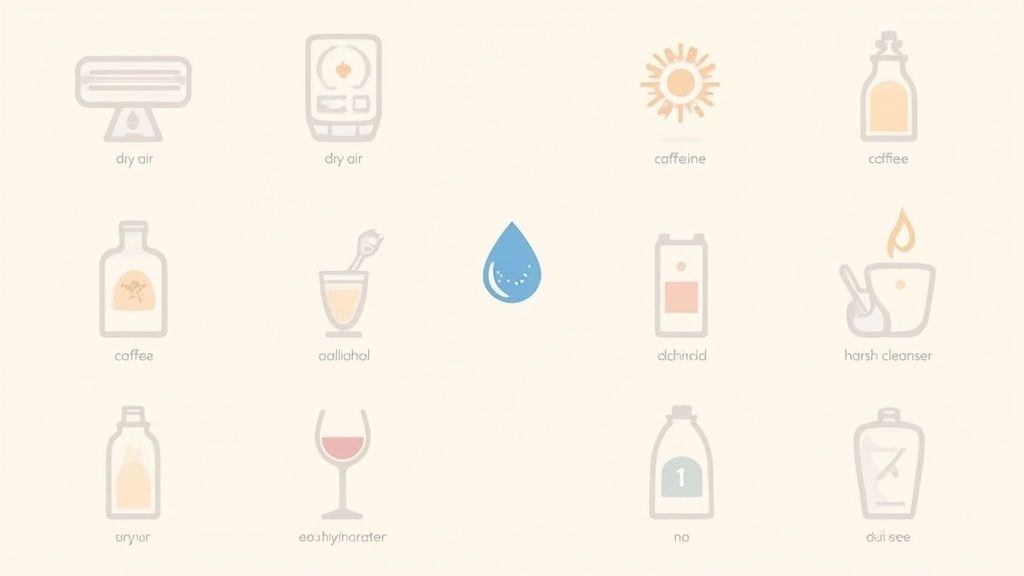
Many of the most common causes are things we're exposed to every single day. Just think about the air in your home or office. That dry, recycled air from indoor heating in the winter and blasting AC in the summer is literally pulling moisture right out of your skin. It’s a constant environmental assault on your skin’s water reserves.
Environmental and Lifestyle Stressors
Your day-to-day habits can either strengthen your skin's moisture barrier or tear it down. Certain choices are notorious for increasing transepidermal water loss (TEWL), which is just the technical term for water evaporating off your skin's surface.
A few key factors are almost always at play:
- Sun Exposure: Spending time in the sun without protection is one of the fastest ways to compromise your skin barrier, making it much less efficient at holding onto hydration.
- Dietary Choices: A diet loaded with diuretics like caffeine and alcohol dehydrates your entire body, and your skin is one of the first places it shows. On the flip side, not getting enough essential fatty acids from foods like avocados and walnuts can weaken your skin barrier from the inside out.
- Low Humidity: Whether you live in an arid climate or just spend a lot of time in centrally heated or air-conditioned rooms, the dry air is constantly wicking moisture away from your skin.
You can fight back against that dry indoor air. Public health data shows that using a simple humidifier to raise a room's humidity from a parched 20-30% to a more comfortable 40-60% can significantly reduce water loss and that tight, uncomfortable feeling in just a few days. You can learn more about this in market reports covering the trends in skincare for dehydrated skin.
When Your Skincare Routine Is the Problem
Here’s the irony: sometimes the very products you're using to "fix" your skin are the main cause of its dehydration. An aggressive routine can strip your skin of its natural oils, damage the all-important moisture barrier, and leave it totally vulnerable to water loss.
If your skin feels tight and "squeaky clean" after you wash it, that’s not a good thing. It's a sign that you've stripped it bare.
Be on the lookout for these common mistakes:
- Harsh Cleansers: Those super-foaming cleansers with sulfates (like sodium lauryl sulfate) are great at dissolving oil, but they're often too good. They take the protective lipids right along with the grime.
- Over-Exfoliating: Going to town with physical scrubs or potent chemical exfoliants (like high-strength glycolic acid) too often is like sanding away your skin's natural defenses.
- Stripping Ingredients: Toners and treatments that are high in denatured alcohol might give you a temporary matte, "clean" feeling, but they cause serious dehydration in the long run.
Once you can spot these culprits, you gain control. The goal shifts from just piling on hydrating products to strategically removing the things that are draining your skin's moisture. By tweaking your environment, habits, and product lineup, you're setting the stage for skin that's truly hydrated, comfortable, and resilient. This proactive mindset is essential if you want to know how to fix dehydrated skin for good.
A Morning Routine to Hydrate and Protect
How you start your morning can make or break your skin for the rest of the day. When you're dealing with dehydration, your AM routine isn't about adding a dozen complicated steps. Instead, it’s a strategic mission: get hydration in, and then seal it off from the environmental aggressors trying to suck it right back out. Think of it as your skin's armor for the day.
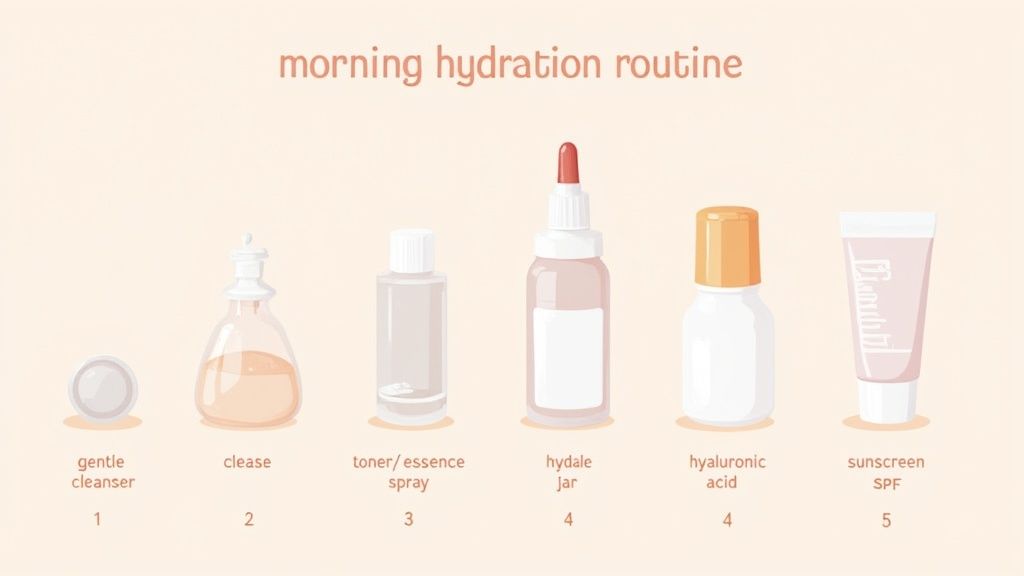
The first misstep for most people happens at the sink. When your skin is dehydrated, its natural defense system—the moisture barrier—is already shaky. Using a harsh, foamy cleanser is like knocking down a wall that’s barely standing.
Believe it or not, for many people with severely dehydrated skin, all you need in the morning is a quick splash of lukewarm water. You haven't been exposed to city grime overnight, so a deep clean just isn't necessary.
Gentle Cleansing Without the Strip
If you really feel the need to use a product, the key is to choose something that coddles your skin, not strips it. Look for cleansers with a cream, milk, or even an oil-based formula that won't lather up. These cleanse away any overnight sweat without robbing your skin of the precious lipids it needs, leaving it feeling soft, not squeaky and tight.
Getting this first step right is crucial. If you start the day by stripping your skin, you're immediately in a moisture deficit, and you’ll spend the rest of your routine just trying to play catch-up. For a truly minimalist approach, a gentle tallow face wash can be a great option, as it cleanses without disrupting that fragile barrier.
Layering Hydration for Maximum Impact
Right after you’ve cleansed (or just splashed with water), your skin is ready for a drink. Here’s a pro-tip: always apply your hydrating products to damp skin. Think of your skin like a sponge—a damp one absorbs liquid far more effectively than a bone-dry one.
Start with a hydrating toner or essence. Forget the old-school, alcohol-heavy toners that made your face sting. Today's hydrating toners are like watery lotions packed with humectants. They give your skin an immediate gulp of water and prep it for what’s coming next. Just pat it in gently with your fingertips.
Next up is your heavy hitter: a dedicated hydrating serum. This is where you deliver a concentrated shot of moisture-attracting ingredients right where they’re needed most.
- Hyaluronic Acid: The celebrity of humectants. It can hold up to 1,000 times its weight in water, pulling moisture into the skin for that plump, bouncy feel.
- Glycerin: A classic, no-frills humectant that’s incredibly effective at helping skin hold onto moisture.
- Panthenol (Pro-Vitamin B5): This is a fantastic multi-tasker. It hydrates while also soothing inflammation, making it a godsend for irritated, dehydrated skin.
Applying your serum to damp skin is a non-negotiable step for fixing dehydration. It gives the humectants the water they need to grab onto and pull into your skin. Otherwise, they might start pulling moisture from the deeper layers of your skin, which is the last thing you want.
The Final Seal of Protection
Okay, you’ve layered in all that wonderful hydration. Now you have to lock the door behind it. That's your moisturizer's job. A good moisturizer for dehydrated skin will have a balanced mix of emollients (to soften and smooth) and occlusives (to create a seal). This forms a breathable shield over your skin, preventing all that hard-earned water from evaporating away—a process known as transepidermal water loss (TEWL).
The last, and arguably most important, step is sunscreen. Every single morning. Sun exposure is a leading cause of barrier damage and, you guessed it, dehydration. A broad-spectrum SPF of 30 or higher is your ultimate defense, protecting your newly hydrated skin and ensuring UV rays don't undo all your good work.
A Night Routine to Repair and Replenish
Your morning routine is all about protecting your skin from the day ahead, but your nighttime routine? That's when the real repair work happens. While you sleep, your skin's natural regeneration process kicks into overdrive. This is the prime opportunity to give it the intensive, restorative ingredients it’s craving to fix dehydration from the inside out.
A solid night routine is straightforward: gently wash away the day, then layer on treatments designed to replenish water and rebuild a struggling moisture barrier.
Start with a Deep Yet Gentle Cleanse
Think about everything your skin accumulates by the end of the day—sunscreen, makeup, city grime, and natural oils. A single wash just doesn’t cut it, but using a harsh, stripping cleanser will only make your dehydrated skin angrier. This is exactly why double cleansing is so effective.
First, go in with an oil-based cleanser or a cleansing balm. Oil dissolves oil, so this step melts away stubborn, oil-based products like foundation and SPF without any harsh scrubbing. Just massage it onto dry skin, add a splash of water to get it milky, and rinse it all away.
Next, follow up with a gentle, water-based cream or gel cleanser. This second wash takes care of any leftover water-based impurities like sweat and dirt. Your skin is left feeling completely clean but also soft and comfortable—never tight or squeaky.
Layer Targeted Treatments for Intensive Repair
Now that you have a perfectly clean canvas, it’s time to deliver that much-needed hydration. Just like in the morning, you'll get far better results by applying your products to damp skin. A quick spritz of a hydrating toner or facial mist after cleansing is perfect for this.
Once your skin is damp, apply your hydrating serum. The evening is a great time to use a serum with a slightly richer texture or one packed with supportive ingredients that can work their magic uninterrupted overnight. This is your moment to really focus on putting back what the day has taken out.
Nighttime is when your skin is most receptive to active ingredients. Staying consistent with a targeted routine can make a huge difference. In fact, studies show that the daily application of humectants, emollients, and barrier-repairing ingredients can create measurable improvements in skin hydration and health in just 2–8 weeks. You can find more data on skincare effectiveness at media.market.us.
Seal Everything In with a Nourishing Moisturizer
This last step is non-negotiable. At night, your skin's transepidermal water loss (TEWL) naturally increases, which means water evaporates from your skin more easily while you sleep. A good nighttime moisturizer acts like a protective seal, preventing that from happening.
You can, and should, go for a cream that’s richer than your daytime one. You don't have to worry about how it will sit under makeup, so you can choose a more substantial formula loaded with nourishing ingredients.
- Emollients: Look for ingredients like squalane and fatty acids, which smooth and soften the skin’s texture.
- Barrier-Repair Heroes: Ceramides are a must. These lipids are the "mortar" holding your skin barrier "bricks" together, and replenishing them helps fill in the cracks.
- Occlusives: Richer ingredients like shea butter form a protective film over the skin. For sensitive or reactive skin, even a minimalist, non-comedogenic tallow cream can work wonders by creating a simple yet effective seal.
For an extra boost when your skin feels especially tight or depleted, try adding a sleeping mask as your final step 2-3 times a week. Think of it as a supercharged moisturizer you leave on all night to deliver a slow, steady infusion of hydration. You’ll wake up to a complexion that feels plumper, calmer, and truly quenched.
The Key Ingredients for Lasting Hydration
Navigating the world of skincare ingredients can feel like learning a new language, but when you're trying to fix dehydrated skin, it really boils down to understanding three key players: humectants, emollients, and occlusives. Think of them as your hydration dream team. Each one has a specific job, and when they work together, they create a powerful strategy to not only add water back into your skin but—more importantly—keep it there.
This focus on targeted hydration isn't just a fleeting trend; it represents a major shift in the beauty industry. The global market for products aimed at dehydrated skin was valued at around USD 15 billion in 2025 and is projected to climb towards USD 25 billion by 2033. This growth is completely fueled by savvy consumers demanding effective solutions—like hyaluronic acid serums and barrier-repair creams—that get to the root of water loss.
To help you decode your product labels and pick the right stuff, I've put together a quick cheat sheet. It breaks down what each of these hydration heroes does and what to look for on the ingredient list.
The Ultimate Hydration Ingredient Cheat Sheet
| Ingredient Category | What It Does | Common Examples |
|---|---|---|
| Humectants | Act like tiny sponges, pulling water from the air and deeper skin layers to the surface for an instant plumping effect. | Hyaluronic Acid, Glycerin, Aloe Vera, Panthenol (Pro-Vitamin B5), Honey, Sodium PCA |
| Emollients | These are skin-softeners. They fill in the tiny cracks between skin cells, smoothing texture and reinforcing the skin barrier. | Ceramides, Squalane, Fatty Acids (like linoleic acid), Jojoba Oil, Shea Butter, Lanolin |
| Occlusives | They form a protective seal on the skin's surface to physically block water from evaporating (Transepidermal Water Loss). | Petrolatum, Mineral Oil, Beeswax, Dimethicone, Tallow, Carnauba Wax |
Now that you have the big picture, let's dive a little deeper into how each one works. A truly effective moisturizer will ideally contain a balanced mix of all three, giving your skin a comprehensive fix.
Humectants: The Water Magnets
First up are the humectants. These are the ingredients that deliver that immediate, satisfying gulp of water to your thirsty skin. They act like tiny magnets, pulling moisture from the environment and from the deeper layers of your dermis right up to the surface.
- Hyaluronic Acid: This is the most famous one for a reason. It can hold up to 1,000 times its weight in water, making it a superstar for instant plumping.
- Glycerin: A true workhorse ingredient, glycerin is a reliable and effective classic that draws in moisture, leaving skin feeling soft and supple.
- Panthenol (Pro-Vitamin B5): This one is a multitasker. It hydrates beautifully while also offering soothing properties to calm down irritated, dehydrated skin.
A pro tip I always share: humectants need water to work. Always apply your humectant serums to damp skin. This gives them a ready source of moisture to pull into the top layer of your skin, instead of pulling it up from the deeper layers, which can sometimes backfire.
Emollients: The Barrier Repair Crew
Next in line are the emollients. If humectants are all about adding water, emollients are about fixing the "container" that holds it. These are skin-softening, lipid-rich ingredients that fill in the gaps between skin cells, smoothing the surface and helping rebuild a compromised moisture barrier.
Emollients are what give creams and lotions that silky, nourishing feel. A few of the best are:
- Ceramides: These are lipids that your skin barrier produces naturally. Adding them back topically is like patching up a leaky wall—essential for barrier health.
- Squalane: A wonderfully lightweight and non-greasy oil that mimics your skin's own sebum. It provides fantastic softening and barrier support without feeling heavy.
- Fatty Acids: Think of these as the building blocks for a strong, flexible barrier that can hold onto moisture effectively.
By replenishing these vital lipids, emollients don't just make your skin feel smoother; they make it function better. For a deeper dive, check out our guide on the best ingredients for dry skin.
Occlusives: The Protective Seal
Finally, we have the occlusives. These ingredients are your last line of defense. They form a physical barrier on top of the skin, creating a seal that dramatically slows down transepidermal water loss (TEWL)—the technical term for water evaporating from your skin. They lock in all the good work done by the humectants and emollients.
Occlusives are typically thicker and richer, which is why you’ll often find them in night creams, healing balms, and ointments.
- Petrolatum: It’s the undisputed gold standard. Studies show it can reduce water loss by over 98%, making it incredibly effective for severely compromised or chapped skin.
- Shea Butter: A rich, nourishing butter packed with fatty acids that provides a substantial, breathable protective layer.
- Beeswax: A great natural occlusive that forms a protective barrier while still allowing the skin to breathe.
Once you get the hang of spotting this trio, you'll be able to look at any product label and know exactly how it will work for your dehydrated skin. The goal is to find products that deliver a comprehensive approach to getting—and keeping—your skin hydrated.
Common Hydration Mistakes and How to Fix Them
If you've loaded up on hydrating products but your skin still feels tight, it’s time to look at your daily habits. Sometimes, it's the little things we do—or don't do—that get in the way of achieving that dewy, comfortable glow.
You might be making one of the most common mistakes without even realizing it: applying serums to completely dry skin. This is especially true for popular ingredients like hyaluronic acid. Think of humectants as tiny sponges; they need water to plump up. When you smooth them over a dry face, they can actually pull moisture up from the deeper layers of your skin, which only makes things worse.
Pro Tip: Always apply your hydrating serums to damp, not soaking wet, skin. A quick spritz of a facial mist or just patting your face gently after cleansing works perfectly. This gives the humectant the surface moisture it needs to do its job.
Another huge culprit is using the wrong cleanser. That "squeaky clean" feeling is actually a major red flag. It means your cleanser has stripped away your skin's natural oils, damaging its protective barrier and leaving it vulnerable to moisture loss all day long.
Supporting Your Skin from the Inside Out
Skincare is only half the battle. True, lasting hydration comes from a combination of what you put on your body and what you put in it. A few simple lifestyle tweaks can make a massive difference.
You'd be surprised how much these small changes can help:
- Dial Down the Shower Temp: A steaming hot shower might feel amazing, but it’s a disaster for your skin's moisture barrier. The high heat strips away natural lipids, leading to a major loss of hydration. Stick to lukewarm water—your skin will thank you.
- Eat Your Healthy Fats: Your skin barrier is made of lipids, so you need to feed it! Foods rich in omega-3 fatty acids like salmon, avocados, walnuts, and flaxseeds help strengthen that barrier from the inside, making it much better at locking in moisture.
- Invest in a Humidifier: Indoor air, especially with heating or AC running, is incredibly dry and constantly pulls moisture from your skin. Running a humidifier in your bedroom or office adds moisture back into the air, creating a much more skin-friendly environment.
Ultimately, your skin's appearance is a reflection of what's happening on a much deeper level. For more on this, it's worth reading about the importance of cellular health for vibrant aging to understand how internal functions directly impact your complexion.
Key Takeaway: Dehydrated skin often points to a damaged moisture barrier. You can tackle the problem from every angle by fixing simple application mistakes (like always applying serums to damp skin) and making supportive lifestyle changes.
These small, consistent efforts compound over time. They work together with your skincare products to build a resilient, well-hydrated barrier, ensuring that moisture doesn't just get in—it stays in.
Common Questions About Fixing Dehydrated Skin
Even with the perfect plan, you're bound to have questions. Getting your skin back to a happy, hydrated state can feel a little confusing at times, so let's tackle some of the most common issues that come up.
How Long Does It Take to Fix Dehydrated Skin?
You should start to feel some immediate relief—that tight, parched feeling often eases up within a couple of days of a consistent, hydrating routine. That's the quick plumping effect of humectants at work.
But for deep, lasting repair? That takes a bit more time. Restoring your skin's moisture barrier and really bringing back that healthy glow is a process. You'll need to stick with your routine for at least 2 to 4 weeks to see a major difference. Think of it as a marathon, not a sprint; patience is everything here.
Can Oily Skin Get Dehydrated?
This is probably one of the biggest misconceptions in skincare. Absolutely, yes. It's crucial to remember that oily skin lacks water, not oil.
In fact, sometimes the skin overproduces oil to compensate for the lack of water, which is why you can feel both greasy and tight at the same time. If that sounds like you, focus on lightweight, water-based products. Gel creams and hyaluronic acid serums are your best friends—they'll deliver the hydration your skin is thirsty for without clogging pores or adding to the shine.
The single most impactful thing you can do for dehydrated skin is layering a hydrating serum onto damp skin and immediately sealing it in with a moisturizer. The serum is your water-delivery service, and the moisturizer is the lock on the door.
Should I Exfoliate Dehydrated Skin?
Tread very, very lightly here. Since over-exfoliation is a primary culprit behind dehydration, your first move should be to put all your scrubs and acids on pause. Just stop. Let your skin barrier heal and get back to a comfortable baseline first.
Once your skin no longer feels tight, irritated, or stripped, you can slowly bring back a gentle chemical exfoliant. I'm talking about something mild like lactic acid or a low-concentration polyhydroxy acid (PHA), used just once or twice a week, maximum. Pay close attention to how your skin responds. If you see any redness or feel that familiar tightness creeping back, pull back immediately. This isn't the time for aggressive treatments.
Ready to give your sensitive, dehydrated skin the simple, nourishing care it deserves? The Wild Tallow Whipped Tallow Cream uses just four food-grade ingredients to deeply moisturize and support your skin’s natural barrier without irritation. Discover minimalist skincare that actually works.