

If you've ever dealt with that tight, flaky, and downright uncomfortable feeling of severely dry skin, you know it's more than just a surface-level issue. It’s a sign that your skin's fundamental defense system is struggling.
So, what's really going on?
Understanding Your Skin's Protective Barrier
Think of your skin's outermost layer like a perfectly constructed brick wall. The skin cells are the bricks, and a rich mixture of natural fats—or lipids—acts as the mortar, holding everything together in a strong, flexible seal.
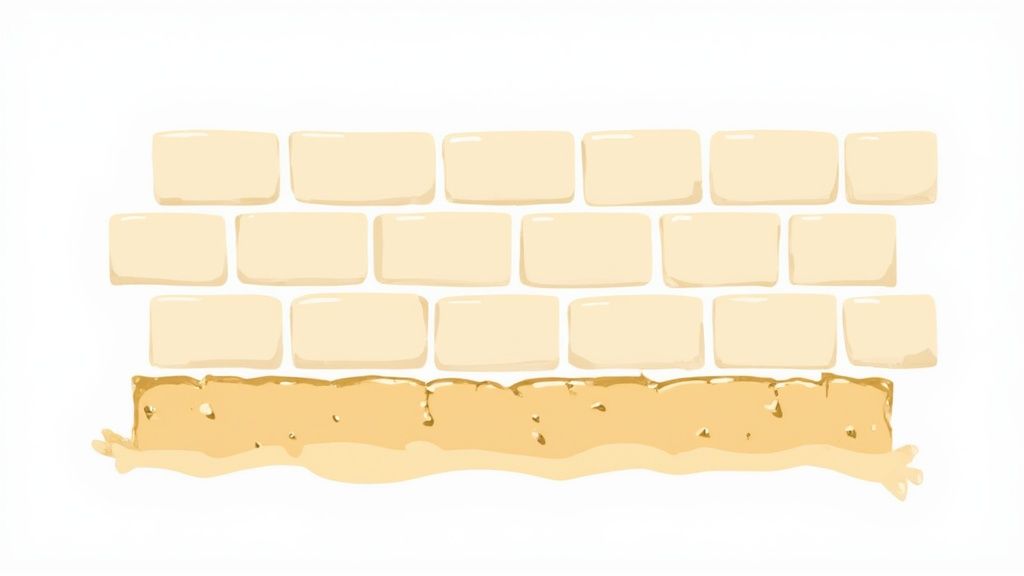
When your skin is healthy, this "lipid mortar" is robust. It does two critical jobs: it locks precious moisture in and keeps harmful irritants out.
But when that mortar starts to break down, you get gaps. Moisture escapes, leaving your skin dehydrated, and irritants can now sneak in, causing redness, itchiness, and sensitivity. This is what dermatologists call xerosis, and it's the root cause of that tight, cracking sensation.
A compromised barrier isn't just a cosmetic concern; it's a growing global issue. The market for dry skin treatments is expected to hit a staggering USD 43.9 billion by 2025, growing at 8.0% annually. This boom is fueled by everything from environmental pollution to our aging population, highlighting just how many of us are struggling with this.
Simply put, your skin barrier is your body's first line of defense. When it's weakened, your skin can't do its job effectively.
What’s Breaking Down the "Mortar"?
Often, it's the little things we do every day that chip away at our skin's protective layer.
- Genetics and Hormones: Some of us are just born with less lipid-rich mortar. Hormonal shifts, especially during menopause, can also slow down oil production significantly.
- Environmental Triggers: Cold winter air and dry indoor heating are notorious for sucking moisture right out of your skin.
- Daily Habits: Love long, hot showers? Unfortunately, that hot water melts away your skin's natural protective oils. Harsh, sudsy soaps do the same, stripping the lipids and leaving your barrier vulnerable.
Think of these factors as constant weathering on that brick wall. Over time, the mortar just washes away, leaving the structure weak and exposed.
Rebuilding Your Skin's Foundation
So, how do you fix a crumbling wall? You can't just paint over it—you have to rebuild the mortar.
The same principle applies to your skin. To truly heal extremely dry skin, you need to replenish the lipids it has lost. This is where nourishing, biocompatible ingredients like tallow come into play. Applying a rich tallow cream is like meticulously re-grouting that wall with the highest-quality, most durable mortar available.
For those battling conditions like eczema, understanding this connection is crucial. We explore this in-depth in our guide on tallow balm for eczema.
True barrier repair isn't about a single magic product; it's a foundational approach:
- Gentle Cleansing: Switch to a cleanser that doesn't strip your skin's natural oils.
- Replenish Lipids: While your skin is still damp, apply restorative oils or balms rich in fatty acids.
- Lock It In: Seal everything with a protective balm to prevent that precious moisture from evaporating.
Once you grasp this concept, it becomes clear why generic lotions often fail. They might provide temporary relief, but they don't address the underlying structural problem. You need to rebuild from the ground up.
Using Plant-Based Oils for Deep Hydration
When your skin is truly parched, you need more than a simple surface-level moisturizer. The goal is to get in there and replenish the lipids that have been lost, and this is where plant-based oils really shine.
Think of it this way: your skin's natural oil, or sebum, is what keeps the "mortar" between your skin cells strong and pliable. Many plant oils have a molecular makeup that’s surprisingly similar to our own, which means our skin recognizes and welcomes them. They don't just sit on top; they integrate into the skin barrier, helping to rebuild it from the inside out.
It's no surprise that so many people are turning to these natural solutions. The global organic skincare market is expected to surge from USD 13.69 billion in 2025 to a staggering USD 27.14 billion by 2033. People are actively seeking out gentle, effective ingredients without the harsh chemicals. You can dig deeper into these market projections on straitsresearch.com to see just how big this shift is.
Picking the right oil is like choosing the right tool for a specific job. Each one brings its own unique blend of fatty acids, vitamins, and antioxidants to the table.
Top Botanical Oils for Parched Skin
Not all oils are created equal, especially when you're battling extreme dryness. Some are light and vanish into the skin, while others offer a much richer, more protective coating.
- Jojoba Oil: This one is a true superstar because it’s the closest thing in nature to our own sebum. Its structure is so similar that your skin accepts it readily, letting it sink in deep to moisturize without ever feeling greasy or clogging pores.
- Coconut Oil: Famous for its high lauric acid content, coconut oil is a fantastic moisturizer that also happens to have antimicrobial properties. It's a go-to for moisturizing the body, though it can sometimes be a bit heavy for acne-prone facial skin.
- Avocado Oil: Loaded with nourishing oleic acid and vitamins A, D, and E, this is a thick, heavy-duty emollient. It's the perfect choice for those severely chapped or cracked spots like your heels, knees, and elbows.
- Olive Oil: This classic kitchen staple is also a powerhouse moisturizer packed with antioxidants. It not only conditions the skin deeply but also helps protect it from environmental stressors.
Pro Tip: Always look for oils that are cold-pressed and unrefined. This gentle extraction method ensures that all the delicate vitamins and beneficial fatty acids remain intact, so your skin gets the full, potent benefit.
Comparing Top Plant-Based Oils for Dry Skin
To help you choose the right tool for the job, here’s a quick breakdown of some of the best plant-based oils for tackling dry skin. Each offers a unique set of benefits, so the best one for you might depend on the area you're treating and your skin's specific needs.
| Oil | Key Benefit | Best For | Texture |
|---|---|---|---|
| Jojoba Oil | Mimics skin's natural sebum | Face & all-over body care; sensitive skin | Lightweight, waxy |
| Coconut Oil | Deeply moisturizing & antimicrobial | Body, hands, and feet; dry patches | Rich, solid at room temp |
| Avocado Oil | Intense nourishment & vitamin-rich | Severely cracked skin, elbows, heels | Thick, very rich |
| Olive Oil | Antioxidant-rich & conditioning | Body, cuticles, and as a treatment | Medium-to-heavy |
Ultimately, the best oil is the one that your skin loves. Don't be afraid to experiment with a few to see what gives you the best, most lasting relief.
How to Apply Oils for Maximum Absorption
Believe it or not, how you apply your oil is just as crucial as which oil you choose. If you just smear it onto bone-dry skin, it will have a hard time penetrating and will mostly just sit on the surface.
The secret is simple: always apply oils to damp skin.
After a warm (not hot!) shower or after cleansing your face, gently pat your skin with a towel so it's still slightly damp. When you apply the oil now, it works to lock that water into your skin. As the oil absorbs, it pulls that moisture down with it, giving you a powerful one-two punch of hydration.
A little goes a long way, so start with just a few drops. Warm the oil between your palms first, then gently press it into your skin. This small tweak in your routine can make a world of difference in your battle against severely dry skin.
Natural Ways to Lock In Moisture
When your skin is desperately dry, just slapping on any old cream won't cut it. To get deep, lasting hydration, you need to think like a pro. It’s a simple, two-step approach that works with your skin, not against it.
Think of your skin like a parched, thirsty sponge. What do you do? First, you get it wet. Then, you find a way to keep that water from evaporating right back out. This is the core secret to truly healing extremely dry skin.
Step 1: Attract Moisture with Humectants
First things first, you need to draw water into the skin. This is the job of ingredients called humectants. These are like tiny moisture magnets, pulling hydration from the environment and from the deeper layers of your skin right up to the surface where it's needed most.
Nature provides some incredible humectants that are both potent and gentle:
- Aloe Vera: More than just a sunburn soother, aloe is packed with vitamins and minerals that deliver a powerful dose of hydration to irritated skin.
- Honey: This sweet stuff is a natural wonder. It pulls moisture into the skin and has antibacterial properties that help keep your skin barrier happy and healthy.
- Glycerin: A plant-derived hero, glycerin is exceptionally good at attracting water, helping to soften those rough, flaky patches and bring back a supple feel.
But here’s the catch: once you've drawn all that wonderful moisture to the surface, it can vanish into thin air. This process, known as transepidermal water loss, is the enemy of hydrated skin. That brings us to the crucial second step.
Step 2: Seal It In with Occlusives
Now that you've got the moisture, you need to lock it down. It’s time to put a "lid" on it. This is where occlusives come in. These ingredients form a physical, protective barrier over the top of your skin. This barrier acts like a shield, preventing all the hydration you just added from escaping.
Applying an occlusive over a humectant is the key to moisture that actually lasts.
Some of the best natural occlusives for severely dry skin include:
- Shea Butter: Loaded with fatty acids, it creates a soft, breathable barrier that conditions and protects.
- Beeswax: This natural wax provides an incredibly effective seal against moisture loss without feeling heavy or clogging pores.
- Cocoa Butter: Known for its rich, emollient texture, it nourishes deeply while locking hydration in place.
The infographic below shows how various plant-based oils also act as fantastic occlusives, helping to fortify your skin's natural defenses.
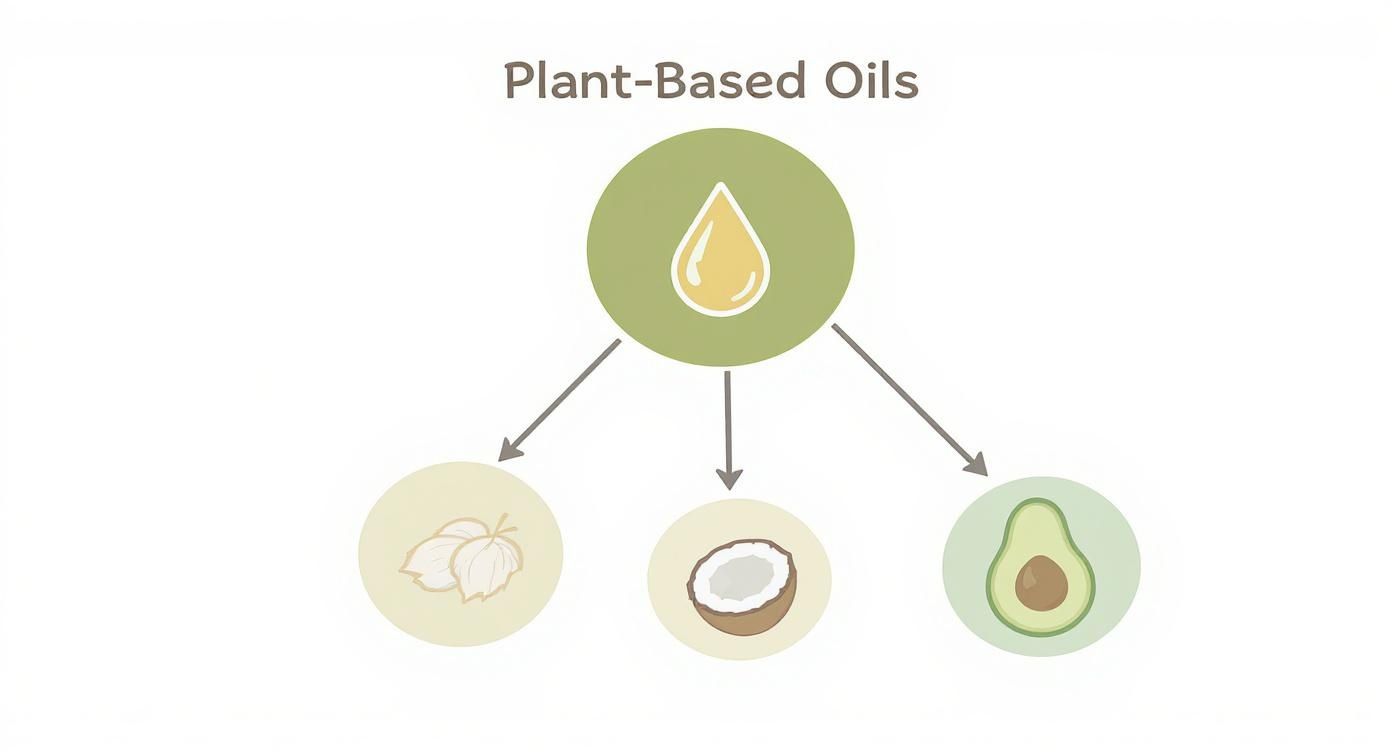
As the visual suggests, oils like jojoba, coconut, and avocado can form a rich, protective layer. But for the ultimate occlusive, many people turn to grass-fed tallow. Its composition is uniquely compatible with our skin's own natural oils, making it a powerhouse for barrier repair. Our guide explains how to use tallow to get the most out of its protective benefits.
By layering these ingredients—applying a humectant like aloe vera first, then sealing it with an occlusive like shea butter or tallow cream—you create a complete moisturizing system that both hydrates and protects.
This simple two-part strategy tackles both sides of the dry skin problem, giving you relief that you can feel right away and that genuinely lasts.
Lifestyle Habits That Heal Dry Skin
While creams and balms are your frontline defense, what you do day-in and day-out can be just as crucial. Getting lasting relief from severely dry skin means looking at the bigger picture. It’s about turning your daily choices into powerful, healing actions that support your body from the inside out.
Think of your skin like a garden. You can’t just spritz the leaves and expect a healthy plant. You have to nurture the soil, protect it from harsh weather, and give it the right nutrients. Your lifestyle habits are how you tend to that garden.
Nourish Your Skin from Within
True, lasting hydration begins with what you put into your body. We all know drinking water is important, but you can supercharge your efforts by eating water-rich foods like cucumbers, juicy oranges, and fresh strawberries. These don't just provide water; they come packaged with vitamins and antioxidants your skin craves.
Beyond that, your diet can literally rebuild your skin's protective lipid barrier from scratch. Eating foods packed with essential fatty acids is like sending in a construction crew to repair the leaky mortar between your skin cells.
- Omega-3s: You'll find these in fatty fish like salmon, as well as in flaxseeds and walnuts. They are fantastic for calming inflammation and fortifying that skin barrier.
- Omega-6s: Sources like evening primrose oil and borage oil are rich in gamma-linolenic acid (GLA), a fatty acid that’s brilliant for maintaining moisture and keeping skin supple.
When you consistently eat these foods, you're giving your body the raw materials it needs to build strong, resilient skin that can hold onto moisture all on its own.
Manage Your Immediate Environment
Your surroundings can be your skin's best friend or its worst enemy. A few simple tweaks to your home can dramatically reduce the environmental stress that leeches moisture from your skin, creating a supportive atmosphere for it to finally recover.
Your home environment is constantly interacting with your skin. By taking control of the humidity and your water temperature, you can create a safe haven that prevents dryness instead of causing it.
Start with the air you breathe. In dry winter months or arid climates, running a humidifier is a game-changer. It puts moisture back into the air, which stops the air from pulling it out of your skin. This is especially helpful overnight, giving your skin eight hours to rehydrate in a friendly environment.
Next, let's talk showers. I know a long, steaming hot shower feels amazing, but it’s one of the worst things for dry skin because it melts away your natural protective oils. Try to stick with shorter, lukewarm showers and gently pat your skin dry afterward instead of rubbing.
Finally, take a look under your sink. Your laundry detergent could be a hidden source of irritation. Many popular brands are loaded with harsh chemicals and synthetic fragrances that can aggravate already-sensitive skin. Switching to a gentle, fragrance-free formula can make a surprising difference, removing a daily irritant and giving your skin the peace it needs to heal.
What to Stop Doing and Using on Your Skin
Figuring out what to add to your skincare routine is only half the story. The other, equally important half is knowing what to take away. When your skin barrier is already struggling, it can become incredibly sensitive to common ingredients and habits that wouldn't normally cause a problem. It's time to do a little audit of your daily routine.
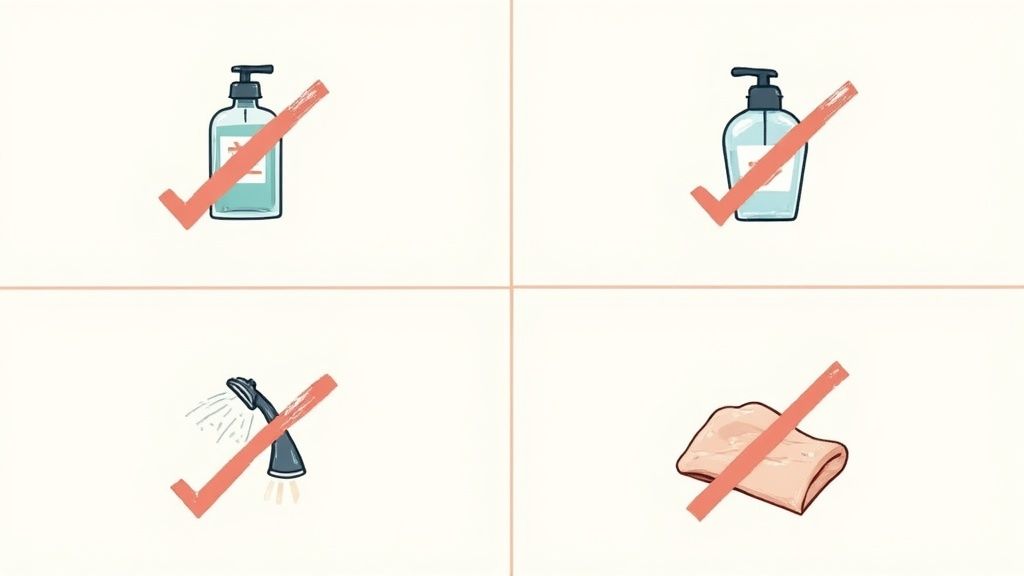
Think of your vulnerable skin like an open wound. You wouldn't pour harsh chemicals on it, would you? Of course not. You’d treat it gently. Yet, so many popular skincare products are loaded with aggressive agents that strip away your skin's precious natural oils, trapping you in a frustrating cycle of dryness and irritation.
This isn't just a niche concern anymore. People are catching on. It’s why the global natural skincare market is projected to hit USD 16.0 billion by 2035. More and more, people are consciously turning their backs on synthetic chemicals, seeking out gentler, more nourishing alternatives. You can see just how significant this shift is by checking out the market research on factmr.com.
Hidden Irritants Lurking in Your Products
The first step is to become a bit of a label detective. You'd be surprised what's hiding in plain sight. Certain ingredients are notorious for disrupting the skin barrier, and cutting them out is one of the most powerful things you can do to start the healing process.
- Sulfates (SLS & SLES): These are the harsh detergents that make your cleansers foam up. That satisfying lather comes at a cost—it strips away your skin’s protective lipids, leaving it feeling tight, dry, and exposed.
- Denatured Alcohol: This is a common ingredient in toners and products for oily skin. It gives you that quick-drying, "clean" feeling, but it's actually just sucking moisture right out of your skin, leading to even more dryness down the line.
- Synthetic Fragrances: That little word, "fragrance" or "parfum," on an ingredient list can be a Trojan horse, hiding dozens of undisclosed chemicals. For sensitive skin, these are often the primary culprits behind irritation and allergic reactions.
Simply by switching to sulfate-free cleansers, alcohol-free toners, and fragrance-free products, you remove the biggest chemical stressors from your routine. This gives your skin the breathing room it needs to finally start healing. For a deeper dive, our guide offers a comprehensive list of skin care ingredients to avoid.
Everyday Habits That Sabotage Your Skin
It’s not just about the products you use. Some of our everyday habits can be just as damaging. Over-exfoliating is a huge one. We’ve been told to scrub away dead skin, but using harsh physical exfoliants with gritty particles can create micro-tears, doing far more harm than good to a fragile skin barrier.
Another classic mistake? Waiting too long after a shower to moisturize. That steamy, post-shower moment is prime time for hydration. Your skin is damp and incredibly receptive. If you wait, that precious water evaporates, and you've lost your chance. Applying a rich balm right away locks all that moisture in where it belongs.
When Natural Remedies Aren't Cutting It
Sticking with natural remedies for extremely dry skin can truly work wonders. But it's just as important to know when your skin is waving a white flag and asking for professional backup.
Think of your at-home routine like a well-stocked first-aid kit. It’s perfect for handling most situations, but there are times when you absolutely need to call in a doctor.
If you’ve been consistent with your routine for a few weeks and aren't seeing any real improvement—or worse, things are getting worse—it’s time to listen to what your skin is telling you. Self-care is a powerful tool, but it's not a cure-all. Knowing where that line is between a stubborn dry patch and a legitimate medical issue is crucial for your long-term skin health.
Red Flags: When to See a Dermatologist
Some symptoms are more than just annoying; they're clear signals that it's time to get a professional opinion. Ignoring them can lead to bigger problems, like an infection or an underlying condition that won’t get better with just tallow cream and oatmeal baths.
Keep an eye out for these warning signs:
- Unrelenting Itchiness: We’re talking about an itch so intense it keeps you up at night or distracts you from your day.
- Cracking or Bleeding Skin: If your skin has developed open sores, deep cracks (also called fissures), or any spots that are bleeding, it's time for medical help.
- Signs of Infection: Look for yellow crusts, pus, excessive swelling, or increasing pain. These are classic signs that bacteria have moved in.
- A Rash That's Spreading: Is your dry skin accompanied by a rash that’s growing, spreading, or changing how it looks? A doctor needs to see that.
Sometimes, what looks like simple dry skin is actually a sign of a bigger health puzzle. Dryness that just won't quit, no matter what you throw at it, could be connected to conditions like eczema, psoriasis, or even a thyroid issue.
A dermatologist can get to the bottom of what’s really causing your severe dryness. They can give you an accurate diagnosis and a treatment plan that might include prescription therapies to use alongside your natural skincare. Don't be afraid to make that appointment—it's a vital step toward finding real, lasting relief.
Got Questions About Natural Skincare? We've Got Answers
Stepping into the world of natural skincare for seriously dry skin can feel a little overwhelming. You've probably got a ton of questions, and you deserve clear, honest answers so you can build a routine that actually works. Let’s clear the air and tackle some of the most common things people wonder about.
How Long Will This Actually Take to Work?
This is the big one, isn't it? We all want to know when we'll see a change. While you'll likely feel some immediate relief—that soothing, calming sensation—within a few days, the real healing happens on a deeper level.
Think of it like this: your skin's protective barrier didn't break down overnight, and it won't be rebuilt in a day either. For that deep, lasting hydration and a noticeable improvement in your skin's texture, give it at least 2 to 4 weeks of dedicated use. The secret ingredient here is consistency. Applying your remedy every single day is what gives your skin the support it needs to truly repair itself.
Can I Really Put Coconut Oil on My Face?
Ah, coconut oil. It’s an amazing body moisturizer, but for the face, it's a "proceed with caution" situation. The main issue is that it's highly comedogenic, which is just a fancy way of saying it’s very likely to clog your pores.
- If your skin is oily or prone to breakouts: I'd steer clear of using coconut oil on your face. You're much better off with a lighter oil that won't cause traffic jams in your pores, like jojoba or argan oil.
- If your skin is desert-dry and rarely breaks out: You might find that coconut oil is a fantastic, nourishing treat for your face.
Here's the golden rule for any new product: always do a patch test. Dab a small amount on a discreet spot, like your jawline, and give it 24-48 hours. If your skin is happy, you’re good to go.
Seriously, Do Oatmeal Baths Actually Do Anything?
Yes, they absolutely do! This is one of those classic remedies that has stuck around for a reason—it’s backed by science.
Colloidal oatmeal (which is just finely ground oats) is packed with compounds called avenanthramides. These are natural anti-inflammatories that are incredibly effective at calming down red, itchy, and irritated skin. Oats also contain beta-glucans, which form a super-thin, protective film on your skin. This film locks in moisture and shields your skin from irritants, giving it the peace and quiet it needs to heal.
For the best results, grind about a cup of plain, uncooked oats into a fine powder. Stir it into a tub of lukewarm water (hot water will only make dryness worse!) and soak for a good 15-20 minutes.
If you're looking for a simple, powerful, and clean solution to bring your skin back into balance, check out the handcrafted moisturizers from Wild Tallow Skincare. Our Whipped Tallow Cream is made with just three food-grade ingredients to deliver deep, lasting hydration without upsetting sensitive skin. Feel the difference for yourself at https://wildtallow.com.