

At its heart, pure beef tallow is simply rendered beef fat. But that simple description doesn't do it justice. It’s an age-old skincare ingredient that’s staging a major comeback, and for good reason. This ancestral staple is celebrated for being uniquely compatible with our own skin, delivering a rich profile of vitamins and fatty acids that many synthetic products can only attempt to mimic.
The Ancestral Secret to Modern Skincare
I know what you might be thinking—animal fat for skincare? In a world overflowing with high-tech, lab-formulated creams, it sounds a little out of place. But the growing interest in beef tallow signals a major shift back to simple, proven ingredients that work with our bodies, not against them. It's less of a fleeting trend and more of a rediscovery of deep-rooted wisdom.
For centuries, tallow was a fixture in households, used for everything from cooking to candle-making to crafting healing salves. It only fell out of favor with the rise of cheaper, mass-produced vegetable oils and synthetic ingredients that were heavily marketed as the "better" choice. Now, people are starting to look past the marketing noise, seeking out whole-food ingredients that offer real nourishment without questionable additives.
What Makes Tallow So Special?
The true magic of tallow is found in its biochemical makeup. It’s created by gently melting down raw beef fat, or suet, to produce a pure, stable oil. This resulting tallow is a powerhouse of nutrients that our skin can readily recognize and absorb. Think of it as feeding your skin a perfectly compatible, bioavailable meal. To see how it's made, you can check out our guide on what tallow is made from.
This natural synergy is precisely why tallow is so incredibly effective. It works to support your skin's structure at a cellular level, helping to fortify the protective barrier that shields you from daily environmental stress.
Tallow provides the perfect blend of skin-compatible fats that nourish, protect, and restore your skin. Its composition is remarkably similar to our skin’s own natural oils, or sebum, making it an ideal moisturizer.
The Benefits You Can Actually Feel
Using tallow is about so much more than just basic hydration. It's about giving your skin the essential building blocks it needs to be healthy and resilient. Its nutrient-dense profile delivers some pretty impressive results:
- Deep, Lasting Moisturization: It expertly seals in moisture, fighting off dryness and leaving skin feeling smooth and supple.
- Improved Skin Elasticity: Its unique fatty acids help restore suppleness and reinforce your skin's natural integrity.
- Soothing Relief: The natural anti-inflammatory properties can calm redness and irritation, making it gentle enough for even very sensitive skin.
- Powerful Nutrient Delivery: It’s loaded with fat-soluble vitamins A, D, E, and K—all crucial for skin repair and overall health.
This guide will walk you through everything, from the science that makes tallow work to how to spot a high-quality product that will genuinely elevate your skincare routine.
The Science Behind Tallow's Nourishing Power
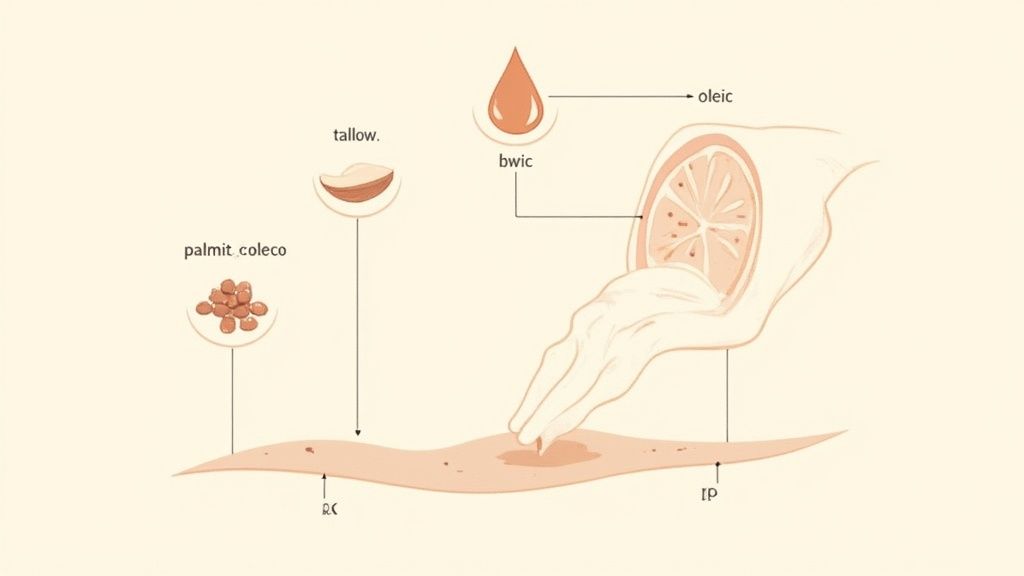
The incredible power of pure beef tallow isn't some new-age trend or clever marketing gimmick—it’s just simple biochemistry. The secret is that its molecular makeup is a near-perfect match for our own skin, something our bodies instinctively recognize. This natural compatibility is what makes it so different from almost any other moisturizer on the shelf.
Think of it this way: your skin produces its own protective oil called sebum. This is your body’s built-in moisturizer, designed to lock in hydration and keep irritants out. The fatty acid profile of pure beef tallow is so strikingly similar to human sebum that our skin just drinks it up, absorbing it deeply without leaving a heavy, greasy film. It’s a concept called biomimicry, and in this case, it’s nature handing us a blueprint for perfect skincare.
Decoding the Fatty Acid Profile
Tallow's real strength comes from its unique blend of fatty acids, with each one playing a vital part in keeping skin healthy. These aren't just any fats; they're the literal building blocks of a strong, resilient skin barrier. When you smooth on tallow, you’re giving your skin the exact raw materials it needs to repair and fortify itself.
Here’s a look at the key players:
- Oleic Acid: A fantastic monounsaturated fat that helps your skin hold onto moisture, keeping it soft, supple, and radiant.
- Palmitic Acid: This is one of the most abundant saturated fatty acids in our own skin, but our levels drop as we get older. Tallow helps replenish it, reinforcing the skin's protective barrier and smoothing its surface.
- Stearic Acid: This workhorse acid helps mend damaged skin and improves its flexibility and integrity. It also has a natural cleansing effect, helping to clear away dirt and excess oil.
Together, these three fatty acids form the core of what makes pure beef tallow so effective. Their synergy helps restore balance, rebuild the lipid barrier, and give your skin that healthy, hydrated glow it's been missing. This blend works on a cellular level to soothe, protect, and truly rejuvenate.
A Multivitamin Complex for Your Skin
On top of its ideal fatty acid profile, tallow is packed with essential fat-soluble vitamins. These aren't added in a lab—they're naturally present in high-quality, grass-fed tallow. Think of it as a built-in "multivitamin complex," delivering targeted nourishment right where you need it most.
Tallow's unique combination of bioavailable fatty acids and fat-soluble vitamins works in perfect harmony with your skin's cellular makeup, providing the fundamental components for repair, protection, and lasting hydration.
Each vitamin brings something special to the table, working together to improve your skin's overall health and appearance.
- Vitamin A: Essential for healthy cell turnover and collagen production, which helps keep skin firm and smooth. It also bolsters the skin's immune function.
- Vitamin D: A true skin protector and rejuvenator. It helps fight off the free radicals that lead to premature aging and supports skin cell growth and repair.
- Vitamin E: A powerhouse antioxidant, famous for its ability to combat oxidative stress from things like UV rays and pollution. It’s deeply moisturizing and helps shield skin cells from damage.
- Vitamin K: Well-known for its role in skin healing, Vitamin K can help even out skin tone and texture, making it great for supporting overall skin vitality.
This incredible cocktail of vitamins, delivered in a fatty acid base that your skin loves, creates a nourishing powerhouse. The science is really quite simple: pure beef tallow gives our skin the very nutrients it's made of. That’s why it's one of the most intuitive and effective moisturizers you can find. It doesn’t just sit on the surface; it becomes one with your skin to bring back its natural, healthy state.
How to Choose High-Quality Beef Tallow
When you’re navigating the world of natural skincare, it can feel like there's a lot to learn. But when it comes to picking a pure beef tallow, a few key signals will point you straight to an exceptional product. The truth is, not all tallow is created equal.
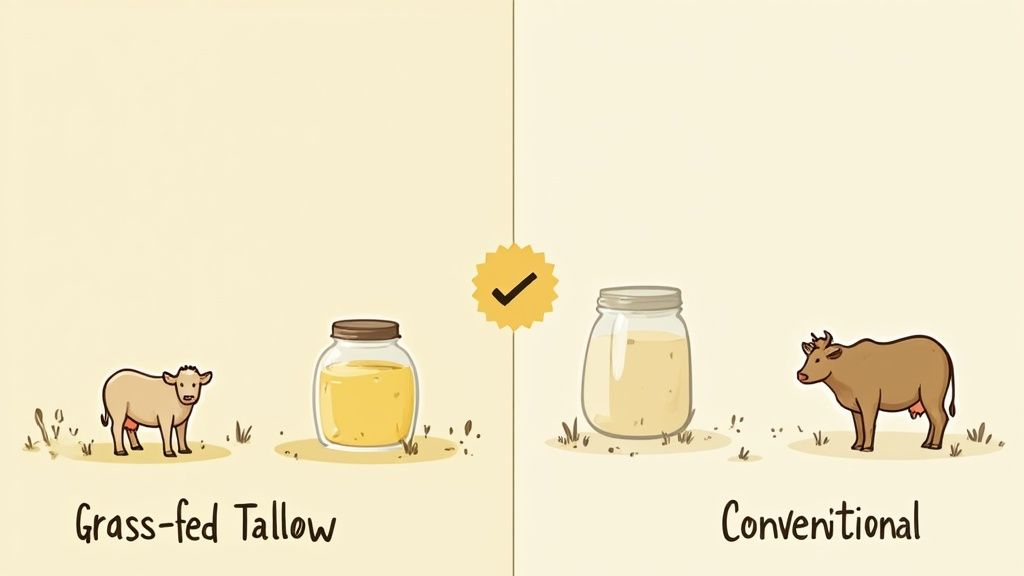
The single most important factor is where the fat comes from. It directly impacts everything—nutrient density, color, texture, and ultimately, how well it works for your skin. Think of it like this: a sun-ripened, organic tomato from a local farm is bursting with flavor and nutrients, while a mass-produced one often falls flat. It's the same idea here. The diet and lifestyle of the cattle profoundly shape the quality of the tallow, transforming it from simple rendered fat into a true skin superfood.
Grass-Fed and Grass-Finished: The Gold Standard
If you want the best, the most crucial terms to look for are “100% grass-fed” and “grass-finished.” This isn’t just marketing speak; it's a promise of superior quality. Cattle are natural grazers, built to thrive on a diet of fresh pasture, and that diet makes all the difference.
This natural way of eating results in tallow that is packed with beneficial nutrients. It boasts much higher concentrations of fat-soluble vitamins A, D, E, and K, plus a more balanced fatty acid profile that's rich in anti-inflammatory omega-3s. For a deeper dive, our guide on the benefits of organic grass-fed tallow is a great resource.
The difference is clear: Grass-fed and finished tallow is a vibrant, nutrient-dense ingredient that reflects the health of the animal it came from. Conventional tallow simply cannot match its superior nutritional profile.
Grass-Fed vs. Conventional Tallow Quality Comparison
To make the distinction even clearer, let's break down the key differences. This table shows why investing in tallow from well-raised cattle pays off for your skin.
| Attribute | Grass-Fed & Finished Tallow | Conventional (Grain-Fed) Tallow |
|---|---|---|
| Color | Rich, creamy white to a vibrant golden yellow. | Often a dull, pale white or off-white. |
| Nutrient Profile | High in vitamins A, D, E, K, and CLA. | Significantly lower in fat-soluble vitamins. |
| Fatty Acids | Balanced ratio of Omega-3 to Omega-6. | Higher in inflammatory Omega-6 fatty acids. |
| Sourcing | From cattle raised on open pasture. | From cattle typically raised in feedlots. |
| Animal Diet | 100% grass diet, from start to finish. | Primarily grain, corn, and soy-based feed. |
Ultimately, choosing grass-fed and finished tallow ensures you're getting a product with the highest possible therapeutic value.
Visual Cues and Sourcing Details
Beyond the label, you can often spot high-quality pure beef tallow just by looking at it and seeing how transparent the brand is. Here’s a quick checklist to help you become a savvy tallow shopper:
- Color and Texture: Premium tallow should have a creamy white to pale yellow hue. A bright, golden yellow often indicates a high beta-carotene content from a diet rich in fresh grass. At room temperature, the texture should be smooth and firm, melting easily with the warmth of your skin.
- Source of the Fat: The best tallow comes from suet, which is the hard, nutrient-dense fat found around the kidneys and loins. Suet produces the purest, most stable, and most vitamin-rich tallow you can get.
- Rendering Method: Look for tallow rendered with low heat. This gentle process purifies the fat without scorching it, which is crucial for preserving its delicate vitamins and fatty acids. High-heat methods can destroy these beneficial compounds.
- Brand Transparency: Trustworthy brands are proud of their sourcing. They should be open about where their cattle are raised and confirm their commitment to humane and sustainable farming practices.
With the rising interest in natural ingredients, the demand for pure beef tallow is growing worldwide. This is great news for consumers, as it pushes more producers to adopt higher standards. By keeping these simple quality signals in mind, you can confidently choose a pure beef tallow that delivers the powerful, skin-loving results you’re looking for.
Incorporating Tallow Into Your Skincare Routine
Bringing pure beef tallow into your daily skincare is a beautifully simple switch, but how you start really matters. The trick is to introduce it slowly and mindfully, giving your skin a chance to get acquainted with this powerful, nutrient-dense moisturizer.
Before you go all-in, always, always do a patch test. This is non-negotiable for any new product, especially if your skin is on the sensitive side. Just dab a small amount on a discreet spot—like your inner wrist or behind your ear—and wait a full 24 hours. If you see no signs of irritation, you’re good to go. This little step gives you the confidence to move forward.
Your Guide To Getting Started
Once you've passed the patch test, you can start to play with all the ways tallow can fit into your routine. Its versatility is incredible; you might find it replaces several other products on your shelf. Remember, a tiny bit goes a very, very long way. Start with less than you think you need—a pea-sized amount is often plenty for your whole face.
Here are a few of the best ways to use it:
- As a Primary Moisturizer: After cleansing, while your skin is still a little damp, warm a small dab of tallow between your fingertips. Gently press it into your face and neck to seal in moisture and create a breathable, protective barrier.
- As a Cleansing Balm: Tallow is a fantastic oil cleanser. Massage it onto your dry face to effortlessly dissolve makeup, sunscreen, and daily grime. Then, simply wipe it all away with a warm, damp washcloth.
- As a Targeted Treatment: Use it as a spot treatment for stubborn dry patches, minor skin irritations, or anywhere that needs a little extra love. It’s also gentle enough for the delicate skin under your eyes or on your lips.
For a deeper dive into application techniques for different skin concerns, check out our complete guide on how to use tallow effectively.
Will Tallow Clog My Pores?
This is easily the number one question we get, and the answer should put your mind at ease. Pure beef tallow has a comedogenic rating of 2, which means it’s unlikely to clog pores for the vast majority of people. Its fatty acid profile is so similar to our skin’s own natural oils (sebum) that it absorbs beautifully instead of just sitting on top.
The "less is more" philosophy is your best friend when using tallow. Its rich concentration means you only need a minimal amount to achieve deep moisturization without overwhelming your skin.
If you have acne-prone skin, a good way to start is by using tallow only at night or as a spot treatment on areas that aren't prone to congestion. This lets your skin soak up its anti-inflammatory benefits while you gauge how it responds.
For those with very dry or mature skin, tallow can be a total game-changer. Used as a nightly repair cream, it helps restore the skin’s lipid barrier and improve elasticity while you sleep. Its gentle, protective nature also makes it an amazing barrier cream for sensitive skin. It's incredibly effective at protecting and soothing delicate areas, a principle that's also key when learning how to prevent and manage diaper rash.
By starting slow and listening to your skin, you can seamlessly welcome this ancestral powerhouse into your routine for a healthier, more radiant complexion.
Comparing Tallow to Plant-Based Oils
When you start exploring natural skincare, it's easy to get lost in a world of plant-based oils and butters. From creamy shea to tropical coconut oil, the options are endless. But how does an animal-based fat like pure beef tallow stack up?
This isn't about pitting them against each other as "good" versus "bad." Instead, it's about understanding a fundamental difference in how our skin recognizes and uses them. The secret is a concept called biomimicry.
Tallow’s magic comes from its structure. Its fatty acid profile is remarkably similar to our skin’s own natural oils, known as sebum. Think of it this way: your skin is a lock, and moisturizers are keys. Plant oils are often great keys that get the job done, but tallow is like a master key cut from the original blueprint of the lock itself.
Because of this incredible similarity, your skin welcomes tallow on a cellular level. It doesn't just sit on the surface; it sinks in deeply and efficiently, delivering nutrients exactly where your skin barrier needs them most. Many plant-based oils, while beneficial, have molecular structures that our skin doesn't recognize as readily, which can sometimes lead to slower absorption or that greasy feeling.
Fatty Acid and Vitamin Showdown
To really see the difference, you have to look at what's inside. Tallow and plant oils both contain beneficial fatty acids, but their profiles and nutrient concentrations are worlds apart. Tallow offers a unique, harmonious balance that’s tough to find anywhere else in nature.
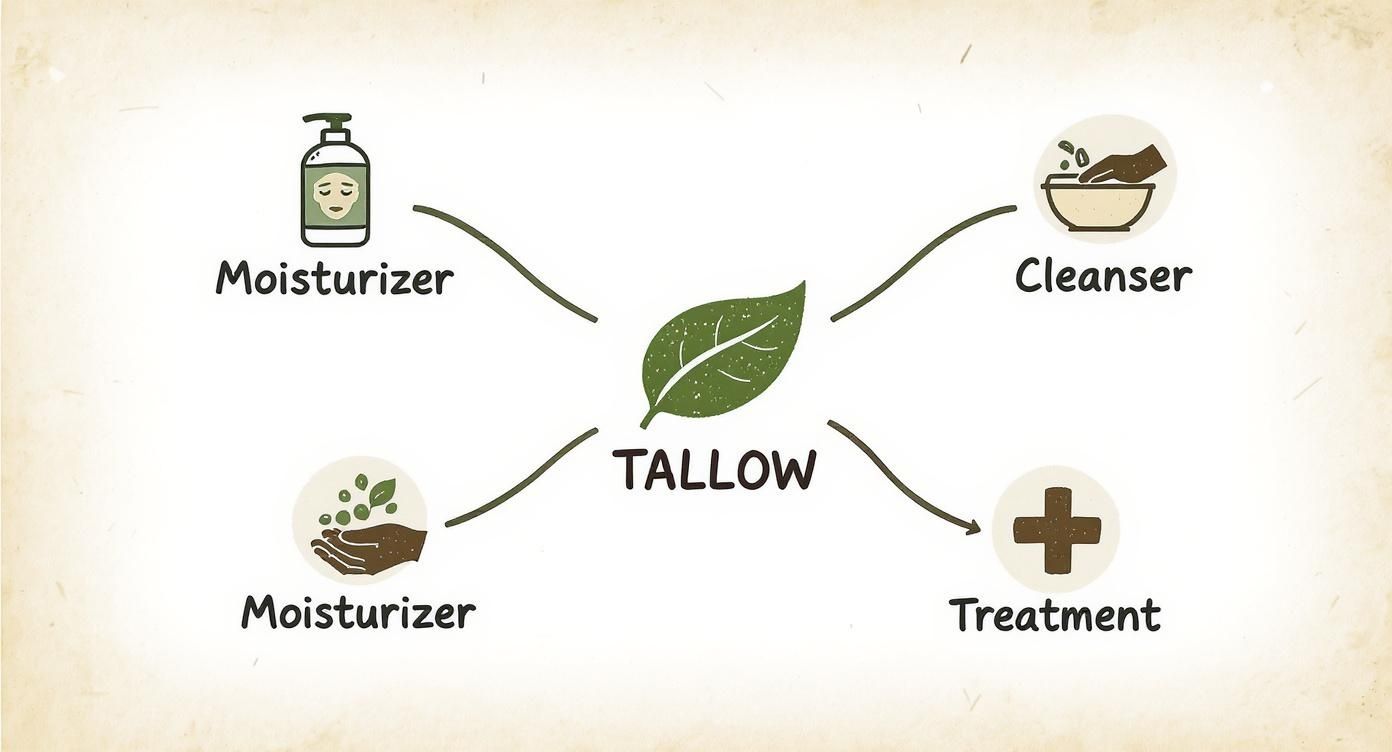
This diagram shows just how versatile tallow is. Because it’s so compatible with our skin, it can work as a moisturizer, a cleanser, and a targeted treatment all in one.
Pure beef tallow isn't just moisturizing; it's bio-recognizable. Its molecular makeup provides the essential building blocks our skin needs for repair and resilience, offering a level of compatibility that many plant oils cannot match.
Let’s break it down with a few quick comparisons:
- Tallow vs. Coconut Oil: Coconut oil is a fantastic antimicrobial and hydrator, but its high concentration of lauric acid can be comedogenic (pore-clogging) for some people. Tallow’s blend of oleic, palmitic, and stearic acids is much closer to our own sebum, making it less likely to cause breakouts.
- Tallow vs. Shea Butter: Shea butter is a wonderful moisturizer packed with vitamins A and E. But high-quality, grass-fed tallow often boasts a wider range of fat-soluble vitamins—including D and K—which are crucial for skin repair and healthy immune function.
The Rise of Bioavailable Skincare
This ancestral wisdom isn't a secret anymore. The skincare world is catching on, and the demand for pure beef tallow in cosmetics is surging as more people look for natural ingredients that actually work.
In fact, the global tallow balm market is projected to grow from $277.57 million to $403.01 million in a recent seven-year forecast. That’s a steady annual growth rate of 5.47%, driven by a growing appreciation for tallow’s deep moisturizing power and unique compatibility with our skin. You can dig into more of the market data on fortunebusinessinsights.com.
Ultimately, the choice between tallow and plant-based oils comes down to what your skin truly needs. Plant-based ingredients offer incredible benefits, but if you’re looking for something that is deeply nourishing, highly absorbable, and biologically familiar to your skin, pure beef tallow has a clear advantage.
It works with your skin, not just on it.
Finding the Best Pure Beef Tallow Products
Diving into the world of natural skincare can feel overwhelming, but picking out a great pure beef tallow is pretty simple once you know the signs of a quality product. Think of this as your cheat sheet for making a smart, informed choice that your skin will thank you for.
It all starts at the source—the farm. Your number one priority should be finding products that are "100% grass-fed and grass-finished." This isn't just a buzzword; it means the cattle were raised on their natural diet, which directly translates to a richer, more nutrient-dense tallow packed with skin-loving vitamins.
Your Tallow Buying Checklist
When you're looking at a specific product, the little details matter. The best tallow comes from suet fat, which is the hard, nutrient-rich fat that surrounds the kidneys. Using suet results in the purest and most stable tallow you can get.
Next, flip it over and read the ingredient list. A genuinely pure beef tallow product will have a ridiculously short list of ingredients. If you see a long list of things you can’t pronounce, or unnecessary additives like synthetic fragrances and preservatives, put it back on the shelf. Those extras can often irritate the skin, defeating the whole purpose.
- Sourcing: Is it clearly labeled as coming from 100% grass-fed and finished cattle? This is the most important factor for quality.
- Ingredients: Does the list contain just tallow, or maybe a simple, beneficial oil like olive oil? Less is almost always more.
- Texture: Do you prefer a creamy, light whipped balm or a denser solid balm? This is purely a personal choice, so think about how you'll be using it.
A truly pure product lets the quality of the tallow speak for itself. Minimalist formulas aren't just a trend; they show the maker is confident in the power and safety of their main ingredient.
Knowing what to look for in tallow is a great start, but understanding which additives help or harm your skin in general is even better. You can learn more about the broader principles for good and bad skincare ingredients to use and avoid to level up your entire routine.
The demand for clean, natural products is exploding. The global tallow market was valued at USD 9.02 billion and is expected to hit USD 13.61 billion by 2030. You can see the full market analysis on Grand View Research to get a sense of the industry's growth. The good news for us? This boom means more high-quality options are hitting the market all the time.
Common Questions About Using Beef Tallow
Diving into the world of ancestral skincare is exciting, but it's totally normal to have a few questions. If you're new to pure beef tallow, you're probably wondering what it really smells and feels like, or if it’s a good fit for your skin. Let's tackle the most common concerns so you can feel completely confident.
A lot of people are a little hesitant at first, worried that an animal-based product might feel heavy, greasy, or have an off-putting smell. These are fair points, but a truly high-quality tallow will surprise you—it offers a clean, luxurious experience that feels incredibly natural on the skin.
Will It Make My Skin Smell Bad?
This is easily the number one question, and the answer is a clear and simple no. When it's rendered correctly, high-quality pure beef tallow is virtually odorless. The gentle, low-and-slow rendering process is key; it purifies the fat and removes any of that strong, "beefy" aroma.
If anything, you might notice a very faint, clean, and slightly waxy scent when you first apply it, but that disappears almost instantly. A strong or unpleasant smell is a major red flag—it usually points to lower-quality sourcing or a rushed rendering process that didn't do its job.
Is Tallow Likely To Clog Pores?
It makes sense to worry about clogged pores, especially when you're thinking about using a rich, nourishing balm. The good news is that beef tallow has a low comedogenic rating of 2, which means it's unlikely to clog pores for most people. Its secret lies in its molecular structure, which is a near-perfect match for our skin's own natural oils (sebum).
Because tallow is so similar to the oils your skin already produces, it's recognized and absorbed beautifully instead of just sitting on top. This biomimicry is what makes it so effective and gentle.
Of course, everyone's skin is different. If you're particularly prone to congestion, the smart move is always to do a little patch test on your arm or jawline first and see how your skin reacts.
How Long Does Tallow Last?
Pure beef tallow is incredibly stable, and that’s thanks to its high concentration of saturated fats. This natural stability essentially makes it self-preserving, giving it an impressive shelf life without any help from artificial additives.
Keep your tallow balm in an airtight container away from direct sunlight and heat, and it can easily last for a year or even longer. You don't need to refrigerate it, but if you live somewhere really hot, popping it in the fridge can help maintain its texture. Just know it will become quite firm when chilled!
Ready to feel the difference a truly pure, gentle formula can make? Wild Tallow Skincare crafts minimalist, effective products with 100% grass-fed tallow, perfect for even the most sensitive skin. Discover our products at Wild Tallow.