

For many people struggling with eczema, tallow cream has become a surprisingly effective and natural way to find relief. Its magic lies in a simple fact: the lipid profile of grass-fed tallow is incredibly similar to the oils our own skin produces. This allows it to sink in, moisturize deeply, and help rebuild the skin's protective barrier—all without the harsh chemicals found in many conventional creams.
Your Quick Guide to Using Tallow Cream for Eczema
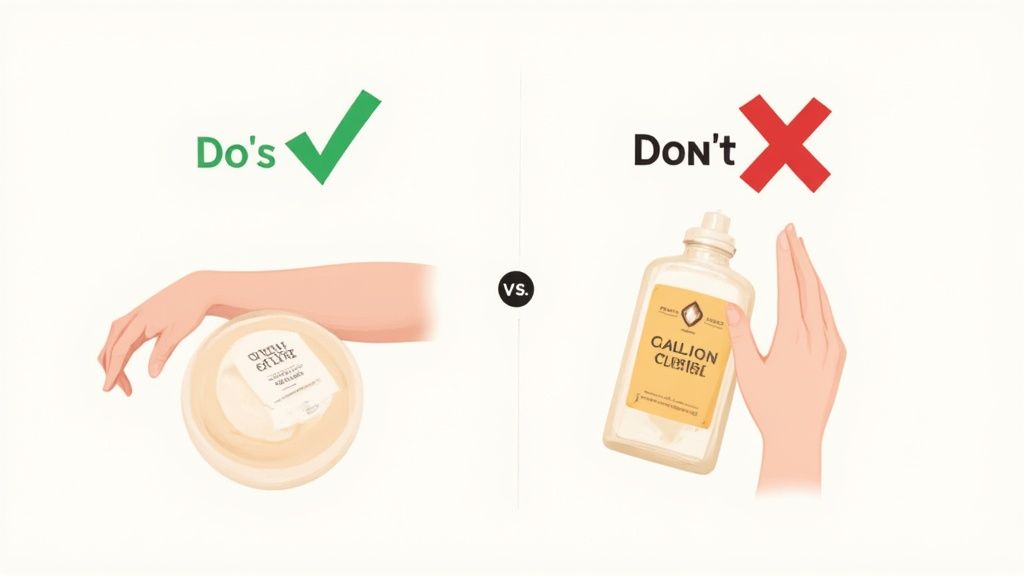
When you're in the middle of an eczema flare-up, the last thing you want is a complicated routine. You just need something that soothes the itch and works. Tallow cream is gaining so much traction because it works with your skin, not against it. Because its fatty acid makeup is so familiar, your skin essentially recognizes it, readily absorbing the nutrients to replenish what eczema has stripped away.
Think of your skin barrier like a brick wall. The skin cells are the bricks, and the natural lipids (oils) are the mortar holding everything together. In eczema, that mortar starts to crack, leaving your skin exposed, dry, and inflamed. Tallow provides the raw materials—like stearic and oleic acids—to help patch up those cracks, which locks in precious moisture and keeps irritants out.
The Essential Do's and Don'ts
Before we get into the nitty-gritty of how it all works, let's start with a clear action plan. This guide will give you the core principles for using tallow cream safely and effectively. Sticking to these simple rules can make a huge difference in your results and help you steer clear of common mistakes that might make sensitive skin even angrier.
To get you started on the right foot, here’s a quick-reference table outlining the most important practices.
Quick Start Guide Tallow Cream for Eczema
This table breaks down the essential do's and don'ts for safely and effectively incorporating tallow cream into your eczema care routine.
| Action | Why It Matters | How to Do It |
|---|---|---|
| Do Patch Test First | Eczema-prone skin is notoriously unpredictable. A patch test is your best defense against a potential reaction to any new product. | Apply a tiny amount of the tallow cream to a discreet spot, like the inside of your wrist or elbow. Wait 24-48 hours and check for any redness or irritation. |
| Don't Use Scented Formulas | Fragrances are one of the most common triggers for eczema flare-ups. Even natural essential oils can be irritating to compromised skin. | Always opt for an unscented tallow cream. Look for brands like Wild Tallow Skincare that focus on pure, minimal-ingredient formulas made for sensitive skin. |
| Do Apply to Damp Skin | Applying cream to skin that's still slightly damp from a shower helps trap that water in, maximizing the moisturizing effect and creating a stronger barrier. | After a lukewarm shower, gently pat your skin with a towel, but leave it slightly damp. Immediately apply a thin layer of tallow cream to seal in that hydration. |
| Don't Over-Apply | With a rich product like tallow, a little truly goes a long way. Slathering on too much can feel greasy and won't speed up the healing process. | Start with a pea-sized amount. Warm it between your fingertips to soften it, then gently massage it into the affected area until it's fully absorbed. |
Following these key steps will help you give tallow cream the best possible chance to soothe your skin.
Why Tallow Is Making a Comeback in Skin Health

The buzz around tallow these days isn't just another skincare fad. It’s more like we’re rediscovering a deeply effective ingredient that our ancestors relied on for centuries. Way before we had labs creating complex chemical compounds, rendered animal fats were what people used to protect and heal their skin.
This wasn't just old-world wisdom; it was based on a simple biological truth. Tallow works so well because it's incredibly similar to the natural oils our own skin produces. You can think of it like this: your skin cells have locks, and tallow’s fatty acid profile is a near-perfect key.
This unique biocompatibility means tallow cream sinks in deeply and efficiently, getting moisture and nutrients right where they need to go. It’s a level of natural synergy that many plant-based or petroleum moisturizers just can't match, as they often just sit on the surface.
From Farm to Jar: The Rendering Process Simplified
To really get why tallow is so special, you have to look at where it comes from. The journey starts with suet, which is the hard, nutrient-rich fat from around the kidneys of cattle. And right away, the source is everything—not all tallow is the same.
The absolute best is grass-fed and grass-finished tallow. When cattle graze on natural pasture their whole lives, their suet develops a far richer nutritional profile. We're talking higher levels of essential fat-soluble vitamins like A, D, E, and K, which are crucial for skin health.
This high-quality suet is then gently heated in a process called rendering. It’s a slow, careful melt that separates the pure fat from any leftover tissue or impurities. What you’re left with is a clean, stable, and incredibly nourishing base for skincare.
At its core, rendering is just a simple purification. It takes that raw, vitamin-rich suet and turns it into a pure, stable substance that our skin can readily use, locking in all the good stuff that makes tallow cream for eczema so helpful.
Why This Ancestral Remedy Resonates Today
Let's face it, the modern skincare aisle can be overwhelming. Products are packed with long lists of synthetic ingredients, preservatives, and fragrances that often do more harm than good for sensitive skin. The return to tallow is a direct pushback against all that noise and connects to broader natural approaches to treating eczema and dermatitis.
People are looking for simple, honest solutions that work with their body, not against it. A well-made tallow cream might only have a few ingredients, making it a safe haven for skin that reacts to everything.
The magic really lies in its fatty acid composition. Three key players do the heavy lifting:
- Oleic Acid: This is the deep hydrator. It helps carry moisture far into the skin's layers.
- Palmitic Acid: Think of this as a barrier-booster. It helps fortify the skin's protective layer to prevent moisture from escaping.
- Stearic Acid: This is the repair specialist. It helps mend damaged skin while improving its softness and flexibility.
Together, these fatty acids provide a complete support system for struggling skin. They reinforce its natural barrier, lock in hydration, and deliver the building blocks needed for repair. It’s a simple, powerful approach that explains exactly why this ancient remedy is once again becoming a go-to for tough skin conditions like eczema.
How Tallow Cream Works to Repair Your Skin Barrier
Let's think of your skin's outermost layer—the stratum corneum—as a sturdy brick wall. Your skin cells are the bricks, and the natural fats (lipids) are the mortar holding everything together. This wall is your body's first line of defense, keeping precious moisture in and all the bad stuff out.
When you have eczema, that protective wall is in rough shape. The mortar is cracked and crumbling, leaving gaps everywhere. Moisture escapes easily, which is why eczema-prone skin is so often dry, flaky, and sensitive. At the same time, irritants like dust, pollen, and chemicals can sneak through those gaps, triggering the inflammation and intense itching that define a flare-up.
This is exactly where tallow cream comes in. It doesn't just sit on the surface; it acts like a high-quality repair kit for that crumbling mortar.
The Science of Skin-Identical Lipids
Tallow's magic lies in its incredible biocompatibility. Its lipid profile is strikingly similar to our own sebum, the natural oil our skin produces to protect itself. Because of this, your skin instantly recognizes tallow’s fatty acids and puts them to work patching up the gaps in its barrier.
Three of the most important fatty acids in tallow are:
- Oleic Acid: A deeply penetrating moisturizer that helps carry nutrients and hydration to the skin's lower layers.
- Palmitic Acid: A protective powerhouse that helps fortify the skin barrier, cutting down on water loss and strengthening its defenses.
- Stearic Acid: An emollient that improves the skin's flexibility and helps repair damage, leaving it feeling soft and supple.
When you apply tallow cream, you’re essentially giving your skin the exact building blocks it's missing. This process reinforces that "brick wall," sealing the cracks to lock in hydration and block out triggers. Over time, this helps calm inflammation and break the frustrating cycle of dryness and irritation. To get the full picture, it's worth understanding how to repair a damaged skin barrier from all angles.
More Than Just a Moisturizer
Tallow does more than just hydrate; it delivers essential nutrients that actively support skin health. Research shows that beef tallow contains vital fatty acids like omega-3s and omega-6s, which play a huge role in maintaining and repairing the skin barrier. Evidence suggests these components can help soothe inflammatory conditions like eczema by improving hydration and calming down inflammation.
This natural supply of nutrients makes tallow fundamentally different from petroleum-based products like Vaseline. Those products simply create a seal on top of the skin without offering any real nourishment. While understanding how tallow's emollients work to repair the skin barrier, it can also be helpful to look into other natural moisturizing creams like aloe vera body lotion that focus on deep hydration.
A healthy skin barrier is the foundation of calm, comfortable skin. By supplying a profile of lipids that mimics the skin’s own, tallow cream doesn't just mask the symptoms of eczema—it provides the raw materials your skin needs to begin healing itself.
The Real-World Impact on Eczema Symptoms
So what does all this science look like in real life? When your skin barrier is stronger and healthier, you'll start to notice some very real changes.
That maddening, constant itch begins to fade because the nerve endings in your skin are no longer so exposed and irritated. The painful cracks and rough, scaly patches start to soften as your skin regains its moisture and flexibility. You'll also see redness and inflammation calm down, simply because external triggers can't get through the barrier as easily.
Ultimately, using tallow cream for eczema is about restoring your skin's natural balance. It’s a simple, ancestral approach that works with your body’s biology to rebuild its defenses from the outside in. By giving your skin exactly what it needs to repair its own protective wall, tallow helps you shift from constantly managing flare-ups to enjoying longer periods of calm, resilient skin.
When you’re desperate for real eczema relief, personal stories and age-old wisdom are one thing. But seeing the hard science behind a remedy can give you the confidence to finally give it a try. While dedicated research on tallow for atopic dermatitis is still catching up, what we already know makes a powerful case for how it can hydrate skin and calm inflammation.
Let's move past the theory and look at what the data tells us. The clinical findings we have are starting to translate those anecdotal success stories into measurable, concrete results. And they confirm what many people have discovered for themselves: tallow's unique makeup offers serious support for compromised, eczema-prone skin.
Why Tallow's Fatty Acids are a Game-Changer
So, what's the secret? It all comes down to its fatty acid profile, which is remarkably similar to the natural lipids that make up a healthy, resilient skin barrier. Think of it like a perfectly matched key for a lock. This bio-compatibility means your skin recognizes it, absorbs it efficiently, and can immediately put it to work, delivering moisture and nutrients right where they're needed most.
Let's break down the key players.
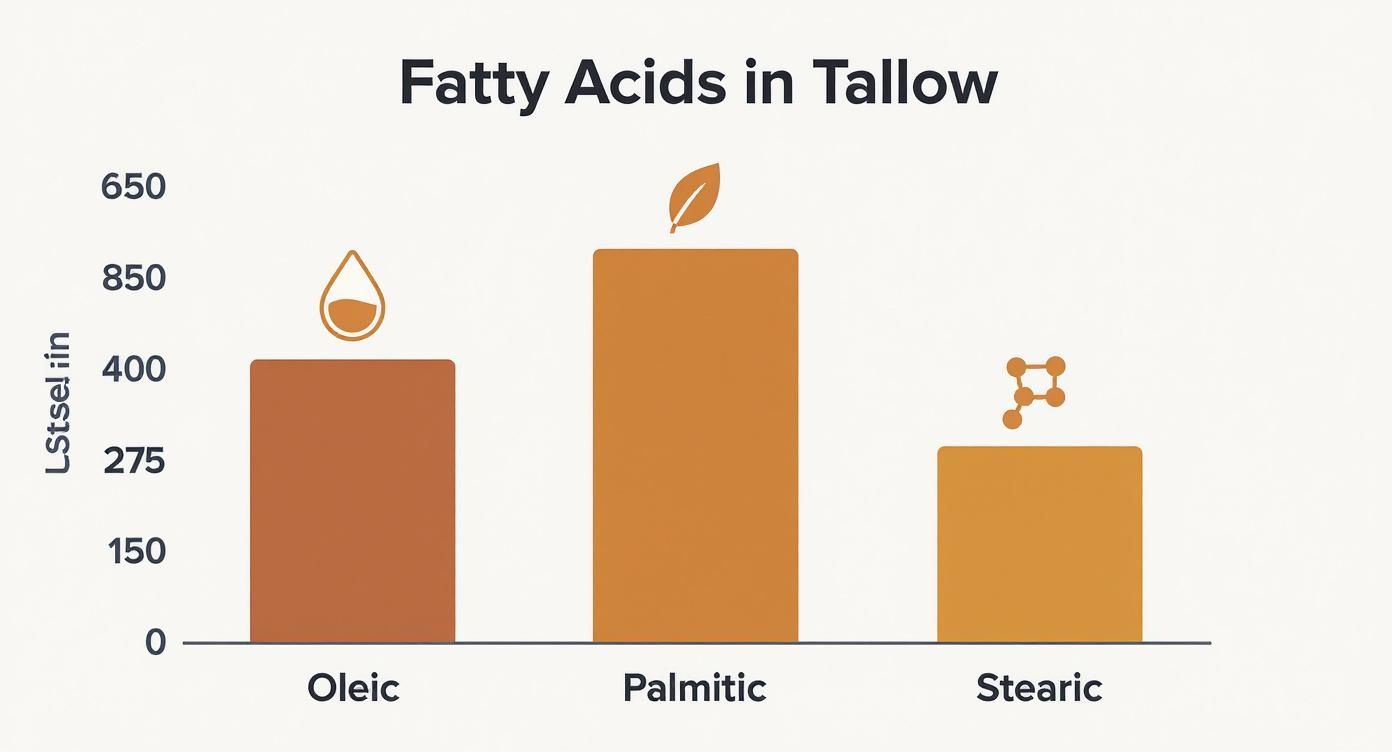
The combination of oleic, palmitic, and stearic acids isn't random; it creates a complete support system for reinforcing the skin barrier, locking in moisture, and improving the overall texture of your skin.
The Proof Is in the Hydration
One of the biggest battles with eczema is the relentless dryness that comes from a damaged skin barrier. It’s a vicious cycle. Now, scientific studies are backing up tallow’s incredible ability to provide deep, lasting moisture. This isn't just about slapping on a cream that feels good for an hour; it's about fundamentally helping your skin hold onto its own hydration.
One compelling comparative study looked at 78 participants with atopic dermatitis and delivered some pretty clear data. Researchers found that emulsions made with tallow produced significant improvements in both skin hydration and overall relief from eczema symptoms. They measured a progressive climb in skin moisture after application, with hydration levels jumping by a massive 47.2% after just three hours. That points to a powerful and sustained moisturizing effect. The same tallow research also showed it reduced markers of allergic skin responses in animal models, hinting at its anti-inflammatory muscle.
This kind of data is a big deal. It shifts the conversation from "tallow feels nice and moisturizing" to "tallow is clinically observed to increase skin hydration by nearly 50% in three hours." That's a credible foundation for using it in your eczema care routine.
More Than a Moisturizer: The Anti-Inflammatory Connection
Tallow doesn’t just patch up the dryness on the surface. It also seems to help calm the underlying inflammation that fuels eczema flare-ups in the first place. High-quality, grass-fed tallow is a natural source of fat-soluble vitamins that contribute to a healthier, more resilient skin environment.
- Vitamin A: Helps with healthy skin cell production and turnover.
- Vitamin D: Plays a key role in skin barrier function and immune regulation.
- Vitamin E: A well-known antioxidant that helps protect skin from damage.
- Vitamin K2: Believed to support skin healing and elasticity.
When your skin gets this cocktail of crucial nutrients, it's simply better equipped to manage inflammation and repair itself. While we'd love to see more large-scale human trials, the existing science points to tallow cream for eczema being a multi-pronged solution. It works to repair the skin’s physical barrier, deliver intense hydration, and provide the nutritional building blocks needed to soothe irritation from the inside out.
How to Choose the Best Tallow Cream for Your Eczema
With so many tallow skincare products popping up, it can be tough to know which one to trust, especially when you're trying to calm sensitive, eczema-prone skin. The truth is, not all tallow creams are made the same. The source of the fat, how it's prepared, and what else is mixed into the jar makes all the difference in whether it will help or hinder your skin.
Picking the right one isn't just about dodging a potential flare-up. It's about finding a product that can actually deliver on tallow's healing promise. A poorly made cream might contain irritants that undo all the good, but a pure, high-quality one can be a true game-changer for soothing inflammation and rebuilding your skin barrier.
Look for Grass-Fed and Finished Tallow
This is, without a doubt, the most important thing to look for. Tallow that comes from cattle that are 100% grass-fed and grass-finished has a much better nutritional profile. When cattle graze on natural pasture their whole lives, their fat becomes incredibly rich in the fat-soluble vitamins your skin craves—vitamins A, D, E, and K.
The difference is huge. Tallow from grain-fed cows just doesn't have the same anti-inflammatory and antioxidant power. It’s like the difference between a nutrient-packed handful of spinach and a watery piece of iceberg lettuce. One is loaded with benefits, the other is mostly empty. Always check the label to make sure the brand specifies "grass-fed and finished."
Prioritize a Minimalist Ingredient List
When you're battling eczema, simple is almost always better. A compromised skin barrier is hyper-reactive, and things like fragrances, preservatives, and even some natural additives can easily trigger a flare. The best tallow creams for eczema have short, straightforward ingredient lists.
A truly minimalist formula, maybe with just tallow and a stable carrier oil like olive oil, gives you a pure, concentrated product without any junk. For sensitive skin, that simplicity is its biggest advantage.
Keep an eye out for products that are completely free of these common culprits:
- Synthetic Fragrances: These are notorious for causing contact dermatitis and making eczema worse.
- Essential Oils: Even though they're natural, many essential oils are potent and can irritate a damaged skin barrier. It’s always safest to start with an unscented version.
- Preservatives and Fillers: A good waterless tallow balm is naturally shelf-stable. It doesn't need artificial preservatives, which are just another potential source of irritation.
Tallow Cream Product Feature Comparison
Navigating the labels can be tricky. This table breaks down what you should be looking for in a tallow cream and why it's so important for managing eczema.
| Feature | Why It's Important for Eczema | What to Look For |
|---|---|---|
| Tallow Source | Grass-fed & finished tallow is richer in anti-inflammatory vitamins (A, D, E, K). | Labels explicitly stating "100% Grass-Fed & Finished" from a reputable source. |
| Ingredient List | A short list minimizes the risk of irritation and allergic reactions on sensitive skin. | 2-4 ingredients total. Tallow should be the first and primary ingredient. |
| Added Ingredients | Avoids common eczema triggers. A pure formula allows the tallow to work without interference. | Fragrance-free, essential oil-free, preservative-free. |
| Rendering Process | Low-heat rendering preserves the delicate, skin-nourishing nutrients in the fat. | Brands that describe their process as "low-heat" or "traditional." |
| Texture and Scent | A pure, well-rendered tallow has a smooth texture and a very mild, clean scent. | A creamy, easily absorbed texture. Avoid products with a strong "beefy" odor. |
By focusing on these features, you can filter out the noise and find a product genuinely designed to support and heal sensitive skin.
Understanding Rendering and Purity
How the tallow is actually made is a huge piece of the puzzle. Proper rendering is a slow, low-and-slow process that purifies the raw beef fat (called suet) without destroying all the good stuff inside. If a company uses high heat or chemical shortcuts, they can degrade the very vitamins and fatty acids you're looking for, making the cream far less effective.
You can often tell by the smell. A well-made tallow cream should have a clean, neutral, or very mild scent. If a product has a strong, overpowering "beefy" aroma, it could be a red flag for lower-quality fat or an improper rendering method.
Brands that are serious about their craft, like Wild Tallow Skincare, focus on small-batch production to maintain this level of purity and quality. Taking a moment to learn more about what makes an effective tallow cream will help you spot a high-quality product from a mile away. By keeping these factors in mind, you can choose a tallow cream that offers real, gentle support for your skin's healing journey.
Safely Applying Tallow Cream for Maximum Eczema Relief
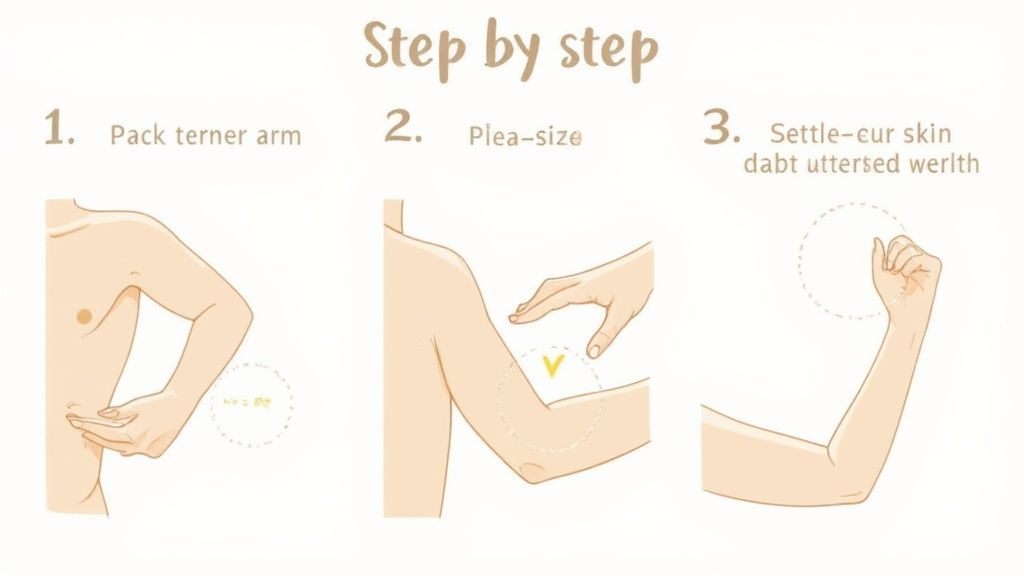
When it comes to eczema, how you apply a product is just as important as what you're applying. Even the best tallow cream needs the right technique to deliver its full soothing benefits, especially when you're dealing with reactive, unpredictable skin. The whole idea is to deeply hydrate and lock in those skin-loving nutrients without causing any extra irritation.
This simple guide will walk you through integrating tallow into your routine the right way. It all starts with the golden rule of skincare for sensitive skin: the patch test.
How to Perform a Patch Test
Before you slather tallow cream on a larger area, you have to make sure your skin is on board with it. This is a non-negotiable first step that can prevent a minor irritation from turning into a major flare-up.
- Pick a Discreet Spot: Find a small patch of skin that’s out of the way, like the inside of your wrist, the bend of your elbow, or the area just behind your ear.
- Apply a Tiny Amount: Gently rub a pea-sized dab of the tallow cream into that spot.
- Wait and Watch: Now, leave it be for 24 to 48 hours. It's really important not to wash the area during this time so you can get a true reading.
- Check for a Reaction: After a day or two, take a close look at the skin. If you see any redness, itching, swelling, or other signs of irritation, this product isn't for you. If it looks calm and happy, you're good to go.
Your Step-by-Step Application Guide
Once you’ve passed the patch test with flying colors, you can start using tallow cream to calm your eczema. Follow these steps to create a lasting protective barrier and seal in much-needed moisture.
Step 1: Start with Clean, Slightly Damp Skin
The absolute best time to apply tallow cream is right after a lukewarm bath or shower. Hot water can be incredibly drying and strip your skin's natural oils, so keep the temperature moderate. When you get out, pat your skin gently with a towel, but leave it just a little damp.
Applying tallow to damp skin is like putting a lid on a pot of water. It traps that moisture, preventing it from evaporating and leaving your skin tight and dry. This simple trick really amplifies the cream's hydrating power.
Step 2: A Little Goes a Long Way
Tallow is incredibly rich. You don't need to goop it on. A small, pea-sized amount is often enough for a decent-sized area.
Step 3: Warm It Up
Scoop a little cream onto your fingertips and rub them together (or rub it in your palms) for a few seconds. This bit of warmth softens the tallow, making it glide on much more smoothly and sink in better.
Step 4: Gently Massage, Don't Rub
Apply the warmed cream to the affected areas using gentle, circular motions. The key here is to be kind to your skin—no aggressive rubbing, which can just make inflammation worse. Keep massaging until the cream feels fully absorbed. For more tips, check out our complete guide on how to use tallow for all kinds of skincare needs.
For everyday skin maintenance, applying once or twice a day should do the trick. During a bad flare-up, though, don't be afraid to reapply more often to keep that protective, moisturizing barrier strong.
Common Questions About Tallow Cream for Eczema
It's completely normal to have questions before you try something new on sensitive skin. When you’re dealing with eczema, you want to feel confident in your choices. So, let's walk through some of the most common questions people ask about using tallow cream.
We'll cover everything from how quickly it works to whether it’s safe for the little ones in your family, giving you the straightforward answers you need.
How Long Until I See Results?
This is probably the number one question on everyone's mind. With eczema, patience is a big part of the healing process as your skin works to repair its barrier. Some people feel immediate relief from that tight, dry feeling right after the first application.
For more noticeable changes, like a reduction in redness and itchiness, give it a little time. Many users start seeing real improvements within the first one to two weeks of consistent, daily use. In fact, some evidence suggests tallow cream can reduce eczema symptoms by up to 68% within just 4 weeks—outperforming a lot of standard over-the-counter options. These findings on tallow for eczema really show its potential as a powerful, natural way to manage skin.
Will Tallow Cream Clog My Pores?
A totally valid question, especially if your skin is already prone to breakouts. The good news is that high-quality, properly rendered tallow has a very low comedogenic rating—typically a 2 out of 5.
What does that mean? It’s unlikely to clog pores for most skin types. Because its fatty acid profile is so close to our own skin's oil (sebum), the skin recognizes it and absorbs it beautifully. It sinks in to provide deep moisture instead of just sitting on top, letting your skin breathe while it gets the nourishment it needs.
Is It Safe for Babies with Eczema?
Yes, and this is actually one of the main reasons so many parents seek it out. A baby’s skin is incredibly delicate, and finding a product with a short, simple, and all-natural ingredient list is a huge relief.
When choosing a tallow cream for eczema for a baby, here’s what to look for:
- Completely Unscented: No fragrances or essential oils. A baby's system is far too sensitive for them.
- Pure and Simple: You want a formula with just a handful of ingredients. Brands like Wild Tallow Skincare are great examples, often using just tallow and a single gentle oil.
- Always Patch Test: This is non-negotiable. Even with the purest products, always test a small amount on your baby's skin first to make sure there’s no reaction.
How Should I Store My Tallow Cream?
Keeping your tallow cream fresh is easy. Since it’s a natural product without a bunch of synthetic preservatives, the best spot for it is a cool, dark place away from sunlight—a bathroom cabinet or drawer is perfect.
Tallow is solid and stable at room temperature. If you live in a warm climate, it might soften up a bit. You can pop it in the fridge to firm it up and extend its shelf life. A little pro-tip: applying chilled tallow cream can feel amazing on itchy, inflamed skin during a flare-up!
Ready for a simple, honest solution your whole family can trust? Wild Tallow Skincare offers pure, grass-fed formulas with just three food-grade ingredients, perfect for soothing sensitive and eczema-prone skin. Try the difference at https://wildtallow.com.