

Picture this: a skincare ingredient so pure and effective that our ancestors relied on it for centuries. That’s the magic of a tallow soap base. In simple terms, it's purified animal fat—usually from beef—that has been expertly crafted into a solid block, ready for artisans or at-home creators to make into soap.
What Is Tallow Soap Base and Why Is It Back
Think of a tallow soap base as the perfect blank canvas for a soap maker. It’s the foundational "dough," waiting for you to add your own personal touch with essential oils, botanicals, or natural exfoliants. This time-honored ingredient is seeing a huge resurgence, especially within the clean beauty and natural living worlds, and for good reason.
At its heart, a tallow soap base is created through a natural chemical reaction called saponification. This is where rendered animal fat is combined with an alkali (like lye). Once the process is complete and the soap has fully cured, all the lye is gone. You’re left with nothing but a pure, gentle, and remarkably effective cleansing bar.
A Return to Traditional Wisdom
For generations, long before synthetic chemicals filled our shelves, tallow was the go-to ingredient for skincare and soap. People are rediscovering it today as they look for honest, hard-working products without all the confusing additives. The clean beauty movement is all about transparency and simplicity, and tallow fits that ethos perfectly. It's a single, powerful ingredient with a history of getting the job done.
This shift back to basics also connects with a growing desire for more sustainable, nose-to-tail living. Using tallow means that more of the animal is respectfully used, which reduces waste. It's a practice that honors the entire resource. To dig deeper into this, you can explore our guide on what tallow is made from.
Why It Resonates Today
The appeal of a tallow soap base isn't just about tradition; it’s about performance. Its biggest advantage is how beautifully it works with our own skin. The fatty acid profile of tallow is remarkably similar to the natural oils our skin produces, so it cleanses gently without stripping away your skin's protective barrier. This makes it a game-changer for anyone dealing with sensitive, dry, or easily irritated skin.
For the DIY crowd and small-batch soap makers, starting with a pre-made tallow soap base is a fantastic shortcut. It offers a safe and convenient way to craft high-quality, custom soaps at home. You get all the benefits of tallow without having to handle lye yourself, opening up the creative process to everyone.
The Unique Benefits for Sensitive and Dry Skin
The real magic of a tallow soap base truly shines when it comes into contact with sensitive or chronically dry skin. The secret isn’t some complicated chemical formula; it’s a beautifully simple, natural compatibility. At a molecular level, tallow is remarkably similar to the oils our own skin produces—a substance called sebum.
Think of it like this: your skin is a lock, and tallow is a perfectly shaped key. When you wash with a tallow-based soap, your skin seems to recognize its composition. This allows all the nourishing goodness to be absorbed deeply and efficiently, helping to repair your skin's moisture barrier without a hint of irritation or clogged pores.
Nourishment Your Skin Understands
This biocompatibility goes more than skin deep. Tallow is a natural powerhouse, loaded with the fat-soluble vitamins your skin craves to stay healthy.
- Vitamin A: Helps with skin cell turnover, keeping your skin looking firm and vibrant.
- Vitamin D: Plays a key part in skin protection and rejuvenation, helping to even out skin tone.
- Vitamin E: A potent antioxidant that defends your skin from environmental damage and calms down inflammation.
- Vitamin K: Supports the skin's natural healing process and can improve the appearance of skin texture and tone.
Because these vitamins are delivered in a fatty base that your skin loves, they're immediately available for use. This direct line of nourishment can calm redness, promote healing, and offer lasting relief that many synthetic products just can't replicate.
A Gentle Solution for Chronic Conditions
If you're dealing with conditions like eczema, psoriasis, or just relentless dryness, you know the struggle of finding a cleanser that doesn’t strip your skin. Most commercial soaps rely on harsh detergents that dismantle the delicate lipid barrier, trapping you in a frustrating cycle of dryness and irritation.
A tallow soap base works completely differently. Instead of stripping oils away, it cleanses while simultaneously replenishing your skin with beneficial fatty acids like oleic and palmitic acid. These are the exact building blocks needed to maintain a soft, supple, and resilient skin barrier.
By reinforcing the skin's natural defenses, tallow soap helps lock in moisture and protect against external irritants. This makes it an exceptional choice for providing comfort and support to compromised skin, turning daily cleansing from a chore into a restorative ritual.
The effectiveness of tallow in soaps is no industry secret. In fact, soaps and detergents make up about 21.8% of the tallow fatty acid market, valued for its incredible moisturizing and lathering properties. As more people seek out gentle, natural ingredients, tallow’s place in modern skincare is only becoming more important. You can read more about the tallow fatty acids market on coherentmarketinsights.com.
This unique blend of skin-friendly structure and rich nutrient content is what makes tallow such a standout ingredient. For those looking for gentle yet powerful care, we've put together a guide on choosing the best natural soap for sensitive skin. At the end of the day, tallow offers a back-to-basics solution that works in beautiful harmony with your body.
How a Tallow Soap Base Is Traditionally Made
To really get what makes a tallow soap base so special, it helps to peek behind the curtain at the traditional craft of soapmaking. This isn't some harsh, industrial process. It's an art form, a time-honored method that turns a few simple, natural ingredients into a bar of soap that genuinely loves your skin.
Think of it like a cherished family recipe—you start with the best ingredients and follow each step with care to get a perfect result. The journey begins with sourcing high-quality suet, which is the nutrient-dense fat from around a cow's kidneys. If you're curious, you can learn more about where tallow comes from in our detailed guide.
The entire process really breaks down into three key stages.
Step 1: Rendering and Purification
First up is rendering, and it’s the most important stage. This is a slow, gentle melting process that purifies the raw suet. We carefully heat the suet at a very low temperature, which allows the pure, clean fat to melt and separate from any leftover tissues or impurities.
This liquid gold is then filtered—not once, but multiple times. What’s left is a clean, creamy-white, and odorless substance. This is pure tallow, the very foundation of an incredible soap base. A meticulous rendering process is the secret to getting a final bar of soap with a neutral scent and a rich, luxurious lather.
The end result is a soap base that works to soothe, nourish, and protect the skin barrier.
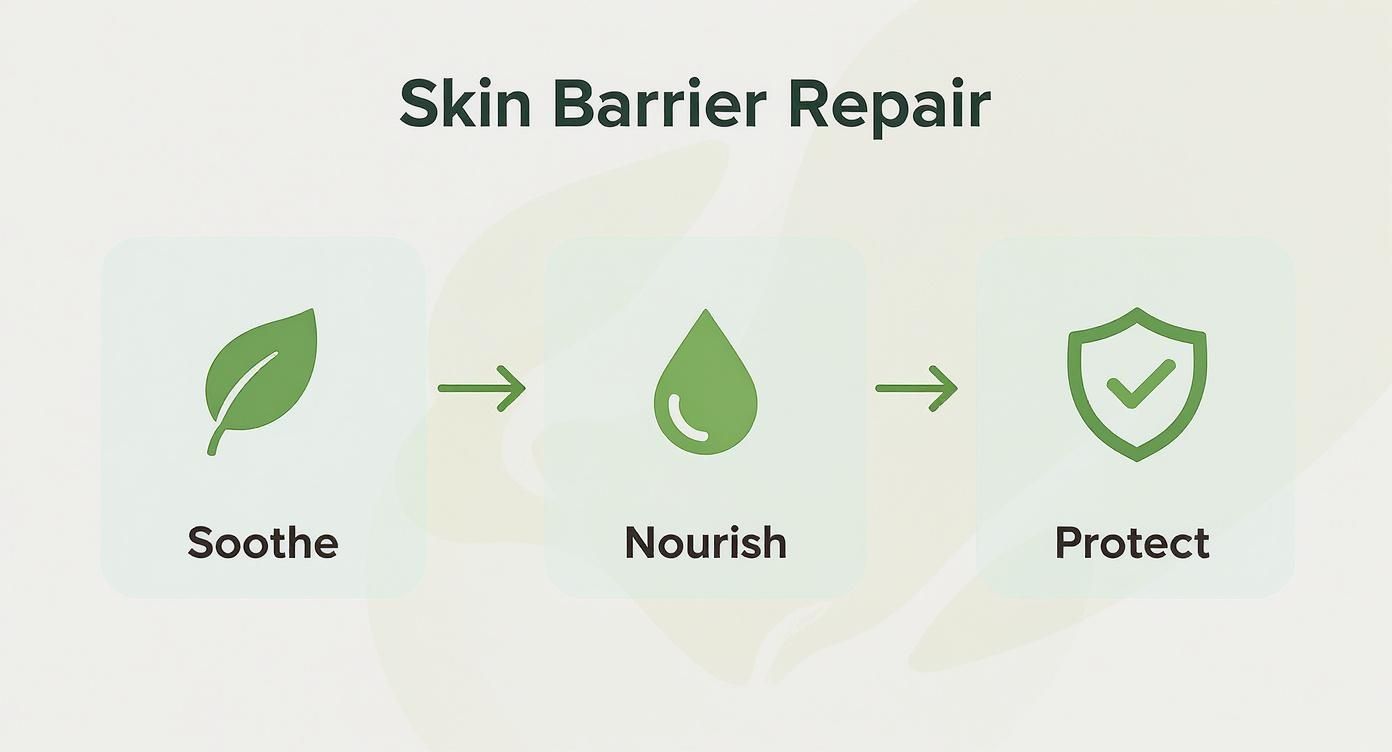
This gentle approach is why tallow is so effective. It first soothes irritation, then delivers deep nourishment, and finally helps strengthen the skin's own protective layer.
Step 2: Saponification—The Magic Moment
Next, we have saponification. This is the beautiful chemical reaction that officially turns fat into soap. The purified tallow is carefully combined with an alkali solution, which has traditionally always been lye (sodium hydroxide). This step demands absolute precision to ensure every last bit of lye is used up in the reaction.
When it's done right, there is zero lye left in the final soap. What you get instead are two wonderful products: pure soap and natural glycerin. This glycerin is a natural humectant, meaning it draws moisture into the skin. It’s a huge reason why traditionally made tallow soap feels so incredibly hydrating and never leaves your skin feeling tight or dry.
Saponification is where the real transformation happens. It’s more than just a chemical process; it’s the moment that unlocks all the nourishing potential of tallow, creating a soap that cleanses without stripping away your skin’s precious natural oils.
Step 3: Curing—The Final Transformation
The final step is curing, and it’s all about patience. After the soap is poured into molds, it’s left to rest in a cool, dry place for about four to six weeks.
During this quiet waiting period, any excess water evaporates. This creates a much harder, longer-lasting bar of soap. Curing also allows the soap to become exceptionally mild, which is why it’s so well-suited for even the most delicate and sensitive skin types.
How to Choose a High-Quality Tallow Soap Base
Dipping your toes into the world of tallow soap is a fantastic move towards simpler, more natural skincare. But here's the thing: not all tallow is created equal. The quality of your tallow soap base makes all the difference, and knowing what to look for on a label is key to getting a bar that truly nourishes your skin.
Think of it like shopping at a farmer's market. You instinctively reach for the most vibrant, fresh-looking produce because you know it's packed with the most nutrients. The same exact logic applies to tallow. A superior soap starts with superior raw ingredients.
Look for 100% Grass-Fed and Finished Tallow
This is, without a doubt, the most important factor. When cattle graze on their natural diet of grass for their entire lives, the tallow they produce has a nutritional profile that's simply off the charts.
- Higher Vitamin Content: You'll find much higher concentrations of skin-loving vitamins like A, D, E, and K.
- Better Fatty Acid Balance: Grass-fed tallow has a healthier ratio of omega-3 to omega-6 fatty acids, which is fantastic for calming down inflammation.
- More Conjugated Linoleic Acid (CLA): This is a powerful antioxidant with natural anti-inflammatory properties, making it a huge win for sensitive or irritated skin.
Insisting on a soap base made from 100% grass-fed tallow ensures you’re getting the most therapeutic bang for your buck. Tallow from grain-fed animals just doesn't have the same density of these vital skin-supporting nutrients. It's a night-and-day difference.
Prioritize Food-Grade and Unscented Formulas
Beyond the animal's diet, the purity of the tallow itself is a huge deal. Always look for a food-grade tallow soap base. This is your guarantee that it was processed and purified to a much higher standard—rendered cleanly, free from junk, and resulting in a pure, stable product that's safe for your skin.
Starting with an unscented base is also the smartest move you can make, for two big reasons:
- It’s a lifesaver for sensitive skin. Artificial fragrances are one of the most common triggers for skin irritation. An unscented base completely sidesteps that risk.
- It’s a perfect blank canvas. If you're into DIY soap making, an unscented base gives you total freedom to add your own gentle essential oils or botanicals without any other scents getting in the way.
A high-quality tallow soap base should be pure, potent, and simple. By prioritizing grass-fed sourcing and an unscented formula, you ensure the final product is gentle enough for a newborn yet effective enough to soothe chronic dryness. It’s about choosing a foundation built on quality, not just cleansing.
To make it even easier, here’s a quick checklist to reference when you're shopping.
Tallow Soap Base Quality Checklist
Use this quick guide to make sure you're picking a truly top-tier tallow soap base.
| Quality Factor | What to Look For | Why It Matters |
|---|---|---|
| Source of Tallow | Label says 100% grass-fed & finished. | Ensures the highest concentration of vitamins A, D, E, K, and a better fatty acid profile. |
| Purity Grade | Labeled as food-grade or "edible." | Guarantees the tallow was rendered cleanly and is free from impurities and contaminants. |
| Scent | Unscented or "fragrance-free." | Minimizes the risk of irritation for sensitive skin and provides a neutral base for DIY projects. |
| Color & Texture | Creamy white to pale yellow; smooth texture. | Indicates proper rendering and purification. Avoid bases that are dark, gritty, or have an "off" smell. |
| Ingredient List | Simple and short. Ideally just tallow and lye. | You want the benefits of tallow without unnecessary fillers, preservatives, or synthetic additives. |
By keeping these points in mind, you can confidently choose a tallow soap base that will deliver all the skin-loving benefits you're looking for.
How Tallow Stacks Up Against Other Soap Bases
Stepping into the world of soapmaking can feel a bit like standing in a grocery store cereal aisle—so many choices, all promising different things. To really get why tallow is making such a comeback, it helps to put it side-by-side with other popular soap bases like glycerin, shea butter, and coconut oil. The best choice always comes down to what your skin is actually asking for.
Think of it like picking out a t-shirt. A thin, breezy linen shirt is great for a hot day, but it’s not what you’d grab for a chilly evening. In the same way, a soap that explodes into big, fluffy bubbles might feel luxurious, but it might not be giving your dry, sensitive skin the deep, soothing moisture it desperately needs. It’s all about matching the ingredient to the job.
Lather and How It Feels on Your Skin
The first thing you notice about any soap is the lather. It’s more than just bubbles; the type of lather a soap produces tells you a lot about how it’s going to treat your skin.
- Tallow Soap Base: Forget big, airy bubbles. Tallow creates a dense, creamy, and incredibly stable lather that feels more like a cleansing lotion. It’s low, rich, and cleans your skin without stripping away its natural, protective oils. This is exactly what skin crying out for comfort and hydration needs.
- Coconut Oil Base: This one is the bubble champion. Coconut oil is famous for its big, fluffy, over-the-top lather. While it's fun, that impressive cleansing power can be a double-edged sword, often stripping too much moisture and leaving skin feeling tight.
- Glycerin Base: Known for being exceptionally gentle, glycerin soap creates a smooth, slick lather that isn't particularly bubbly. It gets the job done without irritation but lacks that rich, conditioning quality you get from a fat-based soap like tallow.
- Shea Butter Base: Shea butter is a close cousin to tallow in feel. It also produces a creamy, lotion-like lather, though the bar itself is often a bit softer and the lather can feel slightly less dense.
Moisturizing Power and How Long the Bar Lasts
A good bar of soap should do two things: leave your skin feeling better than before and not disappear after a week in the shower. These two factors—moisturizing ability and longevity—are directly tied to the hardness of the soap.
This is where tallow truly shines. Soapmakers have valued it for centuries not just for its incredible skin-conditioning properties, but for the hard, durable bars it produces. A tallow soap bar is built to last. It’s a workhorse ingredient, which helps explain why the global tallow market is valued at nearly USD 9.0 billion and is expected to keep growing as people rediscover its benefits. You can dig deeper into the tallow market trends on straitsresearch.com.
To make it even clearer, let's break down how these bases compare on the most important features.
Soap Base Feature Comparison
| Soap Base | Moisturizing Level | Lather Type | Bar Hardness | Best For |
|---|---|---|---|---|
| Tallow | Very High | Creamy, low, stable | Very Hard | Dry, sensitive, or irritated skin |
| Glycerin | Moderate | Smooth, low bubbles | Medium | Normal to sensitive skin needing gentle cleansing |
| Shea Butter | High | Creamy, conditioning | Medium-Soft | Dry or mature skin |
| Coconut Oil | Low | Big, fluffy bubbles | Very Hard | Oily skin, or in small amounts in a blended recipe |
As you can see, each base has its strengths. But when you’re looking for that perfect combination of deep moisture, a gentle cleanse, and a bar that won't melt away, tallow is hard to beat.
The Bottom Line: If you want a hard, long-lasting bar that provides deep, restorative moisture with a creamy feel, tallow is your answer. If you’re all about big bubbles and have normal to oily skin, coconut oil can work. For a simple, no-frills gentle clean, glycerin is a reliable choice.
Ultimately, a tallow soap base delivers a unique harmony of benefits. It gives you that solid, satisfying bar of soap with a lotion-like lather that actively nourishes your skin's protective barrier. This beautiful balance makes it the undisputed champion for anyone who puts skin health first, especially those of us with dry, sensitive, or easily troubled skin.
Getting Started with DIY Tallow Soap Projects
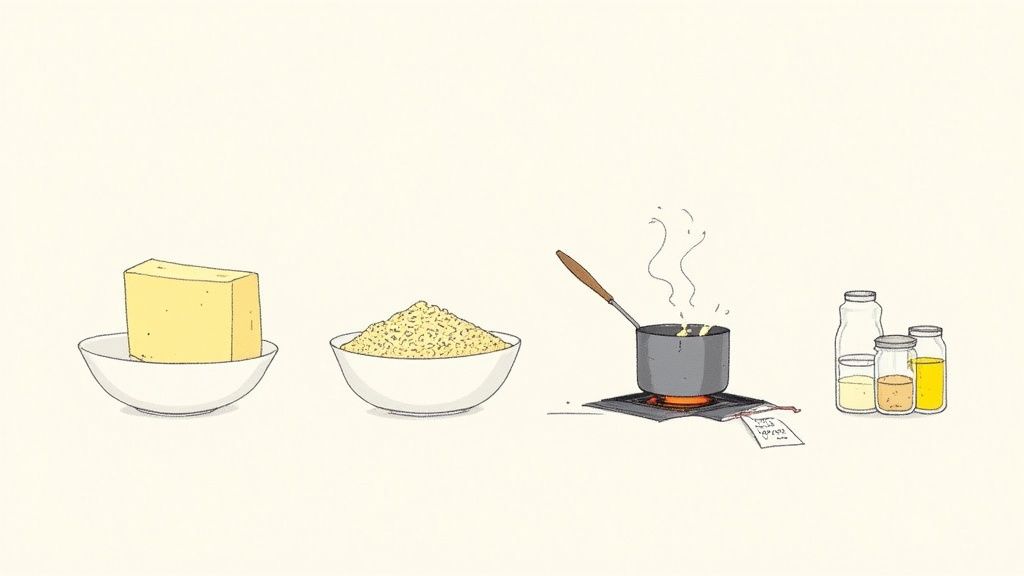
So, you're ready to try your hand at making your own soap? Working with a tallow soap base is a surprisingly simple and rewarding place to start. We're going to walk through a fantastic technique called "rebatching," which is perfect for anyone new to soapmaking because it completely skips the scariest part: handling raw lye.
Think of it like this: rebatching is taking an already-made, unscented bar of soap and giving it a personal touch. You’ll gently melt it down, then mix in all the wonderful, skin-friendly ingredients you want. It's the perfect way to get creative and still end up with a beautiful, handcrafted bar every single time.
The Simple Art of Rebatching Soap
The whole process is incredibly straightforward and fun, making it a great weekend project. You just need a few things from your kitchen and your chosen add-ins to begin.
Here’s how it works, broken down into three easy steps:
- Grate the Base: Grab a cheese grater and shred your block of tallow soap base, just like you would a block of cheddar. The smaller the flakes, the faster and more evenly they'll melt.
- Melt It Gently: Put the soap shavings into a double boiler or a simple heat-proof bowl set over a saucepan of simmering water. Add just a splash of distilled water or milk to help things along, stirring every so often until it looks like thick, creamy oatmeal.
- Customize and Mold: Take it off the heat and let it cool just a bit. This is where the magic happens! Stir in your extras—think essential oils, herbs, or exfoliants. Carefully pour the mixture into your soap molds and let it set for 24-48 hours before popping out your finished bars.
Inspiring Ideas for Your First Batch
The best part about using a tallow soap base is that it's a completely blank slate. You can add ingredients that cater to specific skin concerns or simply create a scent profile you absolutely love.
Here are a few gentle, skin-nourishing ideas to get you started:
- For Soothing: Mix in a tablespoon of colloidal oatmeal. It’s a classic for a reason and works wonders to calm itchy or irritated skin.
- For Hydration: A teaspoon of raw honey isn't just for tea! It’s a natural humectant, which means it helps pull moisture into your skin.
- For Relaxation: A few drops of lavender or chamomile essential oil can create a beautifully calming and gentle aroma, perfect for an evening shower.
Safety First: Even though you aren't working with lye, the melted soap is still hot, so handle it carefully. It’s also a good idea to work in a well-ventilated space, especially when you start adding essential oils.
Got Questions About Tallow Soap? Let's Clear Things Up.
Even when you hear about all the incredible benefits, trying something new often comes with a few lingering questions. Let's tackle the most common ones about tallow soap base so you can feel completely at ease making the switch.
Does Tallow Soap Smell Like Beef?
This is easily the number one question people have, and I get it! But the answer is a firm no. A properly made tallow soap base goes through a meticulous rendering and saponification process that purifies the fat, completely getting rid of any "beefy" scent.
What you're left with is a clean, neutral bar. Any lovely fragrance in a finished tallow soap, like lavender or chamomile, comes from essential oils and botanicals added later on. The tallow itself is just a rich, odorless foundation.
A high-quality tallow soap base should be a blank canvas, completely neutral in scent. This purity is what allows the beautiful, therapeutic aromas of essential oils to really shine through. It's a key sign of a well-crafted product.
Is Tallow Soap Ethical and Cruelty-Free?
Since tallow comes from an animal, it isn't vegan. But it absolutely can be ethical and align with a cruelty-free mindset. The key is to think of it through the lens of sustainability.
Many small-batch makers, myself included, source tallow as part of a "nose-to-tail" philosophy. This is all about honoring the entire animal and making sure nothing is wasted. It often means partnering with small, regenerative farms that treat their animals with respect. Always look for brands that are transparent about where their tallow comes from.
Will Tallow Soap Clog My Pores?
It’s highly unlikely. In fact, tallow is considered non-comedogenic, which is just a fancy way of saying it doesn't block pores. Its molecular structure is remarkably similar to our skin's own natural oils (sebum), so it sinks in beautifully without leaving that heavy, greasy feeling behind.
Many people with combination or even acne-prone skin find that tallow's natural anti-inflammatory properties can actually help calm the redness and irritation that comes with breakouts. It works with your skin to cleanse and nourish, not against it.
Ready to feel the difference that gentle, 100% grass-fed tallow soap can make for your skin? At Wild Tallow Skincare, we handcraft our soaps using just three pure, food-grade ingredients, perfect for skin that craves calm, clean comfort.
Shop our collection of sensitive skin-friendly tallow soaps and creams at wildtallow.com