

Using beef tallow for skincare is a timeless tradition, and for good reason. It’s making a huge comeback because of how incredibly compatible it is with the natural oils our skin produces. This nutrient-dense fat is loaded with vitamins A, D, E, and K, offering deep hydration that reinforces your skin's protective barrier. It's a simple, powerful, and effective choice.
Why Tallow Is Making a Skincare Comeback
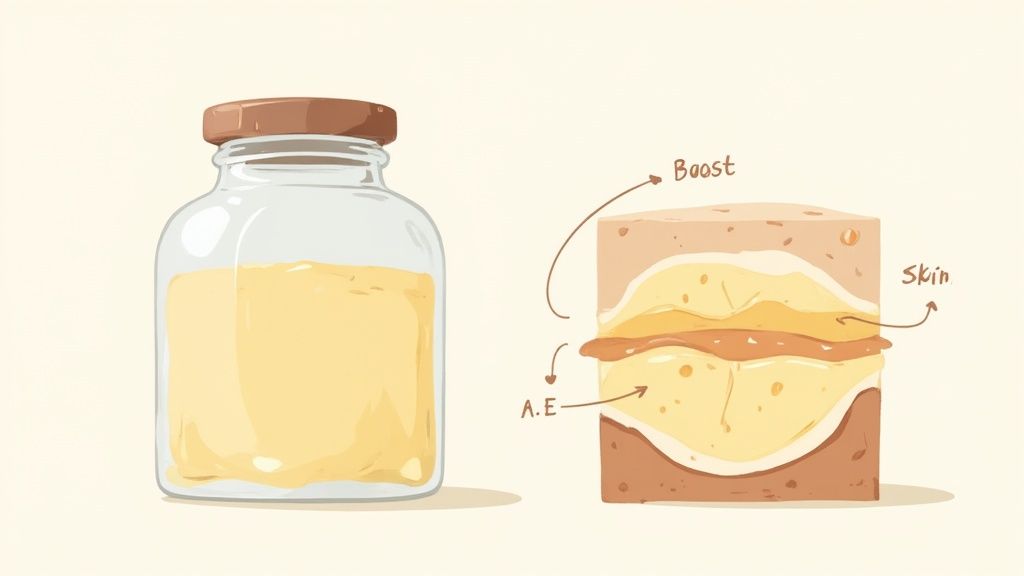
The renewed interest in beef tallow isn't just a passing fad; it's a return to simple, proven ingredients that have worked for centuries. Long before synthetic lotions filled our shelves, animal fats were the go-to for skin protection and healing. In fact, beef tallow has a history as a therapeutic topical that stretches back thousands of years, with evidence of its use in preparations from the Bronze Age.
After falling out of favor in the mid-20th century, people are once again seeking out natural, minimal-ingredient products. This collective shift is bringing ancestral ingredients like tallow back into the spotlight. You can explore a deeper dive into what is tallow made from in our dedicated article.
So, what’s the secret? It all comes down to its biochemical makeup. Tallow is uniquely rich in fatty acids like oleic and stearic acid, which closely mirror the lipids in our own healthy skin. This striking similarity means your skin recognizes it and absorbs it beautifully, delivering essential nutrients right where they’re needed most.
The Science of Skin Compatibility
This bio-compatibility is tallow's greatest strength. Unlike many plant-based oils or synthetic creams that can just sit on the surface, tallow works in harmony with your skin's natural sebum.
Here’s what that means for you:
- Reinforces the Skin Barrier: It helps lock in moisture and protect your skin from environmental stressors like wind and dry air.
- Delivers Fat-Soluble Vitamins: It provides a direct source of skin-loving vitamins A, D, E, and K, which are crucial for cellular health and repair.
- Soothes and Softens: Its rich, emollient texture offers immediate relief for dry, chapped, or irritated skin without any complicated additives.
To get a quick overview of what beef tallow brings to the table, this summary should help.
Beef Tallow Skincare At a Glance
| Aspect | Key Information | Best For |
|---|---|---|
| Texture & Feel | Rich, balm-like consistency that melts into the skin. Can feel heavy if over-applied. | Dry, chapped, or mature skin. Excellent for targeted treatment on rough patches. |
| Key Nutrients | Rich in fat-soluble vitamins A, D, E, K, and fatty acids like oleic and stearic acid. | Nourishing depleted skin and supporting barrier function. |
| Compatibility | Highly compatible with skin's natural sebum, leading to excellent absorption. | Most skin types, but especially those who find plant oils ineffective. |
| Common Uses | All-over body moisturizer, facial balm, lip care, and a soothing agent for minor skin irritations. | Individuals seeking a single-ingredient, whole-food approach to skincare. |
This table shows just how versatile and aligned with our skin's needs tallow really is.
Tallow doesn't just moisturize; it truly nourishes. By providing the very building blocks your skin already recognizes and uses, it supports your skin's innate ability to heal itself and stay balanced.
To better understand how natural fats support your skin’s protective layer, it's worth reading up on the importance of ceramides for skin health. This guide is for anyone who wants an honest, effective, and refreshingly straightforward approach to skincare.
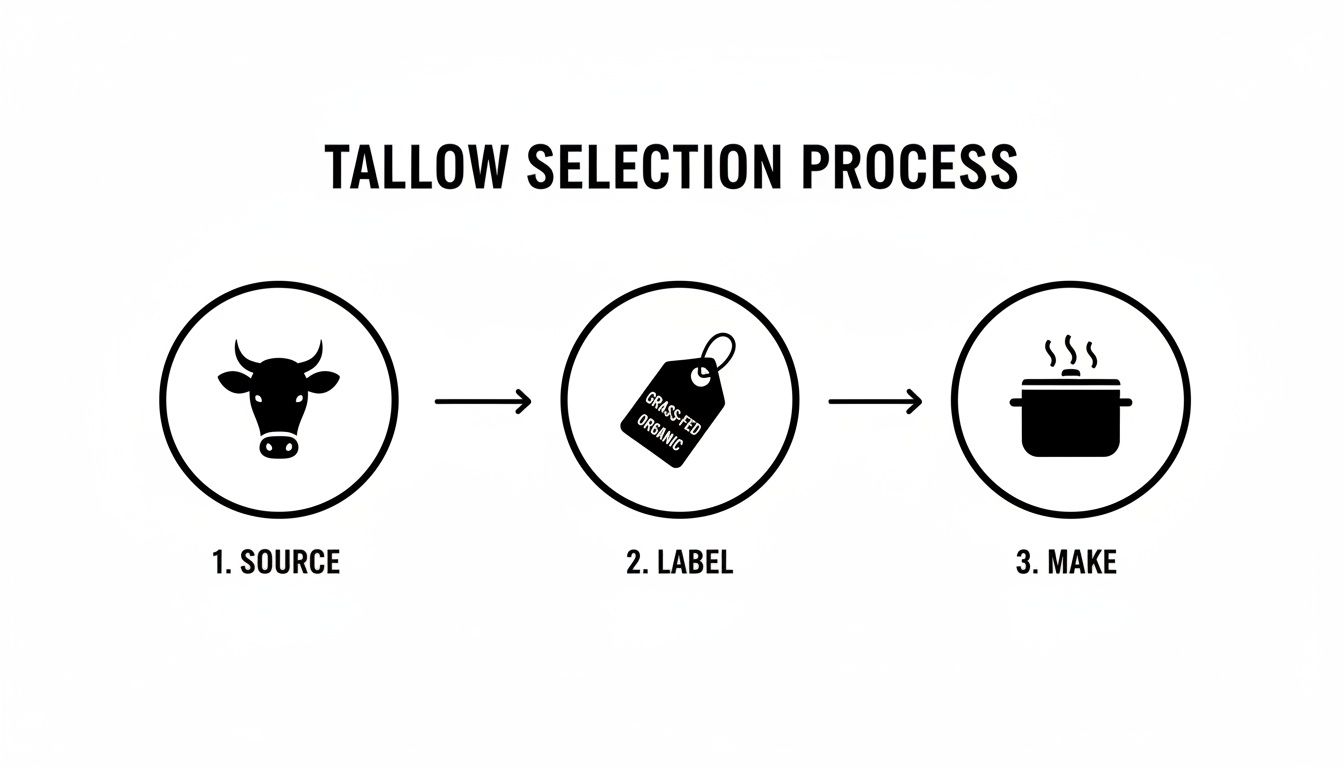
How to Choose the Right Beef Tallow
Let’s be clear: not all tallow is created equal. The quality of the tallow you put on your skin is everything, and it all comes down to the source. When you start looking, you’ll see one factor stands out above all others: the cow's diet and lifestyle.
Your absolute best bet is always tallow from 100% grass-fed, grass-finished cattle.
Cows that spend their lives on pasture, eating their natural diet of grass, produce a fat that's incredibly rich in nutrients. This means the tallow is packed with beneficial fatty acids and the fat-soluble vitamins your skin craves—A, D, E, and K. On the flip side, conventionally-raised cattle are often fed grain, which changes the fat composition and can introduce things you really don't want in your skincare.
But it’s not just about nutrition. Choosing grass-fed is also about purity. When you source from well-managed, responsible farms, you're getting a cleaner product, free from the hormones and antibiotics common in conventional cattle operations. This is a huge deal, especially if you have sensitive skin.
Decoding Product Labels
Once you've zeroed in on the source, the next step is to understand what the product labels are actually telling you. The jargon can seem confusing, but it reveals a lot about the quality inside the jar.
Here's a quick guide to the terms that matter:
- Rendered: This just means the raw beef fat (suet) has been melted down and purified. All tallow is rendered, but how it's rendered is key. You want to see terms like "low-heat" or "slow-rendered," which means the delicate nutrients haven't been destroyed by high temperatures.
- Unrefined: This is a big one. It means the tallow hasn't been bleached, deodorized, or chemically processed. Unrefined tallow keeps its natural creamy color and, more importantly, its full nutrient profile. It's the only way to go for skincare.
- Whipped: This is about texture, not quality. Whipped tallow has simply been beaten to make it light and fluffy, almost like a body butter. It’s much easier to scoop and apply.
When in doubt, always go for simplicity. The best products have the shortest ingredient lists. Pure, unrefined, grass-fed tallow is the gold standard, and you don’t need much else. If you want to dive deeper, you can explore more about the benefits of organic grass-fed tallow in our detailed guide.
Making Your Own Tallow at Home
If you're a DIY enthusiast or just want total control over the quality, rendering your own tallow is a fantastic option. It’s a surprisingly simple process that gives you an incredibly pure, low-odor product.
The most important step is starting with top-notch beef suet, specifically the fat from around the kidneys. You can usually get this from a local butcher or a farmer who raises grass-fed cattle.
To render it, just chop or grind the suet and melt it down in a slow cooker or a heavy-bottomed pot over the lowest possible heat. You’re aiming for a gentle melt, not a sizzle. After a few hours, the liquid fat will have separated from any impurities. All you have to do is strain the liquid through some cheesecloth into a clean glass jar. Once it cools and solidifies, you'll have a jar of beautiful, pure tallow ready for your skin.
Getting the Hang of Applying Tallow
How you apply tallow makes all the difference. Get it right, and your skin feels nourished and glowing. Get it wrong, and you're left with a greasy mess. But before we get into the "how," there’s one crucial step you can't skip. It’s the gatekeeper to making sure your skin will actually love this stuff.
First Things First: The Patch Test
Even with something as pure and natural as grass-fed tallow, you always want to do a patch test. Think of it as a quiet introduction between the tallow and your skin. This simple step can save you from potential irritation and gives you the confidence to move forward.
Here’s the best way to do it:
- Find a good spot: Pick a small, hidden area of skin. The inside of your wrist or just behind your ear are perfect.
- Apply a tiny bit: Just a dab will do.
- Wait and watch: Give it at least 24 hours. Check the spot for any redness, itchiness, or unusual reactions.
If your skin is calm and happy after a day, you’ve got the green light! If you see a reaction, that particular tallow might not be for you, and it could be worth trying a different brand or source.
Once your patch test is clear, you're ready to make tallow a regular part of your routine. The quality of what you're using is just as important as the application, which is why starting with a pure, well-sourced product is foundational.
For Your Face: Less Is Always More
When it comes to your face, remember this: a little goes a very long way. Tallow is incredibly rich and concentrated, so the most common mistake people make is slathering on way too much. The goal is supple, hydrated skin, not an oil slick.
Take out a pea-sized amount—that's it. Warm it up between your fingertips until it melts into a silky, translucent oil. Then, instead of rubbing it in, gently press and pat it onto your face. This technique helps it absorb beautifully without tugging on your skin.
This makes for an amazing nightly moisturizer or a protective shield on your face before heading out into biting winds. It's also fantastic to use right after cleansing. In fact, you can build an entire routine around it, starting with a natural tallow face wash.
The "press and pat" method isn't just a fancy trick. It actually encourages blood flow and helps the tallow meld with your skin’s own lipid barrier, which means you get way more of the good stuff where it needs to go.
For Your Body: Zeroing In on Dry Spots
You can be a bit more generous when using tallow on your body, especially on those spots that are constantly dry and begging for attention. This is where tallow really shines as a heavy-duty hydrator.
Focus your efforts on these trouble zones:
- Elbows and Knees: These areas get rough easily. A good massage with tallow right after you shower will lock in that moisture and keep them soft.
- Heels and Feet: Got cracked heels? Apply a thick layer of tallow to your feet before bed, then pull on some cotton socks. You’ll wake up to seriously soft feet. It’s a game-changer.
- Hands and Cuticles: If you’re constantly washing your hands, they’re probably thirsty. A small jar of tallow on your nightstand or by the sink works better than most hand creams you’ll find.
How often you apply really depends on your skin and your environment. In the dead of winter, you might use it daily. During a humid summer, maybe just a couple of times a week is plenty. Your skin is smart—it will let you know what it needs.
Customizing Tallow for Your Skin's Needs
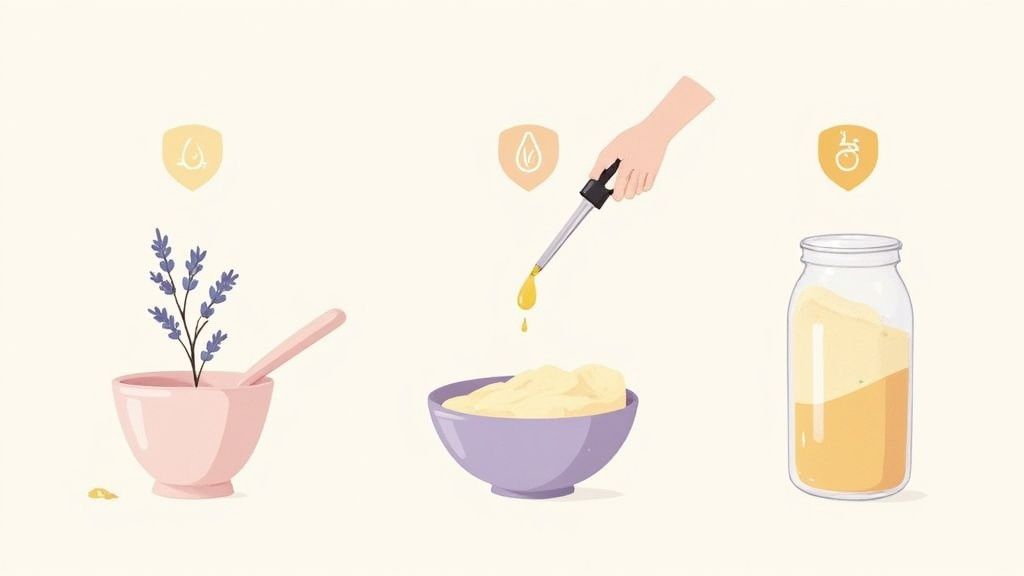
Pure grass-fed tallow is fantastic right out of the jar, but its real secret weapon is how beautifully it plays with other ingredients. Think of it as the perfect base for creating your own personalized skincare. By blending it with other natural goodies, you can dial up its benefits to target exactly what your skin is asking for.
This isn't about being a cosmetic chemist. It's about making small, smart additions to enhance the texture, introduce calming properties, or pack in more antioxidants. This is how you take a great moisturizer and make it your great moisturizer.
Pairing Tallow with Other Natural Oils
One of my favorite ways to tweak tallow is to mix in a bit of a liquid carrier oil. This simple step can lighten the balm's consistency, which is perfect if you find it a bit heavy for your face, or it can add a new dimension of nourishing fatty acids to the mix.
Here are a few combinations I've had great success with:
- Jojoba Oil: This is my go-to for facial blends. The molecular structure of jojoba oil is incredibly close to our skin’s own sebum. This synergy helps the tallow balm sink in quickly without leaving that heavy, greasy feeling behind. It's also well-tolerated by most skin types.
- Olive Oil: You can't go wrong with this classic. A high-quality extra virgin olive oil is loaded with antioxidants and nourishing compounds that blend perfectly with tallow to create a deeply moisturizing, protective body balm.
- Squalane Oil (from olives): If you're aiming for an ultra-lightweight, almost serum-like feel, squalane is the answer. Just a tiny amount gives tallow a silky, fast-absorbing finish that feels amazing.
I always recommend starting small. A good starting point is about one teaspoon of oil per 1/4 cup of softened tallow. Mix it in and see how you like the feel. You can always add more, but you can't take it out!
Tallow Blending Guide for Different Skin Needs
To really tailor your tallow, think about what your skin needs most. Adding specific oils can turn your balm into a targeted treatment for everything from dryness to irritation.
Here's a quick guide I put together to help you get started:
| Skin Concern | Recommended Add-in | Benefit | Mixing Ratio (per 1/4 cup tallow) |
|---|---|---|---|
| Extreme Dryness | Sea Buckthorn Oil | Rich in omega-7, deeply hydrating and repairing for chapped skin. | 1/2 teaspoon |
| Inflammation/Redness | Emu Oil | Known for its powerful anti-inflammatory properties, calms irritation. | 1 teaspoon |
| Signs of Aging | Rosehip Seed Oil | High in vitamin A (retinoic acid), helps with cell turnover and fine lines. | 1 teaspoon |
| Acne-Prone Skin | Jojoba or Hemp Seed Oil | Helps balance sebum production, non-comedogenic and lightweight. | 1 teaspoon |
| Dullness | Squalane Oil | Provides a radiant, non-greasy glow and improves skin elasticity. | 1-2 teaspoons |
This table is just a starting point. Feel free to experiment with other incredible ingredients like calendula-infused oil for soothing or black seed oil for its clarifying properties. The key is to listen to your skin and adjust accordingly.
Creating a Dreamy Whipped Tallow Cream
If you find pure tallow a little too dense, whipping it is a total game-changer. The process couldn't be simpler, and it completely transforms the texture into a light, fluffy cream that feels like a cloud. It's especially wonderful for a full-body moisturizer that just glides on after a shower.
Here's how I make it at home:
- Let the tallow soften up. Just leave the jar on the counter until it's soft enough to press your finger into easily. You don't want it melted, just pliable.
- Add your extras. Now’s the time to drizzle in any carrier oils or a few drops of a skin-friendly essential oil. Lavender and frankincense are beautiful options.
- Whip it good. Grab a handheld electric mixer and start on low speed. Gradually crank it up to high and let it go for about 3-5 minutes. You’ll see it get lighter in color and almost double in volume.
- Jar it up. Gently spoon your airy, whipped tallow cream into a clean, dry glass jar for storage.
Whipping tallow doesn't alter its nutritional profile; it just incorporates air into the fat. This not only creates a luxurious texture but also makes a small amount of product go a lot further.
This one simple step elevates the whole experience, making your homemade tallow balm feel just as decadent as any expensive cream on the market.
Troubleshooting Common Tallow Skincare Issues
Even with a natural product as wonderful as beef tallow, you might hit a few bumps on the road to glowing skin. Don't worry—most issues are easy to fix with a few small adjustments. Understanding how to navigate these little hurdles can be the difference between giving up and unlocking your skin’s full potential.
Is It a Breakout or Just a "Skin Purge"?
The most common concern I hear is about breaking out right after starting with tallow. It's totally natural to feel a little alarmed, but let's figure out what's really happening.
Sometimes, a new product can speed up cell turnover, pushing underlying congestion to the surface faster than usual. This is often called a "purge." It typically looks like small, short-lived pimples in the areas you normally break out. If this is what you're seeing, stick with it—it should clear up within a week or two as your skin adjusts.
But what if you're seeing redness, irritation, or pimples in completely new spots? That could be a sign your skin isn't happy. Before you throw in the towel, try these two simple tweaks:
- Use way less. Seriously. A tiny, pea-sized amount is more than enough for your entire face. Over-applying is the number one reason people run into trouble.
- Apply to damp skin. Slathering tallow on skin that's still slightly damp from cleansing is a game-changer. It helps the tallow spread into a much thinner layer and absorb way faster, preventing it from just sitting on top of your pores.
What to Do If Your Skin Feels Greasy
Feeling a little too greasy after application is another common hurdle. Tallow is incredibly rich, and its occlusive nature can sometimes leave a residue, especially if you have oily or acne-prone skin.
It’s this very texture that makes it so hydrating. In fact, some studies have noted that tallow fat esters can boost skin hydration by over 47% within just three hours. You can read more about these hydration findings yourself. The key is managing that texture for a good experience.
If your skin feels more slick than supple, the fix is usually simple. First, cut back on the amount you're using. If that alone doesn't solve it, try making tallow a nighttime-only treatment. This gives the rich balm all night to sink in and work its magic without you having to worry about a daytime shine.
Remember, the goal is nourished, not smothered. Your skin should feel comfortable and hydrated, not weighed down. Listening to your skin's feedback and adjusting your technique is the most important part of the process.
Storing Your Tallow to Keep It Fresh
Finally, let's talk about storage. Since pure, grass-fed tallow doesn't have any synthetic preservatives, you need to store it correctly to keep it fresh and effective.
For everyday use, keeping it in a cool, dark place like a medicine cabinet or pantry is perfectly fine.
If you've stocked up on a large batch or you live in a particularly warm and humid climate, popping it in the refrigerator is a great move. This will extend its shelf life significantly and prevent it from going rancid. A well-stored jar of tallow can stay fresh and potent for up to a year, ensuring you get all the benefits from the first scoop to the last.
Common Questions About Using Tallow for Skincare
Even after learning all the benefits, it's natural to have a few questions before you dive in. Trying something new on your skin, especially your face, should feel good and confident. Let's tackle some of the most common things people wonder about when they first discover tallow.
Is It Really Okay to Put Beef Tallow on My Face?
Absolutely. For most people, putting beef tallow on their face is not only safe but incredibly effective. The magic is in its composition—the lipid profile of tallow is so similar to our skin’s own natural oils (sebum) that your skin basically recognizes it as its own. This means it absorbs deeply instead of just sitting on the surface.
Now, it is a very rich moisturizer. If you have extremely oily or acne-prone skin, you might find it a bit heavy. The golden rule here is simple: always do a patch test. Try a little bit on your jawline for a few days and see how your skin responds before going all in. Sticking with a high-quality, purely rendered grass-fed tallow is your best bet for avoiding clogged pores and giving your skin the best nourishment possible.
The real takeaway here is compatibility. Tallow’s unique makeup makes it an incredibly intuitive moisturizer. It just works with your skin to support its natural barrier. But like any new relationship, it’s always smart to take it slow at first.
Can I Use Beef Tallow on My Baby?
Yes, tallow is often a fantastic choice for a baby’s incredibly delicate skin. Because it can be a single-ingredient product, it's one of the purest and gentlest ways to soothe things like stubborn dry patches or irritation in the diaper area.
The most important thing to remember is to choose a 100% pure, unscented tallow. This is non-negotiable for babies. You'll want to avoid any formulas that have added essential oils or fragrances, which can easily overwhelm their sensitive skin. And, as always, do a tiny patch test first and have a quick chat with your pediatrician if you have any concerns.
Will Using Beef Tallow Make My Skin Smell… Like Beef?
This is probably the number one question people have, and it’s a fair one! A properly rendered, high-quality beef tallow should have a very faint, almost neutral scent that some describe as slightly nutty or fatty. The key is that this scent vanishes almost immediately after you rub it into your skin.
If you ever come across a tallow product that has a strong or unpleasant "beefy" smell, that's usually a red flag. It often points to a lower-quality source or a rushed rendering process. To avoid this, seek out brands that specifically mention a "low-odor" finished product or, if you're making your own, be sure to render it low and slow and strain it meticulously.
How Does Tallow Stack Up Against Shea or Cocoa Butter?
All three are brilliant natural moisturizers, but tallow has a unique edge: its biochemical similarity to our own skin. This makes it uniquely recognizable and usable by our skin cells on a deeper level.
Let's break it down:
- Tallow: It's naturally packed with skin-loving, fat-soluble vitamins A, D, E, and K. Its fatty acid profile is a near-perfect match for human sebum, which is why it absorbs so beautifully.
- Shea & Cocoa Butter: These are amazing plant-based emollients, rich in their own sets of fatty acids and antioxidants. They are fantastic at creating a protective barrier on the skin but have a completely different structure than tallow.
Ultimately, there’s no single "best" choice—it all comes down to what your individual skin prefers. Some people find tallow feels less greasy and more nourishing, while others might love the distinct texture of a plant butter. The only way to truly know what your skin loves is to give them a try.
Ready to feel the simple, nourishing power of tallow for yourself? Wild Tallow Skincare crafts our products with 100% grass-fed tallow and just three food-grade ingredients, making them perfect for even the most sensitive skin.
Discover our gentle, effective tallow creams and soaps at Wild Tallow Skincare today!