

At its heart, tallow oil is simply the liquid gold that comes from gently heated and purified animal fat—most often, beef suet. Think of it like making ghee or clarified butter. A slow, low heat melts the fat, allowing the purest, liquid oils to separate from the more solid parts. What you're left with is the most refined, nutrient-rich essence of tallow.
An Ancestral Skincare Secret Rediscovered

Long before skincare came in lab-formulated bottles, tallow was a staple in every household. Our ancestors used it for everything from cooking to conditioning leather to healing and protecting their skin. This wasn't just a fleeting trend; it was a deeply ingrained, practical approach to skin health passed down through generations.
The philosophy behind it is beautifully simple: what you put on your body should be just as pure and nourishing as what you put in it. Tallow oil is the perfect embodiment of this idea, offering a powerful moisturizer that our skin just seems to understand.
To give you a quick overview, here are the core characteristics of tallow oil.
Tallow Oil At A Glance
| Attribute | Description |
|---|---|
| Source | Primarily from rendered beef suet (the hard, nutrient-dense fat from around the organs). |
| Form | A golden, stable liquid at room temperature. |
| Texture | Silky and rich, yet absorbs quickly without a heavy, greasy feel. |
| Key Benefit | Deeply moisturizes and nourishes with a fatty acid profile that closely matches human skin. |
This table captures the essence of tallow oil, but its real story begins on the farm.
From Farm to Face
The journey from a pasture to your skincare routine starts with a specific type of high-quality animal fat called suet. This isn't just any fat; it's the exceptionally nutrient-rich fat that protects the kidneys and other organs of cattle. For a deeper dive into the raw material, you can check out our guide on what tallow is made from.
This suet is then put through a slow and gentle rendering process. By melting it down at a very low temperature, the pure fat liquefies and separates from any remaining bits of tissue or impurities. This step gives us pure, rendered tallow.
But getting to tallow oil requires one more crucial step. The rendered tallow is held at a consistent warm temperature, which lets the different types of fatty acids naturally separate. The liquid oleic acid is then carefully poured off, leaving behind the more saturated, solid fats. The result is a beautiful golden oil that stays fluid even at room temperature.
This technique, known as fractional melting, is what makes tallow oil different from a solid tallow balm. While they both come from the same source and are incredibly good for the skin, the liquid oil offers a completely different texture and feel.
Why Is It Gaining Popularity Now?
The resurgence of tallow in the skincare world isn't just a coincidence. It’s a direct response to a growing movement of people who want transparency, simplicity, and real, whole ingredients. We're all getting a bit tired of looking at long, confusing ingredient lists full of chemicals we can't pronounce.
Tallow oil is the perfect answer to this. It is:
- Biologically Compatible: Its profile of fatty acids, fats, and cholesterol is incredibly similar to the lipids that make up our own skin's protective barrier. This means it's recognized and absorbed beautifully.
- Nutrient-Dense: It’s a natural source of fat-soluble vitamins like A, D, E, and K—all essential for maintaining healthy, resilient skin.
- Minimalist: True tallow oil is a single, potent ingredient. There's no need for chemical preservatives, fillers, stabilizers, or artificial fragrances.
This "back-to-basics" approach is showing many of us that the most effective solutions don't always come from a lab. Sometimes, they come from rediscovering the wisdom that has been with us all along, rooted in nature and tradition.
Why Tallow Oil Works So Well with Your Skin
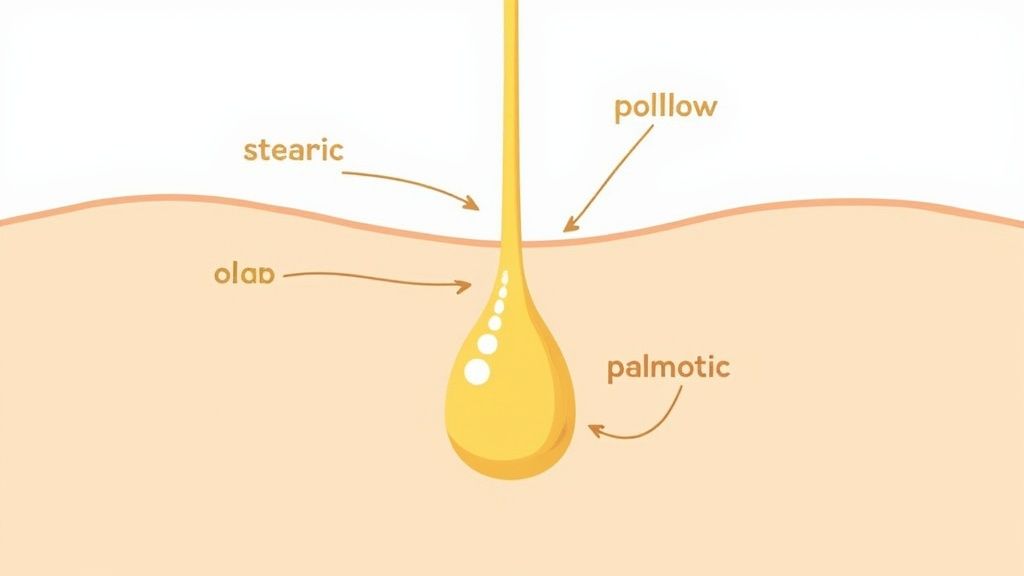
The incredible synergy between tallow oil and our skin isn't just a happy accident or an old wives' tale. It's straight-up biochemistry. The secret is something called biocompatibility—basically, our skin cells recognize the nutrients in tallow oil as familiar and friendly, allowing them to be absorbed effortlessly.
Think of it like a lock and key. Many modern moisturizers, whether synthetic or plant-based, are like keys that don't quite fit the lock. They might sit on the surface and provide a temporary fix, but they can't truly "unlock" deep, cellular-level nourishment. Tallow oil, on the other hand, is practically a master key.
A Fatty Acid Profile Your Skin Recognizes
So, why is the fit so perfect? It all comes down to the fatty acids. Our skin produces its own natural oil, sebum, which is a complex mix of lipids (fats) that creates a protective barrier. This barrier is what keeps moisture in and all the bad stuff—like pollutants and irritants—out.
Amazingly, the fatty acids in tallow oil are strikingly similar to the ones found in healthy human sebum. This means your skin doesn't just tolerate it; it eagerly welcomes it. The main players responsible for this connection are:
- Oleic Acid: A deeply penetrating fatty acid that helps carry other nutrients into the skin's lower layers.
- Palmitic Acid: A crucial component of our skin’s protective barrier, it helps smooth the surface and lock in hydration.
- Stearic Acid: Known for improving the skin's suppleness and flexibility, stearic acid helps fortify its natural resilience and repair damage.
Because these compounds are so biologically familiar, they sink right in without clogging pores or leaving that heavy, greasy film. The oil simply integrates with your skin's own lipid barrier, reinforcing it from the inside out.
The Perfect Delivery System for Skin-Loving Vitamins
On top of its ideal fatty acid profile, tallow oil is a natural source of fat-soluble vitamins that are absolutely essential for healthy skin. These vitamins need fat to be absorbed and put to use by our bodies, which makes tallow the perfect vehicle to deliver them right where they're needed most: our skin cells.
Tallow oil's biocompatibility makes it an incredible carrier. It ensures that valuable vitamins A, D, E, and K are absorbed deeply instead of just sitting on the surface. This targeted delivery helps with everything from cell turnover to collagen production.
This vitamin lineup is a true powerhouse for your skin:
- Vitamin A: Essential for healthy skin cell production, helping to keep skin firm and vibrant.
- Vitamin D: Plays a key role in skin cell growth and repair, while also helping to protect against environmental damage.
- Vitamin E: A potent antioxidant that defends skin cells from the free radicals caused by things like UV exposure and pollution.
- Vitamin K: Known for its ability to aid in skin healing and improve overall tone and texture.
It’s this powerful combination—a familiar lipid profile plus a rich supply of vitamins—that makes tallow oil so uniquely effective. It doesn’t just sit on your skin; it works with your skin, giving it the fundamental building blocks it needs to repair itself, stay hydrated, and truly thrive.
How Tallow Actually Works on Your Skin
It's one thing to understand the science, but it’s another to see what tallow can really do for your skin. The magic isn't just in the ingredients; it's in how perfectly those ingredients match our own biology. This is why it works so well on stubborn skin issues that other products can't seem to touch.
Think about that persistently dry, flaky skin that just won't go away, no matter how much lotion you slather on. Most moisturizers just sit on the surface, but tallow is different. Because its fatty acid profile is so close to our skin's natural oils (sebum), it sinks in deep, truly hydrating and reinforcing your moisture barrier from the inside out. It's about ending the cycle of dryness for good.
This same bio-compatibility is a game-changer for inflammatory conditions. If you're dealing with the constant redness and irritation from eczema or rosacea, tallow can be incredibly soothing.
Calming Irritation and Kickstarting Repair
Tallow is packed with anti-inflammatory compounds and lipids your skin instantly recognizes. This combination helps calm things down, giving your skin the exact building blocks it needs to start repairing itself. The result? Less visible irritation and a complexion that just feels more comfortable and balanced.
This deep nourishment is also key to keeping skin resilient and youthful. Tallow delivers fat-soluble vitamins—A, D, E, and K—directly where they're needed most. These vitamins are crucial for healthy cell turnover and maintaining elasticity, leading to skin that feels softer and looks firmer over time.
If you want to get into all the specifics, we break down the full list of beef tallow benefits for skin in our detailed guide.
Real-World Scenarios Where Tallow Shines
So, when does tallow really make a difference? Here are a few common situations where its unique properties stand out:
- After a Bit Too Much Sun: It’s fantastic for calming that tight, over-exposed feeling after a long day outdoors.
- During Brutal Winter Weather: It forms a protective, breathable shield against the cold, dry air that saps moisture from your skin.
- For Chronically Cracked Hands and Heels: It provides the kind of deep, intensive moisture needed to repair rough spots when nothing else seems to work.
- As a Simple, Effective Face Moisturizer: Since it's non-comedogenic for most people, it can nourish your face without clogging pores.
The bottom line is this: tallow doesn't just put a band-aid on skin problems. It works with your skin's own biology, giving it the nutrients it recognizes and needs to heal itself. This is how you build a complexion that is genuinely strong, hydrated, and calm from the inside out.
Comparing Tallow Oil With Plant-Based Alternatives
When you walk down the skincare aisle, you're met with a sea of plant-based options. Shea butter, coconut oil, jojoba oil—they’re everywhere, and for good reason. But how does an ancient moisturizer like tallow stack up against these modern favorites?
The real difference isn't just animal versus plant. It comes down to biochemistry and how well your skin can actually use the ingredients you put on it.
Plant-based butters and oils are fantastic emollients, which means they’re great at forming a protective layer on your skin to lock in moisture. Shea butter is packed with stearic and oleic acids, making it incredibly hydrating. Coconut oil gets a lot of love for its antimicrobial lauric acid. But their molecular makeup is fundamentally different from the lipids, or fats, that our own skin produces.
This is where tallow has a serious edge. Its fatty acid profile—a balanced mix of palmitic, stearic, and oleic acids—is a near-perfect match for our skin's natural sebum. Because of this remarkable similarity, our skin recognizes it on a cellular level, allowing it to absorb deeply and work more efficiently. It’s like giving your skin a tool it already knows how to use, instead of one it has to figure out.
Bioavailability: The Deciding Factor
The key concept here is bioavailability. It’s a term for how easily your body (or your skin, in this case) can absorb and use the nutrients from a substance.
Because tallow is so biochemically similar to our skin, its precious cargo of fat-soluble vitamins—A, D, E, and K—gets delivered right where it's needed most: the deeper layers of the skin where all the repair and regeneration happens.
Plant-based oils certainly have their benefits, but their nutrient delivery system isn't as naturally aligned with our biology. Tallow’s animal-based origin gives it a unique "lock-and-key" fit, ensuring the vitamins aren't just sitting on the surface but are actually put to work.
This high bioavailability is what powers tallow’s most praised benefits.
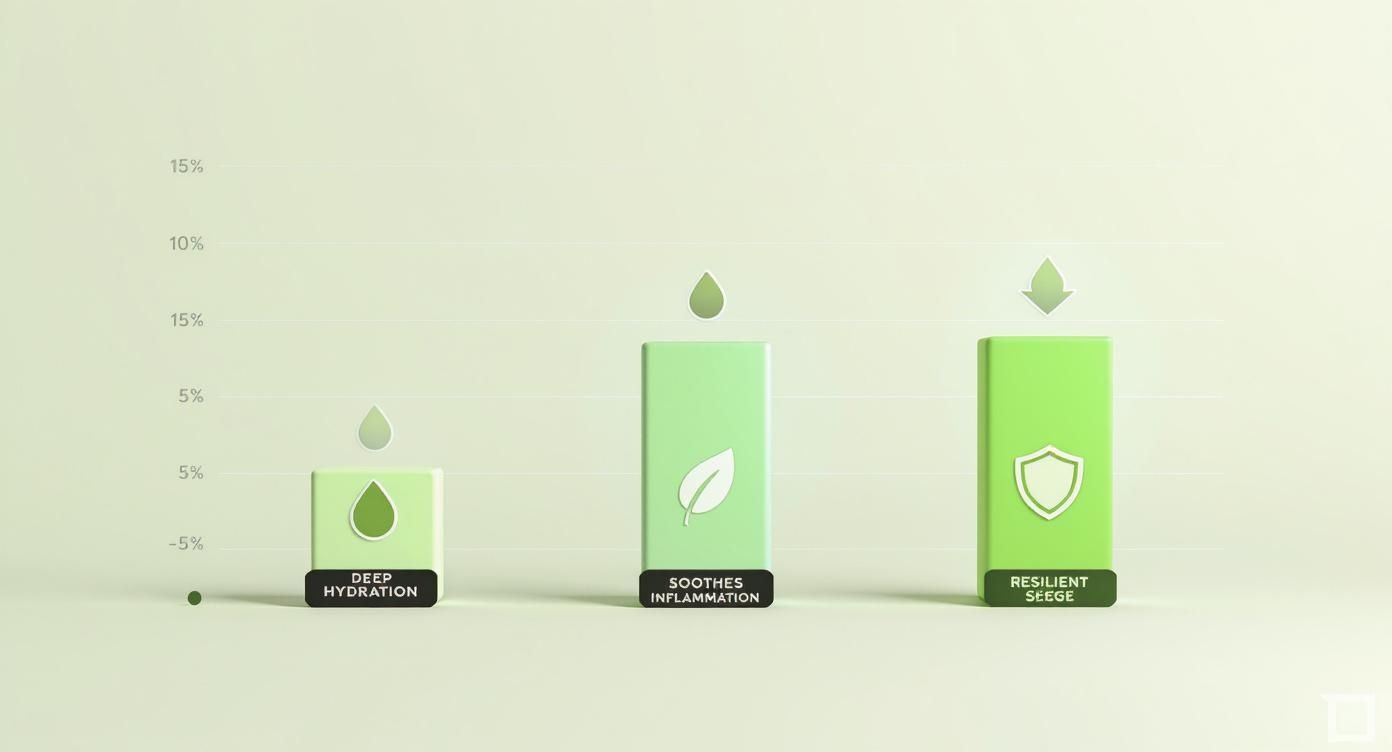
As the chart shows, this efficient absorption translates directly into meaningful results: deep hydration, calmer skin, and a stronger, more resilient barrier.
Tallow Oil vs Popular Plant-Based Moisturizers
Seeing a side-by-side comparison can make it easier to choose the right moisturizer for your specific skin goals. This table breaks down the key differences between tallow and two of the most popular plant-based alternatives.
| Feature | Tallow Oil | Shea Butter | Coconut Oil |
|---|---|---|---|
| Fatty Acid Profile | Balanced palmitic, stearic, and oleic acids; highly similar to human sebum. | High in stearic and oleic acids; provides excellent surface hydration. | High in medium-chain fatty acids like lauric acid; can be comedogenic for some. |
| Key Vitamins | Rich in fat-soluble vitamins A, D, E, and K in a highly bioavailable form. | Contains vitamins A and E, but in a less bioavailable form for skin. | Minimal vitamin content compared to tallow or shea butter. |
| Absorption Rate | Absorbs quickly and deeply with minimal greasy residue due to high compatibility. | Sits more on the surface, creating a protective but heavier barrier. | Varies by skin type; can feel heavy and clog pores for oily or acne-prone skin. |
| Best For | All skin types, especially dry, sensitive, or mature skin needing deep repair. | Very dry skin needing a heavy protective barrier against moisture loss. | Body hydration and hair care; use on the face with caution. |
Ultimately, there's no single "winner" here. The goal is to understand the unique biological advantages each option offers. If you're looking for deep, cellular-level nourishment and repair that works with your skin's natural chemistry, the unique compatibility of tallow oil makes it an incredibly powerful choice.
How to Choose High-Quality Tallow Oil
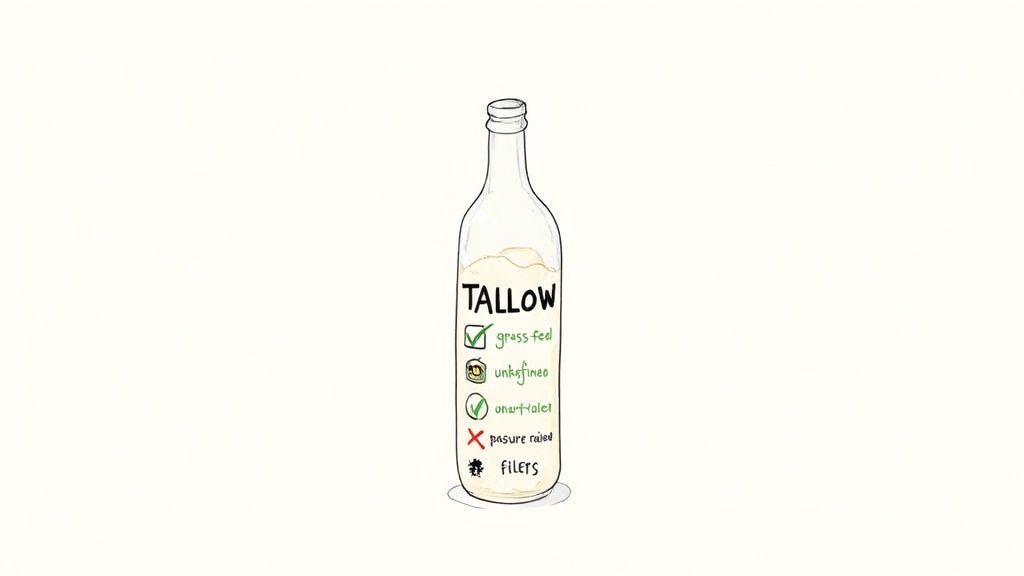
As tallow oil makes its well-deserved comeback in skincare, it's really important to know that not all tallow is created equal. The quality of the final product—its nutrient density and how well it works for your skin—all comes down to where it started and how it was made.
The word is definitely getting out. The global tallow market, currently valued at around USD 9.92 billion, is expected to nearly double by 2034. That’s a huge indicator of just how many people are rediscovering this incredible ingredient. You can read more about what’s driving this growth on straitsresearch.com.
More options are great, but it can also make finding the good stuff a bit tricky. To make a smart choice, you need to know what to look for on the label. A few key terms separate the truly potent, skin-nourishing oils from the mass-produced alternatives.
Prioritize Grass-Fed and Pasture-Raised Sources
If there’s one thing to remember, it’s this: the animal’s diet and lifestyle are everything. Cattle that are 100% grass-fed and pasture-raised produce fat with a far superior nutritional profile compared to those fed a diet of grain.
This isn't just a feel-good marketing term; it’s a matter of biochemistry. Tallow from grass-fed animals is loaded with higher levels of beneficial fatty acids, like the anti-inflammatory powerhouse Conjugated Linoleic Acid (CLA). It’s also packed with more fat-soluble vitamins—A, D, E, and K—that are absolutely essential for healthy, resilient skin. To really get into the nitty-gritty, check out our article on why organic grass-fed tallow matters.
When you choose grass-fed, you're not just getting a moisturizer. You're getting a vitamin-rich, nutrient-dense superfood for your skin that is biologically primed to deliver maximum benefits.
Understand Key Label Terminology
After you've confirmed the source, the next thing to check is how the tallow was processed. Keep an eye out for these terms to ensure you’re getting a pure, potent, and unadulterated product:
- Suet-Derived: This is the gold standard. It means the tallow comes from the hard, nutrient-dense fat that surrounds the kidneys and other organs. Suet is the highest grade of fat, yielding a final product that is incredibly nourishing and stable.
- Unrefined or Cold-Pressed: These labels tell you the tallow was processed gently, with minimal heat. High temperatures can destroy the delicate vitamins and fatty acids we want for our skin, so low-heat rendering is crucial for preserving the oil's full therapeutic power.
- No Fillers or Fragrances: High-quality tallow oil is powerful enough on its own. Look for a short, simple ingredient list and steer clear of products bulked up with unnecessary additives, preservatives, or artificial fragrances that can irritate your skin and water down the benefits.
Your Tallow Questions, Answered
Even after learning all about what makes tallow oil so unique, you might still have a few questions. That's completely normal when you're thinking about trying a new approach to skincare. Let's tackle some of the most common things people wonder about so you can feel totally confident.
Does Tallow Oil Smell Like Beef?
This is probably the number one question we hear, and the answer is a pleasant surprise: no, it shouldn't. A high-quality, properly purified tallow oil has an incredibly neutral, clean scent that vanishes almost instantly after you apply it.
If you ever encounter tallow that has a strong, "beefy" aroma, that’s a red flag. It points to a rushed rendering process or impurities left behind. At Wild Tallow Skincare, we use a careful, low-and-slow purification method specifically to eliminate those odors, leaving you with a pure, gentle product you'll love using every day.
Will Tallow Oil Clog My Pores?
It’s a fair question, especially if you have skin that's prone to congestion. The great news is that tallow oil is considered non-comedogenic, with a low rating of just 2. This means it's very unlikely to cause breakouts for most people.
Think of it this way: because tallow's fatty acid profile is so close to your skin's own natural sebum, your skin recognizes it and drinks it right in. It doesn't just sit on the surface like some heavy oils can. Instead of plugging up pores, it works with your skin's lipid barrier to find a healthy balance. Still, it's always smart to do a little patch test on your jawline or behind your ear before diving in with any new product.
What Is The Shelf Life Of Tallow Oil?
Tallow is incredibly stable, which is one of its unsung superpowers. Its high percentage of saturated fats makes it naturally resistant to going rancid, far more so than many delicate plant oils.
Stored correctly—in a cool, dark spot away from sunny windowsills or steamy bathrooms—a bottle of premium tallow oil will easily last 12 months or even longer. Just be sure to screw the cap on tight after each use to keep it fresh.
You can also pop it in the fridge to extend its life even further. It will solidify, but a few minutes at room temperature will bring it right back to its silky, liquid state.
Can I Use Tallow Oil On Sensitive Or Oily Skin?
Yes! It might sound strange, but tallow is often a fantastic match for these two very different skin types. It all comes back to its biocompatibility.
-
For sensitive skin: Tallow is beautifully simple. As a single-ingredient powerhouse, it's naturally free of the synthetic fragrances, preservatives, and other common irritants that can cause flare-ups. Its anti-inflammatory properties can even help soothe existing redness.
-
For oily skin: It seems counterintuitive to add oil to oily skin, but it works. By giving your skin the exact fats it already knows and needs, tallow helps recalibrate your natural oil production. It essentially sends a signal to your sebaceous glands that they can calm down, leading to a less shiny, more balanced complexion over time. You're working with your skin's biology, not fighting it.
Ready to experience the simple, powerful nourishment of an ancestral skincare secret? Wild Tallow Skincare offers formulas crafted with 100% grass-fed tallow and just a few food-grade ingredients, perfect for even the most sensitive skin. Discover our minimalist, effective skincare solutions today.