

The best soap for dry skin is one that cleanses gently while actively rebuilding your skin's natural moisture barrier. Instead of harsh detergents that strip everything away, look for soaps packed with nourishing ingredients like shea butter, glycerin, and natural oils that hydrate and protect. Making this one simple switch can finally end that cycle of tightness and irritation.
Why Your Soap Choice Matters for Dry Skin

If you’re tired of that tight, itchy feeling right after you wash your hands or shower, you're definitely not alone. The search for a good soap for dry skin is all about finding a cleanser that nourishes instead of strips.
Think of a harsh, conventional soap like a paint stripper for your skin. Sure, it gets the grime off, but it also takes all of your essential, protective oils along for the ride. This leaves your skin barrier compromised, exposed, and irritated.
This isn't just a minor issue; it’s a huge factor in the skincare world. Consumer demand for products made for dry skin is so high that it has become the top skin-type segment in many categories. One market analysis even projects the Dry Skin segment will account for 35.8% of all global soap tablet revenue, making it the single largest category by far. You can find more details about this trend and the soap tablet market on FutureMarketInsights.com.
The Goal of a Good Cleanser
A truly effective soap for dry skin has a dual mission: to clean gently and to actively support your skin’s natural defenses. This guide is built to help you understand the difference so you can make smarter choices for your skin.
We’re going to cover:
- The science behind your skin’s moisture barrier.
- The key ingredients that actually heal and protect dry skin.
- A simple, effective routine to get lasting relief.
A Quick Reference for Better Choices
Choosing the right soap doesn't have to be complicated. To make things easier, here's a straightforward guide on what to look for—and what to run from—on your next shopping trip.
Quick Guide to Choosing Soap for Dry Skin
| What to Look For (The 'Do' List) | What to Avoid (The 'Don't' List) |
|---|---|
| Natural Fats & Oils (Tallow, Olive Oil) | Sulfates (SLS & SLES) |
| Humectants (Glycerin, Honey) | Synthetic Fragrances |
| Gentle Clays (Kaolin, Bentonite) | Alcohols (Denatured Alcohol) |
| Soothing Additives (Oatmeal, Calendula) | Harsh Preservatives (Parabens) |
By focusing on nourishing ingredients and avoiding these common irritants, you can transform your daily cleansing routine from a source of dryness into a step toward healthier, more comfortable skin.
Why Does My Skin Feel So Dry, Anyway?
Before you can find the right fix for dry, sensitive skin, you have to get to the root of the problem. It all comes down to something called the skin barrier. Think of it as your skin’s built-in bodyguard, the very top layer that stands between you and the outside world.
I love to explain the skin barrier like a brick wall. Your skin cells are the bricks, and the natural fats and oils (called lipids) are the mortar holding them all together. This "brick and mortar" structure is brilliant at its job: it keeps the good stuff, like water, locked in, and the bad stuff, like irritants and germs, locked out.
When that wall is strong and the mortar is solid, your skin feels smooth, supple, and comfortable. But when that lipid mortar starts to crumble or get washed away, tiny gaps form. This is when trouble starts. Precious moisture escapes—a process dermatologists call transepidermal water loss—and your skin is left wide open to all sorts of irritants.
How Your Soap Might Be the Culprit
So what's causing the mortar to crumble? Often, it’s your soap. Many commercial soaps on the shelf are basically harsh detergents in a bar. They’re packed with powerful surfactants, like sulfates, that are fantastic at dissolving grease. The problem is, they can’t tell the difference between the grime from your day and the essential lipids that make up your skin's protective mortar.
That tight, squeaky, and sometimes itchy feeling you get after a shower? That’s your soap stripping away your skin’s natural defenses. It's a distress signal that your barrier has been compromised.
A Quick Reality Check: That "squeaky clean" feeling isn't a sign of clean skin; it's a sign of stripped skin. Healthy, truly clean skin should feel calm, balanced, and comfortable—not tight and vulnerable.
Let's Talk About pH Balance
There’s one more piece to this puzzle: your skin's pH. Healthy skin is naturally a little bit acidic, with a pH level somewhere between 4.5 and 5.5. This acidic environment, often called the "acid mantle," is crucial for keeping harmful bacteria in check and making sure your barrier functions properly.
The issue is that most mass-produced bar soaps are highly alkaline—we're talking a pH of 9 or 10. Every time you use one, you're disrupting your skin's natural acidic harmony. This alkaline shock further weakens the lipid mortar, making it even more difficult for your skin to hold onto moisture and defend itself.
Finding the best soap for your dry skin isn't just about adding moisture; it's about stopping the damage in the first place. The goal is to find a cleanser that works with your skin's natural biology, helping to gently clean while rebuilding that brick wall for good.
Decoding the Soap Ingredient Label
Trying to make sense of a soap’s ingredient list can feel like deciphering an ancient text. But once you know the basics, you can quickly spot the good, the bad, and the ugly. The best soap for dry skin isn’t about fancy marketing—it’s about a short, recognizable list of ingredients that actively support your skin.
The guiding principle is simple: look for ingredients that add moisture and fats back into your skin, not ones that strip them away. It's a lot like cooking. You'll always get a better result with whole, simple ingredients than you will with a long list of processed chemicals. It's no wonder so many people are turning back to natural options.
This shift toward cleaner, simpler skincare is making waves. The global organic soap market, valued at USD 2.41 billion, is expected to nearly double to USD 4.17 billion by 2032. This boom is all thanks to savvy consumers who are actively looking for soaps made with natural oils and butters specifically to support their skin barrier.
The Heroes: Nourishing Ingredients to Look For
These are the power players. They work to repair your skin barrier, lock in that precious moisture, and calm down any irritation. When you see these high up on the ingredient list, you know you're holding a winner.
- Natural Fats and Oils: Think grass-fed tallow, shea butter, olive oil, and avocado oil. These are packed with the fatty acids that act as the "mortar" for your skin's brick wall, replenishing the essential lipids that harsh cleansers often wash away.
- Glycerin: This is a natural humectant, which is just a fancy way of saying it pulls moisture from the air and draws it into your skin. In handmade soap, glycerin is a natural byproduct that’s left in, making the final bar incredibly hydrating.
- Soothing Additives: Gentle, calming ingredients like colloidal oatmeal and calendula are fantastic for reducing the redness and itchiness that so often come with dry, sensitive skin.
The Villains: Irritating Ingredients to Avoid
These common culprits are notorious for wrecking your skin barrier and making dryness even worse. If a soap has any of these, especially near the top of the ingredient list, it's best to just put it back on the shelf.
This is where the "brick and mortar" analogy really comes into play. A healthy skin barrier keeps moisture in and irritants out, but when it's damaged, you get that dry, tight, itchy feeling.
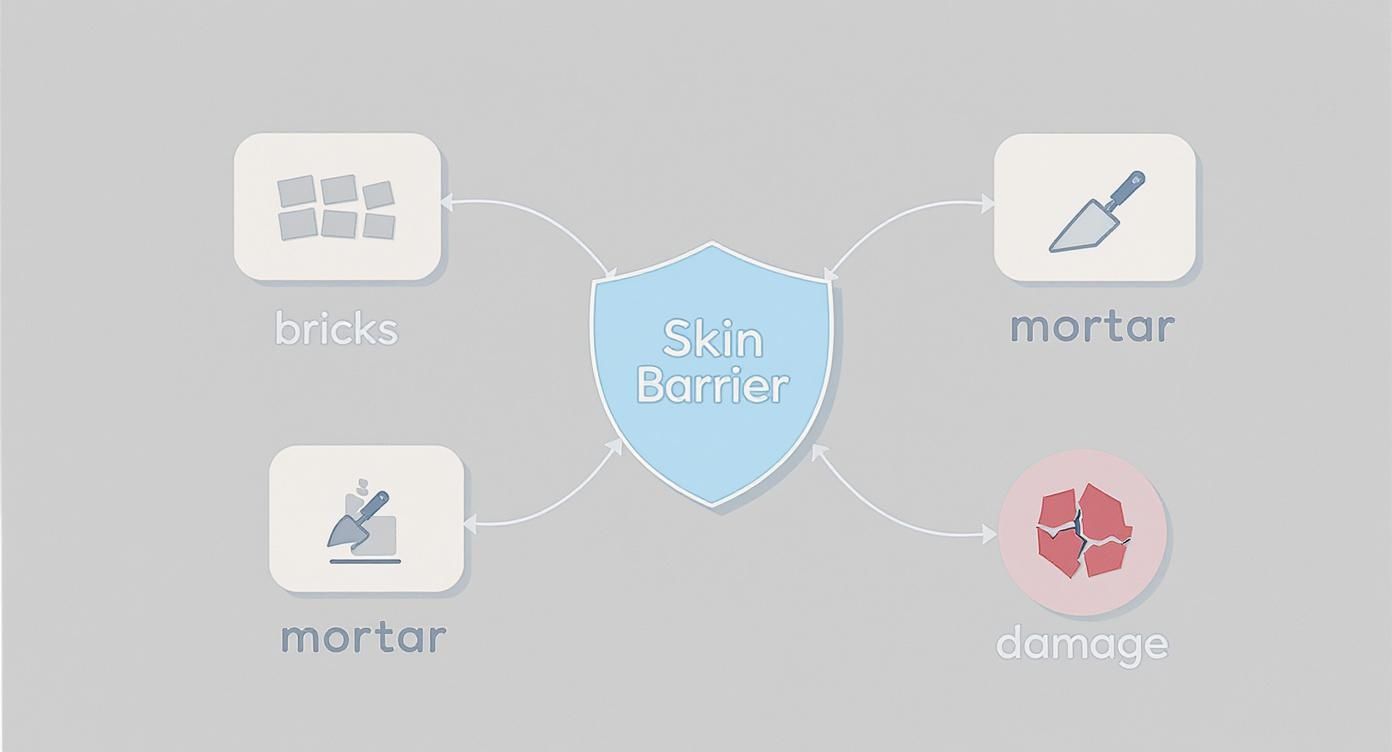
The image drives home just how crucial your ingredient choices are. You're either rebuilding that "mortar" or causing more cracks.
Here's what to steer clear of:
- Sulfates (SLS & SLES): Sodium lauryl sulfate and sodium laureth sulfate are aggressive detergents. Sure, they create a big, bubbly lather, but they do it by stripping your skin of its natural, protective oils.
- Synthetic Fragrances: Often listed mysteriously as "fragrance" or "parfum," this single term can hide hundreds of chemicals that are known irritants. Always opt for fragrance-free or soaps scented only with pure essential oils.
- Harsh Alcohols: Alcohols like SD alcohol or denatured alcohol are incredibly drying and can trigger inflammation in sensitive skin.
Reading an ingredient list is your most powerful tool. It allows you to see past marketing claims and understand what you are actually putting on your skin.
Learning this skill is truly empowering and helps you make confident choices for your skin's health. If you want to dive deeper into decoding labels, this guide on how to read a skincare label is a great resource.
And for those committed to cutting out harsh additives entirely, we've put together a guide on finding a truly natural soap without chemicals.
Making an Informed Choice for Your Skin
Alright, now it's time to put all this knowledge to good use. The real secret to finding the perfect soap for dry skin is learning to look past the splashy marketing claims on the front of the box and get down to what really matters: how it’s made and what the label is actually telling you.
You've probably noticed that not all soaps feel the same. That’s because the manufacturing process makes a world of difference. For those of us with dry, thirsty skin, cold process soaps are often a game-changer. This traditional, hands-on method skips the external heat, which means the naturally moisturizing glycerin isn't stripped away. Glycerin is a humectant, a fantastic little molecule that literally pulls moisture from the air into your skin.
It's no surprise this method is making a huge comeback. As more people hunt for quality, cold process handmade soaps have captured a dominant 45% market share in the artisanal soap world. They're typically packed with skin-loving ingredients like olive oil, coconut oil, and rich shea butter. You can get a deeper look into the growing handmade soap market on Market.us.
Bar Soap vs. Liquid Cleansers
The age-old debate: bar or liquid? While some liquid body washes are gentle, they almost always need preservatives and synthetic surfactants to stay stable and sudsy. For sensitive skin, those extra ingredients can sometimes be the source of irritation.
A well-crafted bar soap, especially one made using the cold process method, can be a much better friend to dry skin. These bars are loaded with a higher concentration of nourishing fats and butters, delivering powerful moisture with fewer additives. For instance, learning about the unique properties of tallow-based soaps can highlight this difference, as their fatty acid profile is incredibly similar to our own skin's natural oils.
Shopping Tip: When you pick up a high-quality bar soap for dry skin, you'll often notice it feels heavier and denser than a typical commercial bar. That weight is a good sign—it usually means it's packed with moisturizing oils and butters, not just fillers.
To help you navigate the options, let's break down how different soap types stack up.
Comparing Soap Types for Dry Skin
This table gives a quick overview of common soaps you'll find on the shelf and how they typically affect dry, sensitive skin.
| Soap Type | Key Characteristics | Best For Dry Skin? |
|---|---|---|
| Cold Process Bar Soap | Retains natural glycerin; rich in oils and butters. Made without external heat. | Excellent. Highly moisturizing and nourishing. |
| Commercial "Beauty Bar" | Often synthetic detergents (syndets), not true soap. pH balanced but can contain synthetics. | It Depends. Some are gentle, but many contain potential irritants. |
| Glycerin "Melt & Pour" Soap | Transparent appearance. Very high in glycerin, which can be moisturizing but sometimes drying if not formulated well. | Okay. Can be good, but check the full ingredient list for additives. |
| Liquid Body Wash | Water-based, requires preservatives and surfactants (like sulfates) to lather and prevent bacterial growth. | Use with caution. Look for sulfate-free, fragrance-free formulas specifically for sensitive skin. |
Ultimately, a true cold process soap is often the most reliable choice for delivering moisture without the risk of synthetic irritants.
Reading the Label Like a Pro
Finally, let's decode some of the language you'll see on the packaging. Knowing these terms helps you quickly spot the good stuff.
- Fragrance-Free: This is your gold standard. It means zero fragrances—natural or synthetic—have been added. Don't confuse it with "unscented," which can mean a chemical has been added to mask the soap's natural smell.
- For Sensitive Skin: This isn't a regulated term, but it’s a good starting point. It usually signals that the brand has at least tried to avoid common irritants like harsh sulfates and dyes.
- Non-Comedogenic: This simply means the product is designed not to clog pores. While often associated with oily skin, it's a great feature for dry skin too, as clogged pores can happen to anyone.
By focusing on the process, the format, and the fine print, you'll be well on your way to choosing a soap that truly soothes, supports, and strengthens your skin.
Building a Complete Routine for Dry Skin
Finding the right soap is a huge first step, but it's what you do after you wash that truly makes a difference. Think of your soap as the foundation of your routine—it sets the stage, but the rest of the players need to show up to win the game against dryness.
A few simple, consistent habits can turn that great foundation into a fortress for your skin barrier, locking in moisture all day. It’s not about adding a bunch of complicated steps, but about making every single step count.
Your Daily Hydration Blueprint
Let's start with your washing habits. These small tweaks are all about protecting the natural oils that your gentle soap is trying so hard to leave behind.
-
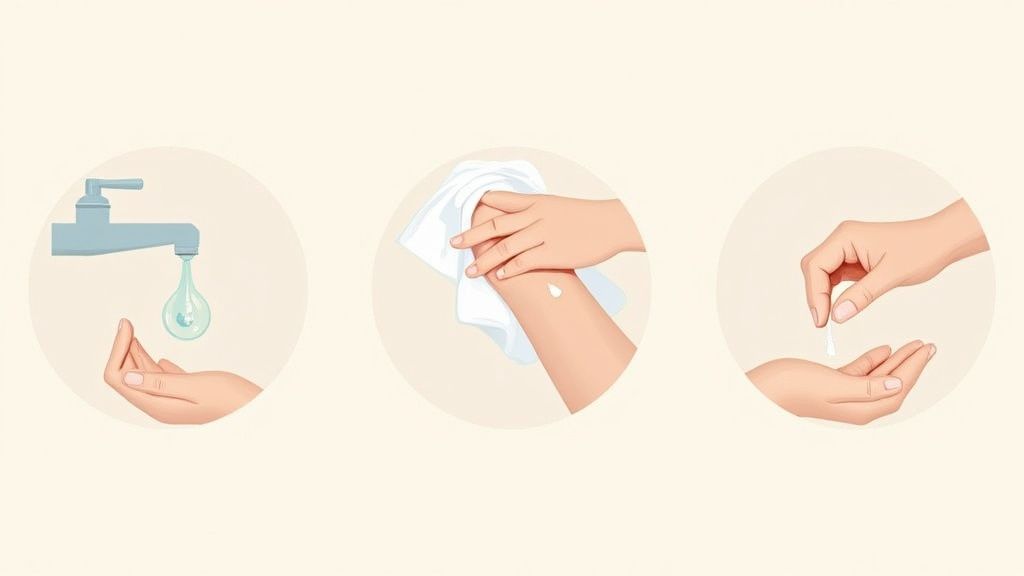
Lower the Temperature: We all love a hot shower, but it's one of the biggest enemies of dry skin. Hot water strips away your skin's protective lipids, so always opt for lukewarm water when washing your hands and body. It cleans just as well without causing that tight, stripped feeling.
-
Pat, Don’t Rub: After you wash, resist the urge to vigorously rub yourself dry. Instead, gently pat your skin with a soft towel. Aggressive rubbing can cause tiny tears in already fragile skin, leading to irritation and making your barrier even weaker.
-
The Golden Minute Rule: This is a game-changer. You have about 60 seconds after patting your skin dry to apply moisturizer. Your skin is primed and most absorbent when it's slightly damp, which helps the lotion or cream trap that surface moisture before it vanishes into thin air.
A complete routine looks at everything that touches your skin. It’s about supporting your skin barrier from all angles so that one part of your day doesn't undo the good work you did in another.
Beyond the Bathroom Sink
True skin health goes beyond just what you put on it; your environment and lifestyle play a huge role, too. If you're dealing with persistently dry, sensitive skin, a few extra considerations can bring massive relief.
Hydrating from the inside out by drinking plenty of water is a classic for a reason. You can also add moisture back into the air by running a humidifier in your bedroom at night, which stops dry indoor air from stealing hydration from your skin while you sleep.
Even the fabrics you're surrounded by can make a difference. It might be worth exploring luxury bamboo bedding options for sensitive skin that are softer and less likely to irritate.
When you combine a nourishing soap with these mindful habits, you're not just treating dryness—you're building a complete system of care. To figure out which moisturizers and oils will work best in your routine, check out our guide on the best ingredients for dry skin.
Answering Your Top Questions About Soap for Dry Skin
Choosing the right skincare can feel like navigating a maze. When it comes to finding the best soap for dry, sensitive skin, a few questions pop up time and time again. Let's clear the air and get you the answers you need.
"Fragrance-Free" or "Unscented": Is There a Difference?
Yes, and it's a big one! You'll see both terms on packaging, but they mean very different things, and getting it right is crucial if your skin is easily irritated.
- Fragrance-Free is exactly what it sounds like. No fragrances—synthetic or natural—have been added to the product. This is your safest bet for reactive skin.
- Unscented is a bit tricky. It often means that chemical agents have been added to the formula specifically to mask the natural smells of the other ingredients. These masking chemicals can be a hidden source of irritation.
When in doubt, always reach for products labeled "fragrance-free." It’s the simplest way to sidestep a whole category of potential irritants and ensure the soap is as pure as it can be.
Should I Use an Antibacterial Soap?
While the promise of "extra clean" sounds tempting, antibacterial soaps are almost always a bad idea for dry skin. They are formulated with harsh agents, like triclosan, that are designed to kill bacteria but end up stripping away your skin’s essential protective oils in the process.
This chemical onslaught disrupts your skin’s microbiome—the delicate ecosystem of good bacteria that keeps your skin healthy and balanced. Unless a doctor has specifically told you to use one for a medical condition, you're far better off with a gentle, moisturizing cleanser that works with your skin barrier, not against it.
How Often Should I Actually Wash My Face?
This is where so many people go wrong. It’s easy to think that more washing equals cleaner skin, but over-washing is one of the fastest ways to make dryness worse.
For most people with dry skin, cleansing just once a day, usually in the evening, is the sweet spot. This is all you need to wash away the day's accumulation of makeup, sunscreen, and environmental grime without compromising your skin's natural moisture.
What about the morning? A simple splash of lukewarm water is usually enough to wake you up and feel refreshed. The golden rule is to listen to your skin. It should always feel comfortable and supple after washing, never tight, stripped, or "squeaky" clean.
Ready to simplify your routine with a soap that truly nourishes? The Wild Tallow Skincare Grass-Fed Tallow Soap is handcrafted with just three food-grade ingredients, providing a gentle, moisturizing clean without any harsh additives. Discover the difference for your dry skin today.