

When you're searching for a natural soap without chemicals, it can feel a bit like navigating a maze. But the idea behind it is actually pretty straightforward.
At its core, true natural soap is made through a simple, time-honored process called saponification. This is just a basic chemical reaction where fats—like rich tallow or nourishing olive oil—are combined with an alkali. This process completely transforms them into pure, gentle soap and a healthy dose of naturally occurring glycerin. The crucial part? In a properly made bar of soap, none of the alkali is left over.
Decoding “Chemical-Free” Soap
Let's clear something up right away. When people say they want "natural soap without chemicals," they don't mean a product free of all chemical compounds. After all, water (H₂O) is a chemical.
What we're really talking about is soap that's free from harsh, synthetic, and unnecessary additives—the kind of stuff your skin just doesn't need.
Think of it this way: it’s like comparing a loaf of fresh, homemade sourdough to a mass-produced, plastic-wrapped bread from the supermarket. One has simple, recognizable ingredients like flour, water, and salt. The other is often packed with dough conditioners, preservatives, and artificial flavors you can barely pronounce.
A genuinely natural soap embraces that same simplicity. The ingredient list is short, sweet, and easy to understand, focusing on high-quality fats, nourishing oils, and maybe some botanicals. This back-to-basics philosophy is resonating with more and more people. In fact, the global natural soaps market is expected to rocket from USD 3.5 billion in 2023 to nearly USD 7 billion by 2032 as consumers demand more transparent, skin-friendly options.
What’s Left Out of Natural Soap
The real magic of natural soap lies in what it doesn't contain. This minimalist approach is all about creating products that work in harmony with your body, not against it.
For a deeper dive into this philosophy, this guide to toxic-free personal care is a great resource. It's all about choosing cleansers that nourish your skin by intentionally omitting common irritants—a core principle of the entire clean beauty movement.
The whole point is to clean your skin without stripping away its natural, protective oils. Many commercial "soaps"—which are often detergents in disguise—do exactly that, leaving your skin feeling tight, dry, and irritated. Natural soap, on the other hand, cleanses effectively while helping to preserve your skin's moisture.
This is precisely why making an informed choice matters so much. Once you understand what a truly natural soap leaves out, you're empowered to pick the best option for your skin's long-term health. If you're looking to build a complete routine around this idea, our guide on chemical-free skincare products offers even more insight.
Natural Soap vs Commercial Beauty Bars
Have you ever used a typical bar of soap from the drugstore and stepped out of the shower feeling tight, dry, and almost squeaky? That “squeaky clean” feeling isn’t a sign of cleanliness—it’s a warning that your skin’s natural, protective oils have been completely stripped away.
The reason for this often comes down to a simple truth: most commercial “soaps” aren’t actually soap at all.
Legally, they’re often classified as beauty bars or cleansing bars. This small tweak in wording makes a world of difference. Instead of being made through the traditional process of saponification, they are synthetic cocktails of detergents, surfactants, and chemical hardeners engineered for a long shelf life and a massive lather.
A primary culprit in many of these bars is a synthetic surfactant called Sodium Lauryl Sulfate (SLS). Picture your skin's surface as a delicate ecosystem with a natural lipid barrier that keeps moisture in and irritants out. SLS is like a harsh degreaser, aggressively dissolving that entire protective layer and leaving your skin exposed, vulnerable, and prone to irritation.
The Gentle Power of Glycerin
This is where true natural soap without chemicals really shines. During the saponification process, a wonderful byproduct is created: glycerin. This natural humectant acts like a moisture magnet, pulling hydration from the air right into your skin.
In mass manufacturing, this valuable glycerin is often extracted and sold off to be used in pricey lotions and creams. But in handcrafted natural soap, all of that skin-loving glycerin stays right in the bar. This means that while the soap cleanses, it also actively moisturizes, leaving your skin feeling soft and balanced—never stripped.
This mind map illustrates how every part of the natural soapmaking process is geared toward a skin-nurturing outcome.
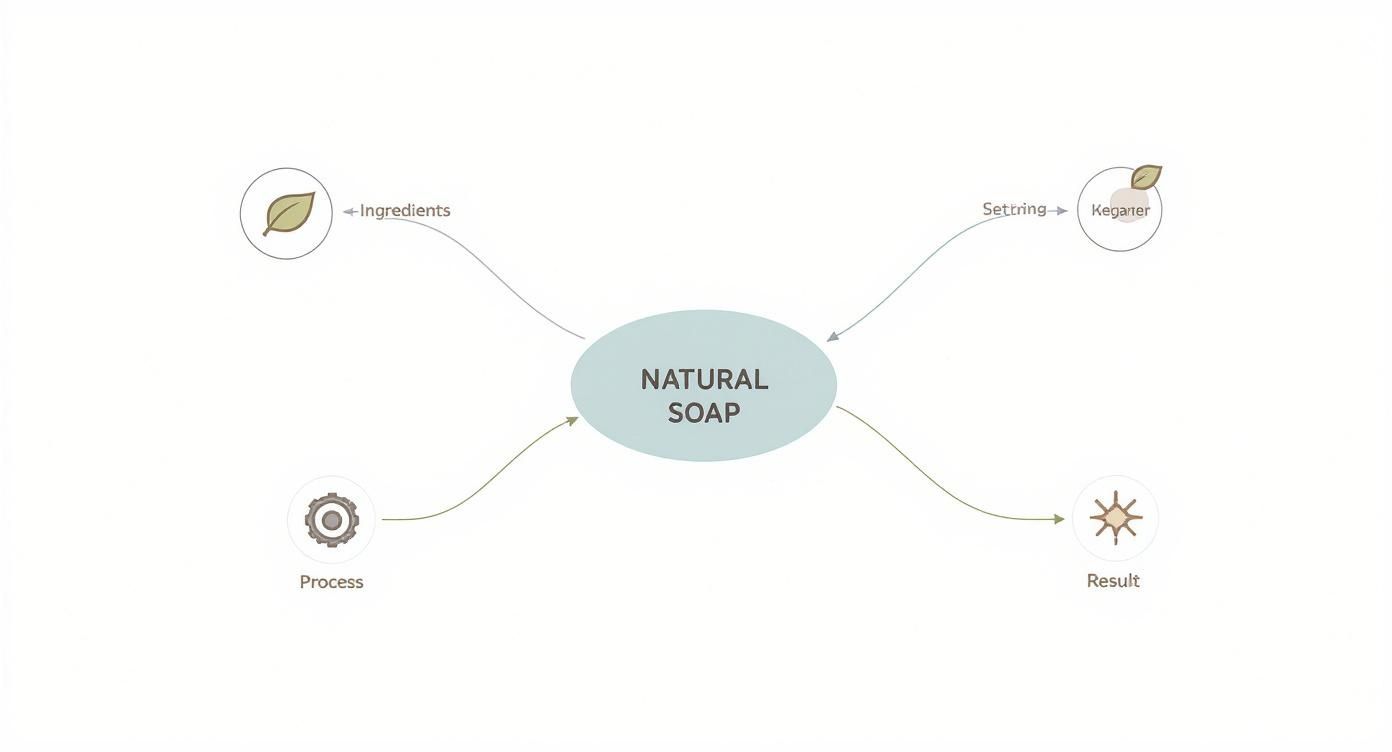
The takeaway is clear: from the simple, recognizable ingredients to the final cured bar, natural soap is all about supporting your skin’s health, not just stripping away dirt.
To put it simply, here’s a side-by-side look at what you’re really choosing between.
| Feature | Natural Soap | Commercial Detergent Bar |
|---|---|---|
| Cleansing Agent | Saponified natural fats and oils. | Synthetic detergents (e.g., SLS). |
| Glycerin Content | Naturally retained, providing moisture. | Typically removed and sold separately. |
| Ingredients | Simple, recognizable oils, butters, and lye. | Long list of chemicals, hardeners, and preservatives. |
| Effect on Skin | Cleanses gently, moisturizes, and nourishes. | Strips natural oils, often causing dryness and irritation. |
| Lather | Creamy and conditioning, varies by oil type. | Often produces a big, bubbly, but drying lather. |
| Regulatory Name | Soap | Beauty Bar, Cleansing Bar, or Syndet Bar |
Ultimately, the difference is one of philosophy. One product is designed to work with your skin's biology, while the other works against it.
A Market Shift Toward Purity
This isn’t just a niche preference; it's a massive shift in consumer awareness. The global bar soap market is expected to grow from USD 32.67 billion in 2025 to over USD 54.08 billion by 2035.
Even more telling is that natural soap formulas are projected to command a dominant 54.3% market share in 2025. People are clearly voting with their wallets for cleaner, skin-friendly options over harsh detergents. You can read the full research about bar soap market trends for a deeper dive.
Choosing a natural soap means you’re picking a product designed to clean without compromise, preserving the delicate balance your skin needs to stay healthy, hydrated, and resilient.
How to Read Soap Labels and Avoid Irritants
Stepping into the world of natural soap can feel like you're trying to learn a new language. Commercial soap labels are often a confusing jumble of scientific-sounding terms, but reading the label on a natural soap without chemicals is a completely different story—it's simple and empowering. The goal here is to turn you into a confident label detective, someone who can instantly spot the good stuff and sidestep the hidden irritants.
Think of an ingredient list as the product's recipe, laid out from the most used ingredient to the least. With a genuinely natural soap, you should see familiar, recognizable names right at the top, like "Saponified Olive Oil" or "Grass-Fed Tallow." That’s your first and best clue that you're holding something made from simple, nourishing fats, not a synthetic detergent bar.
This growing demand for transparency is making waves across the personal care industry. In fact, the organic soap market is expected to jump from USD 7.15 billion in 2025 to USD 9.54 billion by 2030. That surge is being driven by people just like you, who are tired of mystery ingredients and want products that are both effective and truly good for their skin. You can find more details about this trend on mordorintelligence.com.
Common Synthetics to Sidestep
To pick a soap that will actually nurture your skin, you first need to know what to leave on the shelf. These additives are usually thrown in to create huge bubbles, make the product last forever, or add a powerful scent, but they often do so at the expense of your skin's health.
Here are four of the most common culprits to watch for:
-
Sodium Lauryl Sulfate (SLS) and Sodium Laureth Sulfate (SLES): These are harsh detergents that give you that "squeaky clean" feeling. While they produce a rich lather, they're notorious for stripping your skin’s natural protective oils, leading directly to dryness, irritation, and a weakened skin barrier.
-
Parabens (e.g., Methylparaben, Propylparaben): Used as preservatives to stop mold and bacteria from growing, parabens can be absorbed right through your skin. Many people who are shifting to a more natural skincare routine choose to avoid them due to ongoing concerns about their long-term effects.
-
Phthalates: You'll often find these hidden under the generic term "fragrance." Phthalates are chemicals used to make scents stick around longer, and they're another category that health-conscious shoppers are increasingly choosing to avoid.
-
Artificial Fragrance or "Parfum": This might be the most misleading ingredient of all. That one little word, "fragrance," can legally conceal a proprietary mix of dozens, or even hundreds, of undisclosed chemicals. It’s no surprise that synthetic scents are one of the most common triggers for skin allergies and irritation.
Key Takeaway: A short, understandable ingredient list is the true hallmark of a quality natural soap. If you can’t pronounce the first five ingredients, that’s a pretty good sign you're looking at a chemical cocktail, not real soap.
Making an Informed Choice
Learning to read a label like a pro is a skill that puts you back in control of your skin's health. It’s about looking past the flashy marketing claims and getting down to what's actually in the bar. Once you can spot these common irritants, you'll easily filter out the imposters and find a soap that genuinely supports your skin. For a deeper dive, check out our complete list of skin care ingredients to avoid.
At the end of the day, choosing a natural soap is about choosing simplicity and real nourishment over synthetic shortcuts.
Why Natural Soap Is Better for Sensitive Skin
If you struggle with sensitive, dry, or reactive skin, you know the daily tightrope walk required to keep it happy. The wrong cleanser can be an instant trigger for redness, tightness, and that all-too-familiar itchy feeling. This is where a truly high-quality natural soap without chemicals isn't just a nice-to-have—it's the cornerstone of a calm, comfortable skincare routine.
The magic is in what natural soap keeps and what it leaves out. Commercial detergent bars often strip your skin of everything, good and bad. A well-made natural soap, on the other hand, works with your skin's built-in protective systems, not against them.

Preserving Your Skin's Natural Defenses
Think of your skin's surface as a living shield with two critical defense layers: the acid mantle and the lipid barrier. The acid mantle is a super-fine, slightly acidic film that naturally keeps harmful bacteria in check. Right beneath it, the lipid barrier—made of your skin’s own oils (sebum)—is what locks in moisture and keeps environmental gunk out.
Many commercial "beauty bars" are loaded with harsh detergents. Their high pH can completely throw off your skin's delicate acidic balance, essentially dismantling its first line of defense. They aggressively scrub away your natural oils, leaving your skin feeling tight, exposed, and desperate for moisture.
Natural soap is different by design. Since it’s made from real saponified fats and oils, and most importantly, retains all its natural glycerin, it cleanses without that harsh stripping effect. The glycerin is a natural humectant, meaning it pulls moisture into your skin. At the same time, the nourishing fatty acids from the base oils help support your lipid barrier instead of tearing it down.
By maintaining your skin's natural barrier, natural soap helps reduce inflammation, calm irritation, and build long-term resilience. It's not just about getting clean; it's about cleansing in a way that supports and respects your skin's biological needs.
A Holistic Approach to Sensitive Skin Care
This gentle-first philosophy is a game-changer for managing conditions like eczema, psoriasis, and general skin reactivity. When you remove common triggers found in synthetic products, you give your skin the breathing room it needs to heal and thrive.
For anyone with sensitive skin, the benefits stack up quickly:
- Reduced Irritation: No synthetic fragrances, harsh sulfates, or weird preservatives means the risk of allergic reactions and contact dermatitis plummets.
- Enhanced Hydration: That naturally retained glycerin in every bar delivers a dose of moisture that helps counteract the dryness cleansing can sometimes cause.
- Soothing Ingredients: Many natural soaps are crafted with ingredients specifically chosen for their calming properties, like tallow, shea butter, or oatmeal, to further soothe compromised skin.
It’s also worth remembering that it's not always just the soap. For many with sensitive skin, water quality is a big factor. Using an Althy Vitamin C Revitalizing Shower Water Filter can help remove irritants like chlorine and heavy metals right at the source, which can make a huge difference for dry skin and eczema.
Ultimately, switching to a natural soap is more than a simple product swap. It's a foundational step toward building a supportive, non-irritating skincare routine from the ground up.
Why Tallow Soap Is a Skincare Game Changer
When you're on the hunt for a truly natural soap without chemicals, the answer might not be a fancy new formula but a return to old-school wisdom. Enter tallow soap. Made from high-quality rendered beef fat, it’s a perfect example of a minimal-ingredient cleanser that works wonders, especially if you have sensitive or unhappy skin.
This isn’t some new fad. It’s a rediscovery of a traditional ingredient that our ancestors valued for generations. The real magic of tallow is how incredibly compatible it is with our own skin. Its fatty acid profile—full of oleic, palmitic, and stearic acids—is a near-perfect match for our skin's natural oils, or sebum.
Because of that striking similarity, tallow soap can clean your skin thoroughly while also delivering deep, recognizable nourishment that your body knows exactly what to do with.
Bio-Identical Nourishment for Your Skin
Think about trying to fit the wrong piece into a puzzle—it just won’t go. That’s what synthetic ingredients can be like for our skin: foreign and ill-fitting. Tallow, on the other hand, is the perfect matching piece. Its structure is so familiar that our skin welcomes it, helping to fortify the protective lipid barrier without clogging pores.
This makes it an incredible choice for simply maintaining healthy skin. Tallow is also a natural source of fat-soluble vitamins A, D, E, and K, which are all vital for skin cell repair and regeneration. And when the tallow comes from 100% grass-fed and grass-finished cattle, its nutrient profile is even richer, giving you more concentrated goodness in every bar.
Tallow soap perfectly embodies the "less is more" philosophy. It delivers potent, bio-available nutrients and superior moisture using a single, powerful ingredient. This eliminates the need for the synthetic additives, fillers, or preservatives that so often irritate sensitive skin.
Why Quality and Simplicity Matter
Of course, not all tallow is created equal. The source is absolutely critical. Just like the food we eat, the quality of the raw ingredients directly shapes the final product. Tallow from grass-fed cows contains a better balance of omega-3 and omega-6 fatty acids, which are fantastic for calming inflammation and promoting overall skin wellness.
This focus on simplicity and quality is what makes tallow soap such a game-changer. It cleanses, moisturizes, and nourishes using a time-tested ingredient that works in complete harmony with your body’s biology. It offers a gentle yet powerful solution for anyone looking for relief from dryness and irritation. To learn more about how this traditional ingredient works, you can explore the benefits of tallow-based soaps in our detailed guide.
Choosing tallow soap is more than just washing your hands. It’s about feeding your skin with something pure, simple, and deeply effective. It’s a return to what works, proving that sometimes the best solutions have been right here all along.
How to Choose the Right Natural Soap for Your Skin
Feeling ready to finally make the switch to a natural soap without chemicals? It can feel a little overwhelming at first, but once you know what to look for, picking the right bar becomes simple.
Think of it like shopping at a farmer's market instead of a big-box store. You’re looking for simple, recognizable ingredients, not a science experiment in a wrapper.
Your first move is to become a master label reader. A truly natural soap isn't hiding anything—it will have a short, straightforward ingredient list. Look for terms like "saponified grass-fed tallow," "saponified olive oil," or "saponified coconut oil" right at the top. This is the clearest sign you're holding real soap, not just a synthetic detergent bar in disguise.
Next, use your senses. What gives the soap its scent and color? A genuinely natural bar will rely on ingredients straight from nature, not a lab.
-
The Scent Test: Does the label list specific essential oils, or does it use the vague term "fragrance" or "parfum"? Those catch-all words can mask hundreds of synthetic chemicals. You want to see botanicals you recognize, like lavender, peppermint, or tea tree oil.
-
The Color Test: If a soap is glowing with a neon or unnaturally bright color, that's a major red flag. Instead, look for earthy, muted tones that come from natural colorants like kaolin clay, activated charcoal, or ground herbs like spirulina.
Matching the Soap to Your Skin Type
Okay, so you've found a bar with a clean ingredient list. Now it's time to find the perfect match for your unique skin. The oils used as the soap's base make all the difference in how it feels and what it does for your skin.
If your skin is perpetually dry or dehydrated, you'll want a soap made with extra-moisturizing ingredients. Look for bars rich in things like shea butter or avocado oil, which are famous for leaving skin feeling soft and hydrated.
For a soap that nourishes just about every skin type—from sensitive to combination—tallow soap is a fantastic choice. Its fatty acid profile is incredibly similar to our own skin's natural oils. This means it can cleanse and moisturize in perfect harmony without stripping your skin or clogging your pores.
By using this simple checklist—verifying the ingredients, checking the scents and colors, and matching the oils to your skin type—you can confidently pick a natural soap that will leave your skin feeling clean, nourished, and genuinely cared for.
A Few Common Questions About Natural Soap
Switching to natural soap is a great move for your skin, but it's normal to have a few questions before you take the plunge. Let's tackle some of the most common curiosities so you can feel completely confident about what you're putting on your body.
Is Lye in Natural Soap Safe for My Skin?
Yes, 100% safe. This is probably the most common question people have, and the answer is a resounding yes. While lye (sodium hydroxide) sounds harsh, it's essential to kickstart the chemical reaction that creates soap. But here's the key: there is zero lye left in the finished bar.
Think of it like baking a cake. You mix wet, raw ingredients like eggs and flour, but the oven transforms them into something entirely new—a fluffy, delicious cake. The same thing happens in soap making. The process, called saponification, completely consumes the lye, turning it and the oils into gentle soap and skin-loving glycerin. What you're left with is a new, completely skin-safe substance.
Will Natural Soap Last as Long as a Commercial Bar?
A quality natural soap can easily last just as long as its commercial counterpart, but it needs a little help from you. The secret? Keep it dry.
Natural soaps don't contain the synthetic hardeners and preservatives found in mass-market bars. That's a good thing! But it means they can get soft if they're left sitting in a puddle of water. All you need is a soap dish with excellent drainage that lets air circulate and dry the bar out between uses. This one simple trick will make your soap last and last.
The price of a natural soap bar reflects what's inside—pure oils, rich butters, and real botanicals instead of cheap detergents and artificial fragrances. You're investing in something that actively nourishes your skin, making it a valuable part of your skincare routine. This is why a natural soap without chemicals feels so different; it's made to benefit your skin, not just to last on a shelf.
Ready to feel the gentle, nourishing difference for yourself? Wild Tallow Skincare crafts minimalist, tallow-based soaps perfect for sensitive skin. Explore our collection of tallow soaps.