

The absolute best tallow soap starts with one non-negotiable ingredient: 100% grass-fed, grass-finished tallow. This isn't just a marketing buzzword; it's the key to a superior nutrient profile that truly nurtures dry and sensitive skin. This time-honored ingredient creates a hard, long-lasting bar that cleanses without stripping away your skin's natural defenses, leaving it feeling soft, supple, and perfectly balanced.
Why Tallow Soap Is a Game-Changer for Healthy Skin
For generations, long before synthetic detergents took over the shelves, tallow was the heart and soul of soapmaking. It was prized for its ability to create a creamy, conditioning bar that lasted for ages. Now, we're seeing a massive return to this traditional wisdom, with more and more people looking for skincare that actually works with their skin's biology.
So, what makes it so special? It all comes down to its unique chemical makeup. Tallow is packed with fatty acids—like oleic, palmitic, and stearic acid—that are incredibly similar to the lipids found in our own skin. This makes it biocompatible, meaning your skin recognizes and readily accepts it.
Unlike harsh commercial soaps that can leave your skin feeling tight, squeaky, and irritated, tallow soap gently cleanses while reinforcing your skin’s protective barrier. It supports natural hydration instead of working against it. You can dive deeper into all the specific beef tallow soap benefits in our guide.
This isn't just a niche trend. The worldwide tallow market, valued at a staggering $7,250.52 million in 2021, is set to grow by nearly 28% by 2025. This explosion in popularity points to a collective shift back to simple, proven ingredients that deliver real results. For more on this trend, check out the market growth report on cognitivemarketresearch.com.
Defining the Best Tallow Soap
Choosing the "best" tallow soap goes far beyond just grabbing a pretty package off the shelf. It’s about knowing what to look for and understanding what separates a truly exceptional bar from a mediocre one. The quality really boils down to three critical elements:
- Superior Ingredients: The star of the show should be pure, rendered tallow, free from unnecessary fillers, artificial fragrances, or synthetic junk.
- Ethical Sourcing: Tallow from grass-fed and grass-finished sources isn't just better for the planet; it delivers a richer, more potent nutrient profile for your skin.
- Careful Formulation: A thoughtfully balanced recipe will pair the tallow with other skin-loving ingredients to create a cleanser that's both gentle and remarkably effective.
This guide will walk you through exactly what you need to know to find the perfect bar for your unique skin needs.
Getting to Know High-Quality Tallow Soap Ingredients
If you really want to find the best tallow soap, you’ve got to get comfortable reading the ingredient label. A truly great bar of soap isn’t just a random list of ingredients; it’s a thoughtful, balanced formula where every single component has a specific job to do. And it all starts with the star of the show: beef tallow.
The real magic of beef tallow is in its fatty acid profile, which is mostly made up of oleic, palmitic, and stearic acids. What's incredible is how closely this combination mimics the lipids—the fats—that make up our skin’s own natural moisture barrier, or sebum. Because of this biocompatibility, your skin doesn’t see tallow as a foreign invader. Instead, it recognizes it as a nutrient that helps it hydrate deeply without causing irritation.
The Key Players in a Great Bar of Tallow Soap
Tallow might be the hero, but the supporting cast is just as important for creating a soap that feels just right. Other ingredients are brought in to improve the texture, add more moisturizing power, and make sure the soap cleans gently but effectively. When you understand how these ingredients work together, you can get a much better sense of how a soap will feel and perform.
Often, a simple, well-made formula is a dead giveaway for high quality. For instance, many of the best tallow soaps only use a few other powerful ingredients. This minimalist philosophy lowers the risk of irritation, which is perfect for anyone with sensitive or troubled skin.
Key Insight: A top-tier tallow soap doesn't just clean your skin—it nourishes it and helps rebuild its natural defenses. Every ingredient should work toward that goal, leaving your skin feeling soft and strong, never stripped or tight.
How Common Ingredients Work with Tallow
Let’s look at how tallow teams up with other natural ingredients to create something truly special. This synergy is what separates an exceptional bar of soap from just an average one. You can dive deeper into how these components are combined by checking out our guide to a high-quality tallow soap base in our detailed article.
Here’s a quick breakdown of how different ingredients complement tallow:
Ingredient Synergy Comparison
| Ingredient | Its Primary Role in the Formula | Best For Skin That Needs... |
|---|---|---|
| Olive Oil | Conditioning & Softening | Extra moisture and a creamier, more luxurious lather. It makes the soap even gentler, which is a game-changer for dry skin. |
| Beeswax | Protective Barrier & Hardness | A breathable shield to guard against the elements. It helps seal in moisture and also creates a harder, longer-lasting bar of soap. |
| Essential Oils | Targeted Benefits & Aroma | Specific therapeutic properties—like the calming effect of lavender or the purifying touch of tea tree oil—along with a beautiful, natural scent. |
By looking at these combinations, you can pick a soap that’s practically made for you. A straightforward tallow and olive oil bar is all about deep moisture, while one with beeswax gives you an extra layer of protection, making it perfect for harsh weather or very dry hands. This is how you move past the marketing hype and choose a product based on what’s actually inside.
Grass-Fed vs. Grain-Fed Tallow in Soap
When you're trying to find the best tallow soap, the ingredient list is just the start. The real story begins with where that tallow comes from.
Not all tallow is created equal. The difference between grass-fed and grain-fed tallow is probably the single most important factor determining how well that soap will work for your skin. An animal's diet and lifestyle directly impact the nutritional profile of its fat, which in turn dictates the benefits your skin gets.
Sure, a bar of soap made from conventional, grain-fed tallow will get you clean and provide some basic moisture. But it's missing the powerful, skin-loving compounds that make grass-fed tallow the clear winner for dry, sensitive skin. It’s like the difference between taking a generic multivitamin versus eating a nutrient-packed, whole-food meal.
Nutrient Density and Skin Health
The biggest win for grass-fed tallow is its incredibly rich nutrient profile. When cows graze on pasture—their natural diet—they produce fat loaded with higher concentrations of fat-soluble vitamins, including vitamins A, D, E, and K. These are the building blocks for skin regeneration, elasticity, and a strong, healthy barrier.
Take Vitamin E, for example. It's a powerhouse antioxidant that shields your skin from daily environmental stressors. Research has shown that grass-fed tallow can contain up to four times more Vitamin E than tallow from grain-fed animals. That extra antioxidant power is fantastic for soothing inflammation and helping the skin repair itself, making it a game-changer for conditions like eczema or psoriasis.
This infographic breaks down the core components you'll find in a well-formulated bar.
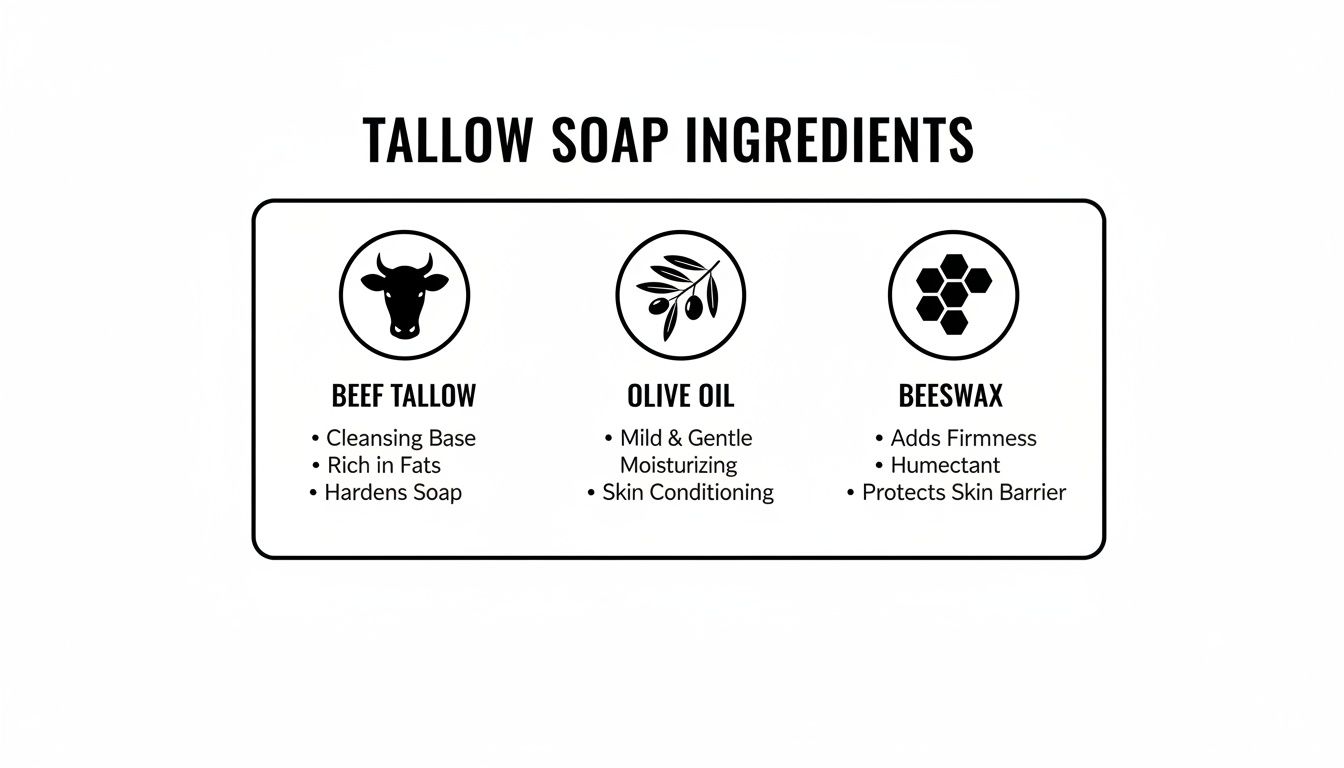
It shows how foundational ingredients like beef tallow, olive oil, and beeswax work in harmony to create a truly balanced and nourishing soap.
Fatty Acid Composition and Anti-Inflammatory Benefits
Beyond vitamins, the type of fat matters, too. Grass-fed tallow has a much healthier balance of omega-3 to omega-6 fatty acids. While we need both, a grain-heavy diet skews this ratio toward omega-6s, which can actually promote inflammation. The balanced profile in grass-fed tallow, on the other hand, helps calm irritation and reduce redness.
The Gold Standard: To get the absolute best quality, look for tallow that’s not just "grass-fed" but also "grass-finished." This is a key distinction. It means the animal ate nothing but grass for its entire life, which results in the purest and most nutrient-dense tallow you can find.
If you want to get into the nitty-gritty of the science, our article on the importance of grass-fed tallow soap offers a much deeper look into why sourcing is so crucial.
Tallow Sourcing Comparison Grass-Fed vs Grain-Fed
To make it simple, let's break down the key differences side-by-side. This table shows exactly what you're getting (or missing out on) when you choose one over the other.
| Feature | Grass-Fed & Finished Tallow | Conventional Grain-Fed Tallow |
|---|---|---|
| Nutrient Profile | High in fat-soluble vitamins (A, D, E, K) and antioxidants. | Contains significantly lower levels of these essential vitamins. |
| Fatty Acid Ratio | A balanced omega-3 to omega-6 ratio, which helps calm inflammation. | Higher in pro-inflammatory omega-6 fatty acids due to a grain-based diet. |
| Skin Benefits | Deeply nourishing, supports barrier repair, and is fantastic for soothing sensitive or irritated skin. | Offers basic moisturization but lacks the potent therapeutic and calming properties. |
| Sustainability | Sourced from regenerative farming practices that improve soil health and animal welfare. | Often tied to industrial farming with a much larger environmental footprint. |
At the end of the day, opting for a soap made with grass-fed, grass-finished tallow is a real investment in your skin's long-term health. It provides a level of nourishment that goes way beyond just getting clean.
Finding the Right Tallow Soap for Your Skin
Choosing the "best" tallow soap isn't about a universal winner. It's about understanding your skin's specific quirks and matching them with the right formula. Tallow is incredibly versatile, but its real power comes from picking the right blend for your needs.
Whether your skin feels tight and dry, reacts to everything, or is showing signs of aging, there's a tallow soap that can help restore its balance. The secret is knowing how to read the ingredient list.
For Dry or Eczema-Prone Skin
When your skin is chronically thirsty, flaky, or dealing with eczema, the golden rule is less is more. You need a soap that cleanses gently without stripping away the natural oils that make up your skin's protective barrier.
Look for a simple formula where high-quality, grass-fed tallow is the main event. A little olive oil for added conditioning is great, but that's about it. Always start with an unscented bar. Even natural essential oils can be too much for compromised skin. The goal here is simple: gentle cleansing plus deep, skin-compatible moisture.
Expert Tip: For severely dry or eczema-prone skin, the shortest ingredient list is your best friend. A pure, unscented tallow bar delivers maximum nourishment with minimal risk of irritation, helping to rebuild a fragile skin barrier from the outside in.
For Sensitive and Reactive Skin
If your skin flares up at the drop of a hat, you need more than just "gentle" ingredients—you need simple ones. The more ingredients in a product, the more chances there are for one of them to cause a reaction. Your perfect tallow soap is one that is completely free of known irritants.
That means a hard pass on synthetic fragrances, dyes, or harsh chemical additives. A pure, unscented bar made from grass-fed tallow is ideal. Its fatty acid profile is so close to our own skin's natural oils that it’s less likely to trigger a reaction. Instead, it works to calm redness and soothe reactivity over time.
This focus on simplicity pays off. Brands that create non-irritating, nutrient-dense products often see 30-50% higher customer retention. It's not just hype; studies have shown tallow soaps can reduce dryness up to 20% more effectively than many plant-oil bars. With the North American tallow market growing by a staggering 79.43% between 2021-2025, it’s clear people are experiencing these benefits firsthand. You can dig into the market trends on futuremarketinsights.com to learn more.
For Oily or Acne-Prone Skin
I know, using a fat-based soap on oily skin sounds completely backward. But hear me out. Harsh, stripping cleansers can actually send your skin into panic mode, causing it to produce even more oil to make up for what's been lost. It’s a frustrating cycle.
Tallow soap breaks that cycle. It cleans away impurities without destroying your skin’s natural lipid barrier. Since tallow is non-comedogenic (meaning it won't clog your pores), it helps bring your skin’s own oil production back into balance. If you're dealing with breakouts, look for a bar with a touch of tea tree oil, which offers natural antibacterial properties without over-drying.
For Mature Skin
As we age, our skin naturally produces less oil and loses some of its bounce. Tallow soap is a fantastic match for mature skin because it's packed with the fat-soluble vitamins that skin craves.
Grass-fed tallow is an especially rich source of vitamins A, D, E, and K. These nutrients are crucial for supporting skin cell turnover, fighting off environmental damage, and maintaining a supple, healthy glow. To give your skin an extra boost, seek out formulas that pair tallow with other antioxidant-rich ingredients. It's the perfect way to give aging skin the nourishment it needs to stay firm and radiant.
How to Spot a High-Quality Tallow Soap
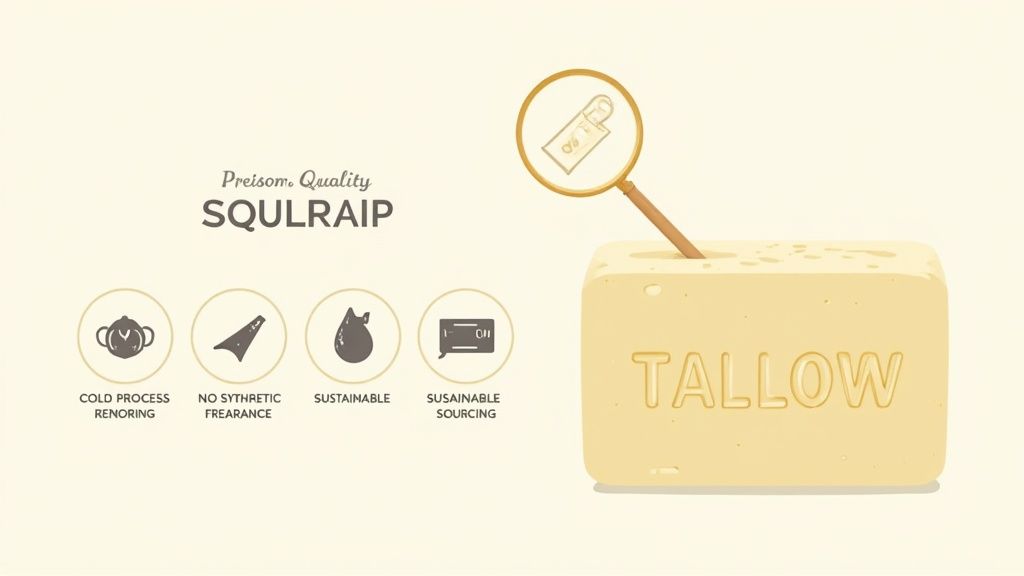
When you’re searching for the best tallow soap, you need to think like a seasoned artisan. It's not just about what's on the label; it's about the craftsmanship behind the bar. The quality can vary wildly depending on how it's made, so knowing a few key details will help you tell a truly premium product from a mediocre one.
The journey from raw suet to a finished bar of soap is a delicate one, and it all starts with the rendering process. This is where the fat is slowly purified. A low-and-slow rendering method is crucial for preserving the tallow’s rich profile of vitamins and fatty acids. If it's rushed with high heat, all those incredible skin-loving compounds can be destroyed before they even get to you.
Understanding the Soapmaking Craft
After rendering comes the soapmaking method itself, where the real magic happens. The vast majority of top-tier tallow soaps are made using the cold-process method, a traditional technique where tallow is mixed with a lye solution without any external heat. It’s a slow, deliberate process.
The mixture then cures for four to six weeks. During this time, the saponification reaction finishes, which means all the lye is converted into soap. This patient approach produces a far gentler, more conditioning bar that retains its naturally formed glycerin—a powerhouse humectant that draws moisture right to your skin.
Expert Tip: A properly made cold-process soap will feel firm and smooth, never soft or greasy. It should also have a clean, almost neutral scent. If you smell a strong "beefy" odor, it’s a sign the tallow wasn’t rendered correctly.
On the flip side, there's hot-process soap, which is "cooked" to speed things up. While you get a usable bar much faster, that high heat can degrade the very nutrients in the tallow you’re paying for.
What to Avoid: The Red Flags
A truly great bar of soap is defined just as much by what isn’t in it. Always be wary of soaps loaded with synthetic additives that do nothing but take away from the tallow’s natural benefits.
Here are a few common red flags:
- Synthetic Fragrances: Often listed simply as "fragrance" or "parfum," these can hide dozens of undisclosed chemicals known to irritate sensitive skin.
- Artificial Colorants: Dyes like FD&C colors are purely for looks and can be another source of irritation. Natural colorants from botanicals or clays are always a better sign.
Learning to spot quality takes a bit of practice. If you want to get really good at it, it helps to understand how quality is assessed in other natural goods, so checking out an essential guide to spotting high-quality wellness products can give you a better eye for detail. In the end, a superior bar of tallow soap won't just feel better on your skin—it will last longer, proving its value with every wash.
Your Questions About Tallow Soap Answered
Diving into the world of traditional skincare like tallow soap can bring up a few questions. I get it. Even with its long history and amazing benefits, it can feel a little new and different at first. Let's tackle some of the most common things people ask so you can feel totally confident about making the switch.
Tackling Common Myths and Concerns
Most people start with a very practical question: "Will this stuff clog my pores?" It’s a fair question, especially if you have oily or acne-prone skin. The great news is that high-quality, grass-fed tallow is very low on the comedogenic scale. Put simply, it’s highly unlikely to block your pores.
The magic is in its composition. Tallow is so similar to our skin’s own natural oils (sebum) that it just sinks right in. Instead of causing problems, it actually helps balance your skin's oil production, which is why it works wonders for nearly every skin type out there.
"But does it smell like beef?"
This is probably the second most common question I hear. A properly rendered and well-made bar of tallow soap should smell clean, neutral, and maybe a little creamy. If you ever pick up a bar that has a strong, "beefy" odor, that’s a major red flag. It means the tallow wasn't purified correctly, which affects not just the scent but its ability to nourish your skin.
A top-notch tallow soap should be virtually odorless or only carry the scent of any essential oils that have been added. The meticulous rendering and saponification process gets rid of any unwanted smells, leaving you with a pure, gentle bar of soap.
"How long will a bar last? Is it worth the money?"
Absolutely. Thanks to its unique fatty acid profile, tallow creates an incredibly hard, dense bar of soap. You know how some plant-based soaps seem to melt into a puddle in the shower after a week? Tallow soap doesn't do that. It holds its shape beautifully and will easily outlast most commercial soaps, giving you fantastic value for your money.
Is Tallow Soap a Sustainable Choice?
For a lot of us, where our products come from matters. Tallow soap is a perfect example of the "nose-to-tail" philosophy, which is all about using every part of an animal to eliminate waste.
Instead of being thrown away, a byproduct of the meat industry is transformed into a beautiful, effective skincare product. When you choose tallow sourced from local, regenerative farms, you’re taking that a step further by supporting ethical and environmentally sound practices. It makes finding the best tallow soap a win for your skin and the planet.
Ready to feel the gentle, nourishing difference for yourself? Wild Tallow Skincare offers handcrafted, 100% grass-fed tallow soaps made with just three simple, food-grade ingredients. Explore our collection of pure, fragrance-free soaps perfect for sensitive skin.