

When you hear the term "minimal ingredient face moisturizer," don't just think "simple." Think intentional. This is a skincare philosophy built on using a very short, carefully curated list of ingredients to achieve powerful results.
The whole point is to maximize potency and biocompatibility, stripping away all the unnecessary fillers, artificial fragrances, and common irritants that do more harm than good, especially for sensitive skin.
What Is Minimal Ingredient Skincare
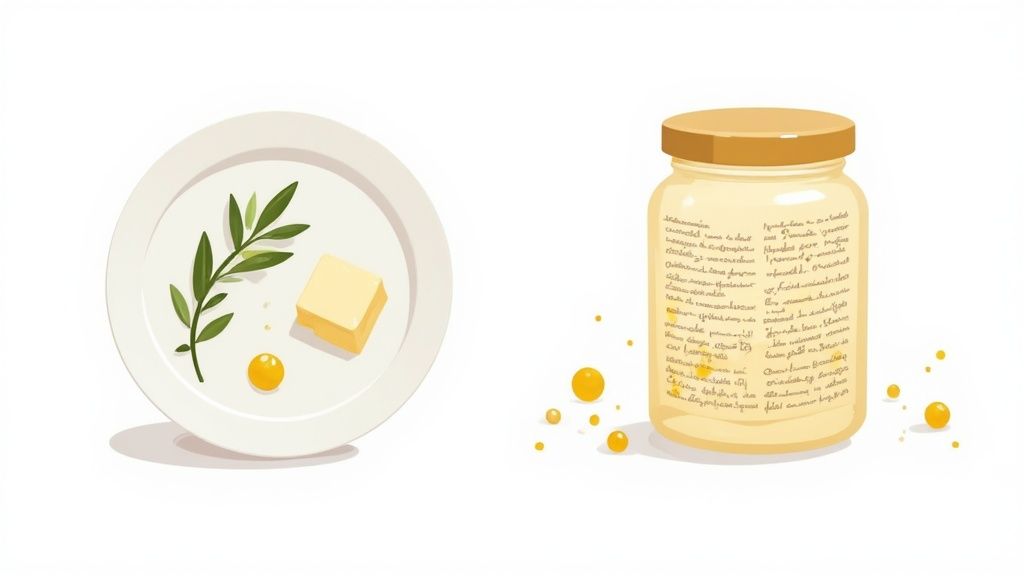
Let's try a little thought experiment. Picture yourself at the grocery store. In one hand, you have a fresh, wholesome meal with just three ingredients you instantly recognize: chicken, sweet potatoes, and broccoli. In your other hand is a processed frozen dinner with an ingredient list 35 items long, full of chemical names you can't even pronounce. Which one feels better for your body?
That's the exact same logic behind minimal ingredient skincare. It’s a return to the idea that less is more. Rather than overwhelming your skin with dozens of synthetic compounds it doesn’t know what to do with, a minimal moisturizer delivers a few high-quality, potent, and recognizable ingredients that work with your skin's natural biology, not against it.
The Philosophy of Intentional Simplicity
Minimalism in your skincare routine isn't about depriving your skin. It’s about being intentional. It means consciously choosing products with transparent, simple formulas over those with a long list of mysterious chemicals. The goal is simple: give your skin exactly what it needs to thrive, and nothing it doesn’t.
This whole approach boils down to a few key ideas:
- Biocompatibility: The ingredients are selected because our skin can easily recognize and use them. Think of it like giving your body a food it already knows how to digest—there's no confusion or defensive reaction.
- Potency Over Quantity: With fewer ingredients, each one is present in a higher, more meaningful concentration. You're not getting tiny, ineffective amounts of "fairy dust" ingredients that are only there for marketing purposes.
- Reduced Irritation Risk: This is a big one. Every single ingredient you add to a formula introduces another potential trigger for an allergic reaction or sensitivity. By keeping the list short, you drastically lower the odds of redness, breakouts, and general irritation.
An effective routine should support your skin’s natural barrier and address your core needs—that's it. The focus is on calming and nourishing the skin, not overwhelming it with complexity.
Supporting Your Skin Barrier
At the end of the day, the real magic of a minimal ingredient face moisturizer is its ability to strengthen your skin's natural protective shield, known as the skin barrier. This barrier is your first line of defense against everything the world throws at it, from pollution and bacteria to moisture loss.
Many complex, conventional formulas contain harsh chemicals that can weaken and strip this barrier, leaving your skin exposed, vulnerable, and reactive.
A simple, nourishing formula does the opposite. It provides the essential building blocks—like healthy fats and vitamins—that your barrier desperately needs to repair itself and function at its best. This leads to skin that isn't just temporarily soothed, but is genuinely healthier, calmer, and more resilient in the long run. It's proof that sometimes, the most powerful solutions are the simplest ones.
Why Your Sensitive Skin Needs a Simpler Moisturizer
Think about trying to have a real conversation in a room with a dozen stereos blasting different songs. It's impossible to focus, right? That's what using a moisturizer with a long, complicated ingredient list is like for your sensitive skin. It's just too much noise.
Every single ingredient in a formula is something your skin has to process. When it's hit with dozens of synthetics, fillers, fragrances, and preservatives all at once, it can get overwhelmed and go on the defensive. This is exactly why a minimal ingredient face moisturizer is so often the solution for skin that just won't calm down. It turns down the static, letting your skin finally hear—and use—the good stuff.
This isn’t just a small trend, either. It’s a huge shift in how we approach skincare. In fact, over 60% of newly launched skincare products now feature “free-from” or minimalist ingredient claims. People are tired of the guesswork and are demanding formulas they can actually understand.
Reducing the Risk of Reaction
The logic here is simple math: the more ingredients you put on your skin, the higher the odds that one of them will cause a problem. Every additive, no matter how tiny the amount, is a potential trigger for redness, an allergic reaction, or a breakout.
It’s like trying to figure out a food allergy. If you have a reaction after eating something with 30 ingredients, good luck pinpointing the culprit. But if you eat something with just three ingredients, it’s much easier to figure out what went wrong. A minimal formula does the same for your skin.
Here’s how this helps with common skin issues:
- Redness and Rosacea: Complex lotions are often packed with hidden irritants that cause flare-ups. A simpler moisturizer removes those potential triggers, giving your skin a chance to calm down.
- Acne and Breakouts: So many fillers and emulsifiers in standard creams are comedogenic, meaning they are known to clog pores. A minimal product gets rid of that risk entirely.
- Chronic Dryness: Harsh preservatives and alcohols can actually strip your skin's natural oils, making dryness even worse. Minimalist formulas focus purely on adding moisture back, not taking anything away.
Calming Inflammation and Supporting the Skin Barrier
Sensitive skin is almost always a sign of a damaged skin barrier. This is your skin's protective shield, designed to keep moisture in and irritants out. When that shield is weak, your skin is left vulnerable to everything, leading to a constant state of inflammation.
A minimal ingredient face moisturizer is like a gentle support crew for that barrier. Instead of throwing more potential attackers at it, it provides simple, biocompatible building blocks your skin can use to repair itself.
By simplifying your routine, you let your skin stop wasting energy fighting off unknown ingredients and start focusing on healing and rebuilding its own defenses. The result is a calmer, stronger, and more resilient complexion.
It’s amazing how many skin problems—from stubborn dry patches to breakouts that never seem to go away—are actually caused by the products we use to try and "fix" them. Fragrances, for example, are one of the biggest culprits behind allergic reactions. If your skin is constantly acting up, checking out our guide on the best fragrance-free moisturizers is a fantastic next step.
Ultimately, choosing a simpler moisturizer is about being kind to your skin. You’re lifting the burden of having to filter through chemical noise every day and giving it a peaceful environment to heal, hydrate, and truly thrive. It’s an approach that doesn’t just manage symptoms—it builds healthier skin from the ground up.
How to Read Ingredient Labels Like a Skincare Expert
Walking down the skincare aisle can feel like prepping for a pop quiz in chemistry. The ingredient lists are long, the names are confusing, and it's easy to feel overwhelmed. But what if you could scan a label with the same confidence as reading a simple recipe?
The secret isn't about memorizing every single compound. It’s about understanding a few key principles that let you quickly tell if a moisturizer is genuinely simple or just hiding behind clever marketing. Once you know what to look for, you're in control.
First, let's talk about the "power of the first five." By law, ingredients have to be listed in order from the highest concentration to the lowest. This means the first five ingredients usually make up 80% or more of the entire product. If you spot water, alcohol, or cheap fillers in that top group, you know the good stuff—the active, nourishing ingredients—are probably just a tiny fraction of the formula.
Decoding the Ingredient List
Think of an ingredient list as the product's unvarnished truth. It can't lie. By focusing on what’s at the very top, you can get a gut check on a moisturizer's quality and purpose without getting bogged down in the tiny print at the bottom.
When a moisturizer is packed with a long list of synthetic compounds, it raises the odds of a bad reaction. The more variables you introduce, the higher the risk of irritation.
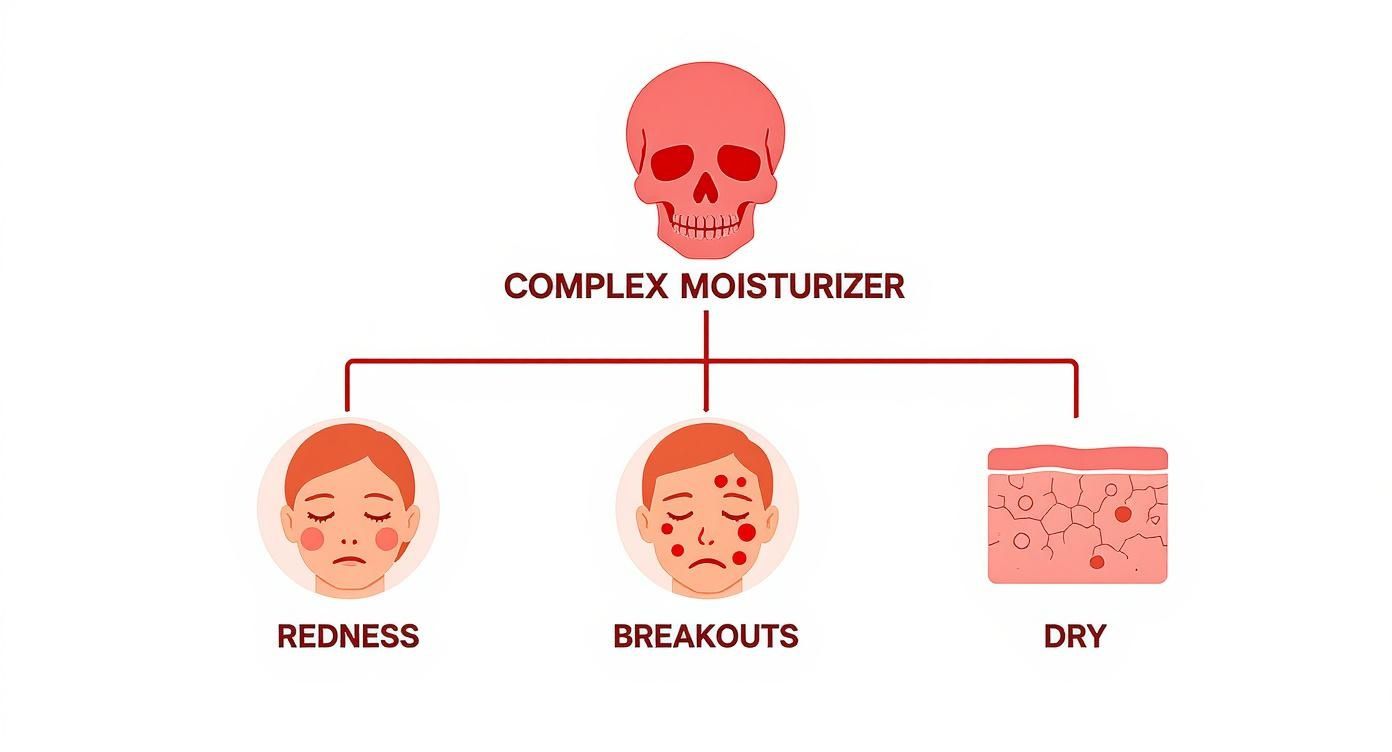
This is why simplifying is so powerful. By choosing a moisturizer with fewer ingredients, you're not just decluttering your routine; you're actively lowering the chances of triggering redness, breakouts, or dryness.
Minimalist Moisturizer Ingredient Checklist
To make things even easier, here's a quick-reference guide. The "Green List" features ingredients known for being gentle and effective, while the "Red List" flags common irritants and fillers that often do more harm than good, especially for sensitive skin.
| Ingredients to Look For (The Green List) | Why It's Beneficial | Ingredients to Avoid (The Red List) | Why It's a Concern |
|---|---|---|---|
| Grass-Fed Tallow | Rich in skin-loving vitamins (A, D, E, K) and has a lipid profile that closely mimics our own skin, making it incredibly biocompatible and soothing for the skin barrier. | Synthetic Fragrance ("Parfum") | This is a huge one. "Fragrance" is a catch-all term that can hide hundreds of undisclosed chemicals, and it's a top cause of skin allergies. |
| Squalane (from olives) | A lightweight, non-clogging oil that delivers serious hydration. It helps balance your skin's own oil production without ever feeling heavy or greasy. | Harsh Sulfates (SLS/SLES) | These are aggressive detergents that strip away your skin's natural protective oils, leaving it dry, tight, and vulnerable to irritation. |
| Ceramides | Think of these as the "mortar" holding your skin cells together. They're essential lipids for a healthy, resilient barrier that locks moisture in. | Drying Alcohols (SD Alcohol, Denatured) | These give products a quick-drying feel but can be incredibly harsh over time, weakening the skin barrier and causing long-term dryness. |
| Jojoba Oil | The chemical structure of jojoba oil is remarkably similar to human sebum. This allows it to moisturize and regulate oil production without clogging pores. | Parabens (Methylparaben, etc.) | These are preservatives used to extend shelf life. Concerns have been raised about their potential to mimic estrogen and disrupt hormone function. |
Keep in mind, this isn't just about "good" vs. "bad" ingredients. It’s about what's right for your skin. For someone with highly reactive skin, even some "natural" additives like essential oils can be a problem. A truly minimal moisturizer keeps it simple and sticks to the absolute essentials.
My goal here is to help you build the confidence to pick up any bottle and make an informed choice for yourself. It’s about moving from being a passive consumer to an empowered advocate for your skin's health.
Learning to demand clean, simple formulas is a mindset that can extend beyond your bathroom cabinet. Realizing the importance of transparent ingredient lists is a philosophy that benefits your entire home.
Thankfully, consumers aren't the only ones pushing for change. Regulatory pressure on certain synthetic ingredients has encouraged brands to shift toward more natural, non-toxic formulations. This growing awareness is making it easier than ever to find products that align with a "less is more" philosophy.
If you want to dive deeper into what to avoid, our guide on chemical-free skincare products is a great next step. Arming yourself with this knowledge is the best way to cut through the marketing hype and choose what’s truly right for your skin.
The Power of a Simple Three-Ingredient Formula
We’re often led to believe that a longer ingredient list equals a better product. When you see a moisturizer packed with twenty different botanical extracts and lab-made peptides, it feels like it must be superior, right? But what if the opposite were true?
What if real, lasting skin health came from a formula so simple, so elemental, that it worked in perfect harmony with your skin’s own biology?

To see just how effective a minimal ingredient face moisturizer can be, let’s break down a classic, powerhouse blend of just three ingredients. This isn't about one specific product, but about a philosophy—a demonstration of how a few carefully chosen, high-quality ingredients can deliver everything your skin needs.
Imagine a formula built on just three things: grass-fed tallow, organic olive oil, and a single therapeutic essential oil. Each one is selected for a specific job, and together they create a beautiful synergy that supports, protects, and restores the skin. This simple trio is proof that great skincare isn't about quantity; it’s about quality and intention.
The Foundation: Grass-Fed Tallow
The star of this simple show is grass-fed tallow. This isn’t some trendy new discovery; it’s a time-tested nutrient our ancestors have relied on for centuries. What makes it so incredible for skin is its remarkable biocompatibility.
Tallow’s fatty acid profile is incredibly similar to the sebum our own skin produces. Your skin recognizes it on a cellular level, allowing it to absorb deeply and efficiently without clogging pores or leaving a greasy residue. It’s like giving your skin a perfectly matched puzzle piece it knows exactly what to do with.
Beyond its structure, grass-fed tallow is a natural source of the fat-soluble vitamins your skin craves:
- Vitamin A helps with healthy cell turnover.
- Vitamin D plays a key role in skin cell repair and protection.
- Vitamin E is a powerful antioxidant that defends against environmental stressors.
- Vitamin K helps support an even skin tone and texture.
This nutrient-dense profile makes tallow far more than a simple moisturizer. It's skin food, delivering the foundational building blocks for a strong, resilient barrier.
The Antioxidant Boost: Organic Olive Oil
Next up in our trio is organic olive oil. Think of it as the perfect supporting partner, enhancing the benefits of the tallow while bringing its own unique strengths to the table. Olive oil is loaded with antioxidants like polyphenols and Vitamin E, which are your skin's personal bodyguards.
These antioxidants patrol your skin, neutralizing the free radicals from pollution and UV exposure that can lead to premature aging and damage. By adding olive oil, the formula gains a protective shield that helps defend your skin all day long.
A simple formula allows each ingredient to shine. There are no fillers or synthetic additives diluting its power, ensuring your skin gets a concentrated dose of pure, unadulterated nourishment with every application.
Olive oil also contains squalene and oleic acid, which add another layer of moisturizing benefits. This creates a perfect synergy: the formula is both deeply nourishing (from the tallow) and actively protective (from the olive oil).
The Soothing Touch: A Therapeutic Essential Oil
The final ingredient is a single, thoughtfully chosen essential oil—like lavender or chamomile. In a minimalist formula, this isn't just for fragrance. It's included in a tiny, therapeutic amount to provide a specific, functional benefit.
For instance, lavender is renowned for its calming properties, making it fantastic for soothing redness and irritation. Chamomile is another great choice for its anti-inflammatory effects, which are ideal for reactive or sensitive skin.
By including just one essential oil, the formula avoids the "cocktail effect" of multiple botanicals that can sometimes overwhelm sensitive skin. Its role is targeted and supportive, adding a final layer of calming action to the nourishing base. It’s a complete system in just three parts, proving that powerful skincare doesn't need to be complicated.
How to Best Use a Minimalist Moisturizer
Making the move to a minimal ingredient moisturizer is a huge win for calmer, healthier skin. But to unlock the full potential of its simple, powerful formula, how you apply it is just as important as what’s inside the jar. A few small tweaks to your routine can make a massive difference in how well the product absorbs and nourishes your skin.
The best part? Integrating a minimalist moisturizer is wonderfully simple. It’s designed to make your life easier, not more complicated. By following a few key practices, you’ll ensure you're getting every last drop of goodness and giving your skin the support it craves.
The Best Time and Method for Application
When it comes to hydration, timing and technique are your secret weapons. A moisturizer applied correctly can seal in moisture for hours, but if you just slap it on, it might just sit on the surface without doing much at all.
Here’s the single most important tip: apply your moisturizer to slightly damp skin. After you wash your face, gently pat it with a towel, but stop before it’s bone-dry. You want it to feel a little dewy. Applying moisturizer at this moment acts like a seal, trapping that surface water and pulling it down into your skin for deeper, more lasting hydration. It’s like a sponge—it soaks up water much better when it's already a little wet.
A good daily routine would look something like this:
- Cleanse: Always start with a gentle wash to create a clean canvas.
- Treat (Optional): If you use any lightweight, water-based serums, apply them now and give them a minute to sink in.
- Moisturize: While your skin is still slightly damp, apply your minimal ingredient moisturizer.
- Protect (AM): In the morning, always finish with a broad-spectrum sunscreen.
Performing a Patch Test First
Even with the gentlest formulas, a patch test is non-negotiable—especially if your skin is on the sensitive side. Think of it as a quick safety check to make sure your skin gets along with the new product before you commit to using it all over your face.
It's easy. Just apply a tiny amount of the moisturizer to a discreet spot, like behind your ear or on the inside of your wrist. Do this twice a day for 2-3 days and keep an eye out for any redness, itching, or irritation. If your skin stays calm and happy, you're good to go.
A patch test is your skin's first handshake with a new product. It's a quick, easy way to ensure you're starting your new relationship on the right foot, preventing potential irritation before it even begins.
The growing global demand for trusted moisturizers underscores this need. In fact, daily face moisturizers are projected to command 41.2% of the skincare market. This growth is fueled by people just like you seeking out minimal ingredient formulas that work beautifully without causing drama. You can learn more about these skincare market trends to see how the industry is shifting toward gentle, effective products.
The Multitasking Power of a Simple Formula
One of the unsung joys of a truly pure, minimal ingredient moisturizer is its versatility. Because it’s free from irritating additives, a high-quality formula can often take the place of several other products, helping you declutter your routine and your bathroom shelf.
A rich, nourishing moisturizer can often double as:
- A Soothing Under-Eye Cream: Gently pat a tiny bit around the orbital bone to hydrate that delicate skin.
- An Effective Lip Balm: A pure, food-grade formula works wonders on chapped, dry lips.
- A Calming Spot Treatment: Dab it on stubborn dry patches, elbows, or even cuticles for targeted relief.
This multitasking magic is the true spirit of minimalism—doing more with less. It streamlines your routine, saves you money, and reduces your skin’s exposure to a long list of unnecessary ingredients, allowing it to simply be at its best.
Got Questions About Minimalist Moisturizers? We’ve Got Answers
Deciding to try a minimal ingredient face moisturizer is a big step—and a smart one. You're consciously choosing a calmer, more focused path for your skincare. But it’s also a shift that can challenge everything we’ve been taught to believe, like the idea that a longer ingredient list somehow means better results.
It's totally normal to have a few questions. Let's walk through some of the most common ones and clear up any confusion. My goal is to give you the confidence that comes from understanding why, for so many people, a simpler approach is the key to finally achieving healthy, happy skin.
Will It Really Be Enough for My Super Dry Skin?
This is easily the most common question I hear, and I’m happy to say the answer is a big, resounding yes. The power of a moisturizer doesn't come from how many ingredients it has, but from the quality and function of the few it contains. Minimalist formulas are designed to be potent and focused, using nutrient-dense ingredients that are absolute lifesavers for parched skin.
Think about it this way: many conventional lotions are mostly water, which feels nice for a moment but evaporates quickly, leaving your skin thirsty again. A truly simple moisturizer skips the fillers and gets right to the good stuff—rich emollients and occlusives like grass-fed tallow or shea butter. These ingredients create a breathable, protective seal over your skin that physically locks in moisture and prevents it from escaping throughout the day.
The secret to deep, lasting hydration isn't found in a complicated chemical cocktail. It's in a short list of powerhouse ingredients that work with your skin's natural barrier to seal in moisture for good. This concentrated strategy is what provides serious relief, even for the driest complexions.
Are "Natural" and "Minimal" Just Different Words for the Same Thing?
It’s easy to mix these two up, but they represent totally different philosophies. "Natural" is a marketing buzzword with virtually no regulation. A product can call itself "natural" while still being packed with a long list of 30 or more botanical extracts and essential oils, many of which are common irritants for sensitive skin.
Minimalism, on the other hand, is all about intention. It’s a deliberate choice to use only a handful of ingredients that are truly necessary and biocompatible—meaning your skin recognizes and knows what to do with them. A minimal ingredient face moisturizer cuts through all the noise, giving your skin only the core building blocks it needs for hydration and support.
This difference is huge. When your skin is acting up, the first step is to reduce the number of variables. A clean, three-ingredient formula is often a much safer bet than a so-called "natural" one with a complex blend that could easily overwhelm your skin.
Can I Use This on Oily or Acne-Prone Skin?
You absolutely can, as long as you choose the right formula. It sounds backward to put something rich on oily skin, right? But here’s the thing: chronic oiliness is often a sign that your skin's moisture barrier is out of whack. When you strip your skin of its natural oils (often with harsh cleansers), it panics and goes into oil-production overdrive to protect itself. This vicious cycle leads to clogged pores and breakouts.
A well-formulated, non-comedogenic minimal moisturizer can help restore that balance. By giving your skin barrier the healthy, biocompatible fats it craves, you send a signal that it’s safe, hydrated, and protected. Over time, your skin can learn to calm down and regulate its own oil production.
For oily or acne-prone skin, look for ingredients with a proven low comedogenic rating:
- Grass-fed tallow: Its lipid profile is remarkably similar to our own, allowing it to absorb beautifully without feeling heavy or clogging pores.
- Jojoba oil: Technically a liquid wax, it masterfully mimics our skin's sebum, helping to trick it into producing less oil.
- Squalane: A super lightweight and non-greasy hydrator that works for pretty much every skin type.
Just make sure to steer clear of heavier oils like coconut oil if you're prone to congestion. To dive deeper, you can check out this helpful guide on skin care ingredients to avoid and become an even smarter shopper.
How Do I Know if Minimalism Is the Right Move for Me?
Switching to a minimal ingredient face moisturizer isn't about fitting into a specific "skin type" box. It's more about recognizing how your skin is behaving and what you want from your daily routine.
A minimalist approach might be perfect for you if:
- You have sensitive or reactive skin. If redness, itchiness, or irritation are your constant companions, simplifying is the best way to reduce potential triggers.
- You struggle with unpredictable breakouts. Sometimes, a routine packed with too many "actives" is the real culprit behind the chaos.
- You feel totally overwhelmed by your current routine. Tired of a 10-step regimen? Minimalism is your path back to sanity.
- You just want a clean, transparent formula. You care about what goes on your skin and prefer products without unnecessary fillers, fragrances, or synthetics.
Ultimately, the only way to know for sure is to give it a try. The golden rule is to always patch test. Just apply a small amount to a discreet spot (like behind your ear or on your inner arm) for a few days and see how your skin feels. This one simple step can ensure you’ve found the perfect match before you go all-in.