

When you see those first red, itchy patches on your baby’s soft skin, it’s completely normal to feel a mix of worry and confusion. That condition, often called atopic dermatitis or simply baby eczema, is far more than just a bit of dry skin.
It’s a clear signal that your little one's skin barrier—which is naturally thinner and more fragile in infants—is having a tough time. I like to explain it as a brick wall with gaps in the mortar. This compromised barrier lets precious moisture out and allows common irritants to sneak in, kicking off that frustrating cycle of dryness, itching, and inflammation.
If you’re going through this, please know you are far from alone. Atopic dermatitis is one of the most common challenges in early childhood. Globally, out of 223 million people with the condition, an estimated 43 million are children between one and four years old. In fact, research shows that around 60% of people with eczema develop their first symptoms before their first birthday. This is exactly why getting a gentle, natural care routine in place right from the start can make such a profound difference. For a comprehensive look at the numbers, you can explore the full global report on atopic dermatitis.
The Philosophy of Natural Eczema Care
A natural approach to baby eczema isn’t about chasing a miracle cure. Instead, it’s about creating a calm, supportive environment where the skin can finally begin to heal and strengthen itself. The real goal here is to manage the symptoms, minimize flare-ups, and keep your baby comfortable without having to immediately reach for harsh chemicals or prescription steroids.
It's a proactive and gentle strategy built on two key things: consistency and observation. For a deeper dive into the science behind this, our guide on how to repair a damaged skin barrier is a great resource.
This philosophy puts the power back in your hands. It’s about building a daily routine that truly nourishes and protects, turning simple tasks like bath time into powerful, therapeutic moments. By focusing on pure, high-quality ingredients and mindful practices, you can bring your baby so much relief.
The Foundational Pillars of Gentle Management
To manage baby eczema naturally and effectively, we’re going to focus on four core strategies throughout this guide. Each one is a pillar that supports the others, creating a complete care plan that gets to the root causes of the discomfort. Think of these pillars as your roadmap to calmer, healthier skin for your little one.
At its heart, natural eczema care is about working with your baby's skin, not against it. It prioritizes soothing, protecting, and strengthening the skin's innate ability to heal by removing irritants and adding intensive, biocompatible moisture.
Before we dive into the details, let's quickly review the core ideas that form the foundation of a successful natural eczema plan. Mastering these simple concepts is the first, most important step you can take.
Foundational Pillars of Natural Baby Eczema Care
| Pillar | Primary Goal | Key Action |
|---|---|---|
| Gentle Cleansing | To clean the skin without stripping its natural oils. | Using lukewarm, short baths with minimal, fragrance-free cleansers. |
| Intensive Moisturizing | To hydrate the skin and lock in moisture to repair the barrier. | Applying a thick, safe emollient multiple times daily, especially after bathing. |
| Trigger Reduction | To minimize exposure to common environmental and topical irritants. | Identifying and avoiding things like harsh detergents, synthetic fabrics, and dry air. |
| Safe Product Selection | To ensure every product that touches the skin is non-toxic and supportive. | Choosing minimalist formulas with clean, recognizable ingredients like tallow. |
These four pillars are the bedrock of everything we'll cover. By focusing your efforts here, you can create a safe and healing environment for your baby's delicate skin.
Mastering the Soak and Seal Routine
If there's one technique that consistently delivers gentle, powerful relief for a baby's eczema, it's the Soak and Seal routine. This isn't some complicated medical treatment; it's a simple, two-step approach to bathing and moisturizing that can completely change the health of your little one's skin. The magic is in its one-two punch: it delivers a huge dose of hydration and then immediately locks it in before it has a chance to disappear.
Think of your baby’s eczema-prone skin like dry, cracked soil. A quick sprinkle of water just evaporates. The Soak and Seal method is more like a deep, nourishing rain followed by a protective layer of mulch to keep the ground healthy and moist. This is exactly what we're doing for the skin barrier—calming the irritation and stopping that awful itch-scratch cycle in its tracks.
There’s a common myth that bathing dries out eczematous skin, which leads many parents to bathe their baby less often. While it's true that long, hot baths with harsh soaps can strip the skin, a short, lukewarm bath followed by immediate moisturizing does the opposite. It provides the very hydration their skin is craving.
This simple routine forms the foundation of a gentle, natural care plan.
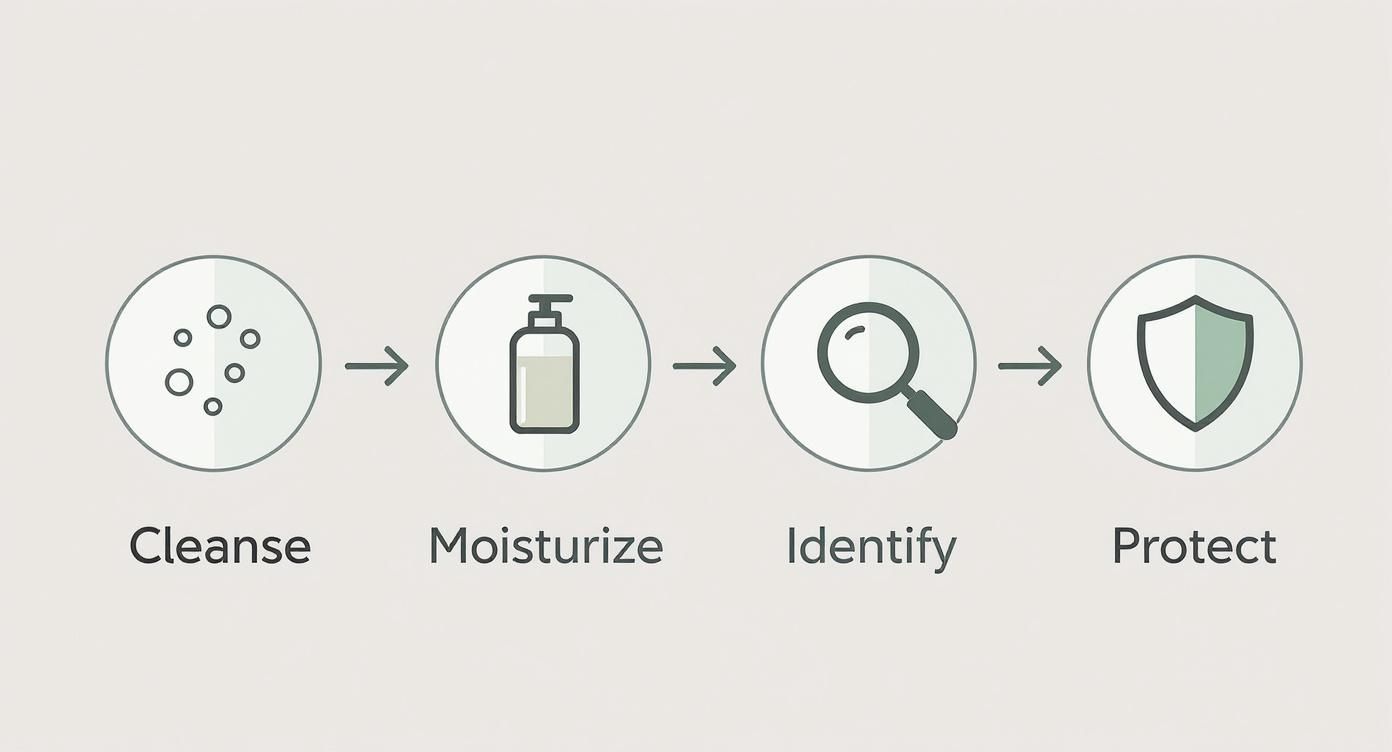
As you can see, it’s all part of a continuous cycle: we cleanse gently, moisturize thoroughly, work to identify triggers, and protect the skin. It all works together to keep your baby comfortable.
Perfecting the Soak
The first half of the routine—the "soak"—is all about the bath. The goal is to get as much water into the skin as possible without causing more irritation. That means getting a few details right.
First, the temperature. The water absolutely must be lukewarm, not hot. A good trick is to test it with the inside of your wrist or your elbow; it should feel pleasant and comfortable, not startlingly warm. Hot water is a major no-go because it strips the skin of its natural protective oils (lipids), which just makes dryness and inflammation worse.
Next up is timing. The sweet spot for an eczema-friendly bath is just five to ten minutes. That's plenty of time for the skin to absorb water but not so long that it starts to prune up and lose moisture. Steer clear of harsh, bubbly soaps. If you need a cleanser, use a tiny amount of a soap-free, fragrance-free formula right at the end of the bath.
The Critical Three-Minute Window
Now for the most important part of this whole process: the "seal."
Once you lift your baby out of the tub, gently pat their skin with a soft towel. Do not rub. You want to leave their skin slightly damp, almost dewy.
You now have a non-negotiable three-minute window to apply a thick moisturizer. I can't stress this enough. If you wait any longer, the water you just lovingly soaked into their skin starts to evaporate, and—paradoxically—it can leave their skin even drier than before the bath.
The three-minute rule is the absolute cornerstone of the Soak and Seal method. Slathering a thick emollient onto damp skin traps water in the outermost layer, dramatically improving hydration and helping the skin barrier do its job.
Trust me, this simple habit is a total game-changer for baby eczema.
Applying Moisturizer the Right Way
When you hear the term "apply liberally," take it to heart. Don't be shy with the moisturizer. You want to apply a thick, visible layer all over your baby's body, giving extra attention to any red, rough, or particularly dry patches.
I often tell parents to think of it like frosting a cake—you want generous, complete coverage.
Gently smooth the cream or balm onto the skin in the direction of hair growth. This little detail helps prevent irritating the hair follicles. Don't worry if it feels a bit greasy at first. The goal here is deep, lasting hydration, and a high-quality product will absorb better than you think.
This approach is widely supported by pediatric dermatologists. Natural, evidence-backed care for baby eczema is all about hydration, barrier repair, and avoiding irritants. Consistent use of thick, fragrance-free moisturizers is proven to reduce flare-ups by restoring the skin's moisture. Applying them right after a bath, when the skin is most receptive, makes them that much more effective.
The product you choose is just as important as the technique. You need a thick emollient that's free from common troublemakers like fragrances, dyes, and harsh preservatives. If you want a deeper dive into what works, you can check out our guide on the best moisturizer for baby eczema. Many parents have found incredible success with minimalist formulas like those made with grass-fed tallow, which is uniquely compatible with our skin and full of the nutrients needed to support healing.
Choosing Safe Skincare Ingredients For Your Baby
Walking down the baby aisle can feel like a pop quiz you didn't study for. The ingredient lists on lotions and washes often look more like a chemistry exam than something you'd want to put on your baby’s delicate skin. But you don't need a science degree to figure this out.
The goal is actually very simple: find ingredients that protect and nourish the skin barrier, while steering clear of anything known to cause irritation. This minimalist approach is the heart of any effective natural eczema treatment for babies. Let's get into exactly what to look for and what to leave on the shelf.
Soothing Ingredients To Look For
When you're scanning a label, a few key ingredients should give you a sense of confidence. These are nature's heavy hitters, known for calming inflammation, locking in moisture, and helping skin heal itself.
Here are a few standouts you’ll want to see on an ingredient list:
-
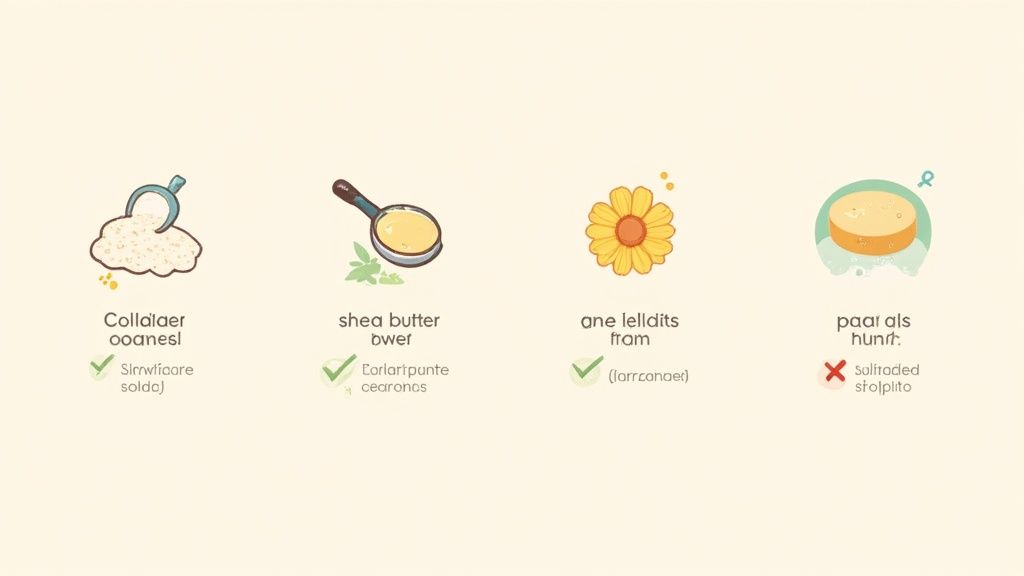
Colloidal Oatmeal: This isn't the same as your breakfast oats. It's ground so finely that it dissolves in water and creates an incredibly soft, protective film on the skin. It’s an FDA-approved skin protectant for a good reason—it contains special compounds called avenanthramides that are fantastic at fighting inflammation and itchiness.
-
Shea Butter: Packed with fatty acids and vitamins, shea butter is a dream for dry, cracked skin. It’s an emollient, which means it softens and smooths everything out, providing deep moisture without feeling greasy. It also has natural anti-inflammatory properties to help calm down those angry red patches.
-
Calendula: This gentle extract from marigold flowers has been a go-to for skin healing for centuries. Its mild antibacterial and anti-inflammatory powers make it perfect for soothing everything from diaper rash to the general irritation that comes with eczema.
These ingredients are beloved because they work. They offer real relief without the risk of harsh side effects.
A Closer Look At Grass-Fed Tallow
You might be seeing grass-fed tallow pop up more and more, and for good reason. It may sound a bit old-fashioned, but its unique makeup makes it incredibly compatible with sensitive, eczema-prone skin.
Tallow is simply rendered animal fat, but the magic is in its fatty acid profile, which is remarkably similar to the natural oils (lipids) found in healthy human skin. This means the skin basically recognizes it, allowing it to absorb deeply and help rebuild a compromised skin barrier from the inside out.
Rich in skin-loving vitamins like A, D, E, and K, grass-fed tallow delivers vital nutrients directly to skin cells. It does more than just moisturize—it feeds the skin what it needs to repair itself and calm inflammation.
Because it’s so biologically similar to our own skin, it provides long-lasting moisture without clogging pores. For many babies with severe sensitivities, a simple, pure tallow balm can be a total game-changer.
Common Irritants To Avoid
Knowing what to avoid is just as critical as knowing what to look for. Unfortunately, many popular baby products are loaded with ingredients that can strip the skin’s natural oils and make an eczema flare-up even worse.
Learning to spot these culprits is your best defense. Here are the top offenders to keep out of your shopping cart:
-
Fragrances ("Parfum"): If you remember one thing, make it this. "Fragrance" is a vague umbrella term that can hide hundreds of different chemicals, and it's the number one cause of skin irritation. Always, always choose products labeled fragrance-free. Be wary of "unscented," which can sometimes mean a masking fragrance was used to cover up chemical smells.
-
Sulfates (SLS/SLES): Sodium lauryl sulfate and sodium laureth sulfate are cheap detergents that give soaps and shampoos that big, bubbly lather. The problem is they’re too good at their job and strip away the skin's protective oils, leaving it dry and vulnerable.
-
Parabens: These are common preservatives used to give products a longer shelf life. They are known skin sensitizers and have also raised concerns about endocrine disruption. Thankfully, most brands now make it easy to find "paraben-free" options.
-
Phthalates: Often hiding under the "fragrance" ingredient, phthalates are another class of chemicals linked to endocrine disruption. The easiest way to avoid them is to stick strictly to fragrance-free products.
Becoming a label detective for your baby empowers you to make choices that truly heal their skin, not accidentally make things worse.
Baby Eczema Skincare Ingredients To Choose and To Avoid
Reading labels can get confusing, so here’s a quick-reference table to help you spot the good stuff and avoid the common troublemakers.
| Ingredient Category | Safe & Soothing Ingredients (Look For) | Common Irritants (Avoid) |
|---|---|---|
| Moisturizers (Emollients) | Shea Butter, Tallow, Jojoba Oil, Sunflower Seed Oil | Mineral Oil, Petrolatum (can be occlusive and derived from petroleum) |
| Humectants (Draw Moisture) | Vegetable Glycerin, Hyaluronic Acid | Propylene Glycol |
| Cleansers (Surfactants) | Decyl Glucoside, Coco-Glucoside (gentle, plant-derived) | Sodium Lauryl Sulfate (SLS), Sodium Laureth Sulfate (SLES) |
| Soothing Agents | Colloidal Oatmeal, Calendula, Chamomile, Aloe Vera | Fragrance/Parfum, Essential Oils (can be sensitizing for babies) |
| Preservatives | Vitamin E (Tocopherol), Rosemary Extract | Parabens, Formaldehyde-Releasing Preservatives |
This table isn't exhaustive, but it covers the main players you’ll encounter. When in doubt, a shorter ingredient list with names you can recognize is almost always a safer bet.
Remember, what touches your baby's skin all day long matters just as much. The same "gentle and natural" philosophy applies to their clothing. For more on this, check out this excellent guide on finding the best organic cotton baby clothes. Pairing the right skincare with soft, breathable fabrics creates the best possible environment for your baby's skin to heal and thrive.
Identifying and Managing Common Eczema Triggers
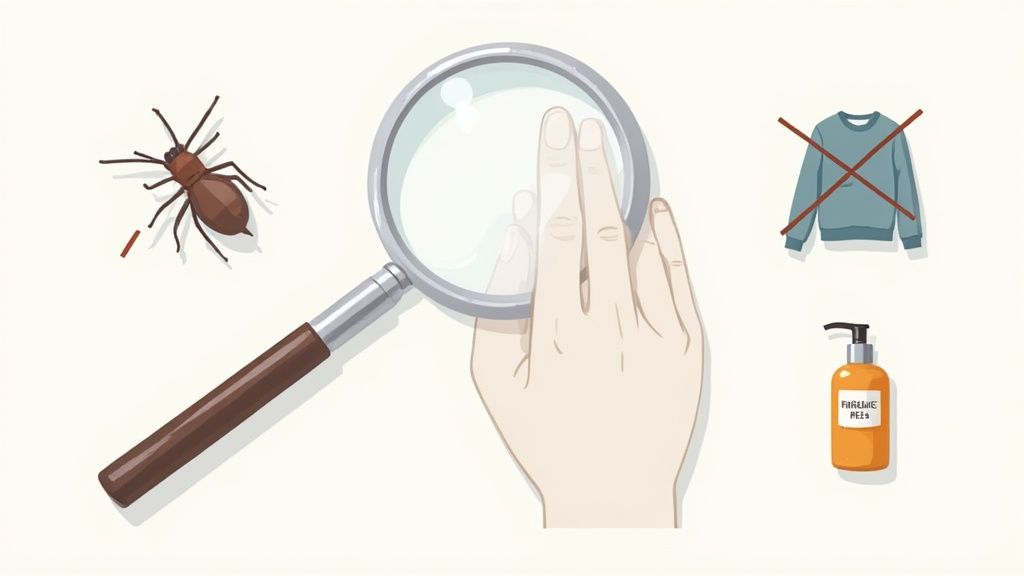
Managing your baby's eczema goes far beyond just what you put on their skin. It’s also about understanding what their delicate skin comes into contact with every single day. Flare-ups rarely happen out of the blue; they’re almost always a reaction to something. Becoming a gentle detective to uncover these triggers is a cornerstone of any effective natural eczema treatment for babies.
This process is all about patient, careful observation. Think of yourself as gathering clues. Every baby is different, so what causes a flare in one might not affect another at all. By taking a closer look at your baby’s environment and daily routine, you can start connecting the dots and create a calmer, more comfortable world for their skin.
Investigating Your Home Environment
Your home should be a safe haven, but hidden irritants can often lurk in plain sight. Thankfully, making a few simple adjustments to your baby's immediate surroundings can bring about some pretty significant relief.
One of the most common culprits is dry air, which saps moisture right out of the skin and weakens its natural barrier. This becomes a real problem in the winter when the indoor heating is on full blast. An easy fix is to run a cool-mist humidifier in the rooms where your baby spends the most time, especially their nursery. Keeping the humidity level between 40% and 50% can make a world of difference.
Dust mites are another frequent offender. These microscopic critters love to hide out in bedding, carpets, and stuffed animals. To keep them under control:
- Wash all bedding weekly in hot water.
- Consider a dust-mite-proof cover for your baby’s mattress and pillows.
- Keep stuffed animals to a minimum in the crib and wash them regularly.
If you have pets, managing dander is also key. For a deeper look at this specific topic, there's great information on understanding pet dander and allergies as potential eczema triggers.
The Impact of Fabrics and Laundry
The clothes, bedding, and towels touching your baby’s skin all day long can either soothe it or seriously irritate it. This is one area where small changes can yield huge results.
When it comes to fabric, always choose soft, breathable, natural materials. 100% organic cotton is the undisputed champion for eczema-prone skin. Try to avoid synthetics like polyester and fleece, as they don't breathe well and can trap heat and sweat, which is a recipe for an itchy flare-up. Even though wool is natural, it’s often scratchy and a common irritant.
Your laundry routine is just as crucial. The detergents you use leave a residue on fabrics that sits directly against your baby's skin. It’s essential to switch to a laundry soap that is clearly labeled as fragrance-free and dye-free. The same goes for fabric softeners and dryer sheets, which are loaded with irritating chemicals and perfumes.
Navigating Potential Food Triggers
The idea of food triggers can feel incredibly overwhelming, so it’s important to approach it calmly and methodically. While not all baby eczema is tied to diet, for some infants, an allergy or sensitivity to certain foods can be a primary driver of inflammation. Common culprits include cow's milk, soy, eggs, and wheat.
A Quick Word of Caution: Please, never make major changes to your baby’s diet (or a breastfeeding parent's diet) without talking to your pediatrician or a pediatric allergist first. Trying to self-diagnose can lead to nutritional gaps and unnecessary stress.
If you have a hunch that a food might be a trigger, start by keeping a detailed journal. Track everything the baby (or the breastfeeding parent) eats alongside the severity of the eczema. This log can reveal patterns and give you solid data to discuss with your doctor, who can then guide you on a safe, supervised elimination diet if it seems necessary.
The rise in childhood eczema isn't just a coincidence; it points to the significant role our modern environment plays. Data gathered from 14 different countries showed that eczema symptoms in children have increased by about 1.21% per decade. This trend reflects how much our surroundings—from allergens to lifestyle—can influence skin health and highlights why personalized trigger management is so important.
By systematically addressing these potential triggers—from the air your baby breathes to the clothes they wear—you take a powerful, proactive step in managing their eczema from the inside out.
When to Partner with Your Pediatrician
A consistent, gentle routine at home is the cornerstone of managing your baby’s eczema naturally, but it’s crucial to know you’re not in this alone. Think of your pediatrician as a key partner on your team.
Bringing in your doctor isn’t a sign that your natural approach has failed. In fact, it’s the smartest, most proactive thing you can do. You have the day-to-day, hands-on observations, and they have the clinical expertise to put the pieces together. Together, you can build a plan that gives your baby the best possible support.
Signs of a Potential Skin Infection
One of the most important reasons to pick up the phone is if you suspect a skin infection. That delicate, eczema-prone skin barrier is much more vulnerable to bacteria, making infections a very real possibility.
Keep a close eye out for these tell-tale signs. If you see them, it’s time for a prompt call to the clinic:
- Yellow or honey-colored crusts: This is a classic sign of a bacterial infection, often caused by Staphylococcus aureus (staph).
- Pus-filled bumps or blisters: Little pimple-like spots popping up within an eczema patch are a definite red flag.
- Spreading redness or warmth: If the skin around the patch looks angrier, gets more swollen, or feels warm to the touch, it needs a professional look.
- Fever: Any of these skin symptoms paired with a fever warrants immediate medical attention.
When Home Care Isn't Enough
Sometimes, you can do everything right, and the eczema just doesn't let up. That’s another key moment to check in with your pediatrician. Constant, intense itching can really take a toll on your baby’s quality of life (and yours!), and your doctor can offer solutions to bring much-needed relief.
It's time to schedule an appointment if you notice:
- Severe Discomfort and Poor Sleep: Is the itching so bad that it’s wrecking your baby's sleep and making them miserable all day? Quality sleep is non-negotiable for their development and for the skin’s ability to heal.
- No Improvement After a Few Weeks: You've been diligent with a gentle, natural routine for two to three weeks but aren't seeing any progress—or worse, the eczema is spreading. Your doctor can help troubleshoot what might be missing.
- Eczema That Oozes Clear Fluid: Often called "weeping" eczema, these wet-looking patches signal a severely compromised skin barrier that likely needs a medical boost to calm down and start healing.
Your job as a parent is to provide that loving, day-to-day care and comfort. Your pediatrician’s role is to provide a diagnosis and medical treatment when it’s needed. Working together is how your baby gets the best of both worlds, leading to happier days and more peaceful nights for the whole family.
Got Questions About Natural Eczema Care? We've Got Answers.
When you're trying to find the best natural solutions for your baby's eczema, a lot of questions pop up. Once you've got the basics down, it's the little details that can make all the difference. Let's tackle some of the most common questions I hear from parents so you can feel confident in your approach.
How Much Moisturizer Should I Actually Be Using?
"Apply liberally" is the standard advice, but what does that mean for a tiny baby? I always tell parents to think of it like frosting a cake. You want a visible, generous layer that covers every single inch of their skin.
Don't be shy with it, especially on those angry red patches. A good way to tell if you've used enough is if their skin has a healthy sheen and feels slightly slick after you're done. This creates a solid barrier that locks in precious moisture and keeps irritants out. Remember, this isn't a one-and-done deal—plan on moisturizing at least twice a day, and always within three minutes of getting out of the bath.
What’s the Deal with Coconut Oil for Baby Eczema?
Coconut oil gets a lot of buzz in natural health circles. And while it does have some nice antimicrobial properties, it’s definitely not a magic bullet for every baby with eczema. For some little ones, it can be wonderfully soothing. For others, it’s a total miss—it can cause more irritation or even trigger allergies, which is a real risk when the skin barrier is already compromised.
While some studies show virgin coconut oil can reduce Staphylococcus aureus on the skin and improve hydration, it doesn't work for everyone. Its effectiveness can vary, and it may not provide the long-lasting barrier protection that thicker emollients like tallow or shea butter do.
My advice? If you want to give it a try, always do a small patch test first and make sure you're using a high-quality, cold-pressed virgin coconut oil.
How Long Before I See a Real Difference?
This is where patience becomes your best friend. Natural treatments aren't about quick fixes; they're about supporting the skin's own ability to heal, and that process takes time.
You'll likely notice a drop in redness and itching within a few days, especially if you're really consistent with a "Soak and Seal" routine after every bath. But for that deeper, more resilient healing where the skin texture truly improves? You're probably looking at two to four weeks. Think of it as a marathon, not a sprint.
How Can I Make a Soothing Oat Bath at Home?
An oatmeal bath is a classic, and for good reason—it’s fantastic for calming an itchy flare-up. Oats contain special compounds called avenanthramides that are brilliant at reducing inflammation. And thankfully, it's super easy to make at home.
- Start with about 1/2 cup of whole, uncooked oats (the regular kind, not instant).
- Use a clean blender or coffee grinder to pulse them into a very fine, silky powder.
- To check if it’s fine enough, stir a spoonful into a glass of warm water. It should dissolve and turn the water milky, not sink to the bottom in clumps.
- As the tub fills with lukewarm water, sprinkle the oat powder in and swish it around with your hand to help it dissolve.
- Let your little one soak for 10-15 minutes. That’s the sweet spot for getting all those soothing benefits.
This simple remedy can offer some much-needed relief when your baby is feeling extra uncomfortable.
For a moisturizer that aligns with a minimalist, natural care philosophy, Wild Tallow Skincare offers formulas with just a handful of pure, recognizable ingredients. Discover gentle, effective relief for your baby’s sensitive skin at https://wildtallow.com.