

Dry, tight, and flaky skin can feel like a constant battle, often leading to complex routines filled with expensive, synthetic ingredients. But what if the most powerful solutions aren't created in a lab but harvested directly from nature? This guide is dedicated to exploring time-tested and science-backed natural remedies for dry skin that deliver deep, lasting hydration without irritating additives. We will move beyond generic advice to provide specific, actionable methods for incorporating these potent ingredients into your daily skincare.
Prepare to learn not just what to use, but precisely how to use it to restore your skin’s delicate balance, strengthen its protective barrier, and achieve a comfortable, healthy glow. We will cover eight distinct remedies, from nourishing shea butter to soothing colloidal oatmeal, detailing their unique properties and a variety of application techniques. Each item has been carefully chosen for its proven efficacy and accessibility, empowering you to build a simple, honest skincare practice that truly nourishes even the most sensitive and parched complexions. You'll gain the practical knowledge needed to confidently soothe and manage your dry skin using simple, food-grade ingredients you can trust.
1. Coconut Oil
A staple in traditional medicine and Pacific Island cultures for centuries, coconut oil stands out as one of the most effective natural remedies for dry skin. Extracted from coconut meat, this saturated fat is rich in medium-chain fatty acids, primarily lauric acid. These unique fats act as emollients, filling in the microscopic gaps between skin cells to create a smoother, more hydrated surface.
How It Works
Coconut oil's primary benefit lies in its ability to repair the skin's natural barrier. A healthy barrier is crucial for retaining moisture and protecting against environmental irritants. When this barrier is compromised, it leads to transepidermal water loss (TEWL), a key cause of dryness and flakiness. The fatty acids in coconut oil penetrate the skin's upper layers, effectively sealing in moisture and significantly reducing TEWL. Clinical studies have even validated its use in treating xerosis, a condition of abnormally dry skin, particularly in elderly patients.
This infographic summarizes the key components that make coconut oil such a powerful moisturizer.
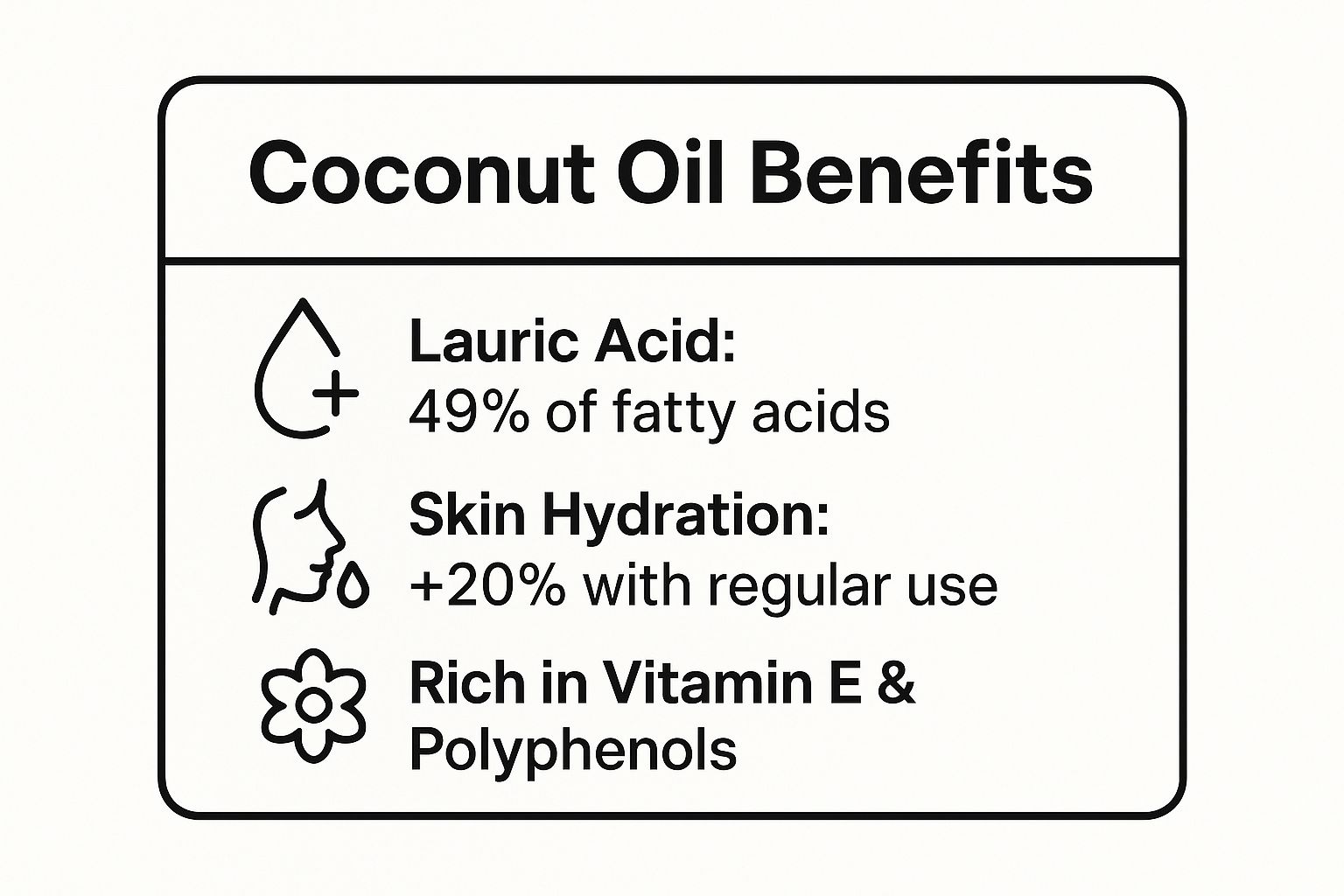
As the data shows, the high concentration of lauric acid is a primary driver of its skin-softening benefits, contributing to measurable improvements in hydration.
Practical Application Tips
To maximize its effectiveness, follow these simple steps for application:
- Choose Wisely: Opt for virgin or extra-virgin coconut oil, as these unrefined versions retain more of their beneficial nutrients.
- Apply to Damp Skin: The best time to apply is immediately after a shower or bath. Pat your skin gently with a towel, leaving it slightly damp, and then massage the oil in to lock in the surface moisture.
- Warm It Up: Solid at room temperature, coconut oil melts with heat. Warm a small amount between your palms to liquefy it for a smoother, more even application.
- Overnight Treatment: For severely dry areas like hands and feet, apply a generous layer at night and cover with cotton gloves or socks. This intensive treatment allows the oil to deeply penetrate and heal cracked skin while you sleep.
Important Note: While coconut oil is generally safe, it can be comedogenic (pore-clogging) for some individuals, particularly on the face. Always perform a patch test on your inner arm before applying it to larger areas, especially if you have acne-prone or sensitive skin.
2. Aloe Vera Gel
Revered through history as the "plant of immortality" by ancient Egyptians, aloe vera gel is a powerhouse natural remedy for dry skin. The clear, succulent gel harvested from inside the plant's leaves is composed of over 99% water and contains more than 75 active compounds, including vitamins, minerals, enzymes, and polysaccharides. These components work together to provide exceptional hydration while forming a lightweight, protective barrier on the skin.

How It Works
Aloe vera's effectiveness comes from its unique blend of humectants and healing agents. Polysaccharides like acemannan help the skin bind and retain moisture, directly combating the water loss that causes dryness and tightness. Simultaneously, its anti-inflammatory properties, attributed to compounds like C-glucosyl chromone, soothe the redness and irritation that often accompany severely dry or chapped skin. This dual-action approach not only hydrates but also calms the skin, making it particularly effective for conditions like eczema and psoriasis. Its proven success in medical settings, such as in burn units for wound healing, underscores its powerful regenerative capabilities.
Practical Application Tips
To get the most out of this versatile plant, consider these application methods:
- Purity is Key: Look for 100% pure aloe vera gel without added alcohol, colors, or fragrances that can counteract its benefits and irritate sensitive skin. Better yet, harvest fresh gel directly from an aloe plant leaf.
- Cool and Calm: Store your aloe vera gel in the refrigerator. The cooling sensation provides immediate relief for inflamed, itchy, or sunburned skin.
- Layer for Success: Apply a thin layer of aloe gel to slightly damp skin to act as a hydrating primer. Follow up with a thicker, oil-based moisturizer to seal in the aloe's moisture and provide a long-lasting barrier.
- DIY Treatment Boost: Use aloe vera as a base for a hydrating face mask. Mix it with a teaspoon of honey or a few drops of jojoba oil for an enhanced moisturizing and soothing treatment.
Important Note: While allergic reactions are rare, always perform a patch test on a small area of skin before widespread use, especially if you have known plant allergies. If using fresh aloe, ensure you only use the clear inner gel and avoid the yellowish latex layer (aloin) just beneath the rind, as it can be irritating.
3. Honey (Raw and Manuka)
Revered since ancient times by civilizations like the Egyptians and Greeks, honey is a time-tested natural humectant and one of the most versatile natural remedies for dry skin. Unlike moisturizers that simply sit on the surface, raw honey actively draws moisture from the environment into the skin. This golden liquid is packed with natural enzymes, antioxidants, and nutrients that not only hydrate but also soothe irritation and support skin regeneration.
How It Works
Honey's primary superpower is its humectant property, which allows it to bind to water molecules and pull them into the skin's outer layers. This provides deep, lasting hydration. Beyond just moisturizing, raw honey contains enzymes like glucose oxidase, which produces small amounts of hydrogen peroxide, giving it mild antiseptic properties that help cleanse and calm distressed skin. Manuka honey, in particular, is valued for its potent antibacterial and anti-inflammatory benefits due to a unique compound called methylglyoxal (MGO), making it exceptionally effective for healing very dry, cracked, or compromised skin.
Practical Application Tips
To harness honey's full potential for dry skin, follow these application methods:
- Choose Wisely: Always opt for raw, unprocessed honey to ensure its beneficial enzymes and antioxidants are intact. For targeted healing, look for Manuka honey with a UMF (Unique Manuka Factor) rating of 10+ or an MGO rating of 400+.
- Hydrating Mask: Apply a thin layer of raw honey to clean, damp skin. Leave it on for 15-20 minutes before rinsing with warm water. This simple mask will leave your skin feeling soft and dewy.
- Soothing Spot Treatment: For extremely dry or cracked patches on elbows, knees, or heels, apply a small amount of Manuka honey and cover with a bandage for several hours or overnight.
- Gentle Cleanser: To use as a face wash, warm a small amount of honey between your fingertips and massage it onto damp skin in circular motions. Rinse thoroughly for a cleanse that won't strip natural oils.
Important Note: Honey's sticky texture can be challenging. Applying it to slightly damp skin or mixing it with a few drops of a carrier oil like jojoba can make it easier to spread. Always perform a patch test, as a small percentage of people with pollen or bee allergies may experience a reaction.
4. Oatmeal (Colloidal Oatmeal)
Used since ancient Roman times to soothe irritated skin, oatmeal is one of the most trusted natural remedies for dry skin. Colloidal oatmeal is simply oats that have been ground into an extremely fine powder. This process allows it to mix with water to form a milky, protective barrier that coats the skin, locking in moisture and easing inflammation.

How It Works
The FDA officially recognized colloidal oatmeal as a skin protectant in 2003, and its power comes from a unique combination of compounds. It contains beta-glucans, which create a fine film on the skin that helps retain moisture, and avenanthramides, potent antioxidants with powerful anti-inflammatory properties that reduce redness and itching. This dual-action approach makes it exceptionally effective for dry, sensitive conditions like eczema and psoriasis, providing both hydration and relief.
This short video explains how an oatmeal bath can soothe dry, irritated skin.
Practical Application Tips
To incorporate oatmeal into your skincare routine, follow these simple methods:
- Create a Soothing Bath: Add one cup of colloidal oatmeal (or homemade oat powder) to a lukewarm bath and soak for 15-20 minutes. This provides full-body relief from dryness and itchiness.
- Make a DIY Face Mask: Mix colloidal oatmeal with a small amount of water or honey to form a thick paste. Apply to your face, leave on for 15 minutes, and rinse with cool water for a calming, hydrating treatment.
- Targeted Spot Treatment: For specific dry patches, create a small amount of oatmeal paste and apply it directly to the affected area. This is great for rough elbows, knees, or patches of eczema.
- Keep It Mess-Free: To avoid a messy cleanup, place the colloidal oatmeal in a muslin bag or an old stocking and let it infuse the bathwater without releasing the grounds.
Important Note: Always use plain, unflavored oats without any added sugars or flavorings, as these additives can irritate the skin. If making your own, ensure the oats are ground into the finest powder possible for proper suspension in water.
5. Shea Butter
A treasured beauty secret from West Africa, shea butter is a rich, creamy fat extracted from the nuts of the African shea tree. Used for millennia to protect skin from harsh, arid climates, this ivory-colored butter is a superior emollient and one of the most celebrated natural remedies for dry skin. It is packed with fatty acids like oleic, stearic, and linoleic acid, as well as vitamins A and E, making it exceptionally nourishing.
How It Works
Shea butter's effectiveness comes from its dual-action moisturizing properties. First, its high concentration of fatty acids replenishes lipids in the skin, reinforcing the natural moisture barrier and preventing transepidermal water loss (TEWL). Second, it contains a significant amount of unsaponifiable matter, compounds that won't turn into soap when mixed with an alkali. These compounds, including triterpenes and cinnamic acid esters, have anti-inflammatory and antioxidant properties that soothe irritation and protect the skin from environmental damage. Its unique composition allows it to melt at body temperature, absorbing deeply to provide long-lasting hydration without a greasy feel. Its benefits for dry skin are so profound that many are turning to similar nutrient-dense fats. You can learn more about natural dry skin treatments on wildtallow.com.
Practical Application Tips
To get the most out of this powerful moisturizer, follow these best practices:
- Choose Raw and Unrefined: Opt for raw or unrefined shea butter, which is typically ivory or pale yellow. This form retains the highest concentration of vitamins and healing compounds, unlike the stark white, chemically refined versions.
- Warm for Smoothness: Shea butter is solid at room temperature. Rub a small pea-sized amount between your palms until it melts into a smooth, clear oil before massaging it into your skin.
- Apply Post-Shower: For maximum absorption, apply it to slightly damp skin right after a bath or shower. This helps to seal in the surface moisture your skin just absorbed.
- Targeted Treatment: It is especially effective on areas prone to extreme dryness and cracking, such as elbows, knees, feet, and hands. Apply a thicker layer to these spots before bed for an intensive overnight healing treatment.
Important Note: Authentic, unrefined shea butter has a distinct nutty, earthy scent that fades shortly after application. If you prefer, you can whip it with a hand mixer and add a few drops of a non-irritating essential oil, like lavender, to create a lighter, fluffier, and more fragrant body butter.
6. Avocado and Avocado Oil
Treasured by ancient civilizations like the Aztecs, who called it 'ahuacatl', the avocado is a potent natural remedy for dry skin. Both the fruit's creamy flesh and its cold-pressed oil are packed with beneficial compounds. They are exceptionally rich in monounsaturated fats like oleic acid, along with vitamins E and C, which work together to deeply nourish, moisturize, and protect the skin.
How It Works
Avocado’s primary strength lies in its high concentration of oleic acid, an omega-9 fatty acid known for its ability to penetrate the skin's surface more effectively than many other oils. This allows it to deliver moisture and nutrients to deeper layers, helping to repair a compromised skin barrier from within. The antioxidants, including vitamins E and C, help combat oxidative stress from environmental factors that can exacerbate dryness. Clinical studies have shown that topical application of avocado-based compounds can significantly improve skin hydration and elasticity.
The combination of fats, vitamins, and antioxidants makes avocado uniquely capable of not just moisturizing but also healing and softening rough, parched skin. Its gentle nature makes it suitable for soothing sensitive or irritated areas.
Practical Application Tips
To harness the full moisturizing power of avocado, consider these methods:
- Soothing Face Mask: Mash half a ripe avocado into a smooth paste. For an extra boost of hydration, mix in a teaspoon of honey. Apply to your face, leave on for 15-20 minutes, and rinse with lukewarm water.
- Apply to Damp Skin: For best results with avocado oil, apply it to your skin immediately after a shower. This helps trap surface moisture, locking in hydration for longer-lasting relief.
- Boost Your Moisturizer: Add a few drops of cold-pressed, unrefined avocado oil to your daily face or body lotion to enhance its nourishing properties.
- Targeted Treatment: Use avocado oil as an intensive treatment for particularly dry spots like cuticles, elbows, and heels. Gently warming the oil between your palms before application can help it absorb more deeply.
Important Note: While avocado is a powerhouse of nutrients, its oil can be moderately comedogenic. If you have oily or acne-prone skin, it's best to use it on the body or perform a patch test on a small area of your jawline before applying it to your entire face.
7. Jojoba Oil
A celebrated ingredient in the world of natural skincare, jojoba oil is technically a liquid wax ester, not an oil. Extracted from the seeds of the Simmondsia chinensis plant, native to the American Southwest, its molecular structure is remarkably similar to human sebum. This unique characteristic makes it one of the most effective natural remedies for dry skin, as it can moisturize deeply without disrupting the skin's natural balance.
How It Works
Jojoba oil's magic lies in its biomimicry. Because it so closely resembles the skin's own oil, it is readily absorbed and can help regulate sebum production. For dry skin, it provides a protective, non-greasy barrier that locks in moisture and prevents water loss. For oilier skin types, it can signal to the skin that it has enough oil, helping to prevent overproduction. This dual-action ability makes it exceptionally versatile for various skin conditions, from extreme dryness to acne-prone complexions. It's also rich in Vitamin E, a potent antioxidant that helps protect the skin from environmental stressors.
Practical Application Tips
To integrate jojoba oil into your routine for maximum benefit, consider these tips:
- Choose High Quality: Always opt for 100% pure, cold-pressed, and organic jojoba oil to ensure it retains its full spectrum of nutrients and is free from additives.
- Apply to Damp Skin: For optimal absorption, apply 3-4 drops to your face or body immediately after cleansing while your skin is still slightly damp. This helps seal in hydration.
- Boost Your Moisturizer: Add a drop or two of jojoba oil to your favorite moisturizer or cream for an extra layer of nourishment. Similar to how some enhance their routine, you can learn more about how to use tallow for intense hydration.
- Gentle Makeup Remover: Its gentle nature makes it an excellent makeup remover, effectively dissolving even waterproof products without stripping the skin. Simply apply to a cotton pad and wipe away makeup.
- Targeted Treatment: Use it as a spot treatment for especially dry areas like elbows, knees, heels, and cuticles for concentrated relief.
Important Note: Jojoba oil is considered non-comedogenic and is generally well-tolerated by all skin types, including sensitive and acne-prone skin. However, as with any new product, performing a patch test on a small area of skin is always a wise first step.
8. Glycerin (Vegetable Glycerin)
A cornerstone of the skincare world for over a century, glycerin is a powerful humectant that offers a simple yet profound solution among natural remedies for dry skin. Also known as glycerol, this clear, odorless liquid is typically derived from vegetable oils like soy or coconut. It functions by drawing water molecules from the air and from deeper layers of your skin to the surface, providing an immediate and lasting boost of hydration.
How It Works
Glycerin’s primary strength is its ability to attract and bind water, which is essential for maintaining a healthy skin barrier. By pulling moisture into the stratum corneum (the outermost layer of the skin), it helps to fortify this barrier, reduce transepidermal water loss (TEWL), and improve overall skin function. Its effectiveness is so well-documented that it is a key ingredient in many clinical and pharmaceutical moisturizers designed to treat conditions like dermatitis and eczema. Glycerin helps the skin mature properly, making it smoother and more resilient against dryness.
This humectant quality makes it particularly valuable for those with compromised barriers, a common issue for individuals with sensitive skin. For those building a skincare regimen from scratch, understanding how gentle yet effective ingredients like glycerin work is crucial. You can learn more about creating a sensitive skin care routine on wildtallow.com.
Practical Application Tips
To incorporate glycerin into your routine for maximum benefit, follow these guidelines:
- Always Dilute: Pure glycerin can draw too much moisture from the skin if used alone, especially in dry climates. Always dilute it to a 5-10% concentration with water or rosewater.
- Apply to Damp Skin: The best time to apply any glycerin-based product is on freshly cleansed, damp skin. This gives the glycerin external moisture to pull from, preventing it from drawing water out from deeper skin layers.
- Boost Your Moisturizer: Add a few drops of vegetable glycerin to your favorite lotion or cream to enhance its hydrating properties.
- Seal It In: After applying glycerin, layer an occlusive product like shea butter or a quality tallow balm over it. This creates a barrier that locks in the moisture the glycerin has attracted, preventing it from evaporating.
Important Note: Always choose 100% pure, vegetable-derived glycerin, preferably organic and food-grade, to avoid synthetic additives. When using in a very dry environment, ensure you run a humidifier to provide ambient moisture for the glycerin to draw from.
Natural Remedies for Dry Skin Comparison
| Item | Implementation Complexity 🔄 | Resource Requirements ⚡ | Expected Outcomes 📊 | Ideal Use Cases 💡 | Key Advantages ⭐ |
|---|---|---|---|---|---|
| Coconut Oil | Low - simple topical application | Low - widely available, affordable | Moderate - +20% skin hydration, barrier repair | Full body moisturizing, dry patches, eczema | Natural, antimicrobial, long shelf life |
| Aloe Vera Gel | Low - direct application or DIY | Low to moderate - fresh plants or pure gel | High - soothes irritation, lightweight hydration | Sensitive/dry skin, sunburn, face moisturizing | Lightweight, anti-inflammatory, soothing |
| Honey (Raw & Manuka) | Moderate - sticky, requires rinsing | Moderate to high - Manuka is costly | High - antibacterial, hydration, skin healing | Face masks, spot treatment, acne-prone | Antibacterial, natural exfoliant, healing |
| Oatmeal (Colloidal) | Moderate - requires preparation (grinding) | Low - inexpensive, easily sourced | Moderate - relieves itching, anti-inflammatory | Eczema, psoriasis, sensitive/itchy skin | FDA-approved, gentle, restores barrier |
| Shea Butter | Low - solid application, melts on skin | Moderate - varies by quality | High - deep moisturizing, improves elasticity | Extremely dry skin, cracked skin, stretch marks | Long-lasting, anti-inflammatory, natural SPF |
| Avocado & Avocado Oil | Moderate - fresh fruit or oil use | Moderate to high - fresh avocado or quality oil | High - deep nourishment, collagen boost | Mature skin, dry skin, face masks | Nutrient-dense, healing, antioxidant-rich |
| Jojoba Oil | Low - easy to apply, liquid oil | Moderate - pricier than common oils | Moderate - balances oil, moisturizes without clogging | Combination, sensitive skin, daily face moisturizer | Sebum-like, non-comedogenic, stable shelf life |
| Glycerin (Vegetable) | Low - usually diluted before use | Low - inexpensive and widely available | Very high - up to +40% hydration, barrier repair | All skin types with dryness, layered moisturizer | Powerful humectant, well-studied, versatile |
Crafting Your Natural Skincare Ritual for Lasting Hydration
Navigating the world of skincare can often feel complex, but as we've explored, the path to relieving dry, sensitive skin can be rooted in simplicity and nature. Embracing natural remedies for dry skin is more than just a trend; it is a return to foundational ingredients that our skin inherently understands and utilizes for healing and protection. From the deep, emollient richness of shea butter to the gentle, anti-inflammatory power of colloidal oatmeal, you now have a versatile toolkit to address dehydration at its source.
The journey doesn’t require an overhaul of your entire routine overnight. Instead, it’s about thoughtful integration and consistent application. The true power of these remedies is unlocked through regular use, allowing your skin's moisture barrier the time it needs to repair and strengthen.
Key Takeaways for Lasting Relief
To truly transform your skin, move beyond sporadic application and build a sustainable ritual. Here are the core principles to remember:
- Listen to Your Skin: Pay close attention to how your skin responds. While coconut oil might work wonders for some, jojoba oil may be the perfect match for others due to its similarity to our skin's natural sebum. Experiment with one new ingredient at a time to clearly identify what provides the most significant relief.
- Consistency is Crucial: Lasting hydration is not achieved with a single mask or application. Incorporate your chosen remedy, whether it’s a nightly layer of shea butter on extra-dry patches or a weekly soothing oatmeal bath, into your daily or weekly schedule. This consistent nourishment is what builds a resilient, healthy skin barrier.
- Quality Over Quantity: The effectiveness of these natural remedies for dry skin hinges on their purity. Opt for unrefined, cold-pressed oils, raw honey, and pure aloe vera gel. High-quality ingredients deliver a higher concentration of the vitamins, fatty acids, and antioxidants your skin craves, without the risk of irritation from additives or harsh processing.
Building Your Personal Hydration Plan
The ultimate goal is to create a personalized approach that feels both effective and enjoyable. Start by selecting one or two remedies from our list that align with your specific needs and lifestyle. For example, if you need a quick, non-greasy daytime hydrator, a few drops of jojoba oil might be ideal. For an intensive overnight treatment for cracked heels or elbows, shea butter provides an unmatched protective seal.
By understanding the unique properties of each ingredient, you empower yourself to move beyond merely treating symptoms. You begin to work in harmony with your skin's natural functions, providing it with the pure, honest nourishment it needs to thrive. This mindful approach fosters not just healthier skin, but a deeper connection to the simple, powerful ingredients that nature provides. The result is skin that isn’t just temporarily moisturized, but truly, deeply, and lastingly hydrated.
Ready to embrace a truly minimalist and powerful solution? Wild Tallow Skincare offers a Whipped Tallow Cream that embodies the principles of pure, food-grade skincare, blending 100% grass-fed tallow with organic olive oil for deep, family-safe hydration. Discover the simple, effective difference at Wild Tallow Skincare today.