

Using tallow for acne seems like one of those skincare tips that goes against everything we’ve been taught. An animal fat to clear up breakouts? It sounds strange, but this traditional ingredient has exploded in popularity, with countless people sharing impressive before-and-after photos.
The truth is, it’s complicated. For some, tallow is a deeply nourishing skin-saver. For others, it’s a potential problem. The entire debate boils down to one key question: does it support your skin barrier better than it clogs your pores?
The Surprising Comeback of Tallow for Acne Prone Skin
Tallow's return to the skincare scene feels like a throwback, but its modern revival is driven by a growing desire for simple, back-to-basics ingredients. At its heart, tallow is just rendered animal fat, and you can get the full story on what tallow is made from in our deep-dive guide.
Advocates argue that its unique fatty acid profile is incredibly similar to our skin's own natural oils (sebum). The idea is that this helps soothe irritation and bring the skin back into balance, which can indirectly tackle acne triggers like inflammation and a damaged moisture barrier.
Of course, not everyone is convinced. The conversation around tallow is pretty polarized. On one side, you have dedicated fans who swear it’s cleared their cystic acne, calmed redness, and finally healed their skin. On the other, many dermatologists advise caution, warning that its rich, heavy texture could be too much for oily or clog-prone skin, potentially making breakouts worse.
Anecdotes Versus Evidence
This tension really highlights the gap between personal stories and scientific proof. Tallow has been used on skin for centuries, but modern research on its effects is surprisingly sparse. A major review of the topic found a glaring lack of hard data—in fact, there are zero randomized controlled trials that specifically test beef tallow on acne.
So, while the success stories are powerful, they aren't backed by clinical studies just yet.
The real challenge is figuring out where you fit in. What works as a holy grail for one person's dry, irritated skin might be a breakout trigger for someone else's oily, sensitive skin.
To help you get a clearer picture of the conversation, we've put together a quick breakdown of the most common arguments for and against using tallow for acne.
Tallow for Acne: A Quick Look at the Claims vs Cautions
This table sums up what you'll typically hear from both enthusiastic users and cautious dermatologists. It's a great starting point for understanding the different perspectives.
| Potential Benefit (User Anecdotes) | Potential Risk (Dermatologist Warnings) |
|---|---|
| Deeply moisturizes and soothes dry, flaky skin. | Can be occlusive and may clog pores (comedogenic). |
| Reduces redness and inflammation associated with acne. | May worsen breakouts in oily or congestion-prone individuals. |
| Supports and repairs a damaged skin barrier. | Lacks clinical studies proving its effectiveness for acne. |
| Provides fat-soluble vitamins (A, D, E, K). | Risk of impurities if not sourced from high-quality, grass-fed animals. |
This table really sets the stage for what’s to come. In the rest of this guide, we’ll unpack the science behind these claims, explore what makes tallow’s composition so unique, and give you a balanced view to help you decide if it’s right for your skin.
Understanding Tallow's Unique Composition
Before we can even talk about putting tallow on acne-prone skin, we need to get to grips with what it actually is. Simply put, tallow is rendered animal fat, almost always from cows. For hundreds of years, it was a household workhorse used for everything from cooking to making candles. Its recent comeback in skincare, however, is all thanks to its unique chemical profile.

The entire argument for its effectiveness boils down to one powerful idea: biocompatibility. The fatty acids in tallow are incredibly similar to the ones that make up our skin’s natural oil, or sebum. Imagine it like a key that’s almost a perfect match for the lock on your skin cells, allowing it to be recognized and absorbed easily instead of just sitting on the surface.
This natural affinity means tallow can work with your skin. When your skin is dry, irritated, or has a compromised barrier—all common triggers for acne—it's usually starving for these specific fats. By giving it a source that mirrors its own structure, you're helping it get back to the business of healing itself.
The Building Blocks of Healthy Skin
The real secret to tallow's power is in its specific ingredients. It’s not just any fat; it’s a powerhouse mix of fatty acids and vitamins, each with a specific job to do for your skin's health.
The three main fatty acids doing the heavy lifting are:
- Oleic Acid: This is a master moisturizer that softens the skin and helps carry all the other good stuff deeper into its layers.
- Palmitic Acid: One of the most common fatty acids in our own skin, but our supply of it drops with age. It’s crucial for strengthening the skin's protective barrier, which keeps moisture in and irritants out.
- Stearic Acid: This fatty acid is a fantastic repair agent, improving skin’s flexibility and suppleness. It also has natural cleansing properties that help lift away dirt and oil.
The theory is simple: by supplying these familiar lipids, tallow helps calm everything down. When the skin barrier is healthy and hydrated, it may finally get the signal to stop overproducing the excess oil that leads to clogged pores and breakouts.
But it’s not just about the fats. Tallow is also a natural source of fat-soluble vitamins that are absolutely essential for skin health. This is where it really stands apart from most plant-based oils. For a closer look at the science, you can dive deeper into the composition of tallow oil and see what makes it tick.
A Natural Source of Essential Vitamins
While the fatty acids are the stars of the show, the vitamins found naturally in high-quality, grass-fed tallow act as the perfect supporting cast. These aren't synthetics added in a lab; they are part of the tallow itself, making them incredibly easy for your skin to recognize and use.
Here are the key players:
- Vitamin A: Critical for healthy skin cell production. It helps keep pores from getting clogged and provides antioxidant benefits.
- Vitamin D: A true skin-calmer. It plays a huge role in skin protection and can help dial down the inflammation that makes acne so angry and red.
- Vitamin E: This is a potent antioxidant that shields your skin from daily environmental damage. Plus, it's deeply moisturizing.
- Vitamin K: Known for its role in skin healing, this vitamin can help improve overall skin tone and health.
It's this specific combination of bio-identical fats and essential nutrients that makes tallow such a fascinating—and yes, controversial—option for skincare. Once you understand what it’s made of, it’s much easier to see why some people with acne-prone skin are getting such great results in repairing their skin barrier and reducing inflammation.
What the Science Says About Tallow and Acne
When you scroll through countless glowing testimonials about tallow clearing up acne, it’s easy to get excited. But as someone who looks at ingredients and skin function all day, I have to ask: what does the actual scientific research say? The theory behind tallow is solid—it’s biocompatible and packed with vitamins—but it's crucial to separate personal success stories from hard clinical evidence.
Here's the straight answer: there are currently no direct clinical studies specifically measuring how beef tallow affects acne breakouts. This is a really important point. While your favorite influencer might swear by it, science just hasn't gotten around to testing those claims in a controlled lab setting. That doesn't mean it doesn't work, of course. It just means it hasn't been clinically proven yet.
What we do have is research on tallow's broader impact on skin health, and that gives us some pretty valuable clues.
Examining the Available Evidence
The most relevant data we can look at comes from studies on tallow-based formulas for general skin conditions, not specifically acne. One clinical study, for example, analyzed a tallow-based emulsion and its effect on overall skin health. The results were promising, but the details matter.
In this study with 78 participants, the tallow formula showed a few key benefits:
- Improved Hydration: It produced a statistically significant boost in the skin's moisture levels.
- Antimicrobial Properties: The formula was active against certain bacteria relevant to skin health.
- High User Satisfaction: People really liked it, rating their satisfaction at 4.2 out of 5.
But here’s the kicker for our discussion: acne reduction was not something the study measured. This leaves a huge gap in our understanding. So, while we have good evidence that tallow can moisturize and fight some germs, we can't scientifically claim it reduces pimples based on this data. You can dig into the full study about its effects on skin conditions yourself to see the specifics.
This really highlights the gap between theory and proof. Tallow has properties that should help with acne—like being moisturizing and antimicrobial—but the direct link to clearing breakouts just hasn't been verified by science.
Connecting Tallow to Skin Barrier Health
So, where does that leave us? The strongest scientific case for using tallow on acne-prone skin hinges on its ability to support your skin barrier. Acne isn't just a simple story of bacteria and oil; it's often driven by inflammation and a compromised barrier. When your barrier is weak, your skin gets irritated easily and can go into oil-production overdrive to compensate, creating the perfect storm for breakouts.
This is where tallow shines. The fatty acids in tallow are incredibly similar to our skin's own natural oils (sebum), making them fantastic for replenishing the lipids a damaged barrier is missing. By strengthening this protective layer, tallow can help:
- Lock in moisture and stop dehydration in its tracks.
- Reduce redness and calm down inflammatory responses.
- Shield the skin from external irritants that can trigger flare-ups.
This indirect approach is likely where its true power lies. Instead of "curing" acne, it helps create a healthier, more resilient skin environment where acne is simply less likely to thrive. If you suspect your breakouts are tied to dryness or irritation, our guide on how to repair a damaged skin barrier is a great next read.
The Bigger Picture: Internal and External Factors
At the end of the day, clear skin is about balance. While a great topical product like a pure, fragrance-free tallow can support your skin's barrier from the outside, what’s happening inside your body is just as important.
Diet plays a massive role in inflammation and skin health. For so many people, one of the biggest wins comes from looking at sugar intake—there are tons of benefits of quitting sugar for clearer skin.
Combining a supportive topical routine with mindful internal choices gives you the best shot at achieving lasting results. Think of tallow as one excellent tool in your skincare toolkit—it's most effective when it’s part of a bigger, more thoughtful strategy for your skin’s overall wellness.
Will Tallow Clog Your Pores?
Let's get right to the million-dollar question: Will tallow clog my pores? It’s the first thing everyone with acne-prone skin wants to know, and for good reason. For years, we've been told to avoid heavy fats and oils, so slathering a rich, animal-based balm on your face feels like breaking a cardinal rule of skincare.
The truth is, there isn't a simple "yes" or "no" answer. It all comes down to your unique skin and what it’s going through right now.
To get a clearer picture, we need to talk about the comedogenic scale. This is just a fancy way of rating skincare ingredients from 0 to 5 on how likely they are to clog pores. A zero means it’s totally in the clear, while a five is a near-guarantee of congestion.
Tallow usually lands at a 2 out of 5 on this scale. That puts it in the "moderately low" risk category, right alongside popular ingredients like grapeseed oil. But a 2 isn't a zero, which means for some people, the risk is very real.
Why Your Skin Type Is the Deciding Factor
A comedogenic rating is just a starting point, not a hard-and-fast rule. The real test is how an ingredient interacts with your skin's specific environment. This is where we see the story of tallow split into two completely different endings.
For some people, tallow is nothing short of a miracle. This is especially true for those with:
- A compromised skin barrier: Think dry, flaky, red, and irritated skin. When your barrier is damaged like this, it can’t hold onto moisture, often causing it to overproduce oil to compensate. Tallow delivers the exact kinds of lipids your skin needs to repair itself, which can calm that inflammation and help rebalance oil production.
- Truly dry skin: If your skin just doesn't produce enough of its own oil, tallow can provide a kind of deep, compatible moisture that many plant-based oils simply can’t replicate.
On the flip side, tallow can be a total disaster for others. This is often the case for people with:
- Naturally oily skin: If you’re already making plenty of sebum, adding a heavy fat like tallow can easily be too much for your pores to handle, leading straight to clogs.
- Congestion-prone skin: If you’re already battling blackheads and whiteheads, tallow’s occlusive nature can act like a lid, trapping oil and dead skin cells inside your pores and making everything worse.
This chart can help you figure out which path your skin is more likely to take.
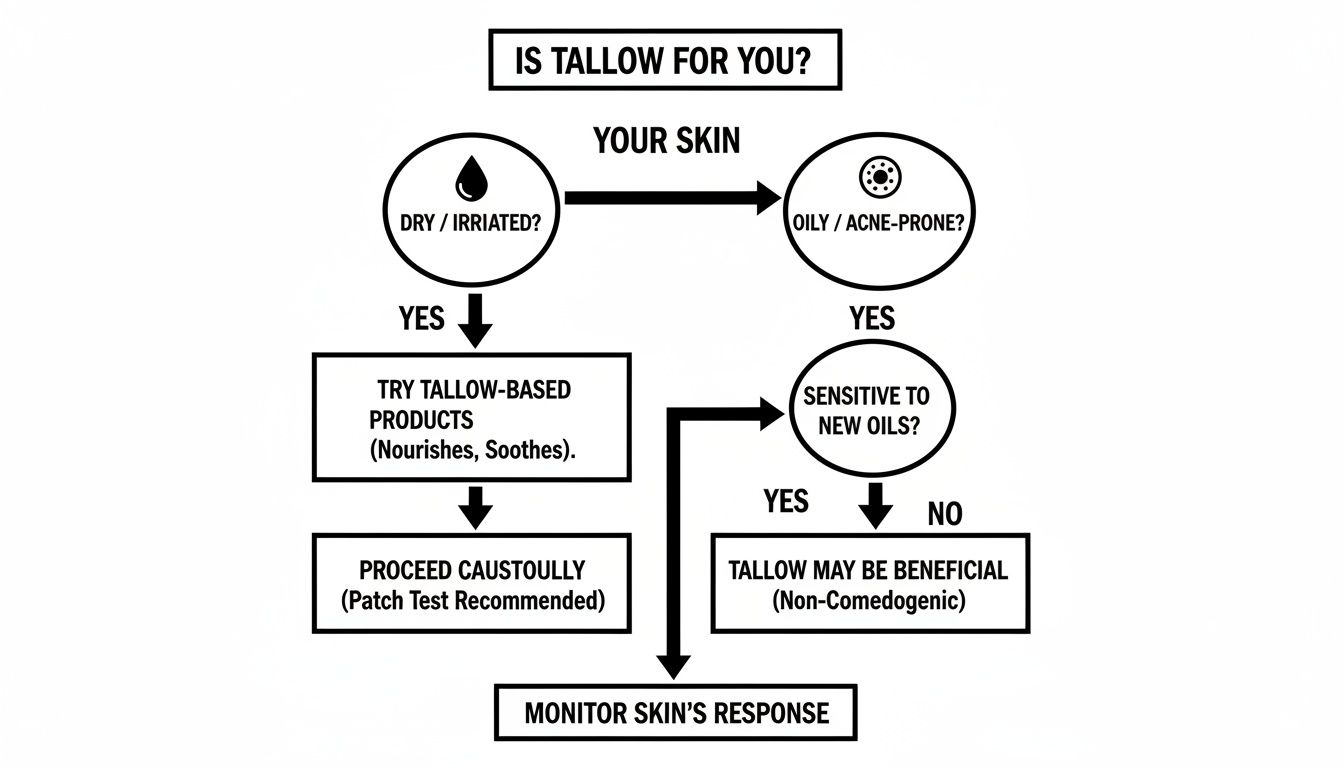
The takeaway here is pretty clear: tallow shines when skin is dry and in distress. But for skin that’s already oily and easily clogged, it’s a much riskier bet.
What Dermatologists Say About the Risk
While you’ll find tons of glowing reviews online, most skincare professionals approach tallow with a healthy dose of caution. Because of its comedogenic rating and heavy texture, the general advice from dermatologists is to steer clear if you have active acne or oily skin. The potential for triggering new breakouts is just too high for them to recommend it broadly.
"The occlusive nature and unpleasant odor of beef tallow...the former may exacerbate acne."
This sentiment is pretty common in the professional world. The logic is simple: why take a gamble on an ingredient with a moderate risk when so many proven, non-comedogenic options are available?
In fact, dermatologists around the world often advise against tallow for acne-prone skin specifically because it can block pores and lead to whiteheads, blackheads, or even deeper cystic acne. There’s also the added concern about bacterial contamination in products that aren't made to pharmaceutical-grade standards, as they may lack the preservatives to keep them stable and safe. You can dig deeper into the science behind the biocompatibility of tallow and its associated risks if you're curious.
Ultimately, trying tallow is a calculated risk. If your breakouts seem to be fueled by a damaged skin barrier and extreme dryness, it might just be the nourishing support your skin has been craving. But if your skin is naturally oily or clogs at the drop of a hat, you're probably better off exploring other options or at least proceeding with extreme caution.
How to Safely Test Tallow on Your Skin
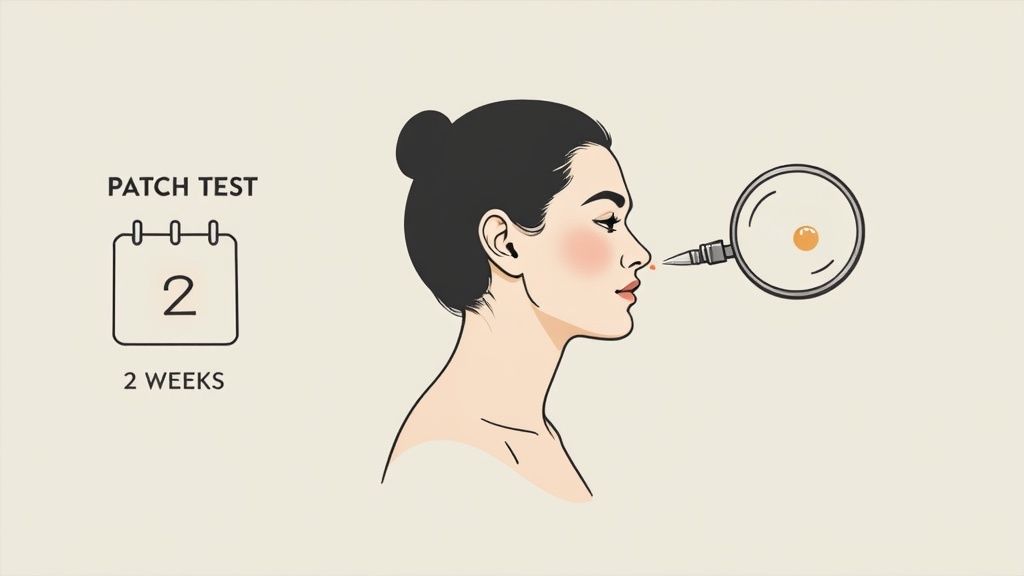
With all the conflicting info out there, slathering tallow all over your face feels like a bit of a gamble, right? The best way to move forward is to become your own skincare detective. A slow, careful patch test is absolutely non-negotiable here—it's the only real way to see how your unique skin will react without risking a full-blown breakout.
Think of it like testing a new paint color on a small, hidden patch of wall before committing to the whole room. You want to see the results in a low-stakes area first. This simple process can save you weeks of frustration and damage control down the line.
Choosing Your Product Wisely
Before you even think about putting it on your skin, you need to know that the quality of your tallow is a huge deal. Not all tallow is created equal, and a low-quality product can introduce impurities that make breakouts even worse. To give your skin the best and safest shot, make sure your tallow checks a few key boxes.
- Source Matters: Always, always choose tallow from 100% grass-fed and finished cattle. This ensures a much better nutritional profile, making it richer in those skin-loving vitamins A, D, E, and K.
- Purity is Paramount: Look for a super simple, minimalist formula. Products like Wild Tallow Skincare are a great example because they contain just a few food-grade ingredients. There are no added fragrances, essential oils, or sneaky preservatives that could trigger sensitive or acne-prone skin.
- Keep it Simple: For your first test, avoid any complex blends. The goal is to see how your skin reacts to tallow, not a dozen other ingredients. A pure, simple tallow balm is the perfect place to start.
The Two-Week Patch Test Protocol
Patience is everything here. A single application won’t tell you much about how your pores will handle tallow long-term. Clogged pores can take days, or even weeks, to surface, so a thorough two-week test is the only way to get a clear answer.
Here’s exactly how to do a safe and effective patch test:
- Select a Discreet Area: Pick a small, dime-sized spot on your face that tends to break out but is also easy to cover if needed. Great options are along your jawline, just behind your ear, or on the side of your neck.
- Apply Sparingly: At night, after cleansing, apply a very thin layer of the tallow to your chosen test spot. And I mean tiny—just enough to create a light sheen on the skin. Less is more.
- Monitor Daily: Each morning, take a close look at the area. You’re watching for any signs of trouble: redness, itchiness, new little bumps, whiteheads, or blackheads.
- Repeat Consistently: Keep applying the tallow to that same spot every single night for at least 14 days. Consistency is crucial for seeing how your skin truly behaves over a longer period.
The Verdict: If you make it to the end of the two weeks with no new breakouts or irritation in that spot, you can feel much more confident about trying the tallow on a larger area of your face. But if you see any signs of congestion or irritation, stop immediately. That’s your skin sending a clear signal that tallow just isn’t the right fit for you.
Your Questions on Tallow and Acne Answered
Diving into the world of tallow when you have acne-prone skin naturally brings up a lot of questions. We've gone through the science and the risks, but let's get into the practical stuff. Here are answers to some of the most common concerns I hear, designed to help you figure out if this is the right move for you.
Is Tallow Soap or Tallow Balm Better for Acne Prone Skin?
If your skin is prone to breakouts, starting with tallow soap is almost always the safer bet. Because it’s a wash-off product, it spends very little time on your skin, which drastically reduces the chance of it clogging pores. You can even use a "short contact" approach—just lather it up for 15-20 seconds and rinse thoroughly.
A tallow balm, however, is a different animal entirely. It’s designed to be heavy and occlusive, sitting on top of the skin to seal in moisture. That richness carries a much higher risk for congestion and breakouts on the face. It’s often a better choice for very dry patches on the body rather than an all-over facial moisturizer.
How Long Until I Know if Tallow Is Helping or Hurting My Skin?
This is where you need to be both patient and a bit of a detective. If tallow is going to be a good fit, you’ll likely see a positive change in about 2-4 weeks. Look for signs like reduced redness, less irritation, and a calmer-looking complexion as your skin barrier gets stronger.
On the flip side, if it’s going to cause problems, you’ll probably know much sooner. New pimples, whiteheads, or even deeper blemishes will typically pop up within the first 1-2 weeks. This is exactly why a careful, two-week patch test is so critical before you even think about putting it all over your face.
Can I Use Tallow with Active Acne Treatments like Retinoids?
Yes, and for some people, this is one of the best ways to use it. Powerful acne-fighters like retinoids and exfoliating acids are notoriously drying and can leave your skin feeling raw and irritated. This is where tallow's emollient, barrier-supporting qualities can really shine.
By reinforcing your skin's natural barrier, tallow can help buffer the harsh side effects of strong acne treatments. Once you've completed a successful patch test, try applying a very thin layer of tallow balm as the very last step of your nighttime routine. Just wait until your active treatment has fully absorbed, then pat the tallow on top to soothe the skin and lock everything in.
Does the Source of the Tallow Really Matter?
It absolutely does. The quality and sourcing of tallow are non-negotiable for getting good, safe results for your skin. Tallow from 100% grass-fed and finished cows is the gold standard in skincare, and for good reason—it’s simply more nutrient-dense.
This kind of tallow is richer in beneficial compounds like omega-3 fatty acids, conjugated linoleic acid (CLA), and skin-loving vitamins like Vitamin E. Choosing a reputable, grass-fed source also ensures you're getting a purer product, which is always a smarter choice for sensitive, reactive skin. If you want to dig deeper into the mechanics of acne itself, check out this a comprehensive guide to understanding acne.
For a pure, gentle option crafted with sensitive skin in mind, explore the minimalist formulas from Wild Tallow Skincare. Made with just three food-grade ingredients, our products are designed to nourish your skin's barrier without unnecessary additives. See the collection at https://wildtallow.com.