

The real difference between tallow and lard for your skin boils down to two things: where they come from and their unique fatty acid makeup. Tallow, from beef fat, is packed with saturated fats like stearic acid, which makes it a firmer, more protective substance. On the other hand, lard, from pork fat, has more monounsaturated oleic acid, giving it a noticeably softer, creamier feel.
This single distinction is key. It makes tallow a fantastic choice for creating a solid, protective layer on distressed or compromised skin, while lard feels lighter and soaks in a bit differently.
An Introduction to Animal-Based Skincare
Long before we had complex chemical formulas, our ancestors relied on animal fats for skincare. They were simple, effective, and deeply nourishing. We're now seeing a huge return to that ancestral wisdom, as people look for skincare that actually works with our bodies, not against them. Many are tired of long, confusing ingredient lists and are rediscovering these traditional, powerful ingredients.
This guide is all about two of the most historically important animal fats:
- Tallow: This is rendered from beef suet, which is the hard, nutrient-dense fat found around the organs. What makes tallow special is how closely its biochemical structure mimics our own skin's natural oils (sebum).
- Lard: Rendered from pork fat, lard is known for its incredibly soft texture. It's also a potential source of vitamin D, though this depends entirely on how much sun the pig was exposed to.
Why Are Animal Fats Making a Comeback?
This isn't just another fleeting trend; it’s a return to what’s fundamental. So many people find that even the most expensive plant-based oils and modern creams just don't provide the deep, lasting moisture needed for issues like eczema or chronically chapped skin.
Animal fats are a biocompatible solution. They deliver fatty acids, vitamins, and lipids that our skin instantly recognizes and knows how to use. Their power to reinforce the skin's natural barrier is precisely why they’ve stood the test of time.
The "clean beauty" movement has really brought these traditional ingredients back into the spotlight. In fact, the global tallow market was valued at around USD 9.02 billion in 2024 and is expected to hit USD 13.61 billion by 2030. The cosmetics industry is a major force behind this growth, a trend you can read more about on MordorIntelligence.com.
Tallow vs. Lard: A Quick Comparison
While both of these fats are incredible for the skin, their different compositions mean they excel in different areas. Figuring out these nuances is the first step in picking the perfect one for your skin.
| Feature | Tallow (Beef Fat) | Lard (Pork Fat) |
|---|---|---|
| Texture | Firmer, almost waxy at room temp | Softer, much creamier, and lighter |
| Key Fatty Acids | Higher in stearic and palmitic acid | Higher in oleic acid |
| Primary Benefit | Builds a strong, protective barrier | Provides deep, soothing moisture |
| Best For | Severely dry skin, eczema, barrier repair | General dryness, sensitive skin |
This guide will take a much deeper look into the specific what is tallow used for, comparing it head-to-head with lard so you can confidently choose what’s best for your skin's health.
Comparing Fatty Acid Profiles for Optimal Skin Health
To really get to the bottom of the tallow vs. lard debate for skin, you have to look at their core building blocks: their fatty acid profiles. These fats are so effective because their lipid structure is incredibly similar to our own skin's, allowing for a kind of deep, cellular-level nourishment that most synthetic ingredients just can't replicate. It's this biocompatibility that makes them such potent moisturizers.
The reason tallow and lard have been treasured in skincare for centuries comes down to this biochemical synergy. Tallow is rich in palmitic and stearic acids, with a good amount of oleic acid as well. This combination makes it solid and wonderfully emollient at room temperature. Lard, in contrast, is a bit softer due to a higher percentage of monounsaturated oleic acid, which gives it a more spreadable consistency.
This renewed appreciation for traditional, animal-based skincare isn't just anecdotal; it's showing up in market trends.

As you can see, the global tallow market is seeing significant growth, and personal care is one of the key sectors driving this demand.
Tallow's Strength: Saturated Fats for Barrier Repair
Tallow gets its firm, almost waxy texture from its high concentration of saturated fats, especially stearic acid and palmitic acid. These aren't just for texture; they are fundamental for building and maintaining a resilient skin barrier.
- Stearic Acid: This is a powerhouse for restoring the skin's natural defenses. It helps lock in moisture and shield your skin from environmental damage. It's what gives tallow its signature protective quality, making it a go-to for chapped, cracked, or wind-whipped skin.
- Palmitic Acid: This is one of the most abundant fatty acids in our own skin, but our natural levels tend to drop as we age. Tallow helps replenish it, which can improve smoothness and reinforce that crucial outer layer.
Thanks to this composition, tallow works as a robust, occlusive moisturizer. It forms a breathable shield that stops moisture from escaping while delivering vital nutrients deep into the skin.
Key Insight: Tallow's higher saturated fat content makes it structurally superior for barrier repair. It provides a more substantial, long-lasting protective layer, which is ideal for compromised or severely dry skin conditions like eczema.
Lard's Edge: The Oleic Acid Advantage
Lard, on the other hand, tells a slightly different story. It contains those same beneficial saturated fats, but its standout feature is a higher percentage of oleic acid, a monounsaturated fat you might recognize from olive oil.
This abundance of oleic acid is what gives lard its softer, creamier feel. It makes the lard feel lighter on the skin and allows it to penetrate with remarkable ease, delivering moisture without the heavier finish that some people experience with pure tallow. This can feel incredibly soothing on skin that's irritated or inflamed.
To make this crystal clear, let's break down how their fatty acid compositions differ and what that means for your skin.
Tallow vs. Lard: A Comparative Fatty Acid Profile
This table breaks down the typical fatty acid composition of tallow and lard, highlighting the key differences and their benefits for skin.
| Fatty Acid | Typical % in Tallow | Typical % in Lard | Primary Skin Benefit |
|---|---|---|---|
| Stearic Acid | ~14% | ~13% | Creates a strong, protective barrier to lock in moisture and defend against irritants. |
| Palmitic Acid | ~26% | ~25% | Helps soften the skin and improves its protective function, mimicking youthful skin. |
| Oleic Acid | ~47% | ~44% | Enhances spreadability and absorption, providing a softer, more emollient feel. |
So, what does this all mean for you?
Ultimately, choosing between them comes down to what your skin is asking for. If your top priority is rebuilding a damaged skin barrier and getting long-lasting protection, tallow’s saturated fat profile is tough to beat. But if you're looking for a softer, more readily absorbed moisturizer for general dryness or irritation, lard’s oleic acid content makes it an excellent choice.
Understanding these nuances is key to appreciating why beef tallow is so good for your skin and helps you make the best choice for your unique needs.
Understanding Absorption Texture and Feel on Skin
Beyond fatty acids and vitamins, the first thing you’ll notice when comparing tallow and lard is how they feel on your skin. The texture, how fast it soaks in, and the finish it leaves behind are what truly shape your daily experience and will ultimately decide which one you reach for every day.
Let’s be honest, if a moisturizer doesn't feel good, you’re not going to use it. This all comes down to the natural structure of the fat itself.
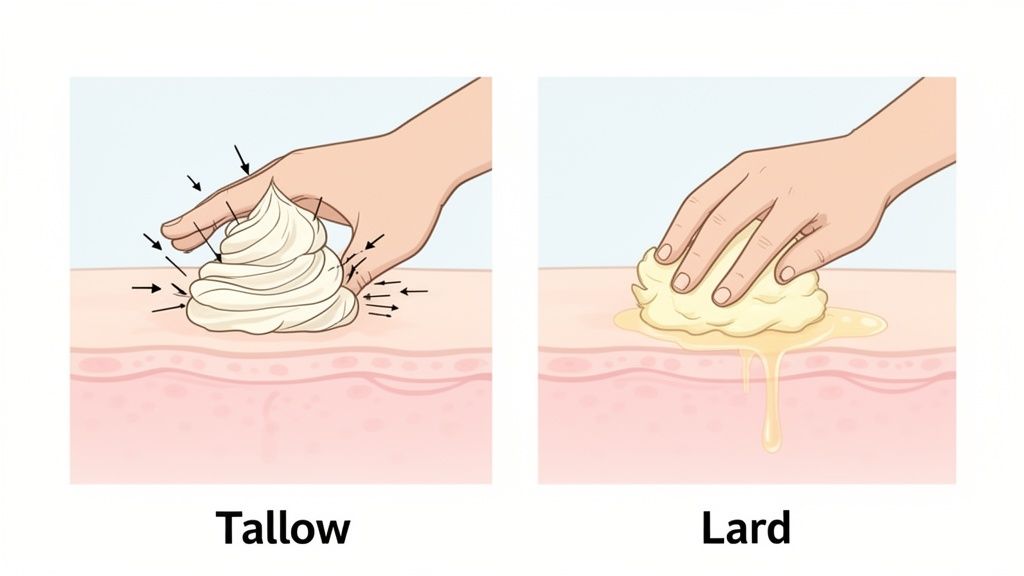
The Protective Feel of Tallow
Tallow, especially when it comes from grass-fed suet, is solid and almost waxy at room temperature. That’s because it’s packed with saturated fats like stearic acid. But when it’s whipped into a balm, like the formulas from Wild Tallow Skincare, that firmness becomes a rich, dense, and incredibly luxurious cream.
When you apply it, the whipped tallow melts right into your skin with your body heat. It absorbs deeply to moisturize from within, but it also leaves a distinct, breathable barrier on the surface. People often describe this feeling as protective and substantial, but without the heavy, greasy feeling you might expect.
This unique quality makes tallow a standout for certain jobs:
- Dry or Compromised Skin: The barrier it creates is second to none for protecting your skin from harsh wind, cold air, and other environmental stressors.
- Overnight Treatments: Put it on before bed, and tallow goes to work repairing and conditioning all night long. You'll wake up to skin that feels softer and stronger.
- Targeted Relief: It’s a lifesaver for those really rough patches—elbows, heels, and knees—that need intense, long-lasting moisture.
The finish is usually a beautiful satin glow. Your skin looks nourished and healthy, not slick or oily. For anyone struggling with severely dry or cracked skin, this protective layer is a complete game-changer.
The Softer Touch of Lard
Lard, on the other hand, is much softer and creamier right out of the jar. Its higher oleic acid content gives it a lighter, more pliable texture that feels silky and smooth. It melts instantly on contact and spreads across the skin with zero effort.
Lard soaks in very quickly and often feels less "present" on the skin than tallow does right after you put it on. This can be a huge plus for anyone who wants a more lightweight feel, particularly for daytime use on the face and neck.
But that quick absorption can lead to a different kind of finish. For some people, especially those with balanced or oilier skin, lard can sometimes leave a shinier, slightly greasier look compared to the more matte finish of a good tallow balm. This is very personal and depends on your skin, but it's a frequent observation.
Key Takeaway: Tallow creates a substantial, protective barrier with a non-greasy, satin finish that’s perfect for deep conditioning and barrier support. Lard feels lighter and silkier, absorbs fast, but can leave a shinier finish on some skin types.
In the end, it really comes down to what you like and what your skin needs at the moment. If you're trying to reinforce a struggling skin barrier with durable protection, tallow's texture is unmatched. If you just want something light and fast-absorbing for everyday moisture, lard might be exactly what you're looking for.
When you're weighing tallow against lard for your skin, the conversation goes way beyond fatty acids and textures. Honestly, the single most important factor—the one that trumps everything else—is where it comes from. The source of the fat determines its quality, safety, and what it can actually do for your skin.
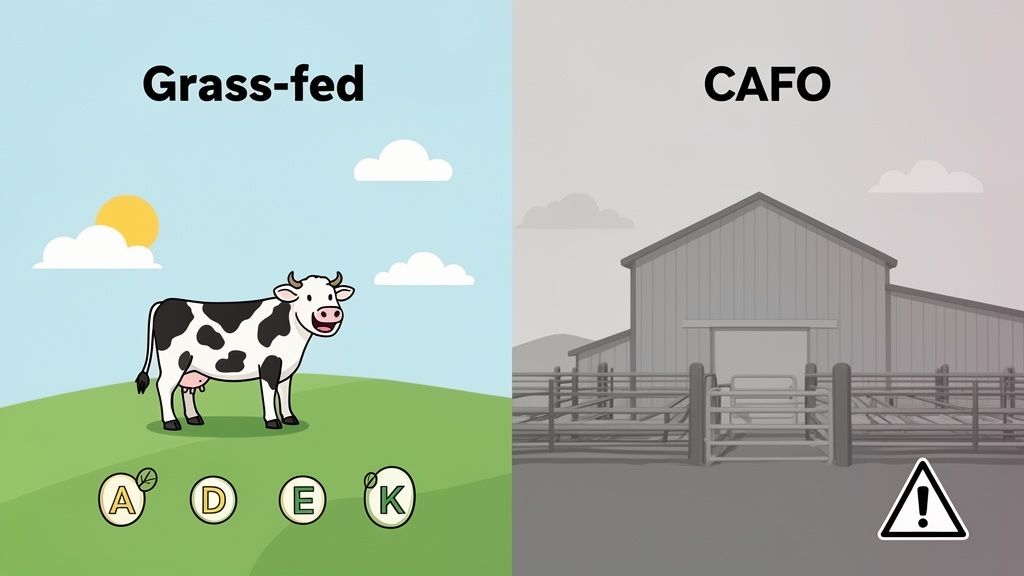
Not all animal fats are created equal. The difference between fat from a healthy, pasture-raised animal and one from a Concentrated Animal Feeding Operation (CAFO) is night and day. One is a nutrient-dense powerhouse for your skin; the other could be loaded with compounds you’d rather avoid.
Grass-Fed Tallow: The Gold Standard
When people rave about tallow, they’re talking about fat from 100% grass-fed and grass-finished cattle. These animals spend their entire lives grazing on pasture, the way nature intended. This diet completely transforms the nutritional profile of their fat.
Grass-fed tallow is packed with skin-loving, fat-soluble vitamins you just don't find in the same concentrations elsewhere:
- Vitamin A: A key player in cell turnover and keeping skin plump.
- Vitamin D: Helps with skin cell growth and repair.
- Vitamin E: A potent antioxidant that acts as a shield against environmental stressors.
- Vitamin K2: An unsung hero for skin elasticity.
This sourcing also creates a superior fatty acid profile. You get a much healthier ratio of omega-3 to omega-6 fatty acids and more Conjugated Linoleic Acid (CLA), which is known for its anti-inflammatory benefits. This is exactly why we at Wild Tallow Skincare will only ever use this kind of top-tier, nutrient-rich tallow.
Conventional Sourcing: The Hidden Risks
Now, let's look at the other side of the coin. Conventionally sourced tallow and lard almost always come from animals raised in CAFOs. They're fed an unnatural diet of corn, soy, and other grains, which fundamentally changes the composition of their fat.
This grain-based diet often leads to a higher concentration of inflammatory omega-6 fatty acids. Worse yet, animals in these crowded, stressful environments are frequently given antibiotics and growth hormones. Residues of these substances can get stored in their fat tissue.
Choosing a product from a CAFO source means you risk applying a substance that is not only less nutritious but may also contain compounds you actively want to avoid. The purity of the fat is a direct reflection of the animal's life and diet.
How to Verify Quality Sourcing
To make sure you're getting the good stuff, you need to be a bit of a detective when you read labels. Just seeing "tallow" or "lard" on an ingredient list isn't nearly enough information.
Here’s what to look for and what to ask:
- Is it Grass-Fed AND Grass-Finished? "Grass-fed" can be a tricky term. Some cattle eat grass for a while but are then "finished" on grain to fatten them up. You want the real deal: pasture for their entire life.
- What's the Rendering Process? The best fats are rendered at low temperatures to protect all those delicate nutrients and ensure the final product has a clean, mild scent.
- Is It Free of Additives? Pure is best. Steer clear of formulas loaded with synthetic fragrances, preservatives, or other fillers that do nothing but increase the risk of irritation.
This focus on purity is something we're seeing more and more. Parents and anyone dedicated to clean beauty—the core of the Wild Tallow community—are increasingly seeking out simple, traceable ingredients. It’s no surprise that products with just 2-4 ingredients, like pure tallow blended with high-quality oils, consistently get top marks for sensitive skin. Brands with transparent ingredient lists simply build more trust.
Understanding where tallow comes from is the first step in making a confident and safe choice for your family's skincare. The integrity of the source is everything.
Situational Recommendations for Tallow and Lard
Choosing between tallow and lard isn't about crowning one as the ultimate "winner." It's more about knowing which tool to pull from your toolkit for a specific job. Each has a unique personality, making them better suited for different skin challenges. This guide will walk you through real-world scenarios so you can confidently pick the right one for your skin's needs at any given moment.
The decision really boils down to a simple question: are you trying to deeply repair a damaged skin barrier, or are you looking for gentle, everyday moisture? Tallow is a powerhouse for repair, creating a robust shield. Lard, with its softer profile, is often the go-to for daily soothing. Understanding this core difference is key.
When Tallow Is the Unbeatable Choice
Grass-fed tallow truly comes into its own when your skin is seriously compromised, desperately dry, or needs heavy-duty protection that lasts. Its higher concentration of saturated fats—namely stearic and palmitic acid—builds a more substantial, semi-occlusive barrier. This doesn't just add moisture; it seals it in and gives your skin the space it needs to heal.
Reach for tallow when you're dealing with these situations:
- For Severely Dry or Cracked Skin: Think chapped hands in the dead of winter, cracked heels that snag on your sheets, or rough, scaly elbows. Tallow provides a durable coating that actively protects skin from more damage. It stays put and works for hours.
- Managing Eczema and Psoriasis: The combination of anti-inflammatory properties and a solid barrier function can bring incredible relief during eczema or psoriasis flare-ups. It helps stop trans-epidermal water loss and shields irritated skin from outside triggers.
- As a Protective Winter Balm: Before you step out into a biting wind or freezing temperatures, a thin layer of tallow balm on your face and lips creates a shield that most plant-based oils simply can't compete with.
Expert Insight for Parents: For newborns and babies, grass-fed tallow is an incredibly gentle and effective choice. Its purity and biocompatibility make it perfect for soothing diaper rash, cradle cap, and other common irritations without introducing a single harsh chemical or synthetic fragrance.
When to Consider Lard
Lard’s charm is in its wonderfully soft, creamy texture and high oleic acid content. This combination often makes it feel lighter on the skin and allows it to absorb a bit more quickly for some people. It’s fantastic for delivering deep, soothing moisture, making it an excellent choice for less severe skin issues or for anyone who prefers a less heavy finish.
Lard might be the perfect fit in these cases:
- For Everyday Facial Moisturization: If your skin is on the dry or mature side and you want a daily moisturizer that feels silky and sinks in beautifully, lard is a fantastic option. Its emollient qualities leave skin feeling supple and velvety.
- As a Soothing After-Sun Treatment: After a bit too much time in the sun, lard’s gentle, moisturizing feel can be incredibly calming on skin that feels warm and tight.
- For Sensitive or Reactive Skin: While both fats are excellent for sensitive complexions, some find lard's lighter texture feels more comfortable on easily irritated skin, like after shaving or on areas prone to redness.
Ultimately, the best advice is to simply listen to what your skin is telling you. Many people find a sweet spot in using both—perhaps lard as a daily face cream and a rich tallow balm for targeted treatments, overnight repair, or for protecting their family’s most sensitive skin. This situational approach ensures you get the maximum benefit from each of these incredible, traditional skincare fats.
Choosing and Testing Tallow or Lard Skincare
So, you're ready to try tallow or lard. That's a great first step toward a simpler, more ancestral skincare routine. But as these traditional fats make a comeback, the market is getting crowded, and it's important to remember that not all products are made with the same care.
Knowing what to look for and how to test a new product is key to making a choice you feel good about. It all starts with the source—the quality of any tallow or lard balm is a direct result of how the animal was raised. A little bit of homework goes a long way.
Your Quality Checklist
Before you buy, run through a few quick checks. This will help you find a pure, nutrient-rich moisturizer that’s truly safe for you and your family.
- For Tallow, Insist on "100% Grass-Fed and Grass-Finished": This isn't just marketing fluff. It’s your guarantee that the tallow contains the highest possible levels of fat-soluble vitamins A, D, E, and K. For lard, the equivalent to look for is "pasture-raised."
- Scan the Ingredient List: Less is more. A top-tier tallow balm, like the ones we make at Wild Tallow Skincare, should have a very short ingredient list—tallow, and maybe a little olive oil or beeswax. Steer clear of anything with artificial fragrances, preservatives, or mystery fillers.
- Check the Rendering Method: Look for brands that mention a low-heat, traditional, or "wet" rendering process. High temperatures can degrade the very nutrients you’re buying the product for.
- Look for Small-Batch Production: Brands that make their products in small batches tend to have much tighter quality control. This usually means you’re getting a fresher, more consistent product.
A brand that’s proud of its quality will be excited to tell you about its sourcing and production. If you have to dig for that information, consider it a potential red flag.
How to Do a Patch Test
Once your new product arrives, there's one last step before slathering it on: the patch test. This is a non-negotiable step, especially if your skin is sensitive, reactive, or prone to allergies. It’s a simple way to make sure your skin is on board with the new addition.
Just follow these easy steps:
- Pick a Spot: Find a clean, dry, and out-of-the-way patch of skin. The inside of your wrist or the crook of your elbow works perfectly.
- Apply and Wait: Rub a small dab of the product into the skin and leave it alone for at least 24 hours. Try not to get the area wet.
- Look for a Reaction: After a day, check the spot. Any sign of redness, itching, bumps, or irritation means it’s a no-go.
- Get the Green Light: If the skin looks and feels completely normal, you're all clear! You can now use the product with confidence.
This little two-minute ritual is the best way to introduce tallow or lard into your skincare routine safely, ensuring your experience is nothing but positive.
FAQs: Tallow, Lard, and Your Skin
When you're exploring skincare that’s a bit different from what's on most store shelves, you're bound to have some questions. It’s not just about the science—it’s about how these products will actually feel, smell, and work for you day-to-day. Let's tackle some of the most common curiosities about using tallow and lard.
Deciding between the two means getting practical. Here’s what you need to know.
Will Tallow or Lard Make My Skin Smell?
This is probably the number one question people have, and it's a fair one. The short answer? It all comes down to quality.
Truly high-quality, grass-fed tallow that has been rendered and purified meticulously has a very faint, almost unnoticeable scent. The same goes for properly rendered leaf lard; it’s known for being nearly odorless.
The "farm" smell people worry about comes from lower-grade fats or improper processing that fails to remove impurities. This is precisely why sourcing and rendering are so critical. When you use a product like Wild Tallow Skincare, which is intentionally fragrance-free and crafted from the purest tallow, you get all the skin-loving benefits without any distracting aroma. It’s a perfect match for even the most sensitive noses.
Are Tallow and Lard Comedogenic?
The word comedogenic just means "pore-clogging," but whether an ingredient actually clogs your pores is deeply personal. Generally, both tallow and lard are considered non-comedogenic for most people.
Tallow, in particular, has a unique advantage. Its lipid profile is so biochemically similar to our skin's natural oil (sebum) that our skin recognizes it. This means it absorbs beautifully instead of sitting on top and causing congestion.
Key Insight: While any rich, protective product could be an issue for some super acne-prone skin types, the biocompatibility of tallow often makes it a surprisingly safe bet. Still, the golden rule of skincare always applies: patch test first.
What Is the Shelf Life of These Products?
One of the best things about tallow and lard is how stable they are. Because they are packed with saturated fatty acids, they are naturally resistant to oxidation (going rancid). This gives them an impressive shelf life without needing a drop of synthetic preservatives.
If you store it properly—in a cool, dark spot away from direct sunlight—a pure tallow balm can easily last for 12 months or even longer. That natural staying power is a huge win compared to water-based lotions that depend on a long list of chemicals to keep from spoiling.
Can I Use Tallow If I Have a Beef Allergy?
Your safety always comes first. If you have a known food allergy to beef or pork, it’s best to steer clear of using tallow or lard on your skin.
While a topical reaction isn't always the same as an internal one, there’s no reason to risk it. Always choose brands with transparent ingredient lists so you can make a choice that’s right for your health and your family.
Ready to feel the difference that pure, grass-fed tallow can make? Wild Tallow Skincare builds simple, powerful formulas from just a few food-grade ingredients, making them ideal for the most sensitive skin.
Discover our collection of handcrafted tallow balms and soaps today.