

So, is beef tallow good for skin? For anyone who's tried it, the answer is usually a resounding yes. The real magic lies in its fatty acid profile, which is so similar to our skin's natural oils that it's almost like a perfect match. Your skin just gets it, which makes tallow an incredibly intuitive and effective moisturizer.
The Ancestral Secret to Modern Skincare
In a market overflowing with complex skincare formulas and ten-step routines, a lot of us are looking for something simpler—something that just works. This has sparked a return to "ancestral skincare," a philosophy that values whole, nutrient-packed ingredients used for centuries, long before labs started creating synthetic compounds. Beef tallow is right at the heart of this movement.
It's not some new, trendy invention; it's more like a rediscovered secret. For generations, tallow was the go-to for everything from soothing chapped hands to healing scrapes. People trusted it because it was pure and effective. Now, as more of us become skeptical of long, unpronounceable ingredient lists, tallow offers a refreshingly minimalist way to nourish your skin.
Why Is Tallow Making a Comeback?
The renewed interest in tallow isn't just about nostalgia; it's driven by a desire for authenticity and real results. People want skincare that works with their body, not against it. Its rising popularity boils down to a few core benefits:
- Biocompatibility: Tallow's makeup is remarkably close to human sebum (the oil our skin naturally produces). This means our skin recognizes it and absorbs it beautifully, delivering deep moisture without clogging pores or disrupting your skin's delicate balance.
- Nutrient Density: It's naturally loaded with fat-soluble vitamins A, D, E, and K. These are the building blocks for healthy skin, helping with everything from cell repair to fighting off environmental damage.
- A Minimalist Dream: True, high-quality tallow balms need very few, if any, artificial preservatives or fillers. This is a huge win for anyone with sensitive skin or for those who simply want a clean, straightforward product. To understand what makes it so pure, it's worth exploring in detail where tallow comes from.
This mindset shifts skincare from being a topical fix to being a form of deep nourishment. You're literally feeding your skin with ingredients it instinctively knows how to use to repair and strengthen itself.
While ancestral wisdom offers this incredible, nature-based support, it’s also interesting to see it alongside modern science. Today's advanced skin regeneration techniques are also pushing boundaries in skin health, showing just how broad the spectrum of care has become. But for now, let's stick with tallow and explore its unique, time-tested benefits.
What Tallow Is and How It Nourishes Your Skin
Beef tallow is, quite simply, rendered and purified beef fat. For generations, it was a household staple for everything from cooking to skincare, and for good reason. It's only now that we're rediscovering what our ancestors knew all along.
Think of your skin's protective barrier like a brick and mortar wall. Your skin cells are the bricks, and the natural fats (or lipids) are the mortar holding it all together. Tallow is nature’s perfect mortar—it’s packed with the very building blocks your skin needs to repair itself and stay strong.
What makes it so special? Unlike most plant-based oils, tallow’s molecular structure is incredibly similar to our own skin's natural oil, called sebum. This biological compatibility means your skin recognizes it instantly, drinks it in, and uses it to replenish what things like harsh soaps, environmental stress, and even just aging have stripped away.
Your Skin’s Natural Toolkit
The magic of beef tallow really boils down to its fatty acid profile. Each one has a specific job to do, and they all work together to bring your skin back into balance.
- Oleic Acid: This is a hero hydrator. It’s known for its ability to sink deep into the skin’s layers, delivering moisture where it’s needed most and keeping your skin soft and flexible.
- Palmitic Acid: This fatty acid is a major component of our skin's natural barrier. It creates a protective layer that locks in moisture while keeping pollution and irritants out. Our bodies produce less of it as we age, so replenishing it with tallow is a huge win.
- Stearic Acid: This workhorse improves your skin’s texture and resilience. It also has a unique cleansing property, helping to lift away dirt and excess oil without that tight, stripped feeling.
This powerful trio is why tallow feels so restorative. In fact, research on ingredients derived from tallow has shown some pretty impressive results. One study found that skin hydration shot up by an incredible 47.2% just 180 minutes after application, proving its deep and lasting impact.
Tallow doesn't just sit on top of your skin. It's delivering the raw materials your skin needs to rebuild its own defenses from the inside out.
More Than Just Fatty Acids
It doesn't stop there. Tallow is also a natural source of the fat-soluble vitamins your skin craves: Vitamins A, D, E, and K. These are potent antioxidants that act like bodyguards for your skin, defending it against damage from the sun and pollution. They also support cell turnover, helping to promote a healthy, even-toned glow. You can dive deeper into this by reading our complete guide on https://wildtallow.com/blogs/articles/what-is-tallow-oil.
The quality of the tallow is directly tied to the animal's diet and lifestyle. Understanding the difference between grass-fed cattle and grain-finished beef makes it clear why sourcing is so important. By choosing tallow from 100% grass-fed cows, you’re ensuring you get the absolute highest concentration of these skin-loving nutrients.
How Tallow Repairs and Reinforces Your Skin Barrier
Think of your skin's outermost layer, the stratum corneum, like a solid brick wall. The skin cells are the bricks, and the lipids—the natural fats and oils—are the mortar holding it all together. This "brick and mortar" structure is your skin barrier, and it’s your body's frontline defender.
When that barrier is in good shape, the "mortar" is strong. It keeps moisture locked in and irritants like pollution and bacteria locked out. But daily life—from harsh weather and over-exfoliating to just using the wrong soap—can weaken that mortar, creating tiny, invisible gaps.
Those little gaps are where skin problems start. They let moisture sneak out, leading to dryness, flakiness, and that tight, uncomfortable feeling. They also become open doors for irritants, which can kick off redness, sensitivity, and inflammation. A damaged barrier just can’t do its job.
Tallow as Your Skin’s Perfect Mortar
This is where beef tallow really shines. Its fatty acid profile is incredibly similar to the lipids that make up our own skin. Because of this natural compatibility, your skin doesn't see tallow as a foreign substance; it recognizes the fatty acids as familiar, ready-to-use building blocks.
When you apply tallow, you’re essentially giving your skin barrier a fresh batch of perfectly mixed mortar. Its fatty acids fit right into the gaps, filling in those microscopic cracks and reinforcing the whole structure from the inside out.
"Think of it like patching a wall with the exact same material it was built with. The repair is stronger, more durable, and perfectly integrated."
This isn't just about surface-level hydration. It's about helping your skin rebuild its own defenses, making it better at holding onto moisture and protecting itself in the long run.
The Nutrient Powerhouse Behind Barrier Repair
The real magic behind tallow’s restorative ability lies in its specific nutrients. Each one has a job to do when it comes to healing and strengthening your skin.
This infographic breaks down some of the most important components that make tallow so great for skin repair.
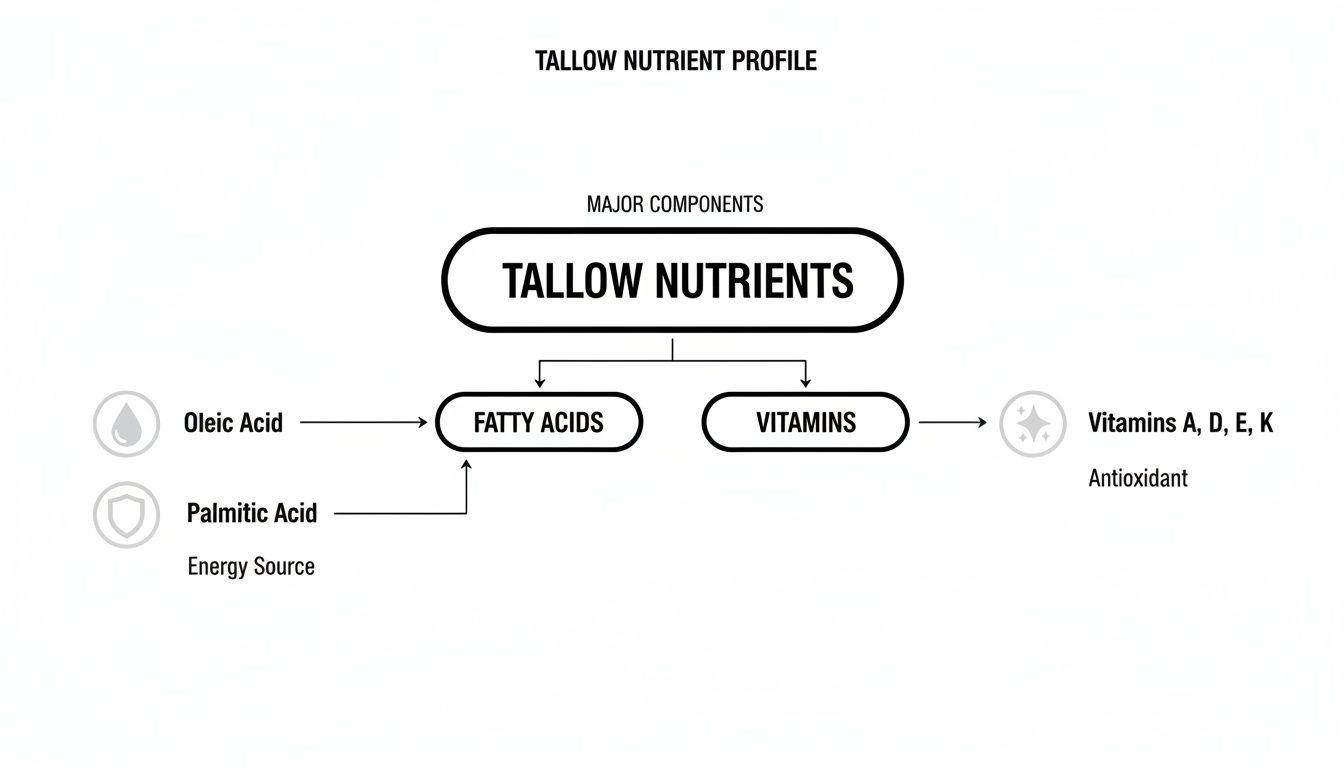
As you can see, oleic acid brings the deep moisture, palmitic acid reinforces the protective shield, and a team of essential vitamins provides antioxidant defense.
Let's take a closer look at how these elements work together:
- Oleic and Palmitic Acids: These two are some of the most common fatty acids in our own natural sebum. Tallow is loaded with them, so it helps replenish what your skin has lost, bringing back that soft, supple feeling. Palmitic acid, in particular, is a star player in creating that protective seal on your skin's surface.
- Stearic Acid: This workhorse fatty acid helps improve the skin’s flexibility and repair existing damage. It also has a unique cleansing quality, helping to lift away dirt and debris without stripping away the essential oils your barrier needs to stay intact.
- Vitamins A, D, E, and K: This lineup of fat-soluble vitamins acts as a team of powerful antioxidants. They help protect the lipid "mortar" from breaking down due to environmental stressors like UV rays and pollution, keeping your barrier strong and resilient day after day.
By delivering this full package of nutrients, tallow does more than just moisturize. It actively takes part in the repair and maintenance of your skin, helping it become healthier, stronger, and far more capable of facing whatever the day throws at it.
Let's Talk About the Potential Downsides of Tallow
Beef tallow can be an incredible friend to your skin, but like any skincare ingredient, it's not a magic bullet for everyone. It's important to go in with your eyes open, so let's walk through a few things to consider before you dive in.
The biggest question people have is about comedogenicity—a fancy word for whether or not an ingredient will clog your pores. Tallow is packed with rich, nourishing fatty acids (like oleic acid), giving it a thick, balm-like consistency.
For skin that’s dry, mature, or feeling a bit fragile, this richness is a godsend. But if your skin is naturally oily or you're prone to breakouts, you'll want to proceed with a little more caution.
Will Tallow Clog Pores?
Honestly, it all comes down to your individual skin. Tallow has a moderate comedogenic rating, which puts it right in the middle of the scale. For many, it's the perfect balancing act. For a few others, it can feel a bit too heavy and lead to some congestion.
This is exactly why a patch test is non-negotiable. It's the simplest way to see how your skin feels about tallow before you commit to using it all over.
Here’s how to do it right:
- Pick a hidden spot: Dab a tiny bit of the tallow balm on your jawline, behind your ear, or the inside of your arm.
- Wait and watch: Give it 24-48 hours. Keep an eye on that specific spot for any signs of redness, irritation, or new pimples.
- Check the results: If your skin looks happy and calm, you can feel much more confident about using it on your face and body.
This little test takes all the guesswork out of the equation. If you want to get really granular on this, our guide on using tallow for acne explores this topic in much more detail.
Sourcing and What to Expect
The quality of your tallow makes a world of difference, so where it comes from is a huge deal. You always want to look for tallow rendered from 100% grass-fed and grass-finished cattle. This isn’t just marketing speak; it means you're getting a cleaner product with a better nutrient profile, without the stuff that can build up in conventionally raised animals.
When you choose high-quality, grass-fed tallow, you are not just getting a moisturizer; you are getting a clean, nutrient-dense product that reflects the health of its source.
Finally, let's talk about the user experience—the scent and feel. Properly rendered, high-quality tallow has a very subtle, earthy smell that usually fades moments after you apply it. It’s solid in the jar but melts beautifully into a rich oil as soon as it touches your skin. A little bit goes a very long way, so start with less than you think you need to avoid feeling greasy.
How to Use Tallow in Your Skincare Routine
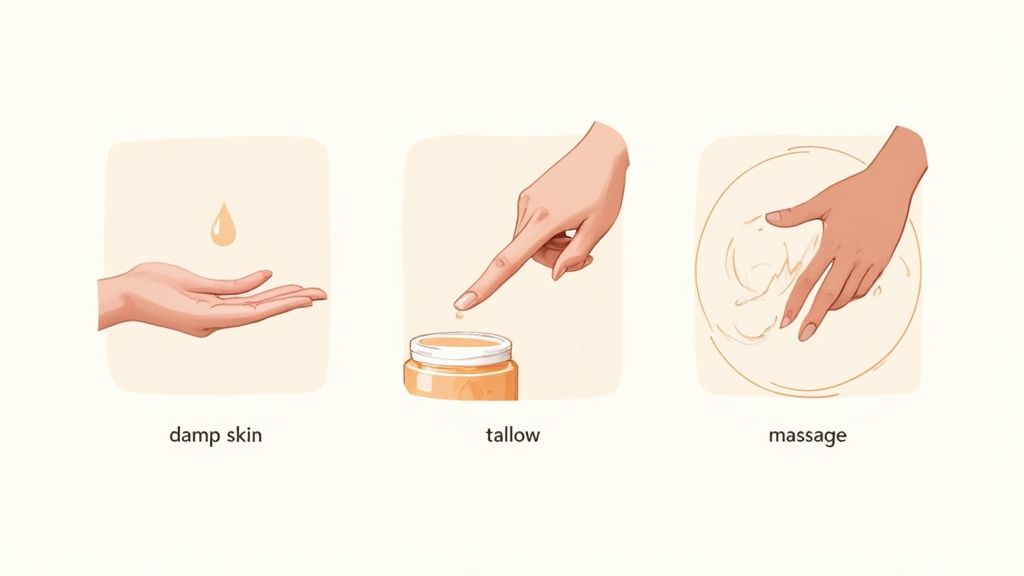
So, you're ready to give tallow a try? Getting started is refreshingly simple. The most important thing to remember is that because it’s so rich and concentrated, a little goes a very long way. You only need a pea-sized amount. Just warm it between your fingertips to melt it slightly, then gently press it into your skin.
Here's a pro tip: always apply tallow to slightly damp skin, like right after you hop out of the shower or wash your face. This little trick does wonders for locking in that surface hydration. It also helps the balm spread evenly and sink in beautifully, leaving your skin feeling velvety-soft, not greasy.
Building Your Tallow-Based Routine
One of the best things about tallow is its versatility. It can easily simplify your routine by standing in for several different products. Whether you're a skincare minimalist or someone needing serious barrier repair, it fits right in. Its gentle, back-to-basics nature makes it a fantastic option for the whole family, from calming a baby's delicate skin to deeply nourishing mature complexions.
Here are a few easy ways to start using it right now:
- Daily Face Balm: Use it as the last step in your morning or evening routine. It seals in all your other products and creates a protective shield for your skin barrier.
- Targeted Body Cream: Got stubborn dry patches? Tallow is incredible for elbows, knees, heels, and knuckles. It provides deep, lasting relief where you need it most.
- Gentle Makeup Remover: The fats in tallow are fantastic at dissolving makeup—even stubborn waterproof mascara—without stripping your skin's natural oils. Just massage it on, then gently wipe everything away with a warm, damp cloth.
- Soothing Treatment: For chapped lips, cracked hands, or skin that’s been irritated by cold wind, tallow offers a calming, protective layer that helps your skin’s natural healing process.
Think of tallow less as just another moisturizer and more as a multipurpose skin superfood. Its unique ability to nourish, protect, and soothe makes it a true workhorse in any skincare cabinet.
Simple Routines to Get You Started
You don't need to completely overhaul your life to fit tallow in. It can easily slot into what you're already doing or help you build a new, beautifully simple ritual.
The 3-Step Minimalist Routine:
- Cleanse: Start with a gentle, non-stripping cleanser.
- Hydrate: While your skin is still damp, spritz with a facial mist or just use the residual water.
- Moisturize: Press a small dab of tallow balm into your face and neck to lock it all in.
The Barrier Repair Ritual (For Dry or Irritated Skin):
- Cleanse: Wash with lukewarm water and a soap-free, pH-balanced cleanser.
- Soothe: Apply a hydrating serum with ingredients like hyaluronic acid or glycerin to draw in moisture.
- Seal and Protect: Layer a slightly more generous amount of tallow balm over the top, giving extra attention to any irritated areas. This creates a breathable, protective shield that allows your skin to heal underneath.
Beef Tallow vs. Common Moisturizers
It's helpful to see how tallow stacks up against other popular moisturizers you might have on your shelf. While many modern products are effective, tallow's unique biocompatibility and nutrient profile put it in a class of its own.
| Moisturizer | Key Components | Skin Barrier Similarity | Best For |
|---|---|---|---|
| Beef Tallow | Saturated & monounsaturated fats (oleic, palmitic, stearic), Vitamins A, D, E, K2 | Very High - Almost identical fatty acid profile to human sebum. | Deep nourishment, barrier repair, sensitive skin, and all-natural routines. |
| Shea Butter | Stearic acid, oleic acid, Vitamin E, Vitamin A | High - Rich in fatty acids but has a different overall profile. | Intense moisture for very dry skin, but can be heavy for some face types. |
| Jojoba Oil | Wax esters, fatty acids | High - Structurally very similar to human sebum (a liquid wax). | Oily and acne-prone skin, as it's lightweight and non-comedogenic for most. |
| Hyaluronic Acid Serum | Humectant (draws water) | Low - Doesn't contain lipids; adds hydration but needs an occlusive on top. | Dehydrated skin of all types, but must be sealed in with a cream or oil. |
| Petrolatum (Vaseline) | Mineral oil (petroleum) | None - It's purely an occlusive barrier, not a nutrient source. | Sealing in moisture and protecting wounds; offers no nutritional value. |
Ultimately, tallow's strength lies in its ability to work with your skin, not just sit on top of it. It offers a combination of barrier-mimicking lipids and essential fat-soluble vitamins that most plant-based or synthetic options simply can't match, providing true, deep nourishment from the outside in.
Common Questions About Using Tallow for Skin
So, you've learned a bit about beef tallow, but you've probably still got some questions. Is it really right for your skin? Let's dive into the most common concerns people have before they try it.
We'll tackle everything from clogged pores and sourcing to what it actually smells and feels like.
Will Beef Tallow Clog My Pores or Cause Acne?
This is the big one. Let's be upfront: beef tallow has a moderate comedogenic rating, which means it can clog pores for some people, especially if your skin is naturally oily or prone to breakouts.
But here's the thing—most people find it does the opposite. When you use high-quality tallow on clean skin, it often helps heal and soothe rather than cause new problems. The key is to test it out first.
- Do a patch test. Apply a tiny amount to a discreet spot, like your jawline, and wait for 48 hours.
- If you see any redness or new blemishes, it might be too heavy for your face. You can still use it on your body, or try a product that blends tallow with lighter oils.
Does the Quality of Beef Tallow Really Matter?
Absolutely. This isn't something you want to skimp on.
You'll want to look for tallow that comes from 100% grass-fed, pasture-raised cattle. This is how you get the highest concentration of skin-loving nutrients like omega-3s and vitamins A, D, E, and K.
Tallow from conventionally-raised animals might contain residues from their feed or environment, and that’s the last thing you want to be putting on your skin.
"High-quality tallow is essential for safe, effective results without unwanted residues," says Nicole Bort, CNP.
Think of it this way: the better the source, the more nourishment your skin gets, without any of the unwanted extras.
What Does Beef Tallow Smell and Feel Like?
If you're picturing the smell of a steak, don't worry. Properly rendered and purified tallow has a very mild, almost earthy, and neutral scent that disappears just a few minutes after you apply it.
As for the texture, it’s a solid balm at room temperature. But the moment it touches your skin, it melts into this beautiful, silky oil that absorbs surprisingly well.
- Scoop out a pea-sized amount and warm it between your fingertips.
- Gently press and massage it into clean, slightly damp skin.
- Continue massaging until it feels fully absorbed.
Applying it to damp skin is a pro-tip—it helps lock in that extra bit of moisture and leaves your skin feeling balanced, not greasy.
Can I Use Beef Tallow for Sensitive Skin or Eczema?
For many people struggling with sensitive skin, rosacea, or eczema, tallow can be a game-changer. Its fatty acid profile is so similar to our own skin that it’s incredibly gentle and biocompatible.
People often report that it calms down redness and soothes that persistent, dry irritation. Because it helps rebuild a compromised skin barrier, it can lead to fewer flare-ups over time.
But, as with any new product on sensitive skin, a patch test is non-negotiable.
A Few More Tips for Getting Great Results
- Store your tallow in a cool, dry spot away from direct sunlight to keep it fresh.
- If your balm is a bit firm, just run the lid of the jar under warm water for a moment. It'll soften right up.
- Always use clean hands when scooping out the product to keep the jar free of bacteria.
Beef tallow is a beautifully simple, nutrient-dense way to moisturize your skin and support your natural barrier. It’s an old-school approach that stands out for good reason.
Just remember to source it well, test it on your skin first, and start with a less-is-more approach.
If you’re ready to give it a try, ease it into your routine. Maybe start by using it only at night to see how your skin feels in the morning. Once you're comfortable, you can see how it works for you during the day, maybe even layered under sunscreen for extra protection against dryness.
- Quick Tip 1: Always apply to damp skin right after cleansing.
- Quick Tip 2: A little goes a very long way. Start small for a non-greasy finish.
- Quick Tip 3: You can even find products that combine it with other nourishing oils, like jojoba.
Pay attention to your skin—it will tell you what it needs.
Key Insight: Truly healthy skin is built over time. Slow, gradual changes often yield the best and most lasting results.
Ready to embrace gentle hydration? Visit Wild Tallow Skincare at https://wildtallow.com