

Let's get straight to it. Fragrance-free means exactly what it sounds like: no scents, natural or synthetic, have been added to the product. Period.
Think of it like a chef who lets the pure, unadulterated flavor of the main ingredients shine through without adding any extra herbs or spices.
Understanding the Fragrance-Free Label
When you spot "fragrance-free" on a bottle, you're looking at the most honest and straightforward claim in the world of skincare scents. It's a promise from the manufacturer that no fragrance materials were added to the formula just to make it smell a certain way. For anyone with sensitive, reactive, or dry skin, this is a huge deal.
Now, this doesn't mean the product will have no smell at all. The raw ingredients in any formula—from lotions to cleansers—have their own inherent odors. These might be earthy, nutty, waxy, or even a little bit clinical. A truly fragrance-free product doesn't try to cover these up; it lets the formula exist in its purest state.
This distinction has become incredibly important as more of us become aware of chemical sensitivities. The "fragrance-free" label is a clear signpost for shoppers trying to avoid potential irritants, and you can learn more about why this market is growing and why it's a positive shift for consumers.
Decoding Common Scent Claims
The language used on skincare packaging can feel deliberately misleading. It’s easy to get tripped up by terms that sound similar but mean very different things.
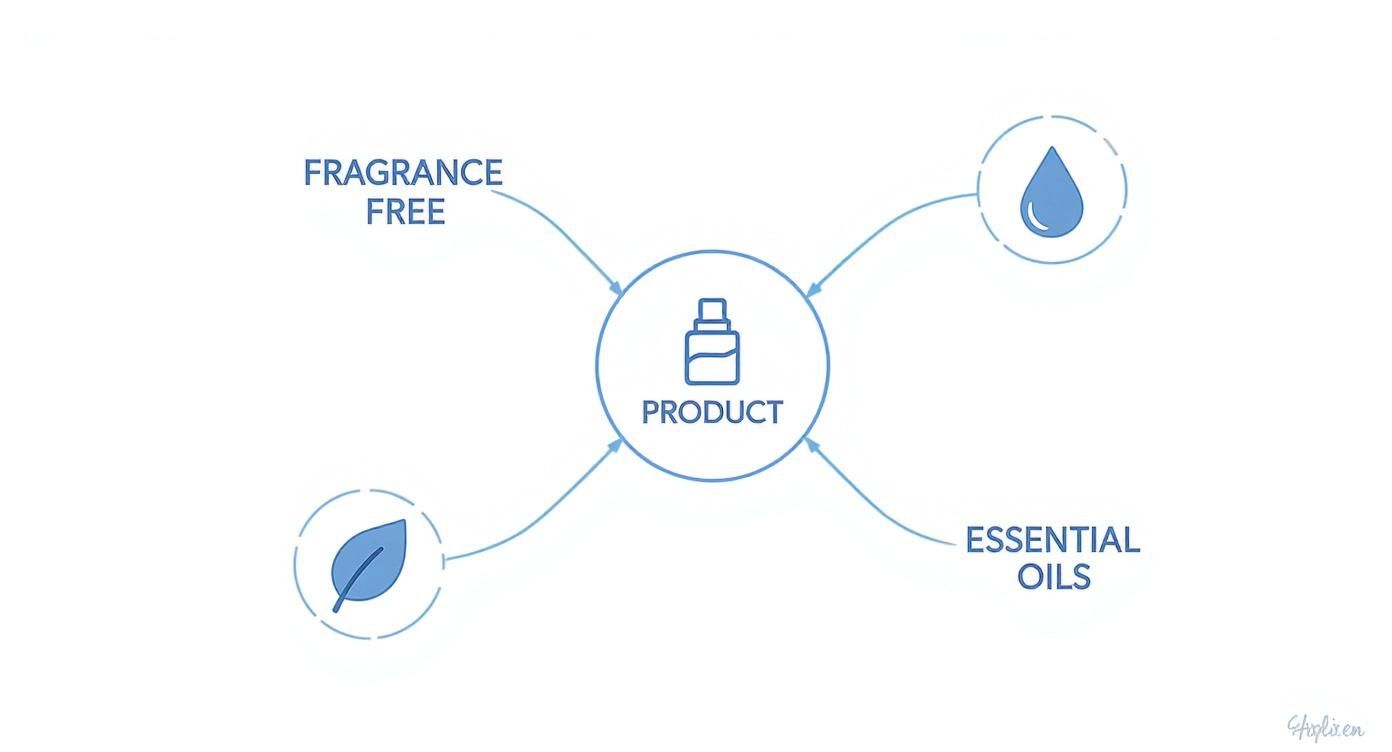
The marketing around scent is a minefield. To make the best choice for your skin, you have to understand what these claims really mean, not just what the brand wants you to think.
The most important thing to remember is this: "Fragrance-free" is the only regulated term that guarantees no scent has been added. Other claims, especially "unscented," can hide masking chemicals used to neutralize the product's natural smell—and those can be just as irritating as perfumes.
To cut through the noise, here’s a simple table breaking down what you’re likely to see on a label.
Fragrance Claims at a Glance
This quick comparison chart helps clarify the most common fragrance-related labels you'll find on product packaging.
| Label Claim | What It Truly Means | Potential for Skin Irritation |
|---|---|---|
| Fragrance-Free | Nothing was added to give the product a scent. You're smelling the raw ingredients. | Lowest |
| Unscented | It has no obvious scent, but chemicals may have been added to mask or neutralize the ingredients' natural odors. | Moderate |
| Essential Oils | Contains concentrated, potent plant extracts for scent. These are natural but are common allergens. | High |
As you can see, the words on the front of the bottle tell a story. Learning to read that story is the first step to finding products that will truly calm and nourish your skin.
Why Fragrance Is a Problem for Sensitive Skin
We’ve all been taught to associate nice smells with things that are clean, fresh, and good for us. But when it comes to skincare, that lovely scent—whether it’s from a rose or a lab—can be a real troublemaker. This is a huge reason why so many people are now specifically looking for products that are truly fragrance free.
Think of your skin's protective barrier like a calm, quiet room. Fragrance is the loud guest who suddenly throws open the door, disrupting the peace. The very chemical compounds that create aromas are often volatile and complex, and it’s this complexity that makes them one of the biggest culprits behind skin sensitization and allergic reactions.
When these compounds land on your skin, they can kickstart an immune response. This not only causes immediate irritation but also weakens your skin's natural defenses, leaving it open to environmental damage and making it harder to hold onto moisture.
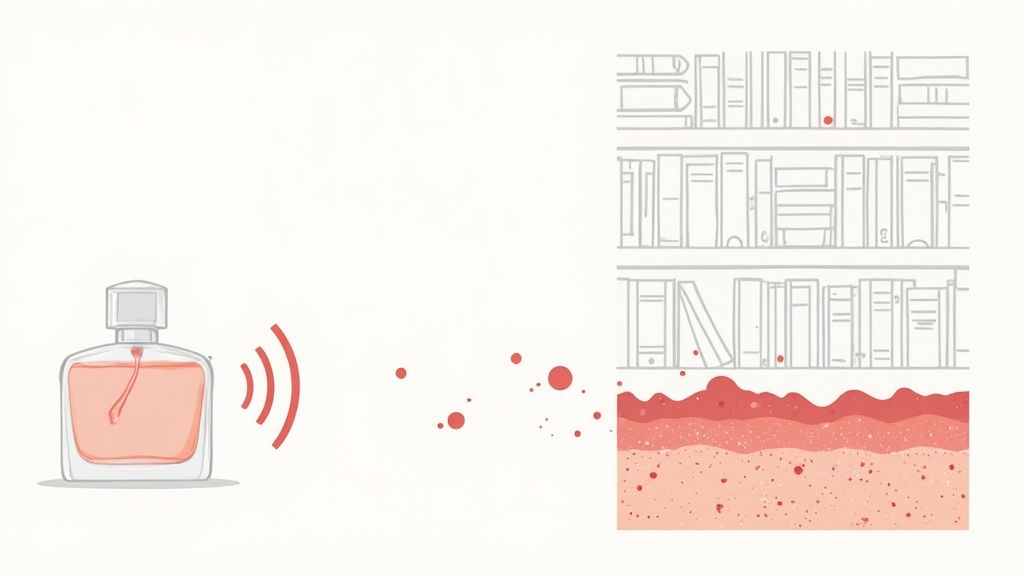
The Science of Skin Irritation
When you see the word "fragrance" or "parfum" on an ingredient list, it's not just one thing. It's a catch-all term that can legally hide a mixture of dozens, sometimes even hundreds, of different chemicals. This is a huge problem for anyone trying to take care of their skin, especially if it's already reactive.
You might be trying to avoid a single known irritant, but that one word could be exposing your skin to a whole cocktail of them without you ever knowing.
This hidden exposure can show up in a few unpleasant ways:
- Contact Dermatitis: That classic itchy, red rash that pops up after your skin touches something it doesn't like.
- Increased Redness: Fragrance is a well-known inflammatory trigger, which can lead to blotchiness and persistent flushing.
- Dryness and Itching: When the skin barrier is compromised, it can't hold onto hydration, leading to that tight, dry, and uncomfortably itchy feeling.
- Worsened Skin Conditions: If you already deal with eczema, rosacea, or psoriasis, fragrance can be a major trigger for flare-ups.
It's easy to assume that only synthetic fragrances cause issues. But "natural" fragrances, like essential oils, are packed with potent, naturally-occurring allergens like linalool, limonene, and geraniol. Just because they come from a plant doesn't mean they can't irritate sensitive skin.
Recognizing the Symptoms
Here’s the tricky part: a reaction to fragrance doesn't always happen right away. You could use a scented cream for months with no problem, and then one day, boom—a rash appears. Sensitivity can build up over time with repeated exposure.
This delayed reaction makes it incredibly hard to connect the dots. Many people just assume their skin is "naturally" sensitive or problematic, never realizing their favorite scented products are the culprit.
If you’re dealing with stubborn redness, random itching, or persistent dryness, it’s worth taking a hard look at the ingredient lists on your products. Often, the first and most impactful step toward calmer skin is simply removing potential irritants. For a deeper dive into managing this kind of reactivity, check out our guide on how to treat sensitive skin.
Understanding what "fragrance free" truly means is about giving you the power to see past the marketing claims. By choosing formulas without any added scents, you’re removing one of the biggest variables in the skincare equation. It's a simple change that gives your skin the peaceful environment it needs to finally calm down, heal, and thrive.
Unscented vs. Fragrance-Free: What's the Difference?
Walking down the skincare aisle can feel like a pop quiz. Brands throw terms around like “unscented” and “fragrance-free,” and honestly, they sound like they mean the same thing. They don't.
This isn’t just about semantics; it’s a critical distinction for the health of your skin. Understanding what these labels really mean is the first step to finally finding products that won't cause irritation.
A fragrance-free product is exactly what it sounds like: it contains zero added fragrance materials, synthetic or natural. It smells like its own ingredients, which might be a little earthy, nutty, or sometimes, like nothing at all.
An unscented product, on the other hand, is a bit of a trick. It doesn’t mean the product is free of fragrance; it means it contains chemicals designed to cover up the smell of the other ingredients so that your nose detects nothing.
Think of it this way: fragrance-free is a quiet room. Unscented is a quiet room where someone is using a white noise machine to drown out the sound of a ticking clock.
The Problem with Masking Agents
Those odor-hiding chemicals are called masking agents. And here’s the kicker: they are fragrances. Their only job is to cancel out other smells, not to make the product smell like a rose garden.
This is a huge deal for anyone with sensitive, reactive, or dry skin. The very chemicals used to make a product seem bland and neutral can be just as irritating as the potent perfumes in heavily scented lotions. You might think you're choosing the "safe" option, but you could just be swapping one trigger for another.
This is exactly why we have to become ingredient detectives and look past the marketing claims on the front of the bottle. "Unscented" is a marketing word. "Fragrance-free" is a formulation fact.
This isn't a small issue. About 10-15% of people report having a sensitivity to fragrance. It's a major reason the demand for truly fragrance-free products is growing so fast, with some market analysts projecting an annual growth rate of around 7.3%. People are tired of the headaches, rashes, and irritation and are actively seeking cleaner formulas. You can dig into more of this data on the growing market at htfmarketinsights.com.
How to Spot the Difference on a Label
So, how do you get wise to the marketing games? It’s simple: ignore the big, splashy words on the front and flip the product over to the ingredient list. That’s where the truth lives.
A genuinely fragrance-free product will have an ingredient list that is completely clean of scent-related chemicals.
Here’s your cheat sheet for what to avoid:
- "Fragrance" or "Parfum": These are the most obvious red flags. They are catch-all terms that can hide dozens of undisclosed chemicals.
- Masking Agents: If you see words like "aroma" or other specific chemical names designed for masking, you know it's not truly free of fragrance.
- Essential Oils: While they come from plants, ingredients like lavender oil (Lavandula Angustifolia) or peppermint oil (Mentha Piperita) are primarily added for scent and are well-known skin irritants for many people.
At the end of the day, choosing fragrance-free over unscented is about choosing a simpler, more honest formula. It’s a minimalist philosophy that strips away unnecessary additives, giving your skin exactly what it needs and nothing it doesn’t.
How to Read Ingredient Lists Like a Pro
Ready to become your own skincare detective? The front of the bottle tells you what a brand wants you to believe, but the ingredient list—often called the INCI list—reveals the truth. Honestly, learning to scan this list is the single most powerful skill you can develop to protect your skin.
The most obvious red flags are the words “Fragrance” and “Parfum.” Think of these as catch-all terms that can legally hide dozens, or even hundreds, of individual scent chemicals. If you see either of these on a label, the product is absolutely not fragrance-free, no matter what the marketing on the bottle says. Another sneaky one to watch for is “Aroma,” which serves the exact same purpose.
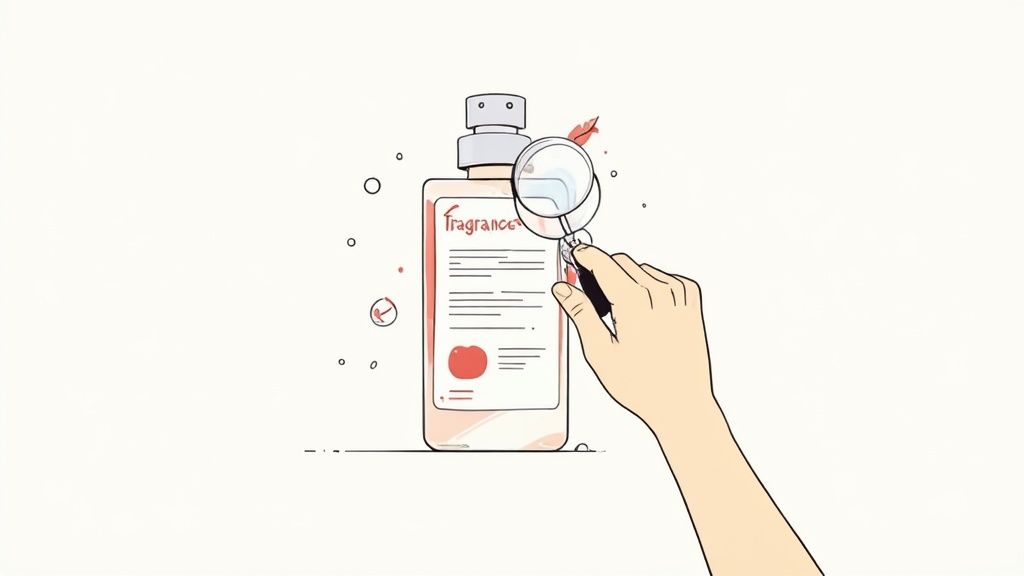
Spotting Naturally Derived Irritants
Just because a scent comes from a plant doesn't automatically make it safe for sensitive skin. Essential oils are highly concentrated and packed with naturally occurring allergenic compounds. You’ll often see these listed by their specific chemical names, which can make a product seem more transparent, but they are still fragrances at the end of the day.
Here are the most common ones to commit to memory:
- Linalool: Found in plants like lavender and coriander.
- Limonene: A major component of citrus oils (think lemon and orange).
- Geraniol: The primary compound in rose and geranium oils.
- Eugenol: A key part of clove and cinnamon oil.
- Citronellol: Derived from citronella and lemongrass.
If these names pop up on a label, you know the product contains fragrance components. Even though they’re natural, they are well-documented triggers for contact dermatitis and irritation. Truly fragrance-free products avoid these entirely.
Common Fragrance Ingredients to Identify
To make things easier, here's a quick reference table of common fragrance and fragrance-masking ingredients. Keep an eye out for these when you're checking a label.
| Ingredient Name | Common Purpose | What You Need to Know |
|---|---|---|
| Fragrance/Parfum | Added Scent | This is a proprietary mix of potentially hundreds of chemicals. Avoid at all costs. |
| Essential Oil Blend | Natural Scent | Often a "natural" allergen that is highly irritating for sensitive skin. |
| Limonene, Linalool, Geraniol | Fragrance Components | These are specific allergenic compounds derived from plants. It's still a fragrance. |
| Aroma/Flavor | Added Scent/Taste | Frequently used in lip products or items labeled "unscented." It’s a fragrance. |
Spotting even one of these is a good reason to reconsider, especially if your goal is to soothe and support your skin.
Your Quick Red Flag Checklist
When you're standing in the store aisle, you don’t have time to research every single ingredient. You need to make a fast decision. The good news is, you just have to look for the big offenders.
Your Mission: Scan the ingredient list for any of the terms we've covered. If you spot one, put the product back on the shelf. The best formulas for sensitive skin are simple and don't need these potentially irritating additives.
This whole process becomes second nature once you get the hang of it. For a more exhaustive breakdown, our guide on skin care ingredients to avoid provides even more detail on building a clean and effective routine.
By learning to spot these key terms, you take the power away from marketers and put it back where it belongs: in your hands. You become empowered to choose products based on what's actually in them, ensuring your skincare is genuinely supporting your skin's health.
Making the Switch to a Fragrance-Free Routine
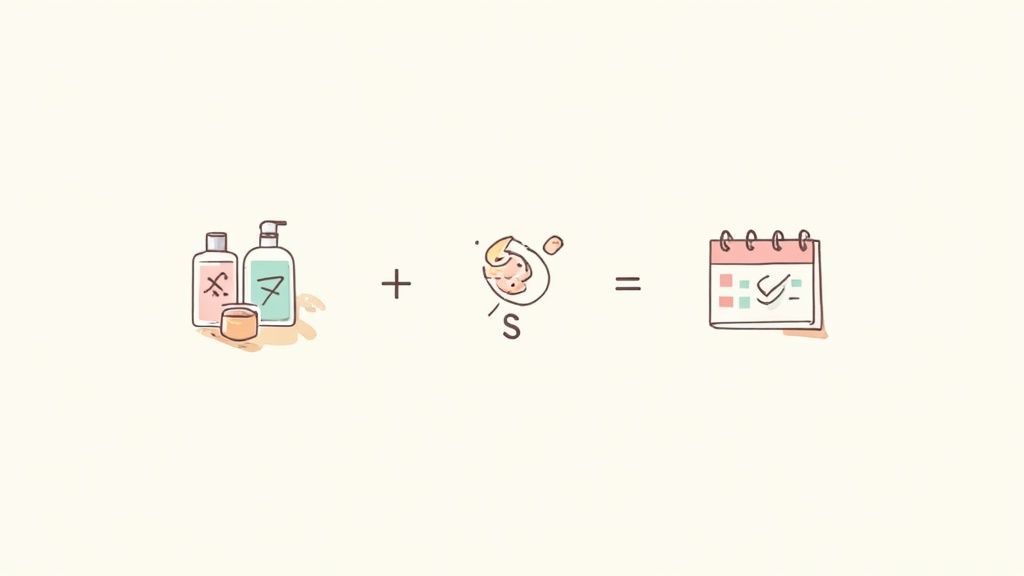
Deciding to go fragrance-free is a huge step toward taking back control of your skin’s health. The good news is, it doesn't have to be some big, overwhelming overhaul. Think of it more like a gradual audit of your daily routine, slowly swapping out potential irritants for calmer, simpler alternatives.
The first move is simply to take inventory. And I mean everything. Look beyond your skincare shelf and consider anything that touches your skin, like your laundry detergent, hand soap, and even your shampoo. You'd be surprised how many people finally find relief from skin issues only to discover their scented laundry soap was the hidden culprit all along. As you transition, it can also be helpful to understand what green cleaning is to expand your efforts into household products, creating a truly gentle environment.
This shift isn't just a niche preference anymore; it's become a mainstream movement. By 2025, the demand for fragrance-free beauty products has seen rapid growth, especially with consumers who want to know exactly what they're putting on their skin and avoid potential irritants.
Your Practical Game Plan
Making the switch is all about progress, not perfection. A great place to start is with the products that stay on your skin the longest—things like moisturizers and serums—since they have the most potential to cause a reaction.
- Audit Your Products: Pull together everything you use on a daily basis. Flip them over, read the ingredient lists, and set aside anything that lists "fragrance," "parfum," or essential oils.
- Replace Strategically: Don't feel like you need to throw everything out at once. A much more manageable (and budget-friendly) approach is to replace a scented product with a fragrance-free one as you run out.
- Always Patch Test: Before you slather a new product all over your face, test a small amount on your inner arm or just behind your ear. Give it 24-48 hours to make sure your skin is happy with it.
Setting the Right Expectations
One of the biggest adjustments when you go truly fragrance-free is getting used to how the products smell. Or rather, how they don't. They won't have that familiar floral or fruity perfume you might be used to. Instead, they’ll simply smell like their raw ingredients—which might be a little earthy, nutty, waxy, or sometimes, like nothing at all.
This isn't a flaw; it's a feature. The absence of a perfumed scent is the sign of a pure, focused formula designed for performance, not for smell. It’s the smell of healthy, happy skin.
As you explore new options, make sure you find a moisturizer that truly supports your skin without any hidden scents. Our guide to the best fragrance-free moisturizers can help you find a perfect match for your new minimalist routine. Embracing this change puts you in the driver's seat, finally giving your skin the peace it needs to thrive.
Have More Questions About Fragrance-Free Skincare?
Diving into skincare labels can feel like you need a translator. Even when you get the basics down, some of the nuances around "fragrance-free" can be genuinely confusing. Let's tackle a few of the questions that come up all the time.
Are Products With Essential Oils Considered Fragrance-Free?
That’s a hard no. While essential oils come from natural sources like plants, they are incredibly potent aromatic compounds. Their main job in a skincare formula is to provide a scent.
Essential oils are packed with volatile components—think things like linalool and limonene—which are well-known allergens that can trigger skin irritation. A truly fragrance-free product won't have any essential oils. Adding them would completely defeat the purpose of creating a gentle, non-irritating formula for sensitive skin.
Is Hypoallergenic the Same as Fragrance-Free?
This is probably one of the most common points of confusion, and it’s completely understandable. The term “hypoallergenic” isn't actually regulated by the FDA. That means there’s no official standard for it, and any brand can slap it on their label. It's really just the company's way of saying they think their product is less likely to cause an allergic reaction.
A product labeled hypoallergenic can absolutely still contain fragrances or masking agents. At the end of the day, it's just a marketing claim. The only surefire way to know a product is free of added scent is to look for the "fragrance-free" label and, more importantly, double-check the ingredient list yourself.
The Bottom Line: Always trust the ingredient list over the marketing claims on the front of the bottle. "Fragrance-free" tells you what's actually in the formula, while "hypoallergenic" is often just a hopeful suggestion.
Will My Skin Get Better Right Away After I Switch?
Sometimes, yes! If your skin was having a direct, angry reaction to a specific perfume, you might feel relief almost instantly. Many people see redness and itching go down within just a few days of cutting out fragrance.
But for others, it can take a few weeks for your skin to really calm down and show improvement. If your skin's natural protective barrier has been worn down by constant exposure to irritants, it needs time to heal and find its balance again. Patience and consistency are your best friends here.
For a routine that truly respects sensitive skin, Wild Tallow Skincare keeps things simple with just a handful of food-grade ingredients and zero added fragrances. Experience the difference for yourself at https://wildtallow.com.