

If you're struggling with sensitive skin, the game plan is actually pretty simple: calm inflammation, simplify your routine, and rebuild your skin's protective barrier. It's all about stripping back to gentle, fragrance-free basics and ditching known irritants to let your skin find its balance again.
Understanding What Your Sensitive Skin Needs

Before you can figure out how to treat your skin, you have to listen to what it's telling you. So many people just assume they were born with "bad skin," but that’s rarely the whole story. There’s a world of difference between skin that is genetically sensitive and skin that has become sensitized over time.
Think of it like this: Genetically sensitive skin is more of a permanent state, often tied to conditions like eczema or rosacea. Sensitized skin, on the other hand, is a temporary reaction triggered by outside factors.
Is Your Skin Sensitive or Sensitized?
Making this distinction is the first real step toward relief because it completely changes your game plan. Sensitized skin is almost always the result of a compromised skin barrier—your skin’s first line of defense.
So what's causing all the damage? Usually, it's one of these culprits:
- Over-exfoliation: Going too hard with harsh scrubs or piling on the chemical exfoliants can strip your skin of its essential protective oils.
- Harsh ingredients: Products loaded with fragrance, drying alcohols, or sulfates are notorious for throwing your skin's balance out of whack.
- Environmental stress: Don't underestimate the impact of pollution, sun exposure, and even extreme weather.
If your skin suddenly starts acting up—getting red, tight, or reactive after you try a new product or go through a stressful week—you're probably dealing with a sensitized barrier. The good news? You can absolutely fix it.
Recognizing the Signs
The sooner you can spot the warning signs, the faster you can intervene. A damaged barrier can't retain moisture properly, which leads straight to dehydration and irritation. Common red flags include persistent redness, that tight or "squeaky clean" feeling after washing, or products suddenly stinging when you apply them.
The real enemy for both sensitive and sensitized skin is inflammation. Your goal is to break that cycle of irritation by getting rid of triggers and bringing in calming, barrier-supporting ingredients.
This isn't just something a few people are dealing with; it's a massive shift in the beauty world. The global market for sensitive skin care products was valued at roughly USD 41.12 billion in 2022 and is expected to hit USD 80.97 billion by 2030. That explosion in growth signals a huge demand for gentle, effective solutions that put skin health first. You can dive deeper into these market trends and what they mean for shoppers.
Once you identify what your skin is truly dealing with—whether it's managing a chronic condition or repairing temporary damage—you can finally move beyond one-size-fits-all advice. This is how you build a routine that actually calms, protects, and restores your complexion for good.
Building a Minimalist Skincare Routine That Actually Works
If you have sensitive skin, a quick scroll through social media can feel completely overwhelming. You're bombarded with elaborate, 10-step routines that look impressive but are often a recipe for disaster for reactive skin. I've learned from years of experience that the secret to treating sensitive skin isn't about adding more products—it's about stripping your routine back to its essential, most effective core.
A minimalist approach centers on three non-negotiable pillars: a truly gentle cleanse, a barrier-repairing moisturizer, and non-irritating sun protection. This "less is more" philosophy does more than just avoid potential irritants; it gives your skin the space it needs to heal and strengthen itself. You’re not just slathering on products; you’re creating a calm, consistent environment where your skin can finally thrive.
This infographic breaks down the core steps for building a routine that supports, rather than overwhelms, sensitive skin.
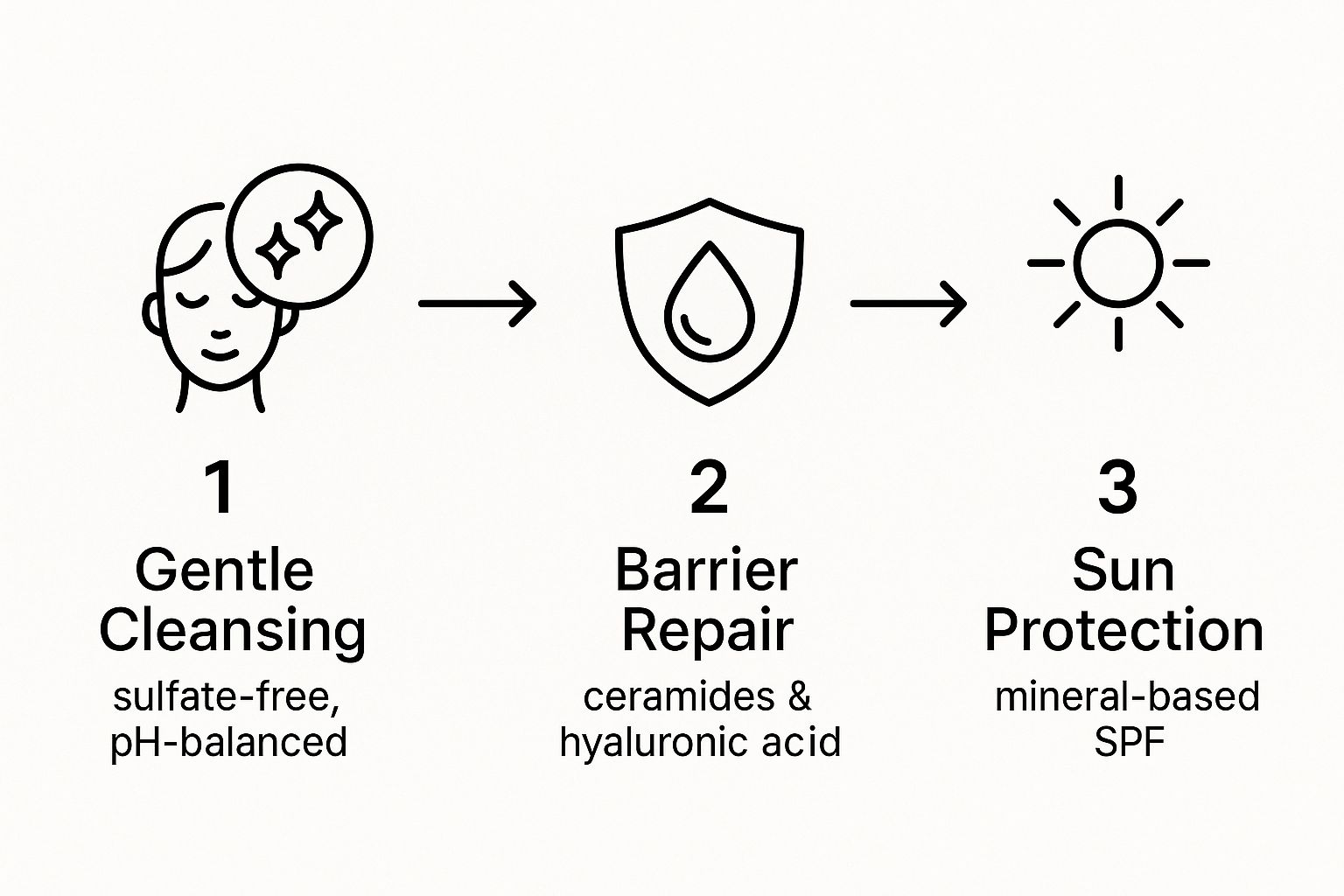
Think of it this way: each step—from cleansing without stripping to protecting with the right SPF—builds on the last to create a complete, supportive system for your skin.
The Foundation: Gentle Cleansing
The whole point of cleansing is to remove dirt, oil, and impurities without wrecking your skin's natural moisture barrier. You know that tight, "squeaky clean" feeling? That’s a major red flag. It means your cleanser is too harsh and has just compromised your skin's first line of defense, leaving it vulnerable to redness and irritation.
To sidestep this common mistake, you need to be picky about your cleanser's formula.
- Sulfate-Free Formulas: Steer clear of sulfates like Sodium Lauryl Sulfate (SLS). They create a satisfying lather but are powerful detergents that can be incredibly drying for sensitive complexions.
- pH-Balanced: Your skin is naturally a little acidic, sitting around a pH of 5.5. Cleansers that are too alkaline throw off this delicate balance, leading to dryness and flare-ups. Look for products labeled "pH-balanced" or "low-pH."
- Cream or Gel Textures: Instead of foaming cleansers, which can be stripping, reach for creamy, milky, or gel-based formulas. These textures are inherently more hydrating and far less likely to disturb your skin's equilibrium.
The Cornerstone: Barrier-Repairing Moisturizer
If cleansing is the foundation, then moisturizing is the cornerstone of any solid sensitive skincare routine. A well-formulated moisturizer does more than just add a layer of hydration; it actively works to repair and reinforce your skin’s protective barrier, locking precious moisture in and keeping irritants out.
This isn’t just a niche concern—moisturizers accounted for a massive 36.5% of the sensitive skincare market in 2023. This huge market share shows a clear shift toward products that soothe and strengthen with simple, effective ingredients.
A strong skin barrier is your best defense against sensitivity. When it’s healthy, it acts like a security guard, keeping essential hydration inside while blocking environmental aggressors from getting in.
When you're hunting for the right moisturizer, there are two types of ingredients that are non-negotiable for barrier repair:
- Ceramides: These are lipids (fats) naturally found in your skin, making up a huge part of its barrier. Think of them as the "mortar" holding your skin cells (the "bricks") together. Applying them topically helps patch up any cracks in a compromised barrier.
- Hyaluronic Acid: This amazing humectant is like a magnet for moisture, drawing water into the skin to keep it plump and hydrated. It offers instant relief from that tight, dehydrated feeling without ever feeling heavy or greasy.
To help you put it all together, here’s a simple table outlining a basic, twice-a-day routine.
Your Core Sensitive Skin Routine at a Glance
This table maps out the essentials for both morning and night. The goal is consistency and simplicity—giving your skin what it needs without overwhelming it.
| Step | Morning (AM) Focus | Evening (PM) Focus | Key Ingredients to Look For |
|---|---|---|---|
| Cleanse | Gently remove overnight buildup without stripping the skin. | Thoroughly remove sunscreen, makeup, and daily grime. | pH-balanced, sulfate-free cleansers with glycerin or gentle surfactants. |
| Moisturize | Hydrate and protect the skin barrier for the day ahead. | Deeply nourish and support the skin’s overnight repair process. | Ceramides, Hyaluronic Acid, Niacinamide, Shea Butter, Squalane. |
| Protect | Shield skin from UV damage, a primary trigger for sensitivity. | N/A | Zinc Oxide or Titanium Dioxide in a mineral-based SPF 30+. |
Following this simple framework helps you build a routine that supports your skin's health from the ground up, reducing the chances of irritation and promoting a stronger, more resilient complexion.
For a deeper dive into crafting your daily regimen, check out our complete guide to a sensitive skin care routine for more detailed tips.
The Shield: Non-Irritating Sun Protection
Sunscreen is the final—and arguably most critical—step in your daily routine. Sun exposure is a huge trigger for inflammation, and it can seriously worsen sensitivity, redness, and long-term damage. The problem is, not all sunscreens are created equal. Chemical filters can sometimes cause stinging or allergic reactions in reactive skin types.
This is exactly why mineral sunscreens are so often the gold standard for anyone with a sensitive complexion.
- Mineral (Physical) Sunscreens: These formulas use active ingredients like zinc oxide and titanium dioxide. Instead of being absorbed into the skin, they sit right on the surface, creating a physical shield that reflects UV rays away.
- Zinc Oxide's Soothing Properties: Zinc oxide is a real superstar here. It's well-known for its calming and anti-inflammatory properties, making it an excellent choice for skin that's prone to redness and irritation.
By focusing on these three simple yet powerful steps, you create a routine that doesn't just manage sensitivity—it actively works to build a more resilient, comfortable, and healthy complexion from the inside out.
Decoding Ingredient Labels for Sensitive Skin
Stepping into the skincare aisle can feel like you’re about to take a chemistry exam you didn't study for. The ingredient lists are long, the names are confusing, and let's be honest, the wrong choice can mean a week of redness and irritation. But learning how to treat sensitive skin means becoming your own best advocate, and that journey starts with understanding what you’re actually putting on it.
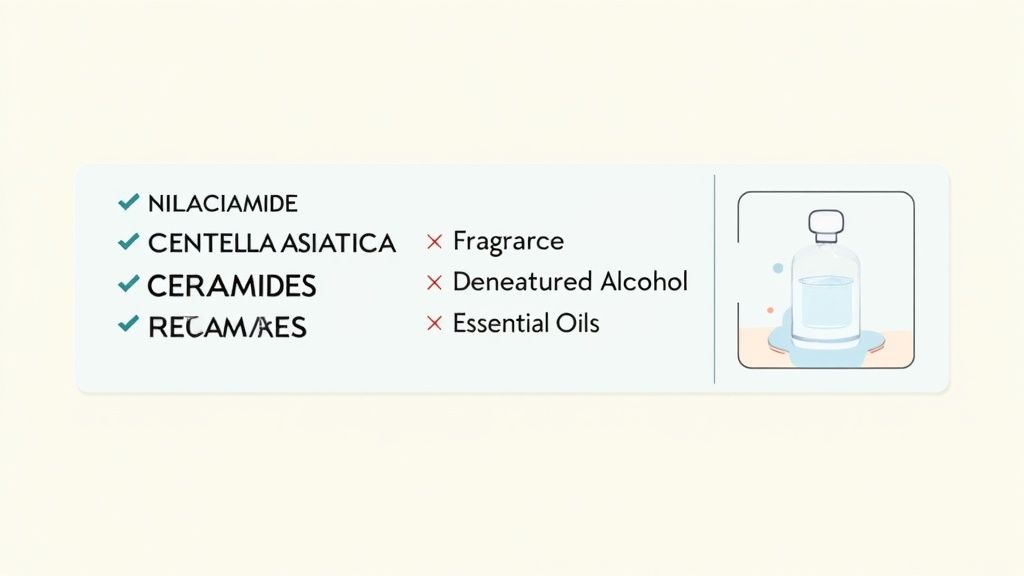
This isn’t about memorizing every last scientific term. It's about getting good at spotting two things: the heroes that will calm and strengthen your skin, and the villains that are likely to send it into a tailspin. Once you know the difference, you can confidently pick up any bottle and know if it’s right for you.
Spotting the Soothing Champions
When your skin is acting up, you need ingredients that do more than just hydrate. You need them to actively soothe, knock down inflammation, and help rebuild your skin’s compromised barrier. These are the all-stars of your skincare lineup.
Keep an eye out for these calming powerhouses on any label:
- Niacinamide (Vitamin B3): This is a true MVP for sensitive skin. It’s fantastic at reducing redness, strengthening that all-important skin barrier, and even helping to balance oil without causing any drama.
- Centella Asiatica (Cica): You might see this listed as tiger grass. It's a botanical extract famous for its incredible healing and anti-inflammatory gifts. It’s my go-to for calming down angry skin and speeding up recovery from a flare-up.
- Ceramides: Think of these as the mortar between the bricks of your skin cells. Ceramides are lipids (fats) that are naturally part of your skin barrier, so applying them topically is like sending in reinforcements to patch up any weak spots.
These ingredients are fundamental because they get to the root cause of reactivity: a weak barrier. By shoring it up, you're making your skin more resilient over the long haul.
The 'Avoid at All Costs' List
Just as important as knowing what to look for is knowing what to run from. Certain ingredients are notorious for causing irritation, dryness, and allergic reactions, even in tiny amounts. Making a habit of scanning for these common offenders will save your skin a world of unnecessary stress.
Often, it’s these hidden troublemakers that sabotage an otherwise solid routine. For anyone committed to an ultra-gentle approach, it's worth exploring the world of chemical-free skincare products for a simpler path to calm, happy skin.
Here’s a quick-glance table of common irritants and why they're such bad news for sensitive complexions.
| Ingredient to Avoid | Why It's a Problem for Sensitive Skin |
|---|---|
| Fragrance/Parfum | This is the #1 cause of contact dermatitis in skincare. "Fragrance" is a catch-all term for dozens of undisclosed chemicals. If you do nothing else, always choose "fragrance-free." |
| Denatured Alcohol | Often listed as SD Alcohol or Alcohol Denat., this is extremely drying. It strips your skin's natural oils, damages the barrier, and ultimately leads to more irritation. |
| Certain Essential Oils | Just because it's "natural" doesn't mean it's gentle. Potent oils like lavender, citrus, and peppermint are common allergens that can cause major irritation and make your skin sun-sensitive. |
| Sulfates (SLS/SLES) | Found in cleansers to create that foamy lather, Sodium Lauryl Sulfate and Sodium Laureth Sulfate are harsh detergents. They strip the skin’s protective layer, leaving it tight and vulnerable. |
Pro Tip: Ingredients are listed in order of concentration, from highest to lowest. If a known irritant like alcohol or fragrance is near the top of the list, put the product down and walk away.
Real-World Label Reading
Let’s put this into practice. You pick up a moisturizer that screams "for sensitive skin" on the front. But the back tells the real story.
You scan the ingredients and see Niacinamide and Ceramides high up on the list—great start! But then you get to the very end and spot "Parfum." Even that tiny amount can be enough to trigger a reaction for truly sensitive skin. A genuinely good product won't just add calming ingredients; it will be just as careful about what it leaves out.
Becoming a savvy label-reader transforms you from a hopeful shopper into an empowered expert on your own skin.
Lifestyle Adjustments to Soothe Your Skin

Truly great skincare goes way beyond what’s in your medicine cabinet. While the right products are absolutely essential, the small choices you make all day long can either help your skin heal or quietly work against it. These daily habits have a huge impact on your skin's reactivity, laying the foundation for either calm or chaos.
Figuring out how to manage sensitive skin means taking a step back and looking at the whole picture. We need to explore the connections between what you eat, how you handle stress, and even the temperature of your shower. These practical, everyday tweaks work right alongside your skincare routine to build a complexion that's genuinely balanced and resilient.
Your Environment Matters
Simple changes in your immediate surroundings can make a world of difference in reducing daily irritation. It’s so easy to overlook these little things, but they are often the source of that low-grade, constant inflammation that keeps your skin in a state of high alert.
One of the easiest yet most impactful swaps you can make is with your water temperature. I know a steaming hot shower feels incredible, but it's brutal on your skin. That heat strips away your natural protective oils, leaving your skin barrier weak and vulnerable. Always, always wash your face with lukewarm water to get it clean without causing damage.
Another sneaky culprit? Your laundry detergent. The clothes, towels, and especially the pillowcase you sleep on every night can be coated in fragrances and harsh chemicals from standard detergents.
- Switch to a fragrance-free detergent: Look for bottles specifically labeled "hypoallergenic" or "for sensitive skin." This is a non-negotiable for reactive skin.
- Run an extra rinse cycle: It's a simple button press, but it helps ensure every last bit of detergent residue is washed away, leaving nothing behind to cause irritation.
Making these small adjustments reduces the constant exposure to irritants, giving your skin the break it desperately needs.
Fueling Your Skin From Within
What you eat directly influences your body's inflammatory responses, and your skin is often the first place this shows up. A diet packed with anti-inflammatory foods can help soothe your skin from the inside out, providing the essential building blocks for a strong, healthy barrier.
Think about weaving more of these skin-calming foods into your meals:
- Healthy Fats: Foods rich in omega-3s, like salmon, walnuts, and flaxseeds, are fantastic for tamping down inflammation.
- Antioxidant-Rich Produce: Berries, leafy greens like spinach, and other colorful veggies are loaded with antioxidants that protect your skin from environmental damage.
- Hydrating Foods: Things like cucumbers, watermelon, and celery have a high water content that helps keep your skin plump and hydrated from within.
On the flip side, some foods are notorious for triggering inflammation. The most common culprits are dairy, processed sugars, and highly refined carbs. You don't necessarily have to banish them forever, but start paying close attention to how your skin feels a day or two after you eat them.
Try keeping a simple food diary for a couple of weeks. Just jot down what you eat and make a note of any flare-ups. You might be surprised to see a pattern emerge, which is an incredibly powerful way to identify your personal triggers.
For anyone wanting to dive deeper into this holistic approach, our guide on natural remedies for dry skin has even more insights on nourishing your skin from the inside.
Manage Stress to Manage Your Skin
Ever notice a surprise breakout or a rosacea flare during a particularly stressful week? That's not a coincidence. Stress floods your body with cortisol, the "stress hormone," which is famous for kicking off an inflammatory cascade that can wreak havoc on sensitive skin.
Learning to manage your stress is a non-negotiable part of caring for reactive skin. While you can't just eliminate stress from your life, you can build routines that help your body and mind cope more effectively.
- Prioritize Sleep: This is huge. Aim for 7-9 hours of quality sleep a night. When you sleep, your body goes into repair mode, which is absolutely critical for healing a compromised skin barrier.
- Incorporate Mindful Movement: You don't have to run a marathon. Gentle activities like yoga, a brisk walk, or even just a few minutes of stretching can lower cortisol levels and boost circulation—both great for your skin.
- Practice Deep Breathing: When you feel that tension rising, stop. Take just a few minutes for deep, mindful belly breaths. This simple act can calm your nervous system and dial back the immediate physical effects of stress.
By weaving these lifestyle changes into your daily life, you create a supportive environment that enhances your skincare routine, helping your skin become stronger, calmer, and more resilient in the long run.
Knowing When to Consult a Dermatologist
Building a solid at-home routine is a fantastic first step, but it’s just as important to know when you’ve hit a wall. Sometimes, no matter how carefully you choose your products or how gentle you are, your skin just needs more help than a good moisturizer can offer.
Recognizing the limits of your own routine is a sign of being smart about your skin's health, not a failure. Think of your daily regimen as your first line of defense. A dermatologist is the specialist you call in for a proper diagnosis and treatment plan when that defense is breached. If you’re caught in a frustrating cycle of flare-ups and irritation, it's time to bring in an expert.
Recognizing the Red Flags
It can be really hard to tell the difference between a minor, temporary reaction and a more serious, chronic issue. The key is to listen to your skin and watch for signals that things are escalating. If any of the following symptoms sound familiar, it’s time to schedule an appointment with a board-certified dermatologist.
These aren't the kind of problems you can "wait out" or fix by trying yet another new serum. They often point to an underlying condition that needs a professional diagnosis.
- Persistent Redness or Flushing: If your face is constantly red and never seems to fully calm down, it could be a sign of a condition like rosacea.
- Painful or Sudden Rashes: Any rash that's itchy, painful, blistering, or spreading quickly needs to be seen by a doctor right away.
- Symptoms That Keep Getting Worse: You've stripped your routine back to the bare essentials and cut out all known irritants, but your skin is still getting worse. This is a huge sign that something else is at play.
- Acne That Won't Go Away: If you’re dealing with deep, painful cysts or breakouts that aren’t responding to over-the-counter treatments, a dermatologist can offer prescription-strength options that actually work.
- Suspected Allergic Reactions: Hives, swelling, or intense itching after using a product could mean you have an allergy that needs proper testing to pinpoint the culprit.
It's so easy to get stuck in a trial-and-error loop, wasting money on products that only aggravate your skin. A dermatologist can cut through all the confusion and give you a clear, effective plan, saving you a ton of time, frustration, and discomfort.
What to Expect From Your Dermatology Visit
Walking into a specialist’s office can feel a little intimidating, but remember, it’s a partnership. Your job is to come armed with as much information as possible so they can connect the dots. Be ready to talk about your skin's history, list the products you’re currently using (bring them with you, or take pictures!), and discuss any lifestyle factors you think might be contributing.
Your dermatologist will start with a thorough visual exam of your skin. From there, depending on what they see, they might suggest some diagnostic tests to get to the bottom of things.
Uncovering Triggers with Patch Testing
For stubborn, mysterious sensitivity, one of the most powerful tools in a dermatologist's arsenal is patch testing. This is a far more in-depth process than a standard allergy prick test.
During a patch test, tiny amounts of common allergens are applied to adhesive panels and placed on your back. You’ll wear these panels for about 48 hours before returning to the office to have them removed. Your doctor will check for any initial reactions and will likely ask you to come back one more time a day or two later for a final reading.
This is the gold standard for identifying the specific ingredients that cause contact dermatitis. It can finally give you a definitive "avoid" list, solving years of skin mysteries in one go. Seeing a professional isn't giving up—it's taking strategic, informed control of your skin's health.
Got Questions About Treating Sensitive Skin? Let's Clear Things Up.
Even when you think you've finally cracked the code for your sensitive skin, a new question always seems to pop up. It can feel like you're constantly troubleshooting, which is why I want to tackle some of the most common concerns I hear. Let's get you some clear, practical answers so you can manage your skin with more confidence and less guesswork.
Understanding the finer points is what makes all the difference, especially when you start thinking about adding more powerful steps to your routine.
Can I Actually Use Actives Like Retinoids or Vitamin C?
Yes, you absolutely can! But you have to be smart about it. The old myth that sensitive skin has to avoid all the "good stuff" is just that—a myth. The secret is choosing the right type of active and introducing it slowly. Forget about jumping straight to the high-potency, aggressive formulas you see all over social media.
Instead, start at the bottom of the ladder with the gentlest versions available.
- Instead of a strong retinoid, look for something like a granactive retinoid.
- For Vitamin C, skip the notoriously unstable L-Ascorbic Acid and opt for a stable, gentler derivative like Sodium Ascorbyl Phosphate. It’s far less likely to cause a reaction.
When you're ready, introduce only one new active at a time. Start by using it just a couple of nights a week, and always apply it over your moisturizer. This little trick is called "buffering," and it creates a protective cushion that lets your skin get used to the ingredient without freaking out. Slow and steady is the only way to win this race.
Is This a Purge or Is My Skin Just Angry?
Ah, the million-dollar question. This is probably one of the most confusing parts of trying new skincare, but telling the difference is crucial. It's the deciding factor between pushing through and pulling the plug on a new product.
Purging is when your skin gets a little worse before it gets better. It happens when an active ingredient (like an exfoliant or retinoid) speeds up your skin's renewal process, pushing all the gunk that was already brewing under the surface up to the top. It shows up as breakouts in your usual problem spots and should clear up within 4-6 weeks.
Irritation, on the other hand, is your skin sending out an SOS. It’s a full-blown negative reaction. Look for these signs:
- Redness that comes with itching or a burning sensation.
- Little red bumps that aren't your typical pimples, often in places you don't normally break out.
- A raw, tight, or uncomfortable feeling all over.
Here's the simplest way to tell them apart: If it stings, burns, or itches, it’s irritation. Purging might be annoying, but it shouldn't be painful. If you even suspect it's irritation, stop using the product immediately and focus on coddling your skin barrier back to health.
Is “Natural” or “Organic” Skincare Automatically Better for Me?
Not at all. This is one of the biggest misconceptions out there, fueled by some very clever marketing. While "natural" certainly sounds safer, many plant-based ingredients are incredibly potent and can be major triggers for sensitive skin.
Essential oils are the perfect example. Things like lavender, peppermint, and citrus oils are common allergens that can cause some serious contact dermatitis. A product's formulation is what truly matters—not whether the ingredients came from a plant or a lab.
Instead of getting wooed by buzzwords, learn to read the practical parts of the label. Phrases like "fragrance-free," "hypoallergenic," and "dermatologist-tested" are far more reliable clues. My advice? Always prioritize what's been left out of a product over vague claims about what's "natural."
How Long Will It Take to Actually See a Difference?
If there’s one secret ingredient for sensitive skin, it’s patience. You might feel some immediate relief from that tight, itchy feeling within a day or two of starting a gentle routine, but the real, visible changes take time.
To truly strengthen your skin barrier and see a real drop in redness, you need to give it at least one full skin cell turnover cycle. For most of us, that's about four to six weeks. You have to commit to a simple, new routine for at least that long before you can fairly judge if it's working.
Consistency is so much more important than speed. Just stick with your core routine—cleanse, moisturize, and protect with sunscreen—day in and day out. This steady, predictable approach is exactly what your skin needs to finally calm down, heal, and build up its resilience.
For a truly minimalist approach that eliminates common irritants, explore the simple, tallow-based formulas from Wild Tallow Skincare. Our products are made with just a few food-grade ingredients, ensuring they are gentle enough for even the most reactive skin. Discover our collection.