

When you think of olive oil, your mind probably goes straight to the kitchen. But for centuries, it’s been a well-kept secret for beautiful skin, used by Mediterranean cultures long before modern skincare existed. This isn't just an old wives' tale; the science today backs up what they knew all along.
This "liquid gold" is a powerhouse for your skin, delivering a triple-threat of benefits: deep moisturization, powerful protection, and gentle soothing.
The Ancient Secret to a Modern Glow
The tradition of using olive oil for beauty is a practice steeped in history. It connects us to a simpler, more holistic approach to wellness, reminding us that nature often provides the most effective solutions.
The reason for its enduring legacy is simple: its natural composition is almost perfectly designed to nourish, heal, and protect our skin.
The Core Benefits of Olive Oil
So, what exactly is happening when you smooth this oil onto your skin? Let's break down the magic.
-
Deep Moisturization: Olive oil is packed with fatty acids, especially oleic acid. These fats are fantastic at sinking deep into the skin to provide hydration that actually lasts. More importantly, they help reinforce your skin’s natural moisture barrier, preventing water from escaping and leaving your skin feeling genuinely soft and plump.
-
Powerful Antioxidant Protection: Think of antioxidants as your skin's personal security team. Olive oil is loaded with them, particularly polyphenols and vitamin E. These potent compounds hunt down and neutralize free radicals—unstable molecules from sun exposure and pollution that cause premature aging and damage.
-
Soothing Anti-Inflammatory Properties: If you struggle with redness, irritation, or sensitivity, olive oil can be incredibly calming. Its natural anti-inflammatory properties help take the "fire" out of irritated skin, promoting a calmer, more even-toned complexion.
It's no surprise that the beauty industry has caught on. The global market for cosmetic-grade olive oil is booming, reflecting a huge consumer shift towards effective, natural ingredients. Projections estimate the market could hit $366 million by 2025, with Extra Virgin Olive Oil (EVOO) dominating the scene, accounting for roughly 70% of the volume. You can dig into more industry insights about the beauty olive oil market to see just how big this trend has become.
To make it even clearer, here's a quick breakdown of how olive oil's components translate directly into skin benefits.
Olive Oil's Key Skin Benefits at a Glance
| Benefit | Key Component | What It Does for Your Skin |
|---|---|---|
| Intense Hydration | Oleic Acid & Squalene | Deeply moisturizes and mimics the skin's natural sebum, strengthening the moisture barrier to prevent water loss. |
| Antioxidant Defense | Vitamin E & Polyphenols | Neutralizes free radicals from UV rays and pollution, helping to prevent premature aging and cellular damage. |
| Soothes Irritation | Oleocanthal | Acts as a natural anti-inflammatory, calming redness, and soothing conditions like eczema and rosacea. |
| Supports Healing | Linoleic Acid | An essential fatty acid that helps maintain the skin's structural integrity and supports the healing process. |
This table sums up why this simple, single-ingredient oil can do so much for your skin's health and appearance.
What Makes Olive Oil a Skincare Powerhouse
To really understand why people have sworn by olive oil for their skin for thousands of years, we have to look past its role in the kitchen. This isn't just a cooking ingredient; it's a complex, nutrient-packed substance whose power lies in its natural chemistry. Think of your skin as a delicate fabric—olive oil contains the very compounds that help mend, shield, and reinforce its threads.
The secret to its incredible moisturizing ability starts with oleic acid, a specific type of monounsaturated fatty acid. Picture your skin's protective barrier as a brick wall. Oleic acid acts like the mortar, filling in the tiny gaps between your skin cells (the bricks) to lock in moisture and keep your skin resilient.
The Dynamic Duo of Hydration and Protection
But olive oil does more than just seal the deal. It also delivers compounds that actively feed your skin. One of the stars of the show is squalene, a lipid our skin produces on its own to stay hydrated and soft. As we get older, our natural squalene levels drop, so applying it topically is a great way to replenish that lost moisture for a more supple feel.
Then you have the polyphenols. These are powerful antioxidants that serve as your skin’s personal bodyguards, defending against daily environmental attacks from things like pollution and UV rays. They go to work neutralizing the unstable molecules known as free radicals, which are a major cause of premature aging, fine lines, and other skin damage.
This visual helps map out how these components translate into real, tangible benefits for your skin.
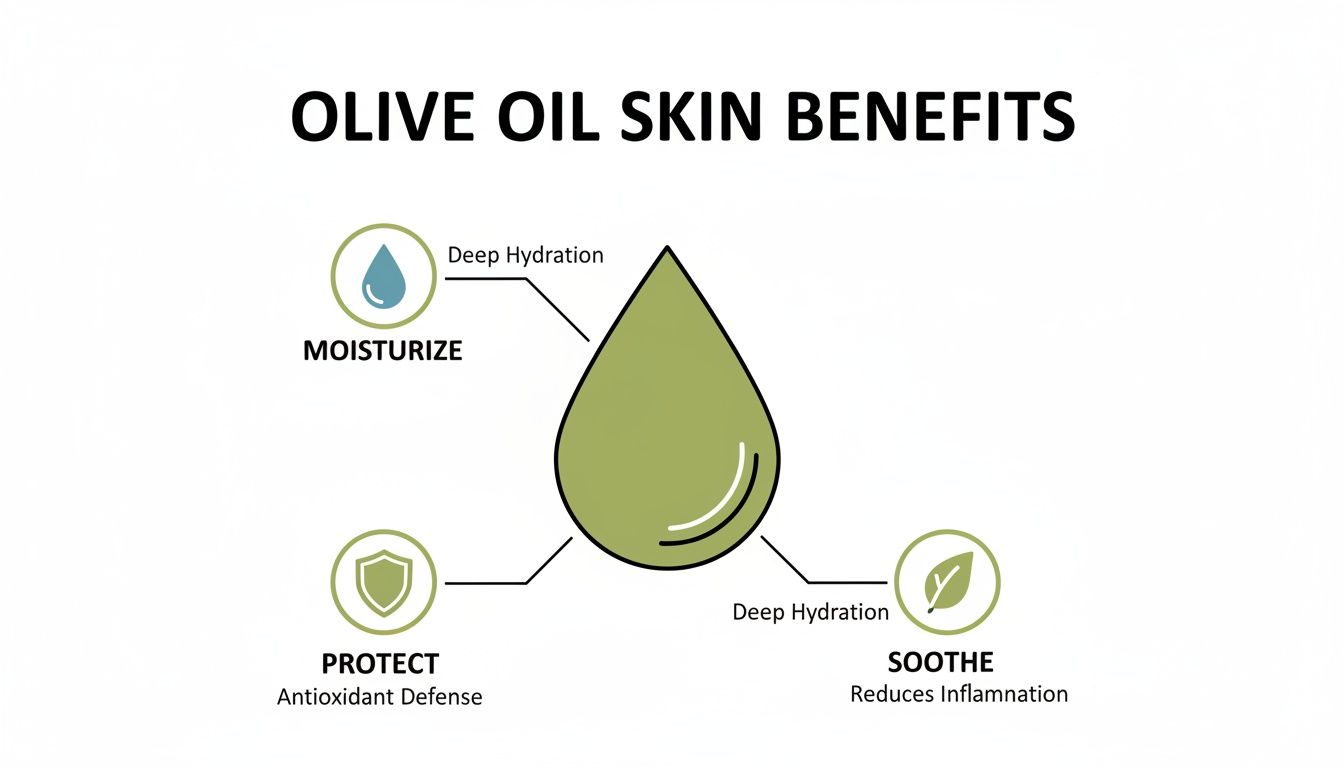
As you can see, olive oil’s three main jobs—moisturizing, protecting, and soothing—come directly from this incredible natural makeup. It’s a perfect blend of fats and antioxidants that work in harmony. It doesn’t just add moisture; it defends the skin from the very things that cause dryness and aging to begin with.
The Science Behind the Glow
These benefits aren't just old wives' tales; modern science backs them up. Analysis of high-quality extra virgin olive oil (EVOO) shows it's packed with skin-loving goodies. In fact, studies confirm that EVOO is typically made up of 55–83% oleic acid, giving it a rich foundation for fortifying that crucial skin barrier.
It also contains significant levels of antioxidants like hydroxytyrosol, a polyphenol directly tied to protecting skin cells from oxidative stress.
To get a better sense of where olive oil fits in, it helps to look at the bigger picture of natural skincare. You can explore various beneficial skin oils and see how they stack up, but you'll find that olive oil's particular mix of oleic acid, squalene, and potent antioxidants makes it a true standout for deep nourishment. It’s this unique combination that makes it so much more than a simple moisturizer.
Is Olive Oil Right for Your Skin Type?
Olive oil is an incredible skincare ingredient, but let's be honest—it’s not a one-size-fits-all miracle worker. The key to knowing if it's right for you is understanding your skin's unique personality. The very thing that makes it amazing—its rich, heavy nature—is also why it might not work for everyone.
For some people, though, olive oil is a total game-changer. Its dense concentration of fatty acids, especially oleic acid, delivers the kind of deep, lasting moisture that thirsty skin dreams of.
Here’s who tends to fall in love with it:
-
Dry and Dehydrated Skin: If your skin constantly feels tight, flaky, or just plain rough, olive oil can come to the rescue. It acts as a fantastic emollient, helping to patch up a weak skin barrier and lock in precious moisture for a soft, supple feel.
-
Mature Skin: As we get older, our skin's natural oil production slows down, which can lead to more dryness and fine lines. Olive oil helps replenish those essential lipids, plumping up the skin and bringing back a more youthful, dewy glow.
-
Sensitive and Irritated Skin: The natural anti-inflammatory compounds in olive oil can be a huge relief for skin that’s easily angered. It creates a gentle, protective shield that helps calm down redness and irritation.
When to Be Cautious
On the flip side, that same richness can spell trouble for other skin types. The very properties that make olive oil a savior for dry skin can feel heavy and suffocating on a complexion that’s already making plenty of its own oil.
Olive oil has a moderately comedogenic rating, which is just a fancy way of saying it has the potential to clog pores. Because its molecules are on the larger side, it can sometimes just sit on the skin's surface instead of sinking in. This can trap sebum and bacteria, which is a recipe for congestion. For a deeper dive into what to look out for, check out our helpful guide on the most common pore-clogging ingredients list.
This is exactly why those with oily or acne-prone skin should proceed with a bit of caution. Slathering on a heavy oil might just make matters worse, leading to more blackheads, whiteheads, or full-blown breakouts.
Key Takeaway: How well olive oil works really comes down to your skin's starting point. What deeply nourishes dry skin can easily overwhelm oily skin, which is a perfect reminder that skincare is never universal.
Olive Oil Suitability by Skin Type
This table breaks down how different skin types usually get along with olive oil, so you can see where you might fit in.
| Skin Type | Primary Benefit or Concern | Recommended Usage |
|---|---|---|
| Dry | Benefit: Deep hydration and barrier repair. | Excellent for daily use, especially as a moisturizer or in nourishing balms. |
| Mature | Benefit: Replenishes lost lipids, reduces dryness, and plumps skin. | Great for nightly treatments or mixed into other skincare products for an anti-aging boost. |
| Normal | Benefit: Provides balanced moisture and antioxidant protection. | Use a few times a week or as needed for a hydration boost, especially in dry weather. |
| Sensitive | Benefit: Soothes inflammation and reduces redness. | Ideal for calming irritated patches, but always patch test first. |
| Combination | Concern: Can be too heavy for oily T-zone. | Best used selectively on dry areas like the cheeks, avoiding oilier spots. |
| Oily | Concern: High risk of clogging pores and causing breakouts. | Generally not recommended for facial use. Better for body care. |
| Acne-Prone | Concern: Strong potential to worsen congestion and breakouts. | Best to avoid on the face. Stick to non-comedogenic oils. |
Ultimately, listening to your skin is the best way to know for sure.
Before you go all-in, a patch test is non-negotiable. Seriously. Just dab a small amount of high-quality extra virgin olive oil on a hidden spot, like behind your ear or on your inner arm. Do this for a few days in a row and keep an eye out for any redness, bumps, or breakouts. This simple little test can save you a world of frustration and give you the confidence to know if olive oil is your skin's new best friend.
Putting Olive Oil to Work in Your Daily Routine
Knowing the science behind olive oil is great, but the real fun begins when you start using it. Bringing olive oil into your skincare routine is surprisingly simple, feels wonderfully indulgent, and delivers real results. Whether you're melting away stubborn makeup or calming down a rough patch of skin, this humble oil can quickly earn its spot on your bathroom counter.
The most important thing to remember? Quality is everything. You'll want to reach for a high-quality, cold-pressed Extra Virgin Olive Oil (EVOO). This is the good stuff—unrefined and packed with the highest concentration of those skin-loving polyphenols and vitamins. The cheaper, refined "light" olive oils are often processed with heat, which unfortunately strips out most of the nutrients you're after.
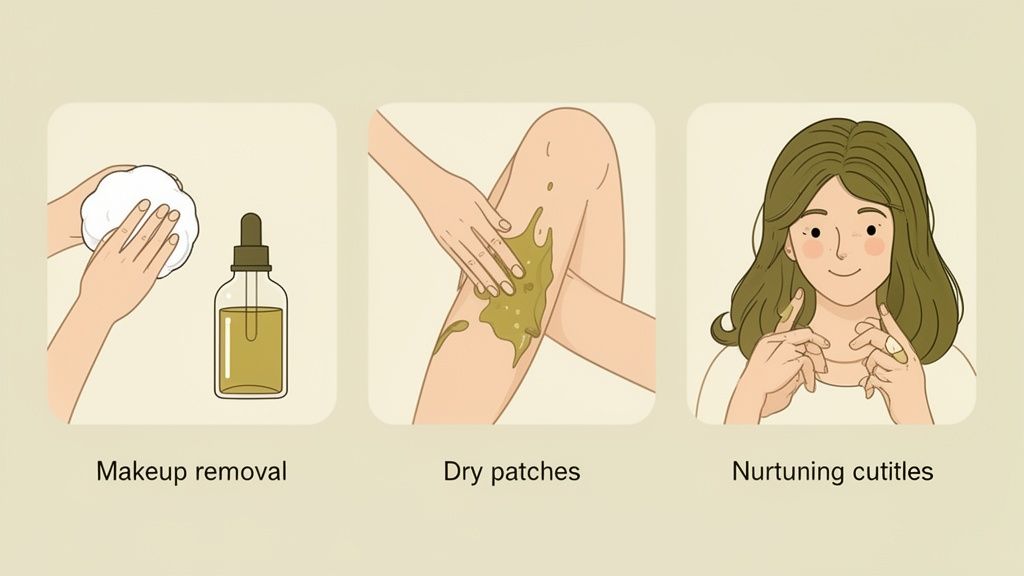
Gentle Makeup Remover
So many commercial makeup removers feel harsh, leaving skin tight, stripped, and begging for moisture. Olive oil works differently, following the simple chemistry principle that "like dissolves like." It gently breaks down even the most stubborn oil-based makeup—we're talking waterproof mascara and long-wear foundation—without any aggressive scrubbing.
This approach doesn't just clean your face; it leaves your skin feeling supple and hydrated. It’s an ideal first step in a double-cleansing routine, especially for anyone looking to build a more natural regimen with chemical-free skincare products.
How to Use It:
- Pour a small, quarter-sized puddle of EVOO into your palm.
- Gently massage it over your dry face using circular motions for about a minute.
- Focus on areas with heavy makeup, like your eyes and lips, letting the oil do the work.
- Drape a warm, damp washcloth over your face for a moment, then gently wipe everything away.
- Follow up with your favorite gentle cleanser to wash off any last traces of oil and makeup.
Targeted Spot Moisturizer
We all have them—those persistently dry spots on our elbows, knees, or heels. These areas naturally have fewer oil glands, making them prone to becoming rough and cracked. A little dab of olive oil can deliver a powerful burst of moisture right where you need it most.
Thanks to its high concentration of oleic acid, it moisturizes deeply while forming a protective barrier that locks in hydration. This makes it the perfect remedy for stubborn dry patches that your everyday lotion just can't seem to conquer.
Pro Tip: For an incredible overnight foot treatment, slather a generous amount of olive oil on your feet and slip on a pair of cotton socks before bed. You'll wake up to unbelievably soft, smooth skin.
Nourishing Cuticle and Hair Treatment
The goodness doesn't stop with your skin. Olive oil is also a fantastic treatment for brittle nails and dry, frazzled hair. Those same fatty acids and vitamin E that nourish your skin can work miracles on your cuticles and hair shafts.
Just a single drop massaged into your cuticles can help prevent painful hangnails and keep the surrounding skin healthy. As for your hair, a little bit used as a pre-shampoo treatment can restore shine and tame frizz.
Try This Mini-Treatment:
- For Cuticles: Before bed, massage one tiny drop of olive oil into each cuticle.
- For Hair Ends: Warm a few drops between your palms and smooth it over the last couple of inches of your hair to seal split ends. Let it sit for at least 30 minutes before you shampoo.
- For Scalp Health: Gently massage a small amount into your scalp to soothe dryness and fight flakiness.
By weaving these simple habits into your routine, you can tap into the full potential of olive oil for your skin, hair, and nails. It’s amazing how a simple pantry staple can become such a cornerstone of a natural beauty regimen.
How Olive Oil Compares to Other Natural Oils
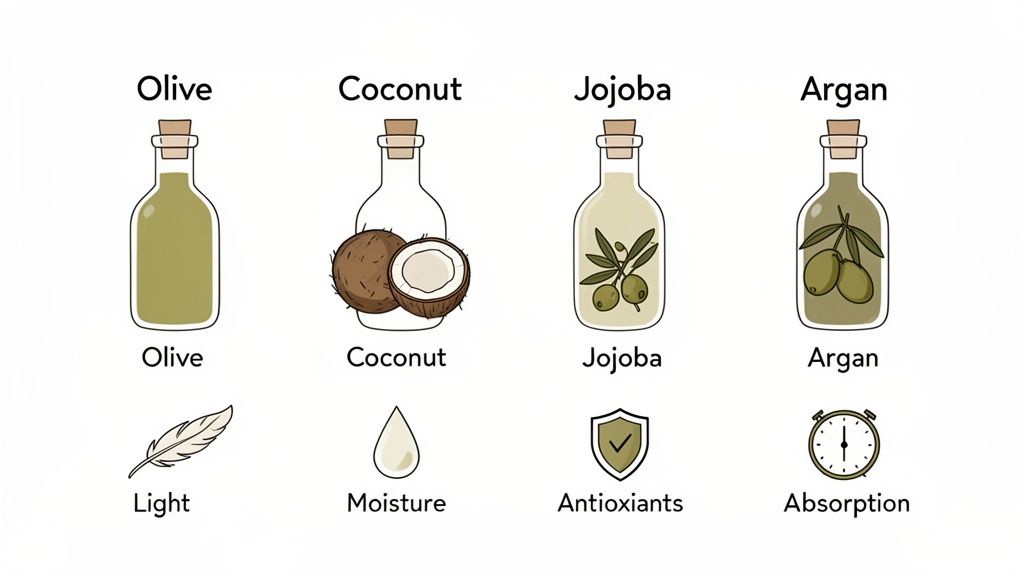
The world of natural oils is huge, and it’s easy to feel a little lost in all the options. You've got coconut, jojoba, argan... the list goes on. Each one brings something special to the table, so understanding how olive oil stacks up helps you pick the right one for your skin.
Think of it like choosing the right tool for a job. A hammer and a screwdriver are both incredibly useful, but you wouldn’t use them for the same task. In the same way, different oils shine in different areas depending on their texture, how quickly they absorb, and their unique fatty acid profiles. The benefits you get from olive oil are distinct, even when compared to other heavy-hitting plant oils.
Olive Oil Versus Other Popular Choices
Let's put olive oil side-by-side with some other favorites to see where it truly excels and where another oil might be a better fit. This isn’t about crowning a single "best" oil, but about finding the right one for you.
-
Coconut Oil: Known for its lauric acid, coconut oil is a powerhouse moisturizer with some nice antimicrobial properties. The big downside? It's highly comedogenic, meaning it can clog pores, and it feels much heavier than olive oil. This makes it a gamble for anyone with oily or acne-prone skin. Olive oil is generally a safer bet for your face unless your skin is exceptionally dry.
-
Jojoba Oil: This one is a real superstar. Jojoba oil’s molecular structure is incredibly similar to our skin’s own sebum. Because of this, it sinks in quickly without clogging pores, making it a fantastic choice for balancing oily and acne-prone skin. It's much lighter than olive oil and is more focused on regulating oil production than providing that deep, heavy-duty moisture.
-
Argan Oil: Often called "liquid gold," argan oil is packed with vitamin E and essential fatty acids. It’s lighter than olive oil and absorbs faster, delivering great anti-aging and moisturizing benefits without leaving a greasy feeling behind. It’s a wonderful all-around oil, especially for normal to dry skin types.
The biggest thing that sets olive oil apart is its exceptionally high concentration of oleic acid and potent antioxidants like oleocanthal. This specific combination makes it an unmatched choice for deep conditioning and soothing severely dry, irritated, or mature skin.
A Powerful Partner in Natural Skincare
This unique composition also makes olive oil a fantastic team player. For instance, it pairs beautifully with animal-based fats like tallow, which brings a completely different (but equally beneficial) profile of fatty acids to the mix. To learn more about this traditional powerhouse, you can read our guide that answers the question, what is tallow oil, and see how it works in harmony with plant oils.
There’s a reason olive oil is so common in skincare, and it’s deeply rooted in history. Europe has always been the heart of olive oil production, so it naturally became a staple in both the kitchen and the medicine cabinet. While olive oil offers incredible, time-tested benefits, it's always worth exploring what else is out there. You can discover more options by checking out some of The Best Body Oil for Dry, Sensitive, and Mature Skin to round out your skincare toolkit.
Got Questions About Olive Oil for Your Skin? Let's Clear Them Up.
Even after learning all the good stuff, it's natural to have a few practical questions before you start. After all, taking an ingredient from your kitchen pantry and putting it on your face can feel a little strange at first. Let's walk through the most common questions so you can feel completely confident.
Think of this as your quick-start guide, covering the nitty-gritty details from picking the right bottle to understanding how your skin should (and shouldn't) react.
Can I Just Use My Regular Cooking Olive Oil on My Face?
This is the number one question we hear, and the answer is a game-changer for getting real results. While you technically can use any olive oil, you absolutely shouldn't. For your skin, you want to stick exclusively with high-quality, cold-pressed Extra Virgin Olive Oil (EVOO).
So, what's the big deal? EVOO is unrefined, which means it’s made without high heat or chemical solvents. This gentle process keeps all the powerful nutrients intact—the vitamins, polyphenols, and healthy fats that actually do the work of nourishing your skin.
"Regular" or "light" olive oils, on the other hand, are highly refined. This industrial processing strips out most of those beneficial compounds. Using refined olive oil on your skin is like eating an orange peel and tossing the fruit; you’re missing the entire point!
Is Olive Oil Going to Clog My Pores?
A totally valid concern, especially if you're new to facial oils. Olive oil has a moderate comedogenic rating, meaning it has the potential to clog pores for some people. This is especially true if you already have oily or acne-prone skin.
Because its molecules are on the larger side, it can sometimes just sit on the surface instead of sinking in completely.
A Quick But Crucial Tip: Everyone's skin is unique, so a patch test is non-negotiable. Dab a small amount on a discreet spot (like behind your ear or on your inner arm) for a few days in a row. See how your skin feels and looks before you go all-in on your face.
How Often Should I Be Using It?
There’s no one-size-fits-all answer here—it really comes down to your skin type and what it needs. The best approach is always to start slow and pay close attention to how your skin responds.
Here are a few starting points:
- For Very Dry or Mature Skin: You might find daily use works wonders, especially as a final "sealing" step in your nighttime routine.
- For Normal or Combination Skin: Starting with 2-3 times a week is often a great balance. You can also use it as a spot treatment on stubborn dry patches.
- For Your Body: Go for it! Areas like elbows, knees, and heels are much less prone to clogging and can usually handle daily application.
How Can I Tell if My Skin Doesn't Like Olive Oil?
Your skin is a great communicator; you just have to learn its language. If olive oil isn't the right fit, it will usually let you know pretty quickly with a few tell-tale signs.
Keep an eye out for any new issues that pop up after you start using it, like:
- Small, flesh-colored bumps (these are closed comedones)
- An increase in blackheads or whiteheads
- More breakouts than usual
- Any new redness, itchiness, or irritation
If you notice any of these, it's a clear signal to stop using it on your face. It doesn't mean olive oil is "bad," just that it might not be compatible with your skin's unique chemistry.
At Wild Tallow Skincare, we're all about the power of simple, food-grade ingredients. That’s why we pair our 100% grass-fed tallow with high-quality olive oil, creating formulas that are deeply nourishing and gentle enough for even the most sensitive complexions. Explore our collection for honest, effective skincare you can truly trust.